This article needs additional citations for verification .(June 2014) (Learn how and when to remove this template message) |
| Balindong | |
|---|---|
| Municipality | |
| Municipality of Balindong | |
Map of Lanao del Sur with Balindong highlighted | |
Location within the Philippines | |
| Coordinates: 7°55′N124°12′E / 7.92°N 124.2°E Coordinates: 7°55′N124°12′E / 7.92°N 124.2°E | |
| Country | |
| Region | Autonomous Region in Muslim Mindanao (ARMM) |
| Province | Lanao del Sur |
| District | 2nd District |
| Barangays | 38 (see Barangays) |
| Government [1] | |
| • Type | Sangguniang Bayan |
| • Mayor | Benjamin M. Bagul |
| • Electorate | 13,670 voters (2016) |
| Area [2] | |
| • Total | 453.94 km2 (175.27 sq mi) |
| Population (2015 census) [3] | |
| • Total | 29,180 |
| • Density | 64/km2 (170/sq mi) |
| Time zone | PST (UTC+8) |
| ZIP code | 9318 |
| PSGC | 153603000 |
| IDD : area code | +63 (0)63 |
| Climate type | tropical climate |
| Income class | 4th municipal income class |
| Website | www |
Balindong, officially the Municipality of Balindong, is a 4th class municipality in the province of Lanao del Sur, Philippines. According to the 2015 census, it has a population of 29,180 people. [3]
Lanao del Sur, officially the Province of Lanao del Sur, is a province in the Philippines located in the Bangsamoro Autonomous Region in Muslim Mindanao (BARMM). The capital is the city of Marawi, and it borders Lanao del Norte to the north, Bukidnon to the east, and Maguindanao and Cotabato to the south. To the southwest lies Illana Bay, an arm of the Moro Gulf.
The Philippines, officially the Republic of the Philippines, is an archipelagic country in Southeast Asia. Situated in the western Pacific Ocean, it consists of about 7,641 islands that are categorized broadly under three main geographical divisions from north to south: Luzon, Visayas, and Mindanao. The capital city of the Philippines is Manila and the most populous city is Quezon City, both part of Metro Manila. Bounded by the South China Sea on the west, the Philippine Sea on the east and the Celebes Sea on the southwest, the Philippines shares maritime borders with Taiwan to the north, Vietnam to the west, Palau to the east, and Malaysia and Indonesia to the south.
It is formerly known as Watu.
Balindong is one of thirty nine (39) municipalities comprising the Province of Lanao del Sur. It lies on the western part of the province. It is bounded on the north by the Municipality of Marantao, on the south by the municipality of Tugaya. On the east and western side, it is bounded by Lake Lanao and Lanao del Norte respectively.
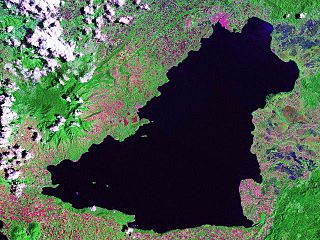
Lake Lanao is a large ancient lake in the Philippines, located in Lanao del Sur province in the country's southern island of Mindanao. With a surface area of 340 km2 (130 sq mi), it is the largest lake in Mindanao, and the second largest lake in the Philippines and counted as one of the 15 ancient lakes in the world. Scholars have been pushing for the lake's inclusion in the UNESCO World Heritage List.
Lanao del Norte officially the Province of Lanao del Norte, is a province in the Philippines located in the Northern Mindanao region. Its capital is Tubod.
The Municipality is only 16 kilometres (9.9 mi) from Marawi City, and 53 kilometres (33 mi) from the nearest seaport of Iligan City.
Marawi is a Component City and the capital city of Lanao Del Sur. Based on the 2015 census, it had a population of 201,785.
Iligan, officially the City of Iligan or referred to as Iligan City, is a 1st class highly urbanized city in Northern Mindanao, Philippines. According to the 2015 census, it has a population of 342,618 people.
The total land area of Balindong is approximately 28,650 hectares (70,800 acres). Of this figure, only about 25% is plain or flat suitable for rice farming. By classification, some 37% of the total land area is forest land.
Climate is classified as Type IV characterized by the absence of distinct dry or wet season. Its coldest period is usually during rainy days when temperature dips down to a low 15 °C (59 °F) while the average temperature rises to 27 °C (81 °F) during dry season.
Balindong is politically subdivided into 38 barangays.
A barangay or baranggay (, formerly referred to as barrio, is the smallest administrative division in the Philippines and is the native Filipino term for a village, district or ward. In metropolitan areas, the term often refers to an inner city neighbourhood, a suburb or a suburban neighborhood. The word barangay originated from balangay, a kind of boat used by a group of Austronesian peoples when they migrated to the Philippines.
The people of Wato (west Masiu) claim descent from Bataraan di kilaten, the first founding ancestor of Masiu Pangampong, his Later descendant were Pondag and Amaloya Thopaan. Thopaan was married to Potri Kaizadan daughter of Aloyodan son of Sarip Kabunsuan of Johore (Malaysia) who in turn descended from Fatima, the daughter of the Islamic Prophet Muhammad. Thopaan and Kaizadan begot, Angkaya of Masiu, Manzang of Molondo, Dayansalong of Binidayan and Ambo of Lumba a Bayabao,
Muhammad was the founder of Islam. According to Islamic doctrine, he was a prophet, sent to present and confirm the monotheistic teachings preached previously by Adam, Abraham, Moses, Jesus, and other prophets. He is viewed as the final prophet of God in all the main branches of Islam, though some modern denominations diverge from this belief. Muhammad united Arabia into a single Muslim polity, with the Quran as well as his teachings and practices forming the basis of Islamic religious belief.
Angkaya married to Potre Ayowa of Taraka and begot Datu Onggor (father of Balindong bsar), Bayora and Bae Kayowa. Bae Kayowa was married to Datu Sandor of Baloi son of Sarip Bato Lakongan begot Panimbang in Talagian of Maguindanao from a Baloi royal princess, Datu Sandor and Bae Kayowa bore Maruhom Kaharoden and Samar known as Datumaas of Watu and Taraka municipality,

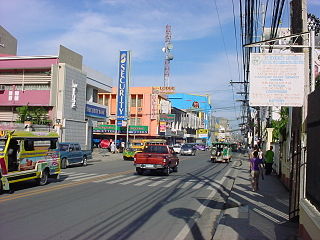
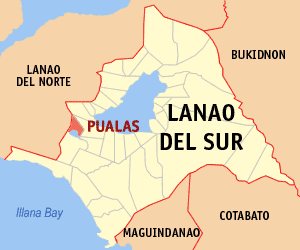
Pualas, officially the Municipality of Pualas, is a 5th class municipality in the province of Lanao del Sur, Philippines. According to the 2015 census, it has a population of 12,866 people.
Maruhom Kaharoden first married to Omera in Unayan daughter of Datu Calipa and second married to Gunup sister of Alanak of Baloi and bore Olan (wife of Pagayawan in Sedepan a Unayan) and his brother Radia Palawan, first Sultan of Raya and the famous saber sa Radapan, who died a martyr on 1759 in Radapan Linamon Lanao del norte, in defense of freedom, homeland and Islam against the Spanish invaders,
Radia Palawan a Maranao hero, married to the grand daughter of Balindong bsar and begot, four Maruhoms (Pat a Datu sa Raya) namely; Maruhom Salam, Maruhom Bsar, Maruhom Datu a Simban, Maruhom Sidic, and the Bae sa Raya who was married to Maruhom Sidic son of Diwan of Bayang. According to the "Taritib" system of Raya, handed down through well-remembered oral traditions, only male descendants of the lines of this four “Maruhoms” could ascend to the titles and thrones of Sultan sa Raya under a rule of alternate succession (idal). The reigning Sultan of Raya Ex Vice Governor, Atty Dimapuno Ramos Datu (Pangnal) enthroned as Sultan of Raya from the turn of Maruhom Sidic of Raya, younger among the four Maruhom. He is the incumbent General Secretary of the original 28 Lanao Sultanate Legislative Council of the four Pangampong of Lanao “28 SULTAN AMBABAYA KO TARITIB SA RANAO”.
Originally there are no Wato and Malaig sultanates, the two son of Samar Datumaas asked permission to their uncle Kaharoden to build their own Sultanate, Maruhom Kahar agreed, Datu sa Malaig married to a Bayabao royal princess and found the Malaig Sultanate, while Datu sa Wato found Wato Sultanate, he was married to Bae sa Marigay daughter of Nanak of Bayang from Potre Nining, daughter of Datu sa Kalodan Gantar son of Sultan Barahaman Aman of Maguindanao,
The territory of these three minor sultanates, from Raya to other side of the lake, Salipongan, to west portion of the municipality is consider territory of Raya sultanate, from Lilod to the east portion of the municipality, including Selangan Island and Nosa island is consider territory of the Wato Sultanate, from the bridge between Malaig and Salipongan to the boundary of Marantao and Wato Balindong is consider territory of Malaig Sultanate, the upper portion of Malaig is Pagayawan, which is extension territory of Pagayawan royal Sultanate of Sedepan a Unayan, Pagayawan was married to Potre Olan (daughter of Maruhom Kahar of Raya) begot a son, and named his place Pagayawan in honor of his father, and to make known that Pagayawan in Wato is belong to the royal Sultanate of Pagayawan.
The Municipality of Balindong was known as Uato or Wato from 1918 to 1948. Wato, the lower western portion of the present day municipality which is surprisingly rocky. In 1956 by virtue of Republic Act 1419 dated June 10, 1956, Wato was renamed Balindong in honor of a great ruler of the Pangampong fame who ruled the Pangampong of Masiu from Wato.
On April 29, 1963, Balindong was converted into a regular Municipality under Executive Order no. 42. Balindong is comprised by 38 barangays. During the martial regime, there were 54 barangays in the municipality. When Corazon C. Aquino came into presidency, the number of barangays was reduced to 38.
| Population census of Balindong | ||
|---|---|---|
| Year | Pop. | ±% p.a. |
| 1918 | 3,827 | — |
| 1939 | 5,418 | +1.67% |
| 1948 | 8,280 | +4.83% |
| 1960 | 14,820 | +4.97% |
| 1970 | 14,678 | −0.10% |
| 1975 | 16,917 | +2.89% |
| 1980 | 12,927 | −5.24% |
| 1990 | 19,635 | +4.27% |
| 1995 | 21,825 | +2.00% |
| 2000 | 24,470 | +2.48% |
| 2007 | 30,295 | +2.99% |
| 2010 | 26,007 | −5.40% |
| 2015 | 29,180 | +2.22% |
| Source: Philippine Statistics Authority [3] [4] [5] [6] | ||
The 1995 survey of Family Income And Expenditures (FIES) indicate that an average Balinndong household earns an annual income of P33,660.00 or P2,805.00 a month. In the same period, Poverty Threshold Income (PTI) in the Province of Lanao del Sur was estimated at P9,364 or a poverty incidence of about 52%. PTI implies that households earning below the rate are considered poor or in the poverty group.
Its geographical local plays a major role in the development of agro-industrial potential in the province and region. Balindong contributes raw materials including forest products. While cottage industry had been home-based for most part, it has high development potentials given sufficient inputs including market access.
Of the 2000 population of 24,470, 51% of this (12,524) are in the labor force, meaning those aged 14 to 64 years old which are classified as economically active sector. However, viewed from the provincial labor force participation rate of 50%, it can be deduced that Balindong’s situation is not far from that reality.
While total agricultural area in the municipality stands at 7,024 hectares, representing 24% of the total land area, only about 832 hectares or 12% is effectively utilized for rice (203 has.) and corn (632 has.) farming. Rice farms are mainly rain fed (153 has.) as there is absence of a developed irrigation system in the municipality.
Due to the existence of a wide tract of land for grazing and pasture, Balindong is one of the Province source for cattle and carabao and other livestock products. Inventory of livestock indicate that there exist (2002): cattle – 145 heads, carabao – 131 heads, goat – 135, chicken 417, ducks – 210. The data indicate a decreasing inventory of animals, therefore, a need to replenish the stock.
A survey of annual fish catch from the lake and inland fish-ponds in the municipality from 1997 to 2002 indicate reduction of catch from 17% metric ton to only 8.02 metric tons. Fish species in the lake include Tilapia, Mudfish, Sirung, Carp, Gaby, and Catfish.
The Municipality of Balindong is a 5th class in terms of income. Its revenue is derived mainly from its share of Internal Revenue Allotment (IRA) from the national government. Currently, the municipality receives an annual IRA of Php28,892,000. Of this revenue, some php5,784,000.00 or 20% of the revenue is earmarked for development activities.
Balindong, other than having its own rural health unit, is a site of the District Hospital. Currently, Balindong’s Rural Health unit is manned by a physician, 1 public health nurse, 3 midwives, and twelve Barangay Health Workers.
Health records indicate that leading causes of morbidity, especially among children, include acute respiratory tract infection, influenza, acute gastroenteritis, hypertension, measles with bronchopneumonia, severe dehydration, cancer, and diabetes mellitus. On the other hand, the leading causes of mortality for both adults and children include cardiovascular diseases, pulmonary tuberculosis, vehicular accidents, measles with bronchopneumonia, severe dehydration, cancer and diabetes mellitus.
Data culled out from the 2000Census indicate that the history of Balindong’s housing trend is one of decreasing from 1960 at 2,236 units to as low as 1,332 dwelling units in 1980. In 1990, Balindong’s dwelling units numbered 1,807 and in 2000 the dwelling units increased to 2,145.
Ninety-seven percent of the dwelling units in Balindong are of single house type. The average number of households occupying a single dwelling unit stands at 1.5 with an household population of 11.41 persons per dwelling unit. }}
Census data of 2000 reports that the literacy rate of Balindong stands at 86.02% while the Province’ literacy rate was at 80.12%. There are seven (7) elementary schools and two (2) secondary schools in Balindong which caters to the education needs of its population.
Elementary
Secondary

Bayang, officially the Municipality of Bayang, is a 5th class municipality in the province of Lanao del Sur, Philippines. According to the 2015 census, it has a population of 23,965 people.

Buadiposo-Buntong, officially the Municipality of Buadiposo-Buntong, is a 4th class municipality in the province of Lanao del Sur, Philippines. According to the 2015 census, it has a population of 16,130 people.

Bubong, officially the Municipality of Bubong, is a 2nd class municipality in the province of Lanao del Sur, Philippines. According to the 2015 census, it has a population of 22,336 people.

Ditsaan-Ramain, officially the Municipality of Ditsaan-Ramain, is a 3rd class municipality in the province of Lanao del Sur, Philippines. According to the 2015 census, it has a population of 22,299 people.

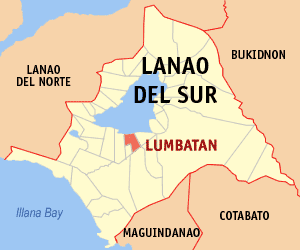
Lumbatan, officially the Municipality of Lumbatan, is a 5th class municipality in the province of Lanao del Sur, Philippines. According to the 2015 census, it has a population of 19,105 people.

Madalum, officially the Municipality of Madalum, is a 3rd class municipality in the province of Lanao del Sur, Philippines. According to the 2015 census, it has a population of 23,127 people.

Maguing, officially the Municipality of Maguing, is a 2nd class municipality in the province of Lanao del Sur, Philippines. According to the 2015 census, it has a population of 24,531 people.

Mulondo, officially the Municipality of Mulondo, is a 3rd class municipality in the province of Lanao del Sur, Philippines. According to the 2015 census, it has a population of 16,067 people.

Pagayawan, officially the Municipality of Pagayawan, is a 5th class municipality in the province of Lanao del Sur, Philippines. According to the 2015 census, it has a population of 13,139 people.

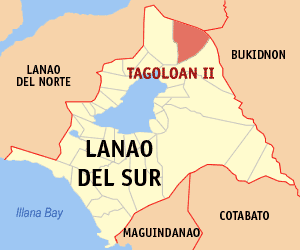
Tagoloan II, officially the Municipality of Tagoloan II, is a 4th class municipality in the province of Lanao del Sur, Philippines. According to the 2015 census, it has a population of 11,169 people.

Tamparan, officially the Municipality of Tamparan, is a 5th class municipality in the province of Lanao del Sur, Philippines. According to the 2015 census, it has a population of 25,874 people.

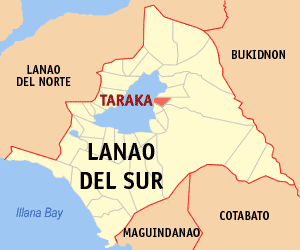
Taraka, officially the Municipality of Taraka, is a 4th class municipality in the province of Lanao del Sur, Philippines. According to the 2015 census, it has a population of 23,644 people.

Munai, officially the Municipality of Munai, is a 4th class municipality in the province of Lanao del Norte, Philippines. According to the 2015 census, it has a population of 32,973 people.

Lumbaca-Unayan, officially the Municipality of Lumbaca-Unayan, is a — municipality in the province of Lanao del Sur, Philippines. According to the 2015 census, it has a population of 7,260 people.

The Sultanates of Lanao in Mindanao, Philippines were founded in the 16th century through the influence of Shariff Kabungsuan, who was enthroned as first Sultan of Maguindanao in 1520. The Maranaos of Lanao were acquainted with the sultanate system when Islam was introduced to the area by Muslim missionaries and traders from the Middle East, Indian and Malay regions who propagated Islam to Sulu and Maguindanao.
Sultan Muliloda Datumulok Dimaporo was a noted politician and scion of many principalities in the Province of Lanao del Sur, in the Autonomous Region in Muslim Mindanao (ARMM) in the Philippines. During his reign, he received various awards from private and Government Organization, one of them was model mayor for his Charitable services in the community, and Binidayan was awarded by the national government as one of the most peaceful municipality in the Philippines.
Local elections will held in the Province of Lanao del Sur on May 9, 2016 as part of the 2016 general election.Voters will select candidates for all local positions: a town mayor, vice mayor and town councilors, as well as members of the Sangguniang Panlalawigan, the vice-governor, governor and representatives for the two districts of Lanao del Sur.
Bayog is a barangay in the municipality of Tagoloan in Lanao del Sur, Philippines. It is one of the municipality's 39 barangays created through Presidential Decree 1548 dated June 11, 1978.