Elections in Benin take place within the framework of a multi-party democracy and a presidential system. Both the President and the National Assembly are directly elected by voters, with elections organised by the Autonomous National Electoral Commission (CENA).

Elections in Chad includes information on election and election results in Chad.

Elections in Gabon take place within the framework of a presidential multi-party democracy with the Gabonese Democratic Party, in power since independence, as the dominant party. The President and National Assembly are directly elected, whilst the Senate is indirectly elected.

Elections in French Polynesia gives information on election and election results in French Polynesia.

Elections in Niger take place within the framework of a semi-presidential system. The President and National Assembly are elected by the public, with elections organised by the Independent National Electoral Commission (CENI).

Elections in Togo take place within the framework of a presidential system. Both the President and the National Assembly are directly elected by voters. The country is a one party dominant state with the Union for the Republic in power.

Parliamentary elections were held in Hungary on 9 April 2006, with a second round of voting in 110 of the 176 single-member constituencies on 23 April. The Hungarian Socialist Party emerged as the largest party in the National Assembly with 186 of the 386 seats, and continued the coalition government with the Alliance of Free Democrats. It marked the first time a government had been re-elected since the end of Communist rule.
The Chadian Progressive Party, known as the National Movement for the Cultural and Social Revolution for the last two years of its existence, was the first African political party in Chad. It was a regional branch of the African Democratic Rally (RDA).
The Chadian Democratic Union was a political party in Chad.
Elections for the Territorial Assembly were held in French Dahomey on 30 March 1952. Sourou-Migan Apithy's Republican Party of Dahomey won 19 of the 32 second college seats. Only ten members of the Legislative Council elected in 1947 were re-elected.
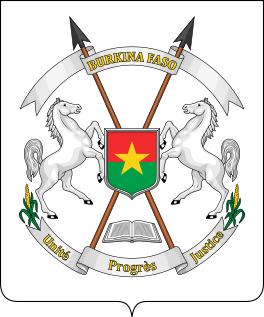
Territorial Assembly elections were held in French Upper Volta on 30 May 1948, with a second round on 20 June. They were the first elections to the new Territorial Assembly, which had been created following the separation of Upper Volta from Ivory Coast the previous year.

Territorial Assembly elections were held in French Cameroons on 30 March 1952.
Elections to the French National Assembly were held in Chad and Ubangi-Shari on 17 June 1951. The territories elected four seats to the Assembly via two electoral colleges; the first college spanned both territories and elected one seat, whilst Chad elected two seats via the second college and Ubangi-Shari one. René Malbrant was re-elected from the first college, and Barthélémy Boganda from the second in Ubangi-Shari. In the second college in Chad, both seats were won by the Chadian Democratic Union.
Elections to the French National Assembly were held in Chad and Ubangi-Shari on 10 November 1946. The territories elected three seats to the Assembly via two electoral colleges; the first college spanned both territories and elected one member, whilst each territory elected one member via the second college. René Malbrant was elected from the first college, with Gabriel Lisette elected from the second college in Chad and Barthélémy Boganda elected in the second college in Ubangi-Shari.
Elections to the French National Assembly were held in Chad and Ubangi-Shari on 2 January 1956. The territories elected four seats to the Assembly via two electoral colleges; the first college spanned both territories and elected one seat, whilst Chad elected two seats via the second college and Ubangi-Shari one. René Malbrant was re-elected from the first college and Barthélémy Boganda from the second college in Ubangi-Shari. In the second college in Chad the Chadian Union and Chadian Social Action won one seat each, taken by Gabriel Lisette and Arabi el Goni respectively.
General Council elections were held in Chad on 15 December 1946, with a second round of voting on 12 January 1947.
General Council elections were held in Niger on 15 December 1946, with a second round of voting on 5 January 1947. The General Council had been established by decree on 25 October 1946.
Territorial Assembly elections were held in Niger on 30 March 1952. The Union of Nigerien Independents and Sympathisers won 34 of the 35 seats in the Second College.
The Civic Action Front of Chad was a short-lived political alliance in Chad.
Parliamentary elections were scheduled to be held in Chad in November 2018, having been postponed since 2015. A new deadline of May 2019 has been proposed by the government.