
Elvis Presley is the debut studio album by American rock and roll singer Elvis Presley. It was released by RCA Victor, on March 23, 1956. The recording sessions took place on January 10 and January 11 at the RCA Victor Studios in Nashville, Tennessee, and on January 30 and January 31 at the RCA Victor studios in New York. Additional material originated from sessions at Sun Studio in Memphis, Tennessee, on July 5, August 19 and September 10, 1954, and on July 11, 1955.

Elvis is the second studio album by American rock and roll singer Elvis Presley, released by RCA Victor on October 19, 1956 in mono. Recording sessions took place on September 1, September 2, and September 3 at Radio Recorders in Hollywood, with one track left over from the sessions for Presley's debut album at the RCA Victor recording studios on January 30 in New York. It spent four weeks at #1 on the Billboard Top Pop Albums chart that year, making Presley the first recording artist to have both albums go straight to number one in the same year. It would go on to spend 5 weeks at #1 in total. It was certified Gold on February 17, 1960, and Platinum on August 10, 2011, by the Recording Industry Association of America.

Elvis Is Back! is the fourth studio album by American singer Elvis Presley, released on April 8, 1960 by RCA Victor. It was Presley's first album of new material since 1958's King Creole soundtrack, as well as his first to be recorded and released in stereophonic sound. The album marked Presley's return to music after his discharge from the U.S. Army.

His Hand in Mine is the fifth studio album by American singer and musician Elvis Presley, released on November 23, 1960 by RCA Victor in mono and stereo, catalog number LPM/LSP 2328. It was the first of three gospel albums that Presley would issue during his lifetime. Recording sessions took place on October 30 and 31, 1960, at RCA Studio B in Nashville, Tennessee. It peaked at #13 on the Top Pop Albums chart. It was certified Gold on April 9, 1969 and Platinum on March 27, 1992 by the Recording Industry Association of America.

How Great Thou Art is the eighth studio album by American singer and musician Elvis Presley, released by RCA Victor in February 1967. How Great Thou Art is a gospel album with slow numbers on one side, and fast-paced numbers on the flipside. The album earned Presley a Grammy Award for Best Sacred Performance, while it became a Billboard top 20 pop hit and it appeared on the Top Country Albums chart on the top 10.
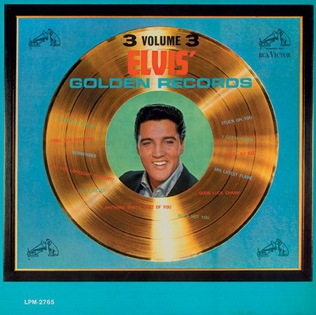
Elvis' Golden Records Volume 3 is a greatest hits album by American rock and roll singer Elvis Presley, released by RCA Victor as LPM/LSP-2765 on August 12, 1963. The album was the third volume of an eventual five volume collection, and his eighteenth altogether. It is a compilation of hit singles released in 1960, 1961, and 1962.

Elvis for Everyone! is a compilation album by American singer and musician Elvis Presley, issued by RCA Victor in mono and stereo, LPM/LSP 3450, on August 10, 1965. Recording sessions took place over a ten-year span at Sun Studio in Memphis, RCA Studio B in Nashville, Tennessee, and Radio Recorders in Hollywood, California. It peaked at number 10 on the Top Pop Albums chart.
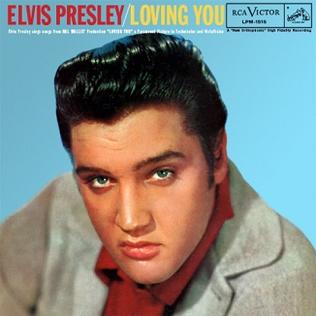
Loving You is the first soundtrack album by American rock and roll singer Elvis Presley. It was released by RCA Victor in mono, LPM 1515, in June 1957 to accompany his film, Loving You (1957). Recording sessions took place on January 15, 16, 17, and 18, 1957, at the Paramount Pictures Scoring Stage, and on January 12, 13, 19, and February 23 and 24, 1957, at Radio Recorders in Hollywood. These are the first sessions where Steve Sholes is officially listed as producer. It spent ten weeks at No. 1 on the Billboard Top Pop Albums chart. It was certified Gold on April 9, 1968 by the Recording Industry Association of America.
"Tomorrow Is a Long Time" is a song written and recorded by Bob Dylan. Dylan's version first appeared on the album Bob Dylan's Greatest Hits Vol. II compilation, released in 1971. It was subsequently included in the triple LP compilation Masterpieces.

G.I. Blues is the third soundtrack album and seventh (overall) album by American singer and musician Elvis Presley, released by RCA Victor in mono and stereo, LPM/LSP 2256, in October 1960. It is the soundtrack to the 1960 film of the same name in which he starred. Recording sessions took place on April 27 and 28, and May 6, 1960, at RCA Victor Studio C and Radio Recorders in Hollywood, California. The album topped the Billboard Top Pop Album chart. It was certified gold on March 13, 1963 and platinum on March 27, 1992 by the Recording Industry Association of America. The album remained at the #1 spot for ten weeks.

"You'll Be Gone" is a song recorded by Elvis Presley and published by Elvis Presley Music and released in 1965 on the Girl Happy soundtrack album and as a 45 single. The song was recorded in 1962 and was one of very few which Presley was involved in writing; his co-writers were his bodyguard Red West and Charlie Hodge. The other song that Elvis Presley composed was "That's Someone You Never Forget" in 1961 with Red West, which was on the Pot Luck LP released in 1962. The song was recorded on Sunday, March 18, 1962, at RCA Studio B in Nashville, Tennessee.

Amazing Grace: His Greatest Sacred Performances is a two-disc compilation of studio master recordings by Elvis Presley, released in 1994 on RCA Records and certified double platinum by the RIAA on July 15, 1999. The release also includes a booklet with session details and an essay by Charles Wolfe.

Fun in Acapulco is the seventh soundtrack album by American singer and musician Elvis Presley, released on RCA Victor Records in mono and stereo, LPM/LSP 2756, in November 1963. It is the soundtrack to the 1963 film of the same name starring Presley. Recording sessions took place at Radio Recorders in Hollywood on January 22 and 23 and February 27, 1963; and at RCA Studio B in Nashville, Tennessee, on May 26 and 28, 1963. It peaked at number three on the Billboard Top Pop Albums chart.

"Bossa Nova Baby" is a song written by Jerry Leiber and Mike Stoller and recorded by Elvis Presley on January 22, 1963, at Radio Recorders in Hollywood, California as part of the soundtrack of the 1963 motion picture Fun in Acapulco. The song peaked at No. 8 on the Billboard Hot 100 in 1963.

Harum Scarum is the eleventh soundtrack album by American singer and musician Elvis Presley, released by RCA Victor in mono and stereo, LPM/LSP 3468, in November 1965. It is the soundtrack to the 1965 film of the same name starring Presley. It peaked at number eight on the Top LP's chart.

Spinout is the 14th soundtrack album by American singer and musician Elvis Presley, released by RCA Victor in mono and stereo, LPM/LSP 3702, on October 31, 1966. It is the soundtrack to the 1966 film of the same name starring Presley. Recording sessions for the film songs took place at Radio Recorders in Hollywood, California, on February 16 and 17, 1966. The album was augmented with three non-film songs recorded earlier in the year. It peaked at number 18 on the Top Pop Albums chart.

"Spinout" is a song first recorded by Elvis Presley as part of the soundtrack for his 1966 motion picture Spinout. In 1966 it was released on a single with "All That I Am", another song from the same movie, on the opposite side. It peaked at number 40 on the Billboard Hot 100 but would continue to sell over 400,000 copies.
"Easy Come, Easy Go" is a song first recorded by Elvis Presley as part of the soundtrack for his 1967 motion picture Easy Come, Easy Go.
"Blue River" is a 1965 song by Elvis Presley. He released it on a single in December 1965 or January 1966.
"Never Ending" is a song originally recorded by Elvis Presley and released as a single in 1964.

