A constitutional amendment is a modification of the constitution of a polity, organization or other type of entity. Amendments are often interwoven into the relevant sections of an existing constitution, directly altering the text. Conversely, they can be appended to the constitution as supplemental additions (codicils), thus changing the frame of government without altering the existing text of the document.
A constituent assembly or constitutional assembly is a body or assembly of popularly elected representatives composed for the purpose of drafting or adopting a constitutional-type document. The constituent assembly is a subset of a constitutional convention elected entirely by popular vote; that is, all constituent assemblies are constitutional conventions, but a constitutional convention is not necessarily a constituent assembly. As the fundamental document constituting a state, a constitution cannot normally be modified or amended by the state's normal legislative procedures; instead a constitutional convention or a constituent assembly, the rules for which are normally laid down in the constitution, must be set up. A constituent assembly is usually set up for its specific purpose, which it carries out in a relatively short time, after which the assembly is dissolved. A constituent assembly is a form of representative democracy.

Elections in Portugal gives information on election and election results in Portugal.

A seven-question referendum was held in Belarus on 24 November 1996. Four questions were put forward by President Alexander Lukashenko on changing the date of the country's independence day, amending the constitution, changing laws on the sale of land and the abolition of the death penalty. The Supreme Council put forward three questions on constitutional amendments by the Communist and Agrarian factions, local elections and the national finances.
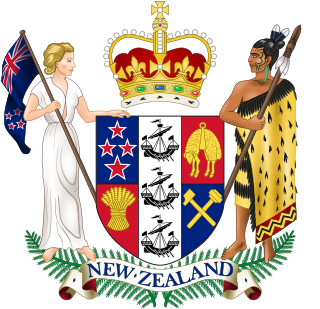
Referendums are held only occasionally by the Government of New Zealand. Referendums may be government-initiated or held in accordance with the Electoral Act 1993 or the Citizens Initiated Referenda Act 1993. Ten referendums have been held so far. Seven were government-led, and three were indicative citizen initiatives.

A constitutional referendum was held in Kyrgyzstan on 21 October 2007, following the constitutional crisis caused by amendments passed since the Tulip Revolution in 2005 being invalidated by the Constitutional Court of Kyrgyzstan on 14 September 2007. Voters were asked whether questions on a new constitution and electoral law. Both were approved by over 95% of voters.

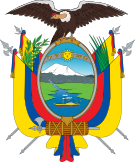
A constitutional referendum was held in Ecuador on 28 September 2008 to ratify or reject the constitution drafted by the Ecuadorian Constituent Assembly elected in 2007. The new constitution was approved by 69% of voters.
The British Columbia Recall and Initiative Referendum was a referendum held in British Columbia on October 17, 1991. It was concurrent with that year's general election. The referendum posed two questions. They were on whether elected officials should be able to be recalled and whether voters should be given a citizen's initiative. Both questions were decisively approved with over 80% of the electorate voting yes to both questions.
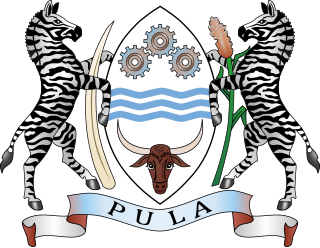
A referendum on electoral reform was held in Botswana on 4 October 1997. The referendum had three separate proposals, and came following promises made by President Quett Masire after violent protests in 1995. All three proposals were passed, although voter turnout was only around 17%.

A non-binding constitutional referendum was held in Iceland on 20 October 2012. Voters were asked whether they approved of six proposals included in a new draft constitution drawn up by the Icelandic Constitutional Assembly. All six questions were approved by voters.

A constitutional referendum was held in Uruguay on 26 November 1989 alongside general elections. The proposed changes to the constitution would require state pensions to be increased at the same rate as the salary of civil servants. The proposal was approved by 81.78% of those voting and 72.51% of all registered voters.

A four-part referendum was held in the Federated States of Micronesia on 1 July 1999. Voters were asked whether a constitutional convention should be called, whether they approved of a proposal on the distribution of revenues from the country's exclusive economic zone (EEZ), whether the amount of tax revenues distributed to the states should rise from 50% to 70%, and whether states should be given exclusive ownership of their natural resources. The latter three had originally been planned to be held alongside the parliamentary elections in March, but were postponed due to a lack of funds to print the ballot papers.

A seven-part referendum was held in Ecuador on 28 August 1994. Voters were asked whether they approved of allowing independents to run in elections, whether the National Assembly should manage the state budget, whether to distribute the state budget by government department or region, whether to allow unlimited re-election for politicians, whether to elect members of the National Assembly in one or two rounds of voting, whether to allow dual citizenship, and whether the National Assembly should approve constitutional reforms within 100 days.

A referendum on electing a Constitutional Assembly was held in Colombia on 27 May 1990 alongside presidential elections. The proposal was approved by 96% of voters. A Constitutional Assembly was later elected in December 1990 and produced the 1991 constitution.
A three-part referendum was held in Ecuador on 26 November 2006, alongside the run-off for the presidential elections. Voters were asked whether they approved of a ten-year plan for education, plans to improve healthcare provision, and using oil revenues for social and economic programmes. All three proposals were approved by wide margins.
A fourteen-part referendum was held in Ecuador on 25 May 1997. Voters were asked whether they approved of the dismissal of President Abdalá Bucaram by the National Congress, the appointment of Fabián Alarcón as interim President for twelve months, the calling of a Constitutional Assembly, whether a Constitutional Assembly should be elected by direct elections or by appointment, whether spending limits should be introduced for election campaigns, whether voters should be able to modify electoral lists, whether National Assembly elections should be held alongside the first or second round of presidential elections, whether political parties that fail to cross the 5% threshold in two consecutive elections should be deregistered, whether the Supreme Electoral Tribunal (TSE) should reflect the political makeup of the National Congress, whether the National Congress should appoint managers of state-owned companies with a two-thirds majority, reforms to the justice system, allowing the Supreme Court to appoint judicial authority member, whether elected officials who commit a criminal offence should be removed from office, and whether the National Assembly should implement the 13 proposals. All eleven proposals were approved by voters.
A fifteen-part constitutional referendum was held in Colombia on 25 October 2003. Whilst all fifteen proposals were approved by voters, only one question had a sufficient numbers of votes to pass the 25% quorum requirement.
A referendum is a direct vote in which an entire electorate is asked to either accept or reject a particular proposal. This article summarises referendum laws and practice in various countries.
An Icelandic Constitutional Council (Stjórnlagaráð) for the purpose of reviewing the Constitution of the Republic was appointed by a resolution of Althingi, the Icelandic parliament, on 24 March 2011. Elections were held to create a Constitutional Assembly (Stjórnlagaþing) body, but given some electoral flaws, had been ruled null and void by the Supreme Court of Iceland on 25 January 2011, leading the parliament to place most of the wining candidate into a Council with similar mission. The question of whether the text of the proposed constitution should form a base for a future constitution was put to a non-binding referendum, where it won the approval of 67% of voters. However, the government's term finished before the reform bill could be passed, and the next government has not acted upon it.

A two-part constitutional referendum was held in Mauritania on 5 August 2017, having initially been planned for 15 July. Voters were asked whether they approve of proposed amendments to the constitution. Both proposals were approved by 86% of voters with a voter turnout of 54%.