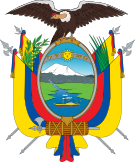
The politics of Ecuador are multi-party. The central government polity is a four-yearly elected presidential, unicameral representative democracy. The President of Ecuador is head of state and head of government on a multi-party system, leading a cabinet with further executive power. Legislative power is not limited to the National Assembly as it may to a lesser degree be exercised by the executive which consists of the President convening an appointed executive cabinet. Subsequent acts of the National Assembly are supreme over Executive Orders where sufficient votes have been cast by the legislators. The judiciary is independent of the executive and the legislature.There is also constitutional republic

The economy of Ecuador is based mostly on exports of oil, bananas, shrimp, gold, other primary agricultural products and money transfers from nearly a million Ecuadorian emigrants employed abroad. In 2002, oil accounted for about one-third of public-sector revenue and 40% of export earnings. Ecuador is the world's largest exporter of bananas and a major exporter of shrimp. Exports of non-traditional products such as flowers and canned fish have grown in recent years. Industry is largely oriented to servicing the domestic market.
Health care reform- is for the most part, governmental policy that affects health care delivery in a given place. Health care reform typically attempts to:

The politics of Iran take place in a framework of a theocracy in a format of syncretic politics that is guided by Islamic ideology. The December 1979 constitution, and its 1989 amendment, define the political, economic, and social order of the Islamic Republic of Iran, declaring that Shia Islam of the Twelver school of thought is Iran's official religion.
A constituent assembly or constitutional assembly is a body or assembly of popularly elected representatives composed for the purpose of drafting or adopting a constitutional-type document. The constituent assembly is a subset of a constitutional convention elected entirely by popular vote; that is, all constituent assemblies are constitutional conventions, but a constitutional convention is not necessarily a constituent assembly. As the fundamental document constituting a state, a constitution cannot normally be modified or amended by the state's normal legislative procedures; instead a constitutional convention or a constituent assembly, the rules for which are normally laid down in the constitution, must be set up. A constituent assembly is usually set up for its specific purpose, which it carries out in a relatively short time, after which the assembly is dissolved. A constituent assembly is a form of representative democracy.
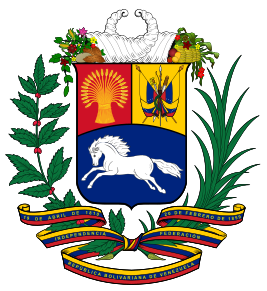
The Constitution of the Bolivarian Republic of Venezuela is the current and twenty-sixth constitution of Venezuela. It was drafted in mid-1999 by a constitutional assembly that had been created by popular referendum. Adopted in December 1999, it replaced the 1961 Constitution, the longest-serving in Venezuelan history. It was primarily promoted by then President of Venezuela Hugo Chávez and thereafter received strong backing from diverse sectors, including figures involved in promulgating the 1961 constitution such as Luis Miquilena and Carlos Andrés Pérez. Chávez and his followers (chavistas) refer to the 1999 document as the "Constitución Bolivariana" because they assert that it is ideologically descended from the thinking and political philosophy of Simón Bolívar and Bolivarianism. Since the creation of the Constituent National Assembly in August 2017, the Bolivarian government has declared the 1999 constitution suspended until a new constitution is created.
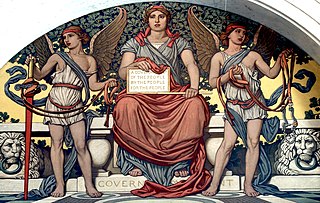
The United States federal budget comprises the spending and revenues of the U.S. federal government. The budget is the financial representation of the priorities of the government, reflecting historical debates and competing economic philosophies. The government primarily spends on healthcare, retirement, and defense programs. The non-partisan Congressional Budget Office provides extensive analysis of the budget and its economic effects. It has reported that the U.S. is facing a series of long-term financial challenges, as the population of the country ages and healthcare costs continue growing faster than the economy, leading to the debt held by the public exceeding GDP by 2030. The United States has the largest external debt in the world and the 14th largest government debt as % of GDP in the world.

Rafael Vicente Correa Delgado is an Ecuadorian politician and economist who served as President of Ecuador from 2007 to 2017. The leader of the PAIS Alliance political movement, Correa is a democratic socialist and his administration focused on the implementation of left-wing policies. Internationally, he served as president pro tempore of the Union of South American Nations.

A constitutional referendum was held in Venezuela on 2 December 2007 to amend 69 articles of the 1999 Constitution. Reform was needed, according to Venezuelan President Hugo Chávez, to initiate the transformation into a socialist country; detractors said he was using the reforms to become a dictator.
The Nordic model refers to the economic and social policies common to the Nordic countries. This includes a comprehensive welfare state and collective bargaining at the national level with a high percentage of the workforce unionised while being based on the economic foundations of free market capitalism. The Nordic model began to earn attention after World War II.

A constitutional referendum was held in Ecuador on 28 September 2008 to ratify or reject the constitution drafted by the Ecuadorian Constituent Assembly elected in 2007. The new constitution was approved by 69% of voters.

Parliamentary elections were held in the Federated States of Micronesia on 8 March 2011, alongside a three-part referendum. As there were no political parties, all 34 candidates ran as independents. For the first time in the country's history, two women ran for election, both in Chuuk State. However, neither was elected.

A referendum on reforming the voting system was held in the Falkland Islands on 3 November 2011. Voters were asked "Do you want a single constituency for the whole of the Islands?" The proposal required a two-third majority in both of the islands' constituencies, but was rejected by 58.78% of voters overall; in Stanley it was narrowly approved by 50.2% of voters but in Camp it was widely rejected, with 84% voting against. Turnout was 70% in Camp and just 39% in Stanley.

A constitutional referendum was held in Uruguay on 26 November 1989 alongside general elections. The proposed changes to the constitution would require state pensions to be increased at the same rate as the salary of civil servants. The proposal was approved by 81.78% of those voting and 72.51% of all registered voters.
A four-part referendum was held in the Federated States of Micronesia on 1 July 1999. Voters were asked whether a constitutional convention should be called, whether they approved of a proposal on the distribution of revenues from the country's exclusive economic zone (EEZ), whether the amount of tax revenues distributed to the states should rise from 50% to 70%, and whether states should be given exclusive ownership of their natural resources. The latter three had originally been planned to be held alongside the parliamentary elections in March, but were postponed due to a lack of funds to print the ballot papers.
A constitutional referendum was held in the Federated States of Micronesia on 27 August 2002. Voters were asked whether they approved of 14 separate amendments to the country's constitution. To be approved, the proposal required at least 75% of voters in at least three of the four states to vote in favour. Ultimately all 14 proposals were rejected, as none passed the 75% threshold in any state.
An eleven-part referendum was held in Ecuador on 26 November 1995. Voters were asked whether they approved of the decentralisation of social and healthcare authorities, the privatisation of social security, equalising public spending between the provinces, abolishing civil servants' right to strike, whether the President should have the authority to dissolve the National Assembly, whether local councils should have a four-year term of office, whether the President and Vice-President of the National Assembly should only serve two-year terms, whether eight constitutional reforms proposed by President Sixto Durán Ballén should be approved, certain reforms to the judiciary, legal rights for civil servants and the creation of a Constitutional Court. All eleven proposals were rejected.
Eleven national referendums were held in Switzerland during 2013. Voters approved six proposals related to spatial planning, executive pay, family policy, amendments to the laws on asylum and epidemics and an increase in the length of petrol station shop opening hours. The other five proposals on directly electing the Federal Council, abolishing compulsory military service, limiting salaries in a company to 12 times the lowest paid worker, tax credits for stay-at-home parents and an increase in road tax were rejected.
Six referendums were held in Switzerland during 2006. The first was held on 21 May on revising article 48a in the Swiss Federal Constitution on education, and was approved by 86% of voters. The second set of three referendums was held on 24 September on proposed amendments to the laws on asylum and foreigners, as well as a popular initiative on diverting profits from the Swiss National Bank into the national pension fund. The two laws were approved, whilst the initiative was rejected.
Universal Basic Services (UBS) are a form of social security in which all citizens or residents of a community, region, or country receive unconditional access to a range of free, basic, public services, funded by taxes and provided by a government or public institution.