Elections in Antigua and Barbuda take place in the framework of a parliamentary democracy.
Elections in the Bahamas take place in the framework of a parliamentary democracy. Since independence voter turnout has been generally high in national elections, with a low of 87.9% in 1987 and a high of 98.5% in 1997. The current Prime Minister is the Hon Hubert Minnis.

Early parliamentary elections were held in Austria on 24 November 2002, after internal divisions in the Freedom Party of Austria (FPÖ) culminating in the Knittelfeld Putsch led to the resignation of several leading FPÖ members. The result was a victory for the ÖVP, which won 79 of the 183 seats, the first time it had been the largest party in the National Council since 1966. It continued its coalition government with the FPÖ, which had lost almost two-thirds of its seats. Voter turnout was 84.3%.

Parliamentary elections were held in Slovakia on 20 and 21 September 2002. The People's Party – Movement for a Democratic Slovakia remained the largest party in the National Council, winning 36 of the 150 seats. Mikuláš Dzurinda of the Slovak Democratic and Christian Union remained Prime Minister.

Parliamentary elections were held in Macedonia on 18 October 1998, with a second round on 1 November. VMRO-DPMNE emerged as the largest party, winning 49 of the 120 seats, and later formed a coalition government with Democratic Alternative and the Democratic Party of Albanians.

Parliamentary elections were held in Hungary on 7 April 2002, with a second round of voting in 131 of the 176 single member constituencies on 21 April. Although Fidesz remained the largest party in the National Assembly despite receiving fewer votes than the Hungarian Socialist Party, the Socialist Party was able to form a coalition government with the Alliance of Free Democrats.
Parliamentary elections were held in Montenegro on 20 October 2002. The result was a victory for the For a European Montenegro alliance formed by the Democratic Party of Socialists of Montenegro and the Social Democratic Party of Montenegro, which won 39 of the 75 seats. It was the last parliamentary election held in Montenegro prior to independence in 2006.

Parliamentary elections were held in Hungary on 10 May 1998, with a second round of voting in 175 of the 176 single member constituencies on 24 May.
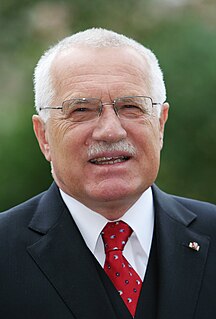
National Council elections were held in the Czech part of Czechoslovakia on 5 and 6 June 1992, alongside federal elections. The result was a victory for the Civic Democratic Party-Christian Democratic Party alliance, which won 76 of the 200 seats. Voter turnout was 85.0%. When the Czech Republic became independent in 1993, the National Council became its Parliament.

Folketing elections were held in Denmark on 24 April 1929, except in the Faroe Islands where they were held on 29 May. The Social Democratic Party remained the largest in the Folketing, with 61 of the 149 seats. Voter turnout was 79.7% in Denmark proper and 58.0% in the Faroes.
Parliamentary elections were held in Chile on 5 March 1961. The Radical Party remained the largest party in the Chamber of Deputies and also became the largest party in the Senate.

General elections were held in Yugoslavia on 24 September 2000. In the presidential election, official results initially showed Vojislav Koštunica of the Democratic Opposition led incumbent Slobodan Milošević of the Socialist Party of Serbia in the first round of voting, but short of the 50.01 percent needed to avoid a runoff election. However, Koštunica claimed he was not only ahead, but had finished just a few thousand votes over the threshold to win a first-round victory. Spontaneous protests broke out in support of Koštunica, and Milošević was forced to resign on 7 October and concede the presidency to Koštunica. Revised totals were subsequently released showing Koštunica had indeed won a narrow first-round victory, with just over 50.2 percent of the vote.

Federal elections were held in Switzerland on 24 October 1999. Although the Swiss People's Party received the most votes for the first time in the party's history, the Social Democratic Party remained the largest party in the National Council, winning 51 of the 200 seats.

General elections were held in Malta between 25 and 27 October 1947. They were the first elections held under universal suffrage for women and Agatha Barbara became the first woman elected to Parliament. These elections saw the Labour Party win 24 of the 40 seats.
General elections were held in Jordan on 29 August 1951. As political parties were banned at the time, all candidates ran as independents, although some affiliated with the Jordanian Communist Party, the Ba'ath Party the Arab Constitutional Party and the Umma Party all won seats.

Parliamentary elections were held in Austria on 24 April 1927. The result was a victory for the Unity List (Einheitsliste), an alliance of the Christian Social Party and the Greater German People's Party, which won 85 of the 165 seats. However this brief coalition failed to result in any larger proportion of the votes than when the CSP ran alone, losing votes to the Landbund. Voter turnout was 89.3%.
Parliamentary elections were held in Bulgaria on 24 December 1939, although voting continued in some areas into January 1940. The elections were officially held on a non-partisan basis with the Bulgarian Agrarian National Union and Bulgarian Communist Party banned, and in a process tightly controlled by Tsar Boris III, by then the real power in the country. However, candidates representing parties did contest the elections. Pro-government candidates won a majority of seats. Voter turnout was 67.2%.
Senate elections were held in the Czech Republic on 25 and 26 October 2002, with a second round on 1 and 2 November. Voter turnout was just 24.1% in the first round and 31.7% in the second.

General elections were held in Liechtenstein on 11 March 1918, with a second round on 18 March. They were the first elections held in the country contested by political parties, as the Christian-Social People's Party and Progressive Citizens' Party had been founded that year. The Progressive Citizens' Party emerged as the largest in the Landtag, winning seven of the 12 elected seats.
General elections were held in Malta between 22 and 24 July 1939. The Constitutional Party emerged as the largest party, winning 6 of the 10 seats.