
Hakea myrtoides, commonly known as myrtle hakea, is a shrub endemic to the woodlands of the Darling Range near Perth in Western Australia.
Banksia brunnea is a species of low, bushy shrub that is endemic to the south-west of Western Australia. It has dark green pinnatisect leaves, heads of up to seventy pink and brownish flowers and glabrous follicles in the fruiting head.

Grevillea paniculata, commonly known as kerosene bush, is a species of flowering plant in the family Proteaceae and is endemic to the south-west of Western Australia. It is a dense shrub with divided leaves, the lobes linear, and more or less spherical clusters of white to cream-coloured flowers.

Grevillea endlicheriana, commonly known as spindly grevillea, is a species of flowering plant in the family Proteaceae and is endemic to the south-west of Western Australia. It is an erect shrub with linear leaves, and groups of white, pink tinged flowers.

Grevillea drummondii, commonly known as Drummond's grevillea, is a species of flowering plant in the family Proteaceae and is endemic to the south-west of Western Australia. It is a low, spreading to erect shrub with narrowly elliptic to narrowly egg-shaped leaves with the narrower end towards the base, and dense groups of cream-coloured flowers that turn pink or red as they age.

Banksia sessilis var. cordata is a variety of Banksia sessilis, with unusually large leaves and flower heads. It is a rare variety that is restricted to the extreme south-west corner of Western Australia.

Adenanthos meisneri, commonly known as prostrate woollybush, is a species of shrub in the family Proteaceae. It is endemic to the south-west of Western Australia.

Grevillea diversifolia, the variable-leaved grevillea, is a species of flowering plant in the family Proteaceae and is endemic to the south-west of Western Australia. It is an erect to prostrate shrub with simple or divided leaves and groups white to cream-coloured flowers with a dull red style.

Grevillea brachystylis, also known as short-styled grevillea, is a species of flowering plant in the family Proteaceae and is endemic to the south-west of Western Australia. It is a low, spreading to erect shrub with linear to narrow egg-shaped leaves with the narrow end towards the base, and wheel-like clusters of hairy red flowers.
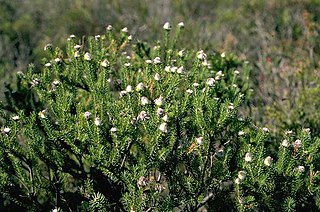
Petrophile scabriuscula is a species of flowering plant in the family Proteaceae and is endemic to southwestern Western Australia. It is a dense, prickly shrub with sharply-pointed, needle-shaped leaves more or less pressed against the branchlets, and oval heads of hairy, yellow to creamy-yellow flowers.

Hibbertia montana is a species of flowering plant in the family Dilleniaceae and is endemic to the south-west of Western Australia. It is an erect, straggling or sprawling shrub with densely hairy foliage, narrow oblong leaves, and pedunculate yellow flowers with thirty to sixty stamens and a few staminodes arranged around velvety carpels.
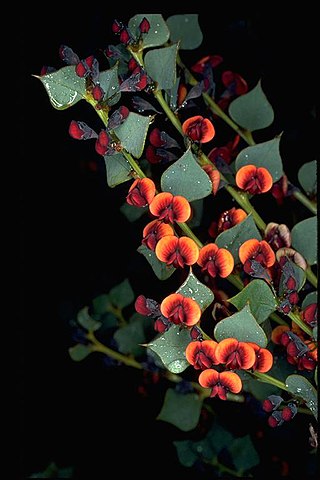
Daviesia rhombifolia is a species of flowering plant in the family Fabaceae and is endemic to the south-west of Western Australia. It is a bushy, spreading shrub with scattered, rhombus-shaped, sharply-pointed phyllodes, and orange and dark red flowers.
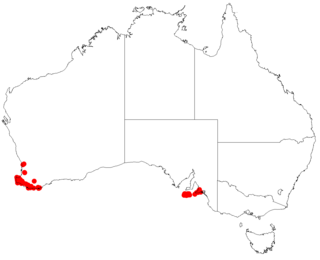
Leucopogon hirsutus is a species of flowering plant in the heath family Ericaceae and is endemic to southern continental Australia. It is a low-lying or straggling shrub with elliptic to oblong leaves and inconspicuous, white, bell-shaped flowers.
Thomasia discolor is a species of flowering plant in the family Malvaceae and is endemic to the south-west of Western Australia. It is a small, compact shrub with hairy new growth, heart-shaped leaves with wavy, lobed edges, and pink flowers in crowded clusters.
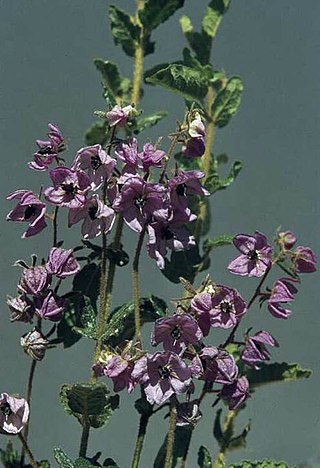
Thomasia macrocalyx is a species of flowering plant in the family Malvaceae and is endemic to the south-west of Western Australia. It is an erect, bushy shrub with densely hairy new growth, egg-shaped leaves with a heart-shaped base and lobed or toothed edges, and groups of pale purple to mauve or white flowers.
Thomasia montana, commonly known as hill thomasia, is a species of flowering plant in the family Malvaceae and is endemic to the south-west of Western Australia. It is an upright to low, ground-covering shrub with hairy new growth, egg-shaped to broadly oblong leaves, sometimes with wavy or toothed edges, and pale purplish-pink to maroon flowers.

Pimelea lehmanniana is a species of flowering plant in the family Thymelaeaceae and is endemic to the southwest of Western Australia. It is a shrub with narrowly egg-shaped leaves and clusters of white to pale yellow flowers surrounded by 4 or 6, pale yellowish-green involucral bracts.
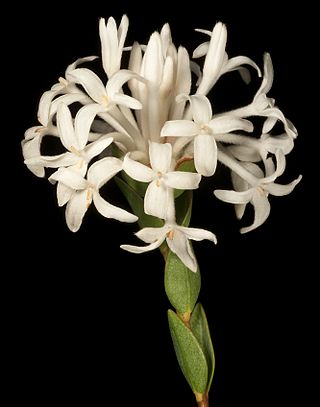
Pimelea preissii is a species of flowering plant in the family Thymelaeaceae and is endemic to the southwest of Western Australia. It is an erect, spreading shrub with narrowly elliptic leaves arranged in opposite pairs, and compact clusters of many white or pink flowers surrounded by 4 green, egg-shaped involucral bracts.

Pimelea tinctoria is a species of flowering plant in the family Thymelaeaceae and is endemic to the south-west of Western Australia. It is an erect, spindly shrub with elliptic leaves arranged in opposite pairs, and compact heads of many yellow or yellowish-green flowers usually surrounded by 4 to 7 pairs of egg-shaped to narrowly elliptic yellow and green involucral bracts.
Pimelea villifera is a species of flowering plant in the family Thymelaeaceae and is endemic to the south-west of Western Australia. It is an erect, dense shrub usually with linear to narrowly elliptic leaves arranged in opposite pairs, and compact heads of many white flowers usually surrounded by 6 to 10 pairs of green and yellowish, narrowly egg-shaped involucral bracts.


