Tradescantia is a genus of 85 species of herbaceous perennial wildflowers in the family Commelinaceae, native to the Americas from southern Canada to northern Argentina, including the West Indies. Members of the genus are known by many common names, including inchplant, wandering jew, spiderwort, dayflower and trad.

In botany, a bract is a modified or specialized leaf, especially one associated with a reproductive structure such as a flower, inflorescence axis or cone scale. Bracts are usually different from foliage leaves. They may be smaller, larger, or of a different color, shape, or texture. Typically, they also look different from the parts of the flower, such as the petals or sepals. A plant having bracts is referred to as bracteate or bracteolate, while one that lacks them is referred to as ebracteate and ebracteolate, without bracts.

Commelinaceae is a family of flowering plants. In less formal contexts, the group is referred to as the dayflower family or spiderwort family. It is one of five families in the order Commelinales and by far the largest of these with about 731 known species in 41 genera. Well known genera include Commelina (dayflowers) and Tradescantia (spiderworts). The family is diverse in both the Old World tropics and the New World tropics, with some genera present in both. The variation in morphology, especially that of the flower and inflorescence, is considered to be exceptionally high amongst the angiosperms.

Tradescantia zebrina, formerly known as Zebrina pendula, is a species of creeping plant in the Tradescantia genus. Common names include silver inch plant and wandering Jew. The latter name is controversial, and some now use the alternative wandering dude. The plant is popular in cultivation due to its fast growth and attractive foliage. It is used as a groundcover in warm winter climates, and as a houseplant elsewhere.

Tradescantia fluminensis is a species of spiderwort native to South America. It is one of several plants known by the common name wandering Jew, but now also commonly called wandering trad. It is also known as small-leaf spiderwort, river spiderwort, inch plant, speedy Henry, and wandering willie. The genus is named after the English naturalists and explorers John Tradescant the Elder and John Tradescant the Younger (1608–1662).

Bromus hordeaceus, the soft brome, is an annual or biennial species of grass in the grass family (Poaceae). It is also known in North America as bull grass, soft cheat, and soft chess.

Bromus secalinus is a species of bromegrass known as rye brome. The specific epithet secalinus is Latin, meaning "rye-like". The fruits are hard, rounded glumes that appear superficially similar to the rye grain, which gives the brome its common and scientific name. The grass has a diploid number of 28.

Corallorhiza striata is a species of orchid known by the common names striped coralroot and hooded coralroot. This flowering plant is widespread across much of southern Canada, the northern and western United States, and Mexico. It lives in dry, decaying plant matter on the ground in pine and mixed coniferous forests, and it obtains its nutrients from fungi via mycoheterotrophy.
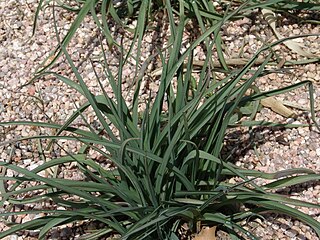
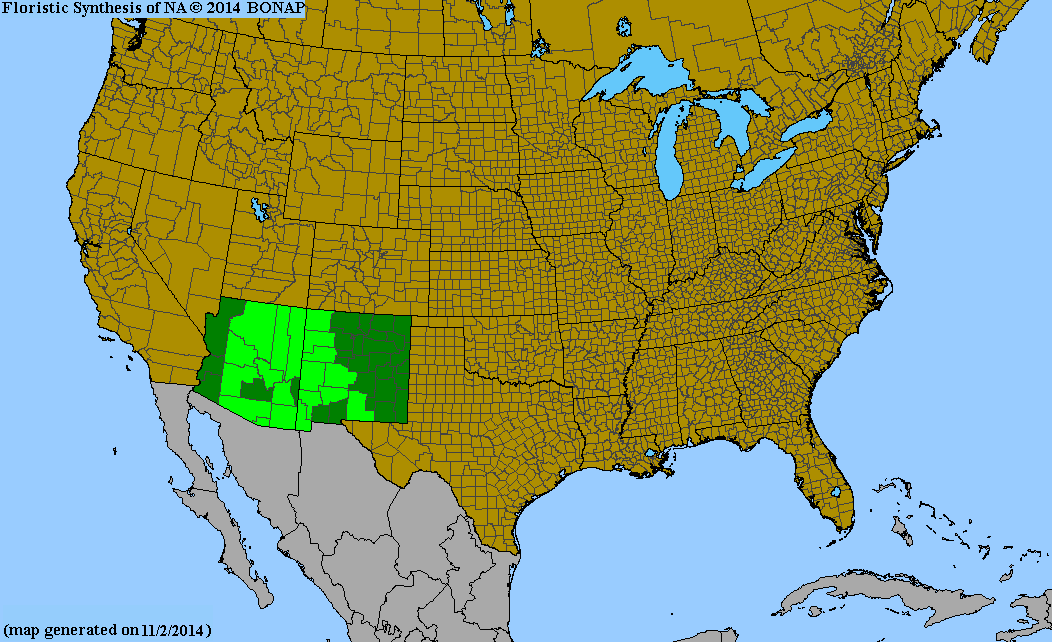
Tradescantia occidentalis, the prairie spiderwort or western spiderwort, is a plant in the dayflower family, Commelinaceae. It is common and widespread across the western Great Plains of the United States, as well as in Arizona, New Mexico, southern Utah, and Sonora, but is listed as a threatened species in Canada.

Tradescantia ohiensis, commonly known as bluejacket or Ohio spiderwort, is an herbaceous plant species in the genus Tradescantia native to eastern and central North America. It is the most common and widely distributed species of Tradescantia in the United States, where it can be found from Maine in the northeast, west to Minnesota, and south to Texas and Florida. It also has a very small distribution in Canada in extreme southern Ontario near Windsor.

Tradescantia spathacea, the oyster plant, boatlily or Moses-in-the-cradle, is a herb in the Commelinaceae family first described in 1788. It is native to Belize, Guatemala, and southern Mexico but widely cultivated as an ornamental and naturalized in parts of Florida, Texas, Hawaii, and various oceanic islands.

Tradescantia ozarkana, the Ozark spiderwort, is a species of Tradescantia. It is part of the Commelinaceae family, native to the States of Missouri, Arkansas, and Oklahoma in the south-central United States. It flowers from April to May and can be found in rich, rocky areas, including woods and bluff ledges.

Tradescantia crassula, common names succulent spiderwort and white-flowered tradescantia, is a species of plants in the Commelinaceae. It is native to southeastern Brazil, Uruguay, and the Misiones Province of Argentina, and has been introduced to Florida. It flowers in May in Florida, and can be found under Oak Trees.

Commelina dianthifolia, known as the birdbill dayflower, is a perennial herb native to mountains in the south-western United States and northern Mexico. Petals are blue while sepals are green. The inflorescence is a scorpioid cyme and it is subtended by a boat-like spathe.

Bromus erectus, commonly known as erect brome, upright brome or meadow brome, is a dense, course, tufted perennial grass. It can grow to 120 centimetres (47 in). Like many brome grasses the plant is hairy. The specific epithet erectus is Latin, meaning "erect". The diploid number of the grass is 56.
Tradescantia buckleyi, commonly known as Buckley's spiderwort, is a species of flowering plant in the dayflower family, Commelinaceae. It is native to southern Texas in the United States as well as northern Tamaulipas in Mexico. The specific name honours Samuel Botsford Buckley (1809-1884), who collected the type specimen near Corpus Christi, Texas.
Melica porteri, known as Porter's melicgrass, is a species of grass that grows in the United States and Mexico. In the US it is found in Arizona, Colorado, Kansas, New Mexico, Texas, Utah, and Iowa.

Tradescantia longipes, commonly known as the wild crocus, is a perennial herbaceous plant in the dayflower family. It is found only in the Ozark Mountains of southern Missouri and northern Arkansas in the Midwest United States. A spring blooming species, its flowers can be observed from April to May, typically in its preferred habitat of wooded slopes on rocky hillsides. While most other members of the genus in North America have stems reaching at least a few inches above the soil, the flowering shoots of Tradescantia longipes are borne essentially at ground level. This character is shared with some individuals of Tradescantia hirsuticaulis and Tradescantia virginiana, two closely related species, although both typically have obvious stems. Regardless, Tradescantia longipes can be distinguished from the former with its longer pedicels and bracts without fine hairs, and from the latter by the presence of at least some glandular hairs on the sepals. Furthermore, Tradescantia longipes is a tetraploid, meaning it has four sets of chromosomes, while Tradescantia hirsuticaulis is diploid with only two sets. Tradescantia virginiana occurs in both diploid and tetraploid forms, although it is consistently tetraploid where its range overlaps with Trandescantia longipes.

Thalictrum dasycarpum, known as tall meadow rue and purple meadow-rue, is a species of flowering plant in the buttercup family, Ranunculaceae. It is native to North America.

Sphenopholis intermedia, the slender wedgegrass or slender wedgescale, is an annual grass native to North America. The specific epithet "intermedia" means "intermediate". The diploid number is 14.