
The AEG G.IV was a biplane bomber aircraft designed and produced by the German aircraft manufacturer Allgemeine Elektrizitäts-Gesellschaft. It saw action during the First World War with the Luftstreitkräfte.

The Albatros C.III was a twin-seat general-purpose biplane designed and produced by the German aircraft manufacturer Albatros Flugzeugwerke. It was produced in greater numbers than any other C-type aircraft by Albatros as well as being the company's most-produced twin-seat aircraft.

The Albatros C.I,, was a twin-seat general-purpose biplanes designed and produced by the German aircraft manufacturer Albatros Flugzeugwerke. It was the first of the successful C-series aircraft operated by the Luftstreitkräfte.

The Albatros B.II, was an unarmed two-seat reconnaissance biplane designed and produced by the German aircraft manufacturer Albatros Flugzeugwerke. It was the aircraft that brought Albatros Flugzeugwerke to the world's attention.
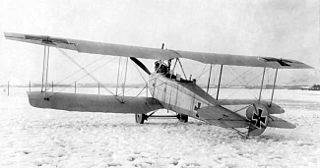
The Aviatik C.I was an observation aircraft designed and produced by the German aircraft manufacturer Aviatik. It was the first aircraft produced by the company to be mass-produced as well as one of the first German military aircraft of the First World War to become fairly well known amongst the general public of the era.
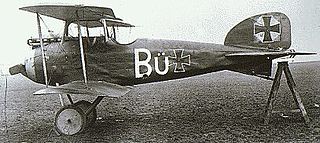
The Albatros D.I was an early fighter aircraft designed and produced by the German aircraft manufacturer Albatros Flugzeugwerke. It was the first of the Albatros D types which equipped the majority of the German and Austrian fighter squadrons (Jagdstaffeln) for the last two years of the First World War. Despite this, the D.I had a relatively brief operational career, having been rapidly eclipsed by rapid advances in fighter aircraft.

The Albatros D.V is a fighter aircraft of the German aircraft manufacturer Albatros Flugzeugwerke. It was the final development of the Albatros D.I family and the last Albatros fighter to see operational service with the Luftstreitkräfte during the First World War.

The Pfalz D.III was a fighter aircraft used by the Luftstreitkräfte during the First World War. The D.III was the first major original design from Pfalz Flugzeugwerke. Though generally considered inferior to contemporary Albatros and Fokker fighters, the D.III was widely used by the Jagdstaffeln from late 1917 to mid-1918. It continued to serve as a training aircraft until the end of the war.
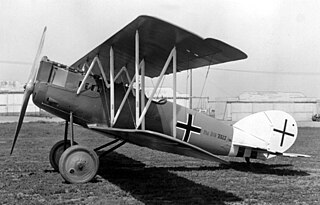
The Pfalz D.XII is a German fighter aircraft built by Pfalz Flugzeugwerke. Designed by Rudolph Gehringer as a successor to the Pfalz D.III, the D.XII entered service in significant numbers near the end of the First World War. It was the last Pfalz aircraft to see widespread service. Though the D.XII was an effective fighter aircraft, it was overshadowed by the highly successful Fokker D.VII.

The Albatros W.4 was a military floatplane designed and produced by the German aircraft manufacturer Albatros Flugzeugwerke.

The AGO C.IV was a German biplane reconnaissance aircraft designed and produced by the German aircraft manufacturer AGO Flugzeugwerke. It was active with the Luftstreitkräfte during the latter half of the First World War.
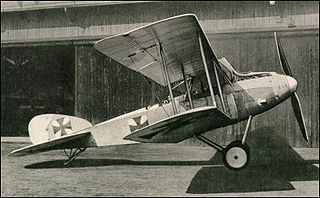
The Albatros C.V was a military reconnaissance aircraft designed and produced by the German aircraft manufacturer Albatros Flugzeugwerke.

The Albatros C.VII was a military reconnaissance aircraft designed and produced by the German aircraft manufacturer Albatros Flugzeugwerke. It was a revised and re-engined development of the Albatros C.V, which had proved disappointing in service.

The Albatros C.XII was a military reconnaissance aircraft designed and produced by the German aircraft manufacturer Albatros Flugzeugwerke.
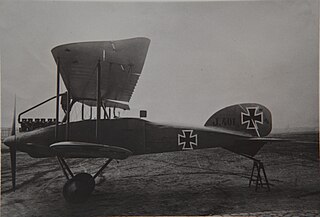
The Albatros J.I was an armored ground attack airplane designed and produced by the German aircraft manufacturer Albatros Flugzeugwerke. It saw active combat during the final months of the First World War.

The Halberstadt D.II was a biplane fighter aircraft developed and manufactured by German aircraft company Halberstädter Flugzeugwerke.
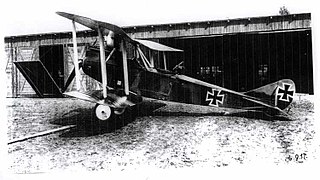
The Rumpler C.IV was a German single-engine, two-seat reconnaissance biplane. It was a development of C.III with different tail surfaces and using a Mercedes D.IVa engine in place of the C.III's Benz Bz.IV. The Rumpler 6B 2 was a single-seat floatplane fighter variant with a 120 kW (160 hp) Mercedes D.III engine built for the Kaiserliche Marine.

The LFG Roland D.II was a German single-seat fighter of World War I. The type was manufactured by Luftfahrzeug Gesellschaft, and also by Pfalz Flugzeugwerke under license.
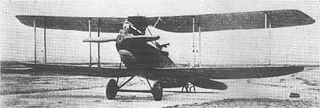
The Rumpler C.VII was a military reconnaissance aircraft built in Germany during World War I. It was developed from the C.IV and optimised for high-altitude missions that would allow it to operate at heights that would render it immune to interception by enemy fighters. Work on the C.VII took place after a similar attempt to develop the C.III into a high-altitude machine as the C.V failed.
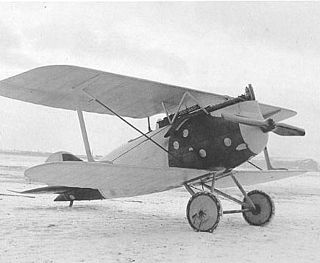
The Rumpler D.I was a fighter-reconnaissance aircraft produced in Germany at the end of World War I. It was a conventional single-bay biplane with wings of unequal span braced by I-struts. It featured an open cockpit and a fixed, tailskid undercarriage. The upper wing was fitted with aerodynamically balanced ailerons and fuselage had an oval cross-section.


