Industry overview
Notable performances
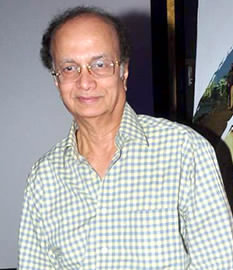
Dilip Prabhavalkar received critical acclaim for his portrayal of Babuli Mestry in Dashavatar . Reviewers praised his nuanced performance at the age of 81, emotional depth, and strong screen presence, considering it one of the standout performances of the year. [21] [22] Alongside Prabhavalkar, several veteran actors appeared in Marathi films, including Ashok Saraf and Vandana Gupte ( Ashi Hi Jamva Jamvi ), Mahesh Manjrekar and Renuka Shahane ( Devmanus ), Nivedita Saraf ( Fussclass Dabhade ), and Prashant Damle ( Mu. Po. Bombilwaadi ). [7]
The year further featured notable performances by Amruta Subhash and Anita Date appeared in Jarann , with Scroll.in describing Subhash as “terrified, terrifying, and terrific.” [9] Loksatta , while reviewing Date's performance, noted that although she had limited screen time, she portrayed her role with great intensity and left the audience wishing she had been given more scope. [23] Bharat Jadhav and Siddharth Jadhav in Ata Thambaycha Naay! also praised for their roles. In its review, The Times of India wrote, "Bharat Jadhav takes a role that's in complete contrast to his well-known comic characters and shows why more filmmakers need to look beyond comedy when it comes to casting him. Ditto for Siddharth Jadhav, who doesn't go off-track even once in his portrayal." [24]
Sai Tamhankar, Sameer Choughule and Esha Dey in Gulkand , Siddharth Bodke ( Devmanus,Punha Shivajiraje Bhosale) also received appreciation for their performances. Hruta Durgule and Lalit Prabhakar ( Aarpar ), Abhinay Berde ( Uttar ), and Rinku Rajguru ( Asha ) were among other actors noted during the year. Sajiri Joshi, who appeared in April May 99 , won Best Debut Actress at the Zee Chitra Gaurav Puraskar. [7] [25]
Commercial Performance and industry challenges
Box office performance

In 2025, the box office performance of the industry was one of its worst years ever with overall revenue at ₹99 crore, the worst in the last ten years of recorded data excluding COVID-19 pandemic period. [3] Out of the 110 Marathi films, only 10 films, which constituted 9 percent of the total, earned approximately 75 percent of the total box office revenue, which was ₹74.46 crore. The Marathi film industry recorded the lowest box office revenue compared to other major Indian language industries. [3] Around 10 average-performing Marathi films, which earn between Rs 1 and 2 crore each, collectively earned ₹14 crore. In contrast, the remaining 90 films collectively earned just ₹11 crore, resulting in an average of ₹12 lakh per film. [3] [26] The revenue dropped by 46 percent compared to 2024, when the industry had earned ₹177 crore. [26]
The highest-grossing Marathi film of 2025 was Dashavatar which grossed ₹29 crore worldwide. [26] The Dashavatar film took in a total of approximately ₹10.80 crore in its opening week representing the only film in 2025 to accomplish this feat and was produced/financed with a budget of approx. ₹12.50 crore making it one of the most expensive Marathi films of all time. [27] [28] Another high-budget production during the year was Punha Shivajiraje Bhosale, made on an estimated budget of ₹13 crore. [29] However, the film underperformed at the box office and failed to recover its production costs, ultimately emerging as a commercial failure. [30] Other successful commercial box office releases this year included Jarann (₹9 crore–₹10 crore), Gulkand (₹8.14 crore), SuSheela SuJeet (₹8.76 crore), and Ata Thambaycha Naay! (₹7.45 crore). [31] [32] [6] The majority of releases struggled to sustain theatrical runs, with revenues largely concentrated among the top-performing films. [6]
Structural and Economic Challenges
Marathi cinema faced many problems that are structural and economic in nature. During panel discussions organised by Loksatta , which included Kedar Shinde, Sanjay Jadhav, Kshitij Patwardhan, and Bavesh Janavlekar (from Zee Studios), at the University of Mumbai, said that there were box office sustainability issues, differences in marketing for movies and availability of distribution opportunities, and according to the data presented during discussion, over 110 Marathi films released in 2025; however, only six films earned more than ₹3 crore at the box office and even fewer of these films earned back their cost of production and marketing expenses. Participants expressed concerns about the impact of big-budget Hindi films, particularly regarding digital marketing expenditure, as well as discussing challenges with some parts of Maharashtra having limited access to theatres. [33] It was noted that Marathi audiences contribute approximately ₹600–900 crore to the collections of Hindi films, with Chhaava alone earning over ₹300 crore just from Maharashtra. [34] [33]
There are still ongoing issues with screen allocations for regional films. According to Kshitij Patwardhan, who spoke with The Hindu , Marathi films in general have trouble securing adequate showtimes for major Hindi films as well as internationally produced films. He cited the example of his feature film Uttar , which was released alongside the Hindi film Dhurandhar and the international film Avatar: Fire and Ash . Due to simultaneous high-profile releases, Uttar reportedly faced difficulties in securing sufficient screens across Maharashtra. [35]
Marathi theatre resergence

In 2025, Marathi theatre recorded significant growth in ticket sales and audience attendance. BookMyShow, who provide statistics for ticket sales for various forms of entertainment, reported an increase in ticket sales for Marathi plays of 50%, compared to the prior year. Some large-scale productions (i.e., Sangeet Devbabhali) saw repeated advance sell-outs throughout major venues in Mumbai and Thane. [5]
Industry analysts noted that the resurgence of interest in live performances was due in part to the use of digital marketing and other forms of OTT adaptation. The resergence of theatre and live performance experienced during this time was also in the face of ongoing box office performance challenges for Marathi cinema and reflects a diversification within audiences' preferences for entertainment. [5] Audiences are increasingly valuing strong content, storytelling, and emotional depth over star power, making these factors central to box office outcomes. [36]
Several films achieved sustained theatrical runs, including Ata Thambaycha Naay! , and Gulkand both of which ran in the theatres for more than 50 days. [37] [38] [39] The debutant Rohan Mapuskar's coming-of-age film April May 99 also achieved a significant milestone by successfully running for 30 consecutive days. [40] Similarly films like Jarann , Fussclaas Dabhade, Devmanus , Mukkam Post Devach Ghar , Ashi Hi Jamva Jamvi and Sant Dnyaneshwaranchi Muktai bringing audiences to the theatres in the first six months of this year. [36]
Industry Reactions
In interview in February 2025 with NDTV Marathi, filmmaker Nipun Dharmadhikari stated that Marathi cinema has historically embraced experimentation and does not adhere to rigid commercial formulas. He noted that the industry is increasingly adapting to a box office model driven by opening weekend performance, contrasting it with southern film industries where strong first-week theatrical culture prevails. He also expressed optimism about the future of Marathi cinema despite financial and distribution challenges. [41] In September 2025, Veteran actor Makarand Anaspure stated during his Pune visit "Marathi cinema is not affordable in multiplexes. The rulers should try for this. The facility of watching Marathi cinema for 100 rupees should be made available across the state. By doing this, Marathi cinema will see good days." [42]
In an interview with India Today , film director Mahesh Manjrekar stating “Content-wise, Malayalam and Marathi are the only industries which give content, otherwise it is all commerce.” He also suggested that producers should prioritise quality over quantity and consider collaborative investments to mount higher-budget films capable of wider, pan-India reach. [43] Similarly actor Gashmeer Mahajani raised the same issue, stating "Rather than increasing ticket prices, we should think about improving the quality of film production. First, make good films and then think about money; it's simple math." [44] Marathi newspaper Loksatta has listed several reasons behind continuing decline of Marathi cinema like support of big studios, huge investments and strong marketing in its report, and states, "Until Marathi filmmaking emerges as a disciplined and professional 'business model' rather than just a 'cultural movement', it will be difficult to survive in the face of the vast empire of Hindi or South Indian cinema." [45]
Screen allocation and pricing reforms
The Government of Maharashtra made an effort in 2025 to resolve issues brought forward by Marathi film producers and distributors about how many screens were available for their films and how those films were being displayed in multiplex cinemas across the state. The Deputy Chief Minister, Eknath Shinde, decided after receiving complaints against multiplexes across the state for not showing enough film shows or for taking films out of multiplexes too early after their initial release date that he would establish a committee to make recommendations to the state government to improve the viability of making Marathi feature films available in theatres through long-term and sustainable development practices. [46]
Further to the announcement, a meeting was held in October 2025 with representatives of the Marathi Film Industry and the State Government to reach an agreement regarding the price that should be charged for cinema tickets and the way they will be exhibited in cinemas. After the Government of Karnataka set a maximum cinema ticket price of ₹200, many of the industry bodies in Maharashtra proposed that a maximum cinema ticket price of between ₹150 and ₹200 be used in multiplex cinemas and single screen theatres. [47] [48] The meeting was chaired by the State Secretary for Home Affairs and included filmmakers, distributors, exhibitors and film association representatives. Among the issues that were discussed included the regulation of cinema ticket prices, the cost of food or beverages in cinemas and how to allocate additional screening times for Marathi Feature Films. A committee has been set up to look at these proposals, with a decision announced at an upcoming State Legislative session. Cinema exhibitors, however, expressed concerns regarding the financial viability of operations under a reduced pricing model. [49]