General elections were held in Guatemala on 9 November 2003, with a second round of the presidential election held on 28 December. Óscar Berger won the presidential election, representing the Grand National Alliance, a coalition of alliance of the Patriotic Party, the Reform Movement and the National Solidarity Party. The Alliance were also victorious in the Congressional elections, winning 47 of the 158 seats. Voter turnout was 57.9% in the Congressional elections, 58.9% in the first round of the presidential elections and 46.8% in the second.
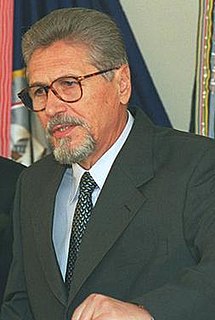
General elections were held in Romania on 3 November 1996, with a second round of the presidential election on 17 November. Whilst incumbent President Ion Iliescu of the Social Democracy Party of Romania received the most votes in the first round, he was defeated by Emil Constantinescu of the Romanian Democratic Convention in the second round.
The Autonomist Liberal Party, renamed usually semplified in Liberal Party in 1898, was one of major parties from 1910 until the Cuban Revolution the late 1950s, when it was exiled.
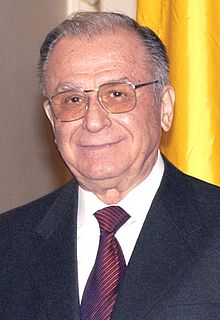
General elections were held in Romania on 26 November 2000, with a second round of the presidential election on 10 December. Former president Ion Iliescu of the Social Democracy Party of Romania (PDSR) was re-elected in the run-off, whilst the PDSR, as part of the Social Democratic Pole of Romania, emerged as the largest party in Parliament, winning 155 of the 345 seats in the Chamber of Deputies and 65 of the 140 seats in the Senate.
General elections were held in Romania on 27 September 1992, with a second round of the presidential election on 11 October. Ion Iliescu was re-elected President, whilst his Democratic National Salvation Front emerged as the largest party in Parliament, winning 117 of the 341 seats in the Chamber of Deputies and 49 of the 143 seats in the Senate.
Presidential elections were held in the Republic of Upper Volta on 14 May 1978, with a second round on 28 May after no candidate won more than 50% in the first round. They were the country's first multi-party presidential elections, the previous elections in 1965 having Maurice Yaméogo as the sole candidate. The result was a victory for independent candidate Sangoulé Lamizana, who was backed by the Voltaic Democratic Union-African Democratic Rally and won 56.3% of votes in the second round. Voter turnout was 35.2% in the first round and 43.6% in the second.
General elections were held in Montenegro on 20 December 1992, with a second round of the presidential election on 10 January 1993. The elections were seen as a referendum on independence for Montenegro, and were won by the Democratic Party of Socialists of Montenegro who favoured greater autonomy within Yugoslavia. The presidential elections were won by Momir Bulatović, who received 63.4% of the vote in the second round. The result of the parliamentary elections was a victory for the Democratic Party of Socialists of Montenegro (DPS) who succeed ruling League of Communists of Montenegro. DPS won 46 of the 85 seats.

Presidential elections were held in Colombia on 31 May 1998, with a second round on 21 June. Although Horacio Serpa of the Liberal Party received the most votes in the first round, the result was a victory for Andrés Pastrana Arango of the Great Alliance for Change, who received 51.9% of the vote in the run-off.

Presidential elections were held in Cyprus on 8 February 1998, with a second round on 15 February. The result was a victory for Glafcos Clerides of the Democratic Rally after he finished as runner-up behind George Iacovou in the first round. Voter turnout was 91.7% in the first round and 93.4% in the second.

Presidential elections were held in Niger on 27 February 1993, with a second round on 27 March after no candidate passed the 50% barrier in the first round. They were the first multi-candidate presidential elections held in the country since independence in 1960, following constitutional changes approved in a referendum the previous year. Although Mamadou Tandja of the ruling National Movement for the Development of Society won the most votes in the first round, he lost in the second round to Mahamane Ousmane of the Democratic and Social Convention party. Voter turnout was only 32.5% in the first round and 35.2% in the second.

Presidential elections were held in Finland on 16 January 2000, with a second round on 6 February.
Presidential elections were held in Mali on 12 April 1992, with a second round on 26 April. They were the first presidential elections in the country to feature more than one candidate following the reintroduction of multi-party democracy the previous year. The result was a victory for Alpha Oumar Konaré of the Alliance for Democracy in Mali, who defeated Tiéoulé Mamadou Konaté of the Sudanese Union – African Democratic Rally. Voter turnout was 23.6% in the first round and 20.9% in the second.

General elections were held in Ecuador on 29 January 1984, with a second round of the presidential elections on 6 May. After finishing second in the first round, León Febres Cordero of the Social Christian Party won the run-off with 51.5% of the vote. The Democratic Left emerged as the largest faction in the National Congress, winning 24 of the 69 seats.

Direct presidential elections were held for the first time in Bulgaria on 12 January 1992, with a second round on 19 January. The result was a victory for incumbent President Zhelyu Zhelev of the Union of Democratic Forces, who won 52.8% of the vote in the second round. Voter turnout was 75.4% in the first round and 75.9% in the second. Zhelev had originally been elected as President by the Grand National Assembly in 1990.
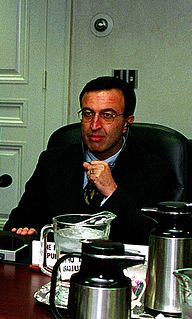
Presidential elections were held in Bulgaria on 27 October 1996, with a second round on 3 November. The result was a victory for Petar Stoyanov of the United Democratic Forces, who won 59.7% of the vote in the second round. Voter turnout was 63.3% in the first round and 61.8% in the second.
Presidential elections were held in Cyprus on 14 February 1988, with a second round on 21 February. They were the first presidential elections in the country's history to go to a second round, and resulted in a victory for George Vassiliou as an independent candidate supported by AKEL after he finished as the runner-up behind Glafcos Clerides of the Democratic Rally in the first round. Voter turnout was 94.3% in both rounds.
Presidential elections were held in Cyprus on 7 February 1993, with a second round on 14 February. The result was a victory for Glafcos Clerides of the Democratic Rally after he finished as runner-up behind George Vassiliou of the AKEL in the first round, a reverse of the 1988 elections. Voter turnout was 92.4% in the first round and 93.3% in the second.
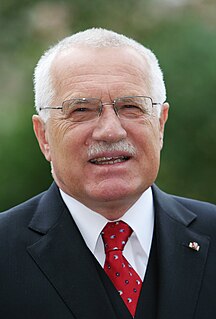
Senate elections were held in the Czech Republic on 25 and 26 October 2002, with a second round on 1 and 2 November. Voter turnout was just 24.1% in the first round and 31.7% in the second.

General elections were held in Macedonia on 16 October 1994 to elect a President and Assembly, with a second round of Assembly elections on 30 October. The presidential election was won by Kiro Gligorov of the Alliance for Macedonia, whilst the parties forming Alliance for Macedonia also won the Assembly elections with 95 of the 120 seats. However, the second round of the Assembly elections were boycotted by VMRO-DPMNE and the Democratic Party, as they claimed there had been irregularities in the first round.
Presidential elections were held in Macedonia on 31 October 1999, with a second round on 14 November. Tito Petkovski of the Social Democratic Union won the first round. However, as he received less than 50% of the vote, the election went to a second round, which was won by Boris Trajkovski of VMRO-DPMNE, who won 53.2% of the vote.