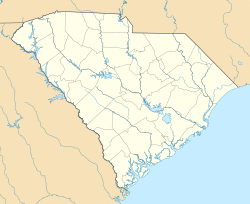
The museum attracts more than 300,000 visitors each year with its 1,000,000 square feet of living exhibits and artifacts, landside and on ship. [1]
History
The museum was born out of an idea by former naval officer Charles F. Hyatt to develop a major tourist attraction on what had once been a dump for dredged mud.[2] Initial plans for the museum called for a large building onshore to display exhibits related to the history of small combatant ships in the U.S. Navy.[3] On 3 January 1976, the aircraft carrier USSYorktown was opened to the public.[4]
The Patriots Point Development Authority attempted to capitalize on its financial success in 1987 when it announced an plans to build a hotel and marina.[9] However, the museum encountered controversy in 1989 when it was revealed that Comanche, which never opened to the public, had been used to conduct cruises for private tours and VIP parties.[10] The same year, USCGCIngham arrived at the museum, replacing Comanche.[11][12] The latter was removed from the museum and sunk as a reef in 1992, but not before suffering damage during Hurricane Hugo.[13][14] By that time, the development project had failed, and the development authority was forced to declare bankruptcy.[15]
Laffey was towed to a shipyard for repairs on 19 August 2009.[19] The following day, Ingham was removed by the Coast Guard.[20] The destroyer returned to the museum in 2012.[21]Clamagore was towed away for scrapping in 2022 due to ongoing structural issues that were far too costly for repair.[22]
In 2025 more than 1.6 million gallons of hazardous materials and nine tons of asbestos were safely removed from the Yorktown, along with hundreds of structural repairs. [23]
The centerpiece of the museum’s fleet is the USS Yorktown (CV-10), an Essex-class aircraft carrier that earned an extensive combat record during World War II. Commissioned in 1943, Yorktown participated in major Pacific Theater operations, including campaigns in the Marshall Islands, the Marianas, the Philippines, and Okinawa, ultimately receiving numerous battle stars for her wartime service. The carrier later supported operations during the Vietnam War before being decommissioned in 1970.
In 1968, the ship played a prominent role in the recovery of the Apollo 8 command module, connecting it to the early history of NASA’s space program. [25] Since arriving at Patriots Point in 1975, Yorktown has been preserved as a museum ship and has become the site’s most recognizable landmark.
The USS Laffey (DD-724), an Allen M. Sumner-class destroyer, is one of the museum’s most historically significant vessels. Commissioned in 1944, Laffey earned the nickname “The Ship That Would Not Die” after surviving one of the most intense kamikaze attacks of World War II during the Battle of Okinawa, when she withstood repeated strikes while continuing to fight. For her actions in the war, the destroyer received multiple battle stars and recognition for extraordinary resilience under fire. [27]
After World War II, Laffey saw additional service during the Cold War and supported operations throughout the 1950s and 1960s before being decommissioned in 1975. The destroyer joined Patriots Point in 1981 and remains one of the few preserved Sumner-class destroyers in the United States.
Medal of Honor museum, with biographies of all medal recipients[66]. The Medal of Honor Museum was designated by Congress under the National Medal of Honor Memorial Act in 1999 as a National Medal of Honor Site.[67] It reopened onboard the Yorktown in 2024.[68]
This page is based on this Wikipedia article Text is available under the CC BY-SA 4.0 license; additional terms may apply. Images, videos and audio are available under their respective licenses.