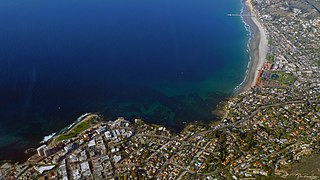
Scripps Research's California and Florida Campuses | |
| Established | 1993 |
|---|---|
| Faculty | 265 |
| Staff | 2,469 |
| Location | San Diego, California Jupiter, Florida, US |
| Website | www |
Scripps Research, previously known as Scripps Research Institute (or TSRI) [1] is a nonprofit American medical research facility that focuses on research and education in the biomedical sciences. Headquartered in San Diego, California with a sister facility in Jupiter, Florida, the institute has 250 laboratories employing 2,400 scientists, [2] technicians, graduate students, and administrative and other staff, making it the largest private, non-profit biomedical research organization in the United States and among the largest in the world.

The United States of America (USA), commonly known as the United States or America, is a country composed of 50 states, a federal district, five major self-governing territories, and various possessions. At 3.8 million square miles, the United States is the world's third or fourth largest country by total area and is slightly smaller than the entire continent of Europe's 3.9 million square miles. With a population of over 327 million people, the U.S. is the third most populous country. The capital is Washington, D.C., and the largest city by population is New York City. Forty-eight states and the capital's federal district are contiguous in North America between Canada and Mexico. The State of Alaska is in the northwest corner of North America, bordered by Canada to the east and across the Bering Strait from Russia to the west. The State of Hawaii is an archipelago in the mid-Pacific Ocean. The U.S. territories are scattered about the Pacific Ocean and the Caribbean Sea, stretching across nine official time zones. The extremely diverse geography, climate, and wildlife of the United States make it one of the world's 17 megadiverse countries.
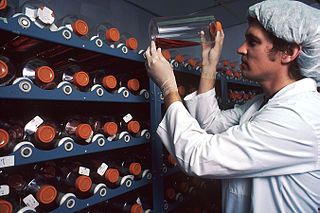
Biomedical research encompasses a wide array of research, extending from "basic research", – involving fundamental scientific principles that may apply to a preclinical understanding – to clinical research, which involves studies of people who may be subjects in clinical trials. Within this spectrum is applied research, or translational research, conducted to expand knowledge in the field of medicine.
Jupiter is the northernmost town in Palm Beach County, Florida, United States. According to a 2017 Census Bureau estimate, the town had a population of 64,976. It is 87 miles north of Miami, and the northernmost community in the Miami metropolitan area, home to 6,012,331 people in a 2015 Census Bureau estimate. Jupiter was rated as the 12th Best Beach Town in America by WalletHub in 2018, and as the 9th Happiest Seaside Town in America by Coastal Living in 2012.
The institute holds nearly 1,000 patents, [3] produced 8 FDA-approved therapeutics, and has generated over 70 spin-off companies. According to the 2017 Nature Innovation Index, Scripps Research is the #1 most influential research institution in the world. [4] [5] The Scripps Research graduate program is ranked 10th nationally in the biological sciences, 5th for organic chemistry, and 2nd for biochemistry. [6]
Nature is a British multidisciplinary scientific journal, first published on 4 November 1869. It is one of the most recognizable scientific journals in the world, and was ranked the world's most cited scientific journal by the Science Edition of the 2010 Journal Citation Reports and is ascribed an impact factor of 40.137, making it one of the world's top academic journals. It is one of the few remaining academic journals that publishes original research across a wide range of scientific fields.
Biology is the natural science that studies life and living organisms, including their physical structure, chemical processes, molecular interactions, physiological mechanisms, development and evolution. Despite the complexity of the science, there are certain unifying concepts that consolidate it into a single, coherent field. Biology recognizes the cell as the basic unit of life, genes as the basic unit of heredity, and evolution as the engine that propels the creation and extinction of species. Living organisms are open systems that survive by transforming energy and decreasing their local entropy to maintain a stable and vital condition defined as homeostasis.
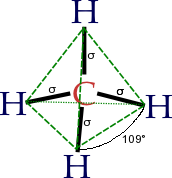
Organic chemistry is the chemistry subdiscipline for the scientific study of structure, properties, and reactions of organic compounds and organic materials. Study of structure determines their chemical composition and formula. Study of properties includes physical and chemical properties, and evaluation of chemical reactivity to understand their behavior. The study of organic reactions includes the chemical synthesis of natural products, drugs, and polymers, and study of individual organic molecules in the laboratory and via theoretical study.
Scripps Research began with the Scripps Metabolic Clinic, founded near the current site in the La Jolla area of San Diego in 1924 by philanthropist Ellen Browning Scripps, who was inspired by the discovery of insulin. In 1946, the metabolic clinic separated from Scripps Memorial Hospital.
La Jolla is a hilly, seaside community within the city of San Diego, California, occupying 7 miles (11 km) of curving coastline along the Pacific Ocean within the northern city limits. The population reported in the 2010 census was 46,781.
Ellen Browning Scripps was an American journalist and philanthropist who was the founding donor of several major institutions in Southern California. She and her brother E.W. Scripps created America's largest chain of newspapers, linking midwestern industrial cities with booming towns in the west. By the 1920s, Ellen Browning Scripps was worth an estimated $30 million, most of which she gave away.
In 1956, Scripps Research was renamed Scripps Clinic and Research Foundation to reflect its broader focus and management's renewed commitment to biomedical research. Harvard biochemist A. Baird Hastings joined the institute in 1959, followed by immunologist Frank J. Dixon and colleagues William Weigle, Joseph Feldman, Charles Cochrane, and Jacinto Vazquez in 1961, biochemist Frank Huennekens and microbiologist John Spizizen in 1962. Dixon was appointed director of research operations in 1970, and in 1977 these operations assumed the name of The Research Institute of Scripps Clinic. [7]
Frank James Dixon was an biomedical researcher, best known for his research into diseases of the immune system that can damage other organs of the body. Dixon was also noted for having developed techniques involving trace iodines to study proteins.
Upon Dixon's retirement in 1986, Richard Lerner, who had been chair of the Scripps Department of Molecular Biology, was appointed the research institute's new director. In 1989, the institute launched a graduate program. In 1991, as the result of a merger of hospitals, the research branch became part of a larger organization, the Scripps Institutions of Medicine and Science. In 1993, the research division separated from the clinical side, becoming an independent nonprofit organization under the name of The Scripps Research Institute (TSRI). [7] An additional campus in Florida was instituted in 2004.
Richard A. Lerner is an American research chemist. Best known for his work on catalytic antibodies, Lerner served as President of The Scripps Research Institute (TSRI) until January 1, 2012, and is currently a member of its Skaggs Institute for Chemical Biology, in La Jolla, California.
The Scripps Research Institute (TSRI) Graduate Program is an interdisciplinary graduate school offering doctoral (Ph.D.) degrees in the chemical and biological sciences.
Michael Marletta became president and CEO in 2012, assuming the position from Lerner. [8] Marletta announced his resignation on July 21, 2014 and James C. Paulson was subsequently appointed acting president and CEO.
Michael A. Marletta is an American biochemist.
James C. Paulson is an American biochemist and biologist known for his work in glycobiology.
In September 2015, Peter G. Schultz was appointed CEO, and Steve A. Kay, president. [9] Kay announced he was returning to the University of Southern California in August 2016. [10]
In October 2016, TSRI announced a strategic affiliation with the non-profit California Institute for Biomedical Research (Calibr). The two organizations had already collaborated on several research programs in recent years, including the development of an antibody engineering platform aimed at improving treatments for chronic diseases such as diabetes and COPD, and immune therapies for the treatment of cancer. [11]
In February 2017, 5AM Ventures' John Diekman was named chairman of the board. [12]
The Scripps Institution of Oceanography is often incorrectly associated with Scripps Research; it is in fact a nearby research facility that is part of UCSD. TSRI is a private nonprofit institute not directly associated with UCSD. Confusingly, the Scripps Institution of Oceanography was once called the Scripps Institution for Biological Research.
Scripps Research's California campus is located on 35 acres (140,000 m2) of land between the Torrey Pines State Reserve and the University of California, San Diego in La Jolla. In Florida, Scripps Research occupies 30 acres (120,000 m2) adjacent to the John D. MacArthur campus of Florida Atlantic University in Palm Beach County, Florida.
Scripps Research emphasizes interdisciplinary studies. Departments provide support to the faculty, organized around: cancer biology, cell and molecular biology, chemical physiology, chemistry, immunology and microbial science, immunology and microbial science, molecular and cellular neuroscience, molecular and experimental medicine, molecular therapeutics, neurobiology of addictive disorders, and aging and metabolism.
The institute also incorporates the:
Among the 215 members of faculty are Nobel Laureates K. Barry Sharpless and Kurt Wüthrich, as well as many other notable scientists, including Donna Blackmond, Phil S. Baran, Dale L. Boger, Benjamin Cravatt III, Gerald F. Joyce, Ardem Patapoutian, Roy A. Periana, William R. Roush, Paul Schimmel, Peter G. Schultz, Eric Topol, Charles Weissmann, Ian Wilson, Peter Wright, John R. Yates, Jin-Quan Yu and Chi-Huey Wong. [2]
In addition to the Nobel Laureates, the Scripps Research faculty comprises numerous members of the National Academy of Sciences, National Academy of Medicine, American Academy of Arts and Sciences, National Academy of Engineering, American Association for the Advancement of Science and American Philosophical Society, as well as winners of the Wolf Prize in Chemistry and MacArthur Fellows Program ("genius grant"). [23]
The board of directors includes Herb Boyer (co-founder of Genentech), John D. Diekman (founder of 5AM Ventures), William R. Hearst III (Chairman of the Board, Hearst Corporation), Ge Li (Founder of WuXi AppTec), and Joel S. Marcus (Founder, Alexandria Real Estate Equities, Inc.).
According to the 2017 Nature Innovation Index, Scripps Research is the #1 most influential research institution in the world (LENS score of 18.1), followed by The Rockefeller University (LENS score of 15.4) and the Massachusetts Institute of Technology (MIT) (LENS score of 9.4). [4]
The Scripps Research Institute was noted as a standout in the Science Watch survey of "high-impact" papers in chemistry (1997–2008), ranked number one worldwide by citations per paper. [13]
Another measure of productivity, the Hirsch index (which has been published by Chemistry World), placed six Scripps Research scientists – Wüthrich, Sharpless, Lerner, Yates, Schultz, and Chi-Huey Wong – in the top 100 of 2,000 chemists rated. Science Watch placed Sharpless within the Top 10 list of its "Top 100 Chemists 2000–2010" based on citations impact; other faculty in the list were the late Carlos F. Barbas and John R. Yates. [24]
In addition, a Thomson-Reuters's list of researchers ranked in the top one percent by citations in their field (2002 to 2012) included TSRI researchers Phil S. Baran (chemistry); the late Carlos F. Barbas (chemistry); Dennis Burton (microbiology); Benjamin Cravatt III (biology and biochemistry); Pascal Poignard (microbiology); K. Barry Sharpless (chemistry); Eric Topol (genomic and digital medicine); [25] Ian Wilson (microbiology); Richard Wyatt (microbiology); and Jin-Quan Yu (chemistry). [26]
Medical therapies based on Scripps Research findings include: [27]
The graduate program at Scripps Research started in 1989 as the Macromolecular and Cellular Structure and Chemistry (MCSC) Program. A program in Chemistry followed three years after the establishment of the MCSC Program. In 2003, the institute redefined the curriculum to allow and encourage students to build course loads in an interdisciplinary manner. In 2005, Scripps Research's graduate program expanded to encompass the Jupiter, Florida campus. Today, approximately 300 graduate students are enrolled in the program, which offers doctoral degrees in the chemical and biological sciences. In addition to its Ph.D. programs, Scripps Research offers a master's degree in the discipline of Clinical and Translational Investigation (MCTI) for physician-scientists. The institute also administers the Skaggs-Oxford Scholarship program, which enables students to pursue a joint Ph.D./D.Phil. with the University of Oxford.
The most recent graduate school rankings by U.S. News & World Report places Scripps Research's program as 6th in chemistry (2nd in biochemistry, 5th in organic chemistry) and 10th in biological sciences. [28]
In 2018, the program was renamed the Skaggs Graduate School of Chemical and Biological Sciences following a gift from the Skaggs family. [29]
Florida Atlantic University launched a new joint MD/PhD program association with Scripps Florida. The first students entered the new program in fall 2011. [30] Previously, Scripps Research and the Scripps Health hospital network explored the idea of starting a medical school in California, [31] but this project did not come to fruition.
The California and Florida campuses both offer educational outreach programs for high school students and undergraduates interested in learning more about science.
The Florida campus of Scripps Research operates a 350,000-square-foot (33,000 m2) state-of-the-art biomedical research facility focusing on neuroscience, cancer biology, medicinal chemistry, drug discovery, biotechnology, and alternative energy development. More than 500 faculty, staff and students occupy Scripps Research's Florida campus.
The grand opening of the new facility took place on February 26, 2009, five years after Scripps Florida started operating, with a public ceremony that drew many dignitaries including then Florida Gov. Charlie Crist.
Grants and contracts provide funding for a significant portion of the institute's research. This revenue is derived primarily from the National Institutes of Health and other federal agencies. In addition, grantors include, among others, the American Cancer Society, the American Heart Association, the Cystic Fibrosis Foundation, the Leukemia & Lymphoma Society, and the Juvenile Diabetes Association.
Gifts from individuals and private foundations provide an important source of funding for TSRI. Private foundations that have provided support include the ALSAM Foundation, Lucille P. Markey Charitable Trust, W.M. Keck Foundation, Arnold and Mabel Beckman Foundation, Pew Charitable Trusts, the Ellison Medical Foundation, Bill & Melinda Gates Foundation, and Harold L. Dorris Foundation. [32] [33]
The establishment of the Scripps Florida campus was made possible by a one-time $310 million appropriation of federal economic development funds and by the Florida State Legislature and by an economic package provided by Palm Beach County. [34]
The University of California, San Diego, also known as UCSD, is a public research university located in the La Jolla neighborhood of San Diego, California, in the United States. The university occupies 2,141 acres (866 ha) near the coast of the Pacific Ocean with the main campus resting on approximately 1,152 acres (466 ha). Established in 1960 near the pre-existing Scripps Institution of Oceanography, UC San Diego is the seventh oldest of the 10 University of California campuses and offers over 200 undergraduate and graduate degree programs, enrolling approximately 30,000 undergraduate and 8,500 graduate students.
The Scripps Institution of Oceanography in the La Jolla community of San Diego, California. Founded in 1903, it is one of the oldest and largest centers for ocean and Earth science research, public service, undergraduate and graduate training in the world. Hundreds of ocean and Earth scientists conduct research with the aid of oceanographic research vessels and shorebased laboratories. Its Old Scripps Building is a U.S. National Historic Landmark. SIO is a division of the University of California San Diego (UCSD). The public explorations center of the institution is the Birch Aquarium at Scripps. Since becoming part of the University of California in 1912, the institution has expanded its scope to include studies of the physics, chemistry, geology, biology, and climate of Earth.
The University of California San Diego School of Medicine is the graduate medical school of the University of California San Diego in La Jolla, California. It was the third medical school in the University of California system and is the only medical school in the San Diego metropolitan area. It is closely affiliated with the medical centers that are part of UC San Diego Health.
Gerald Francis "Jerry" Joyce is a professor and researcher at Salk Institute for Biological Studies and the director of the Genomics Institute of the Novartis Research Foundation. He is best known for his work on in vitro evolution, for the discovery of the first DNA enzyme (deoxyribozyme), for the development of the first self replicating RNA enzyme and more in general for his work on the origin of life.
The San Diego State University College of Sciences is the San Diego region's largest center for science education and research. Comprising eight departments and various specialties, the College offers bachelor's, master's and doctoral degrees, as well as curricula for pre-professional students in medicine, veterinary medicine and dentistry. The College strives to produce scientifically educated graduates who possess both a fundamental understanding of their fields and the essential professional skills needed by local and regional industries. The College provides scientific literacy for all San Diego State University graduates as well as participating in the training of future mathematics and science teachers.
Sanford Burnham Prebys Medical Discovery Institute (SBP) is a non-profit medical research institute with locations in La Jolla, California, and Orlando, Florida. There are more than 850 scientists at SBP blending fundamental research with drug discovery to address unmet clinical needs in the areas of cancer, neuroscience, immunity, and metabolic disorders.
The College of Sciences at the University of Texas at San Antonio is a college in research and science education. The college hosts more than 5000 students enrolled in twelve undergraduate and fourteen graduate programs. The six departments employ 130 tenure and tenure track faculty members. Students are exposed to collaboration through programs with local external research institutions including UT Health Science Center, Southwest Research Institute and the Southwest Foundation for Biomedical Research.
Dale Lester Boger is an American medicinal and organic chemist and chair of the Department of Chemistry at The Scripps Research Institute in La Jolla, CA.
The College of Natural Science (NatSci) at Michigan State University is home to 29 academic units serving 5,000 undergraduate majors and nearly 1,000 graduate students in the biological, physical and mathematical sciences.
The California Institute for Quantitative Biosciences (QB3) is a nonprofit research and technology commercialization institute spanning three University of California campuses in the San Francisco Bay Area: UC Berkeley, UCSF, and UC Santa Cruz. QB3's domain is the quantitative biosciences: areas of biology in which advances are chiefly made by scientists applying techniques from physics, chemistry, engineering, and computer science.
Paul Reinhard Schimmel is an American biophysical chemist and translational medicine pioneer.
William R. Roush is an American organic chemist. He was born on February 20, 1952 in Chula Vista, California. Roush studied chemistry at the University of California Los Angeles and Harvard University. Following a year postdoctoral appointment at Harvard, he joined that faculty at the Massachusetts Institute of Technology. In 1987, Dr. Roush moved to Indiana University and was promoted to Professor in 1989 and Distinguished Professor in 1995. Two years later, he moved to the University of Michigan in Ann Arbor and served as the Warner Lambert/Parke Davis Professor of Chemistry. He served as chair of the University of Michigan's Department of Chemistry from 2002-2004. In 2004 Professor Roush relocated with his group to the Jupiter, Florida campus of the Scripps Research Institute (TSRI) where he is currently an emeritus professor.

The Scripps Energy & Materials Center (SEMC) is an American research center that focuses on research in the basic energy and materials sciences. Located in Jupiter, Florida, the center is home to scientists, graduate students, and administrative staff. It is a part of the Scripps Research Institute (TSRI), one of the largest non-profit research institutes in the world.
Albert Baird Hastings was an American biochemist and physiologist. He spent 28 years as the department chair and Hamilton Kuhn Professor of Biological Chemistry at Harvard University. After retiring from Harvard, Hastings moved to the Scripps Clinic and Research Foundation, where he became the director of the division of biochemistry and helped to establish the institution's emerging program in basic research. In 1966, he became one of the first faculty members at the University of California, San Diego's new medical school. His research focused on the biochemical underpinnings of physiology and included characterizing acid-base homeostasis in blood and pioneering the use of radioactive tracers for studying metabolism. Hastings received a number of honors and awards for his work, including election to the National Academy of Sciences in 1937 and the President's Medal for Merit in 1948 following his wartime service on the Committee for Medical Research. Hastings died of heart failure in 1987 at age 91.
Vicki Helene Grassian is a Distinguished Professor at University of California, San Diego in the Departments of NanoEngineering, Department of Chemistry and Biochemistry and Scripps Institution of Oceanography. She also holds the Distinguished Chair in Physical Chemistry and serves Executive Associate Dean of the Division of Physical Sciences.
Carlos F. Barbas III was chair professor of the Janet and Keith Kellogg II and a chemist of The Scripps Research Institute. He was diagnosed with medullary thyroid cancer and died on June 24, 2014.Barbas developed new therapies that can target HIV-1 and some kinds of cancer which went into clinical trails.