An election is a formal group decision-making process by which a population chooses an individual to hold public office. Elections have been the usual mechanism by which modern representative democracy has operated since the 17th century. Elections may fill offices in the legislature, sometimes in the executive and judiciary, and for regional and local government. This process is also used in many other private and business organizations, from clubs to voluntary associations and corporations.

The United States Electoral College is a body of electors established by the United States Constitution, constituted every four years for the sole purpose of electing the president and vice president of the United States. The Electoral College consists of 538 electors, and an absolute majority of 270 electoral votes is required to win an election. Pursuant to Article II, Section 1, Clause 2, the legislature of each state determines the manner by which its electors are chosen. Each state's number of electors is equal to the combined total of the state's membership in the Senate and House of Representatives; currently there are 100 senators and 435 representatives. Additionally, the Twenty-third Amendment provides that the District of Columbia (D.C.) is entitled to a number of electors no greater than that of the least populous state.

The Bharatiya Janata Party is one of the two major political parties in India, along with the Indian National Congress. As of 2018, it is the country's largest political party in terms of representation in the national parliament and state assemblies, and it is the world's largest party in terms of primary membership. BJP is a right-wing party, and its policy has historically reflected Hindu nationalist positions. It has close ideological and organisational links to the Rashtriya Swayamsevak Sangh (RSS).

Rahul Gandhipronunciation (help·info)[ˈraːɦʊl ˈɡaːnd̪ʱiː] is an Indian politician. He hails from a long line of politicians, known as the Nehru-Gandhi family, which has occupied a prominent place in the politics of India ever since the country gained independence in 1947. His great-grandfather was Jawaharlal Nehru, the first prime minister of India and also the longest serving Prime Minister of India having served for a total of seventeen years. Gandhi's grandmother Indira was the first woman Prime Minister of India and his father Rajiv was the youngest prime minister of India to be sworn in to office. The son of Sonia and Rajiv, he is the president of the Indian National Congress and serves such additional offices as the chairperson of the Indian Youth Congress and the National Students Union of India. A member of the Indian Parliament, Gandhi represents the constituency of Amethi, Uttar Pradesh in the 16th Lok Sabha.
The incumbent is the current holder of an office. This term is usually used in reference to elections, in which races can often be defined as being between an incumbent and non-incumbent(s). For example, in the 2017 Hungarian presidential election, János Áder was the incumbent, because he had been the president in the term before the term for which the election sought to determine the president. A race without an incumbent is referred to as an open seat.

The All India Trinamool Congress is a national level political party in India. Founded on 1 January 1998, the party is led by its founder Mamata Banerjee, who is the current chief minister of West Bengal. Following the 2014 general election, it is currently the fourth largest party in the Lok Sabha with 36 seats.
India is a federation with a parliamentary system governed under the Constitution of India, which defines the power distribution between the union, or central, government and the states.
An independent or nonpartisan politician is an individual politician not affiliated with any political party. There are numerous reasons why someone may stand for office as an independent.

The Indian general election, 2014 was held to constitute the 16th Lok Sabha, electing members of parliament for all 543 parliamentary constituencies. Running in nine phases from 7 April to 12 May 2014, it lasted 36 days. According to the Election Commission of India, 814.5 million people were eligible to vote, with an increase of 100 million voters since the last general election in 2009, making it the largest ever election in the world. Around 23.1 million or 2.7% of the total eligible voters were aged 18–19 years. A total of 8,251 candidates contested for the 543 Lok Sabha seats. The average election turnout over all nine phases was around 66.40%, the highest ever in the history of Indian general elections.

The 2012 United States presidential election was the 57th quadrennial American presidential election, held on Tuesday, November 6, 2012. The Democratic nominee, President Barack Obama, and his running mate, Vice President Joe Biden, were elected to a second term. They defeated the Republican ticket of businessman and former Governor Mitt Romney of Massachusetts and Representative Paul Ryan of Wisconsin.
The 2016 United States presidential election was the 58th quadrennial American presidential election, held on Tuesday, November 8, 2016. The Republican ticket of businessman Donald Trump and Indiana Governor Mike Pence defeated the Democratic ticket of former Secretary of State Hillary Clinton and U.S. Senator from Virginia Tim Kaine, despite losing the popular vote. Trump took office as the 45th president, and Pence as the 48th vice president, on January 20, 2017.

The election of president and vice president of the United States is an indirect election in which citizens of the United States who are registered to vote in one of the 50 U.S. states or in Washington, D.C. cast ballots not directly for those offices, but instead for members of the U.S. Electoral College, known as electors. These electors then in turn cast direct votes, known as electoral votes, for president, and for vice president. The candidate who receives an absolute majority of electoral votes is then elected to that office. If no candidate receives an absolute majority of the votes for President, the House of Representatives chooses the winner; if no one receives an absolute majority of the votes for Vice President, then the Senate chooses the winner.
The 2019 Indian general election is currently being held in seven phases from 11 April to 19 May 2019 to constitute the 17th Lok Sabha. The counting of votes will be conducted on 23 May, and on the same day the results will be declared. About 900 million Indian citizens are eligible to vote in one of the seven phases depending on the region.

The 2017 United Kingdom general election took place on Thursday 8 June 2017, having been called just under two months earlier by Prime Minister Theresa May on 18 April 2017 after it was discussed in cabinet. Each of the 650 constituencies elected one Member of Parliament (MP) to the House of Commons. The governing Conservative Party remained the largest single party in the House of Commons but lost its majority, resulting in the formation of a minority government with a confidence-and-supply arrangement with the Democratic Unionist Party (DUP) of Northern Ireland.

The 2019 Alberta general election was held on April 16, 2019, to elect the 87 members of the Legislative Assembly of Alberta. In its first general election contest, the Jason Kenney-led United Conservative Party won 54.8% of the popular vote and 63 seats, reducing Premier Rachel Notley's governing Alberta New Democratic Party (NDP) to Official Opposition with 24 seats. The United Conservative Party was formed in 2017 from a merger of the Progressive Conservative Party and the Wildrose Party after the NDP's victory in the 2015 election ended nearly 44 years of Progressive Conservative rule.

The Election Commission of India is an autonomous constitutional authority responsible for administering election processes in India. The body administers elections to the Lok Sabha, Rajya Sabha, state Legislative Assemblies, state legislative Councils, and the offices of the President and Vice President of the country. The Election Commission operates under the authority of Constitution per Article 324, and subsequently enacted Representation of the People Act. The commission has the powers under the Constitution, to act in an appropriate manner when the enacted laws make insufficient provisions to deal with a given situation in the conduct of an election. Being a constitutional authority, Election Commission is amongst the few institutions which function with both autonomy and freedom, along with the country’s higher judiciary, the Union Public Service Commission and the Comptroller and Auditor General of India.

The 2020 United States presidential election, scheduled for Tuesday, November 3, 2020, will be the 59th quadrennial U.S. presidential election. Voters will select presidential electors who in turn on December 14, 2020, will either elect a new president and vice president or re-elect the incumbents. The series of presidential primary elections and caucuses are likely to be held during the first six months of 2020. This nominating process is also an indirect election, where voters cast ballots selecting a slate of delegates to a political party's nominating convention, who then in turn elect their party's presidential nominee.
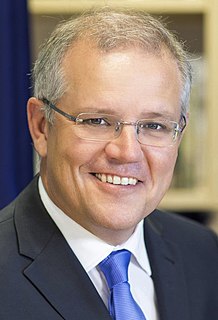
The 2019 Australian federal election will be held on Saturday 18 May 2019 to elect members of the 46th Parliament of Australia. The election was called following the dissolution of the 45th Parliament as elected at the 2016 double dissolution federal election. All 151 seats in the House of Representatives and 40 of the 76 seats in the Senate will be up for election.