| |||||||||||||||||
| |||||||||||||||||
| This article is part of a series on the politics and government of Mexico |
|---|
Executive |
Legislative |
| Foreign relations |
General elections were held in Mexico on November 17, 1929.
Mexico, officially the United Mexican States, is a country in the southern portion of North America. It is bordered to the north by the United States; to the south and west by the Pacific Ocean; to the southeast by Guatemala, Belize, and the Caribbean Sea; and to the east by the Gulf of Mexico. Covering almost 2,000,000 square kilometres (770,000 sq mi), the nation is the fifth largest country in the Americas by total area and the 13th largest independent state in the world. With an estimated population of over 120 million people, the country is the eleventh most populous state and the most populous Spanish-speaking state in the world, while being the second most populous nation in Latin America after Brazil. Mexico is a federation comprising 31 states and Mexico City, a special federal entity that is also the capital city and its most populous city. Other metropolises in the state include Guadalajara, Monterrey, Puebla, Toluca, Tijuana and León.
The National Revolutionary Party, founded in 1928 by Mexico's most powerful leader at the time, Plutarco Elías Calles, made its debut in these elections. The 1929 elections marked the beginning of 71 uninterrupted years of rule by that party, which was later renamed Party of the Mexican Revolution in 1938 and finally, Institutional Revolutionary Party (PRI) in 1946. No opposition party would win a Presidential election until the 2000 elections.
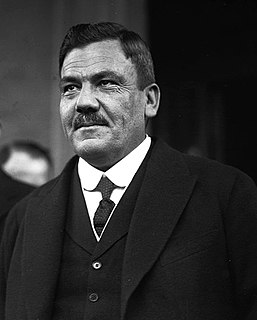
Plutarco Elías Calles was a Mexican general and politician. He was the powerful interior minister under President Álvaro Obregón, who chose Calles as his successor. The 1924 Calles presidential campaign was the first populist presidential campaign in the nation's history, as he called for land redistribution and promised equal justice, more education, additional labor rights, and democratic governance. Calles indeed tried to fulfill his promises during his populist phase (1924–26) but later entered a State atheism phase (1926–28). After leaving office he continued to be the dominant leader from 1928 to 1935, a period known as the Maximato, named after the title Calles gave himself as "Jefe Máximo" of the Revolution.

The Institutional Revolutionary Party is a Mexican political party founded in 1929 that held uninterrupted power in the country for 71 years from 1929 to 2000, first as the National Revolutionary Party, then as the Party of the Mexican Revolution, and finally renaming itself as the Institutional Revolutionary Party in 1946.
General elections were held in Mexico on Sunday, July 2, 2000.
According to the official results, the 1929 presidential elections were won by Pascual Ortiz Rubio, who received 93.6% of the vote. [1] The opposition candidate José Vasconcelos refused to recognize the official results, claiming that a massive electoral fraud had taken place, and proclaimed his "Plan de Guaymas", urging the Mexican people to rebel against the alleged fraud. He was subsequently jailed, and after being released he moved to the United States.
Pascual Ortiz Rubio was a Mexican politician and the President of Mexico from 1930 to 1932. He was one of three Mexican presidents to serve out the six-year term (1928-1934) of assassinated president-elect Álvaro Obregón, while former president Plutarco Elías Calles retained power in a period known as the Maximato. Calles was so blatantly in control of the government that Ortiz Rubio resigned the presidency in protest in 1932.
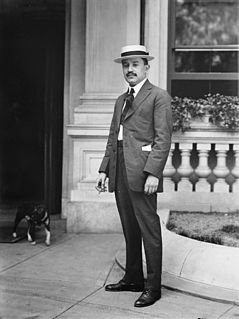
José Vasconcelos Calderón has been called the "cultural caudillo" of the Mexican Revolution. He was an important Mexican writer, philosopher and politician. He is one of the most influential and controversial personalities in the development of modern Mexico. His philosophy of the "cosmic race" affected all aspects of Mexican sociocultural, political, and economic policies.
The United States of America (USA), commonly known as the United States or America, is a country comprising 50 states, a federal district, five major self-governing territories, and various possessions. At 3.8 million square miles, the United States is the world's third or fourth largest country by total area and is slightly smaller than the entire continent of Europe's 3.9 million square miles. With a population of over 327 million people, the U.S. is the third most populous country. The capital is Washington, D.C., and the largest city by population is New York City. Forty-eight states and the capital's federal district are contiguous in North America between Canada and Mexico. The State of Alaska is in the northwest corner of North America, bordered by Canada to the east and across the Bering Strait from Russia to the west. The State of Hawaii is an archipelago in the mid-Pacific Ocean. The U.S. territories are scattered about the Pacific Ocean and the Caribbean Sea, stretching across nine official time zones. The extremely diverse geography, climate, and wildlife of the United States make it one of the world's 17 megadiverse countries.
Many modern analysts, such as Enrique Krauze, have arrived to the conclusion that the 1929 elections were indeed rigged and Ortiz Rubio probably lost the election. In subsequent decades, the National Revolutionary Party, later renamed Institutional Revolutionary Party, continued resorting to electoral fraud to perpetuate itself in power [2] [3] [4] .
Enrique Krauze Kleinbort, widely known as Enrique Krauze, is a Mexican public intellectual, historian, essayist, critic, producer, and publisher. He has written numerous books about the Mexican Revolution and leading figures in Mexican history, as well as economic analysis of the nation's history. The journalist Jon Lee Anderson describes him as "arguably [Mexico]'s most prominent public intellectual".
Electoral fraud, sometimes referred to as election fraud, election manipulation or vote rigging, is illegal interference with the process of an election, either by increasing the vote share of the favored candidate, depressing the vote share of the rival candidates, or both. What exactly constitutes electoral fraud varies from country to country.
| Candidate | Party | Votes | % |
|---|---|---|---|
| Pascual Ortiz Rubio | National Revolutionary Party | 1,947,848 | 93.6 |
| José Vasconcelos | Mexican Anti Re-election Party | 110,979 | 5.3 |
| Pedro Rodríguez Triana | Mexican Communist Party | 23,279 | 1.1 |
| Invalid/blank votes | – | ||
| Total | 2,082,106 | 100 | |
| Source: Nohlen | |||
The Politics of Mexico take place in a framework of a federal presidential representative democratic republic whose government is based on a congressional system, whereby the President of Mexico is both head of state and head of government, and of a multi-party system. The federal government represents the United Mexican States and is divided into three branches: executive, legislative and judicial, Anahis term as established by the Political Constitution of the United Mexican States, published in 1917. The constituent states of the federation must also have a republican form of government based on a congressional system as established by their respective constitutions.
The National Action Party, founded in 1939, is a conservative political party in Mexico, one of the three main political parties in Mexico. Since the 1980s, it has been an important political party winning local, state, and national elections. In 2000, PAN candidate Vicente Fox was elected president for a six-year term; in 2006, PAN candidate Felipe Calderón succeeded Fox in the presidency. During the period 2000-2012, both houses of the Congress of the Union contained PAN pluralities, but the party had a majority in neither. In the 2006 legislative elections the party won 207 out of 500 seats in the Chamber of Deputies and 52 out of 128 Senators. In the 2012 legislative elections, the PAN won 38 seats in the Senate, and 114 seats in the Chamber of Deputies. The members of this party are colloquially called Panistas.
Cuauhtémoc Cárdenas Solórzano is a prominent Mexican politician. He is a former Head of Government of the Federal District and a founder of the Party of the Democratic Revolution (PRD). He ran for the presidency of Mexico three times. His 1988 loss to the Institutional Revolutionary Party candidate by the narrowest of margins had long been considered a direct result of obvious electoral fraud, later acknowledged by President Miguel de la Madrid. He previously served as a Senator, having been elected in 1976 to represent the state of Michoacán and also as the Governor of Michoacán from 1980 to 1986.
Miguel de la Madrid Hurtado was a Mexican politician affiliated with the Institutional Revolutionary Party (PRI) who served as the 52nd President of Mexico from 1982 to 1988. During his presidency, de la Madrid introduced sweeping neoliberal economic policies in Mexico, beginning an era of market-oriented presidents in that country. His administration was criticized for its slow response to the 1985 Mexico City earthquake, and the handling of the controversial 1988 Presidential elections in which the PRI candidate Carlos Salinas de Gortari was declared winner, amid accusations of electoral fraud.
José Guillermo Abel López Portillo y Pacheco, was a Mexican lawyer and politician affiliated with the Institutional Revolutionary Party (PRI) who served as the 51st President of Mexico from 1976 to 1982. López Portillo was the only official candidate in the 1976 Presidential election, being the only President in recent Mexican history to win an election unopposed.
The Party of the Democratic Revolution is a social democratic political party that had been one of the three major political parties in Mexico over the last several decades, the others being the Institutional Revolutionary Party and the National Action Party.
The National Electoral Council (CNE) is one of the five branches of government of the Bolivarian Republic of Venezuela that was designed to be independent. It is the institution that has the responsibility of overseeing and guaranteeing the transparency of all elections and referendums in Venezuela at the local, regional, and national levels. The creation of the CNE was ratified in Venezuela's 1999 constitutional referendum. Following the election of Nicolás Maduro – Hugo Chávez's handpicked successor – into the presidency, the CNE has been described as being pro-Maduro.
General elections were held in Mexico on Sunday, July 2, 2006.
The Mexican general election of July 2, 2006, was one of the most hotly contested elections in Mexican history and as such, the results were controversial. According to the Federal Electoral Institute (IFE), the initial "Quick Count" determined the race was too close to call, and when the "Official Count" was complete, Felipe Calderón of the right-of-center National Action Party (PAN) had won by a difference of 243,934 votes. The runner-up, Andrés Manuel López Obrador of the left-of-center Coalition for the Good of All, immediately challenged the results and led massive marches, protests, and acts of civil resistance in Mexico City. On August 9, while protests continued to expand, a partial recount was undertaken by election officials after being ordered to do so by the country's Federal Electoral Tribunal. The tribunal ordered the recount of the polling stations that were ruled to have evidence of irregularities, which were about nine percent of the total.
General elections were held in Mexico on July 6, 1988.
The Maximato was a period in the historical and political development of Mexico from 1928 to 1934. Named after former president Plutarco Elías Calles's sobriquet el Jefe Máximo, the Maximato was the period when Calles continued to exercise power, but did not hold the presidential office. The six-year period was the term that president-elect Alvaro Obregón would have served had he not been assassinated directly after the July 1928 elections. There needed to be some kind of political solution to the presidential succession crisis. Calles could not hold the presidency again, due to restrictions on re-election without an interval out of power, but he remained the dominant figure in Mexico.

General elections were held in Mexico on 7 July 1940. The presidential elections were won by Manuel Ávila Camacho, who received 93.9% of the vote. In the Chamber of Deputies election, the Party of the Mexican Revolution won all but one of the 173 seats.
The President of Mexico, officially known as the President of the United Mexican States, is the head of state and government of Mexico. Under the Constitution, the president is also the Supreme Commander of the Mexican armed forces. The current President is Andrés Manuel López Obrador, who took office on December 1, 2018.
General elections were held in Mexico on 7 July 1952. The presidential elections were won by Adolfo Ruiz Cortines, who received 74.3% of the vote. In the Chamber of Deputies election, the Institutional Revolutionary Party won 151 of the 161 seats. These were the last presidential elections in Mexico in which women were not allowed to vote.
General elections were held in Mexico on 4 July 1976. José López Portillo was the only candidate in the presidential election, and was elected unopposed. In the Chamber of Deputies election, the Institutional Revolutionary Party won 195 of the 237 seats, as well as winning all 64 seats in the Senate election. Voter turnout was 64.6% in the Senate election and 62.0% in the Chamber election.
The L Legislature of the Mexican Congress met from 1976 to 1979. It consisted of senators and deputies who were members of their respective chambers. They began their duties on September 1, 1976 and ended on August 31, 1979.
Breve historia de México is a work published in 1937 by the Mexican writer, philosopher, academic and politician José Vasconcelos Calderón, who was a presidential candidate in 1929. In this work, Vasconcelos maintains narrative of historical events but at the same time of confrontation with the ruling party in Mexico, demanding a return to true revolutionary values, which according to Vasconcelos had been betrayed and corrupted, and he presented a review of national history. Unlike earlier Vasconcelos works such as La Raza Cósmica, in Breve historia de México he stresses the importance of the Spanish part of the Mexican culture, including cultural, moral, spiritual and traditional values which gave origin of Mexico. It is one of the most important revisionist works of Mexican and Latin American history.