| ||||||||||||||||||||
| ||||||||||||||||||||
| ||||||||||||||||||||
| This article is part of a series on the politics and government of Mexico |
|---|
Executive |
Legislative |
| Foreign relations |
General elections were held in Mexico on 7 July 1940. [1] The presidential elections were won by Manuel Ávila Camacho, who received 93.9% of the vote. In the Chamber of Deputies election, the Party of the Mexican Revolution won all but one of the 173 seats. [2]
Mexico, officially the United Mexican States, is a country in the southern portion of North America. It is bordered to the north by the United States; to the south and west by the Pacific Ocean; to the southeast by Guatemala, Belize, and the Caribbean Sea; and to the east by the Gulf of Mexico. Covering almost 2,000,000 square kilometres (770,000 sq mi), the nation is the fifth largest country in the Americas by total area and the 13th largest independent state in the world. With an estimated population of over 120 million people, the country is the eleventh most populous state and the most populous Spanish-speaking state in the world, while being the second most populous nation in Latin America after Brazil. Mexico is a federation comprising 31 states and Mexico City, a special federal entity that is also the capital city and its most populous city. Other metropolises in the state include Guadalajara, Monterrey, Puebla, Toluca, Tijuana and León.
Manuel Ávila Camacho was a Mexican politician and military who served as the President of Mexico from 1940 to 1946. Although he did participate in the Mexican Revolution and achieved a high rank, he came to the presidency of Mexico because of his direct connection to General Lázaro Cárdenas, as a right-hand man, serving as his Chief of his General Staff during the Mexican Revolution and afterwards. He was called affectionately by Mexicans "The Gentleman President". As president, he pursued "national policies of unity, adjustment, and moderation." His administration completed the transition from military to civilian leadership, ended confrontational anticlericalism, reversed the push for socialist education, and restored a working relationship with the U.S. during World War II.
The Institutional Revolutionary Party is a Mexican political party founded in 1929 that held uninterrupted power in the country for 71 years from 1929 to 2000, first as the National Revolutionary Party, then as the Party of the Mexican Revolution, and finally renaming itself as the Institutional Revolutionary Party in 1946.
The campaign was very intense, with clashes between Camacho's and Almazán's supporters becoming common throughout the electoral process.
The 7 July election was the most violent election in Mexican history, as violent clashes between Camacho's and Almazán's supporters on election day ended with at least 47 deaths and 400 people injured.
| Candidate | Party | Votes | % |
|---|---|---|---|
| Manuel Ávila Camacho | Party of the Mexican Revolution | 2,476,641 | 93.9 |
| Juan Andreu Almazán | Revolutionary Party of National Unification | 151,101 | 5.7 |
| Rafael Sánchez Tapía | Independent | 9,840 | 0.4 |
| Invalid/blank votes | – | ||
| Total | 2,637,222 | 100 | |
| Source: Nohlen | |||
| Party | Votes | % | Seats |
|---|---|---|---|
| Party of the Mexican Revolution | 172 | ||
| Other parties | 1 | ||
| Invalid/blank votes | – | – | |
| Total | 173 | ||
| Source: Nohlen | |||
Although initially Francisco José Múgica was seen as the likely successor of President Lázaro Cárdenas due to their shared leftist ideology, in the end President Cárdenas appointed Manuel Ávila Camacho as the PRM's presidential candidate. The decision was made due to Ávila Camacho's perceived conciliatory nature and the fact that he was a devout Catholic, which was crucial to defuse tensions between the Party and the Catholic Church in the aftermath of the bloody Cristero War, as well as to appeal to the conservative sectors of the country which had fiercely opposed Cárdenas social reforms.
Francisco José Múgica Velázquez was a military revolutionary, Major General and Mexican politician. He participated in the Constitutional Assembly of 1917 that produced the Constitution of Mexico, and was notable for being a radical ideologue. and served governor of the states of Tabasco and Michoacán as well as the then-Territory of Baja California Sur and Islas Marías. Múgica was the ideological mentor to Lázaro Cárdenas following the military phase of the Revolution, and served as member of Cárdenas's cabinet when he was president (1934-40), heading the secretariats of National Economy and Communications and Public Works.
Lázaro Cárdenas del Río was a general in the Constitutionalist Army during the Mexican Revolution and a statesman who served as President of Mexico between 1934 and 1940. He is best known for nationalization of the oil industry in 1938 and the creation of Pemex, the government oil company. He also revived agrarian reform in Mexico, expropriating large landed estates and distributing land to small holders in collective holdings (ejidos).
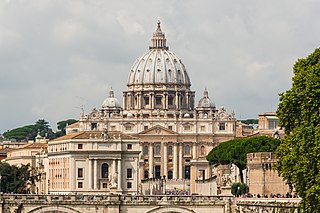
The Catholic Church, also known as the Roman Catholic Church, is the largest Christian church, with approximately 1.3 billion baptised Catholics worldwide as of 2017. As the world's "oldest continuously functioning international institution", it has played a prominent role in the history and development of Western civilisation. The church is headed by the Bishop of Rome, known as the pope. Its central administration, the Holy See, is in the Vatican City, an enclave within the city of Rome in Italy.
Nevertheless, most Mexican conservatives chose to support an opposition candidate, which they found in Juan Andreu Almazán. A former revolutionary combatant who later served as Communications Minister under Pascual Ortiz Rubio's administration and accumulated great wealth from construction works, Almazán presented himself as a right-wing candidate who would put an end to the "Comunazi degeneration" of the Cárdenas administration, although he promised to maintain the social reforms in case he won.
Gen. Juan Andreu Almazán was a Mexican revolutionary general, politician and businessman. He held high posts in the Mexican Army in the 1920s and ran for the presidency of Mexico in 1940 in a highly disputed election, having accumulated great wealth from construction.
Pascual Ortiz Rubio was a Mexican politician and the President of Mexico from 1930 to 1932. He was one of three Mexican presidents to serve out the six-year term (1928-1934) of assassinated president-elect Álvaro Obregón, while former president Plutarco Elías Calles retained power in a period known as the Maximato. Calles was so blatantly in control of the government that Ortiz Rubio resigned the presidency in protest in 1932.
On election day, a group of Almazán's supporters attempted to get into the National Palace to protest against the alleged electoral fraud that was taking place. In response, Paramilitary groups shot and killed many of them.
The National Palace is the seat of the federal executive in Mexico. It is located on Mexico City's main square, the Plaza de la Constitución. This site has been a palace for the ruling class of Mexico since the Aztec empire, and much of the current palace's building materials are from the original one that belonged to Moctezuma II.
A paramilitary is a semi-militarized force whose organizational structure, tactics, training, subculture, and (often) function are similar to those of a professional military, but which is formally not part of a government's armed forces.
The violence in Mexico City on election day was so severe that President Lázaro Cárdenas himself was unable to vote at his polling place until the nearby violence calmed down. [3] There were violent incidents in other parts of the country as well.
A polling place is where voters cast their ballots in elections.
Almazán refused to recognize the official results, claiming that the PRM had organized the violence against his supporters, as well as accusing it of stealing ballot boxes and preventing Almazán's supporters to vote for him.
Afterwards, Almazán fled to La Habana, unsuccessfully seeking support from the United States, which recognized Ávila Camacho's victory (although the US Government had opposed Cárdenas' social reforms, they saw Almazán's alleged Fascist sympathies as a bigger threat). When it became clear that it would be impossible to change the results, Almazán gave up on the idea of a violent revolt. He returned to Mexico and attended the inauguration of Ávila Camacho.
The United States of America (USA), commonly known as the United States or America, is a country comprising 50 states, a federal district, five major self-governing territories, and various possessions. At 3.8 million square miles, the United States is the world's third or fourth largest country by total area and is slightly smaller than the entire continent of Europe's 3.9 million square miles. With a population of over 327 million people, the U.S. is the third most populous country. The capital is Washington, D.C., and the largest city by population is New York City. Forty-eight states and the capital's federal district are contiguous in North America between Canada and Mexico. The State of Alaska is in the northwest corner of North America, bordered by Canada to the east and across the Bering Strait from Russia to the west. The State of Hawaii is an archipelago in the mid-Pacific Ocean. The U.S. territories are scattered about the Pacific Ocean and the Caribbean Sea, stretching across nine official time zones. The extremely diverse geography, climate, and wildlife of the United States make it one of the world's 17 megadiverse countries.
Fascism is a form of radical, right-wing, authoritarian ultranationalism, characterized by dictatorial power, forcible suppression of opposition, and strong regimentation of society and of the economy, which came to prominence in early 20th-century Europe. The first fascist movements emerged in Italy during World War I before it spread to other European countries. Opposed to liberalism, Marxism, and anarchism, fascism is placed on the far-right within the traditional left–right spectrum.
The Politics of Mexico take place in a framework of a federal presidential representative democratic republic whose government is based on a congressional system, whereby the President of Mexico is both head of state and head of government, and of a multi-party system. The federal government represents the United Mexican States and is divided into three branches: executive, legislative and judicial, Anahis term as established by the Political Constitution of the United Mexican States, published in 1917. The constituent states of the federation must also have a republican form of government based on a congressional system as established by their respective constitutions.
Cuauhtémoc Cárdenas Solórzano is a prominent Mexican politician. He is a former Head of Government of the Federal District and a founder of the Party of the Democratic Revolution (PRD). He ran for the presidency of Mexico three times. His 1988 loss to the Institutional Revolutionary Party candidate by the narrowest of margins had long been considered a direct result of obvious electoral fraud, later acknowledged by President Miguel de la Madrid. He previously served as a Senator, having been elected in 1976 to represent the state of Michoacán and also as the Governor of Michoacán from 1980 to 1986.
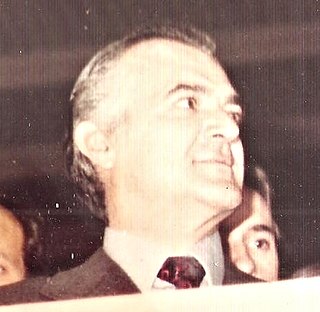
Miguel de la Madrid Hurtado was a Mexican politician affiliated with the Institutional Revolutionary Party (PRI) who served as the 52nd President of Mexico from 1982 to 1988. During his presidency, de la Madrid introduced sweeping neoliberal economic policies in Mexico, beginning an era of market-oriented presidents in that country. His administration was criticized for its slow response to the 1985 Mexico City earthquake, and the handling of the controversial 1988 Presidential elections in which the PRI candidate Carlos Salinas de Gortari was declared winner, amid accusations of electoral fraud.
The Party of the Democratic Revolution is a social democratic political party that had been one of the three major political parties in Mexico over the last several decades, the others being the Institutional Revolutionary Party and the National Action Party.
Miguel Alemán Valdés was a Mexican politician who served a full term as the President of Mexico from 1946 to 1952, the first civilian president after a string of revolutionary generals. His administration was characterized by Mexico's rapid industrialization, often called the Mexican Miracle, but also for a high level of personal enrichment for himself and his associates. His presidency was the first of a new generation of Mexican leaders, who had not directly participated in the Mexican Revolution, and many in his cabinet were also young, university-educated civilians, close friends from his days at university.
General elections were held in Romania on 28 November 2004, with a second round of the presidential elections on 12 December between Prime Minister Adrian Năstase of the ruling Social Democratic Party of Romania (PSD) and Bucharest Mayor Traian Băsescu of the opposition Justice and Truth Alliance. Băsescu was elected President by a narrow majority of just 51.2%.
Lázaro Cárdenas Batel is a Mexican politician. He served as governor of Michoacán from 2002 to 2008), representing the Party of the Democratic Revolution (PRD). Prior to his election to that office in 2001, he had represented his home state in both the federal Chamber of Deputies and the Senate.
Leonel Godoy Rangel is a Mexican lawyer, politician, and former Governor of Michoacán. He is a former president of the Party of the Democratic Revolution (PRD).
General elections were held in Mexico on July 6, 1988.
General elections were held in Mexico on 7 July 1952. The presidential elections were won by Adolfo Ruiz Cortines, who received 74.3% of the vote. In the Chamber of Deputies election, the Institutional Revolutionary Party won 151 of the 161 seats. These were the last presidential elections in Mexico in which women were not allowed to vote.
General elections were held in Costa Rica on 13 February 1944. Teodoro Picado Michalski of the Victory Bloc won the presidential election with 75.1% of the vote. Voter turnout was 43.2%.

General elections were held in Costa Rica on 8 February 1948. Otilio Ulate Blanco of the National Union Party won the presidential election with 55.3% of the vote, although the elections were deemed fraudulent and annulled by Congress, leading to the Costa Rican Civil War later that year. Following the war, the results of the parliamentary election were also annulled. Voter turnout was 43.8% in the vice-presidential election and 49.2%.
General elections were held in Mexico on 4 July 1976. José López Portillo was the only candidate in the presidential election, and was elected unopposed. In the Chamber of Deputies election, the Institutional Revolutionary Party won 195 of the 237 seats, as well as winning all 64 seats in the Senate election. Voter turnout was 64.6% in the Senate election and 62.0% in the Chamber election.
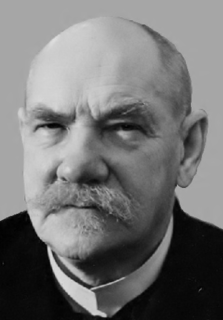
Two-stage presidential elections were held in Finland in 1931. On 15 and 16 January the public elected presidential electors to an electoral college. They in turn elected the President. The result was a victory for Pehr Evind Svinhufvud, who won on the third ballot by just two votes. The turnout for the popular vote was 47.3%. This presidential election was held during an ideologically, politically, socially and economically tense time. The Great Depression was impoverishing many Finnish farmers and workers. The far-right Lapua Movement had not settled for the ban of the Communist Party and its affiliated organizations in the autumn of 1930. It wanted to help elect a President who would also strongly oppose the Social Democrats and moderate bourgeois parties, such as the Progressives. Although Svinhufvud disapproved of the Lapua Movement's violent kidnappings of left-wing politicians and other illegal acts, he was their preferred presidential candidate. Former President K.J. Ståhlberg, a champion of democracy, parliamentarism and the rule of law, had been briefly kidnapped by some activists of the Lapua Movement with his wife in October 1930. He was chosen as the Progressive presidential candidate. Speaker of the Finnish Parliament, Kyösti Kallio, held ideals similar to those of Ståhlberg, and he became the Agrarian presidential candidate. The outgoing President, Lauri Kristian Relander, had lost the Agrarian presidential candidacy to Kallio, because he did not condemn the Lapua Movement as strongly as Kallio did, and a sufficient number of Agrarians believed that Kallio could control the Lapua Movement's extremists more effectively than Relander. Right-wing Finns and some centrists, such as a prominent Agrarian parliamentarian, Juho Niukkanen, were concerned that Ståhlberg's re-election as the Finnish President would escalate political tensions in Finland. The Commander-in-Chief of the Civil Guards, Major General Lauri Malmberg, announced in the Finnish Parliament that he would not guarantee order among the Civil Guards, if Ståhlberg was elected President. Svinhufvud's razor-thin victory required Niukkanen's arm-twisting tactics, whereby he pressured all the Agrarian presidential electors to support Svinhufvud. This 69-year-old and slightly ailing conservative politician was considered by his supporters as a sufficiently bold, solid and patriotic man to re-unite the ideologically divided Finns. His pro-democracy supporters hoped that he could keep both right-wing extremists and left-wing extremists in check.
Miguel Henríquez Guzmán was a Mexican politician and military officer.

The Confederación Nacional de Organizaciones Populares is a political institution of the Institutional Revolutionary Party (PRI) in Mexico. It was founded in 1943 and has historically served to represent the middle and lower classes within the party organization. Although a major sector of the PRI, it has been less studied that the worker and peasant sectors.