Liechtenstein is a principality governed under a constitutional monarchy. It has a form of mixed constitution in which political power is shared by the monarch and a democratically elected parliament. There is a two-party system and a form of representative democracy in which the prime minister and head of government is responsible to parliament. However the Prince of Liechtenstein is head of state and exercises considerable political powers.
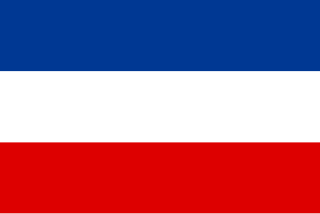
The Kingdom of Yugoslavia was a state in Southeast and Central Europe that existed from 1918 until 1941. From 1918 to 1929, it was officially called the Kingdom of Serbs, Croats, and Slovenes, but the term "Yugoslavia" was its colloquial name due to its origins. The official name of the state was changed to "Kingdom of Yugoslavia" by King Alexander I on 3 October 1929.

Demetrius is the Latinized form of the Ancient Greek male given name Dēmḗtrios (Δημήτριος), meaning “Demetris” - "devoted to goddess Demeter". Alternate forms include Demetrios, Dimitrios, Dimitris, Dmytro, Dimitri, Dimitrie, Dimitar, Dumitru, Demitri, Dhimitër, and Dimitrije, in addition to other forms descended from it.

The Principality of Serbia was an autonomous state in the Balkans that came into existence as a result of the Serbian Revolution, which lasted between 1804 and 1817. Its creation was negotiated first through an unwritten agreement between Miloš Obrenović, leader of the Second Serbian Uprising, and Ottoman official Marashli Pasha. It was followed by the series of legal documents published by the Sublime Porte in 1828, 1829 and finally, 1830—the Hatt-i Sharif. Its de facto independence ensued in 1867, following the evacuation of the remaining Ottoman troops from the Belgrade Fortress and the country; its independence was recognized internationally in 1878 by the Treaty of Berlin. In 1882 the country was elevated to the status of kingdom.
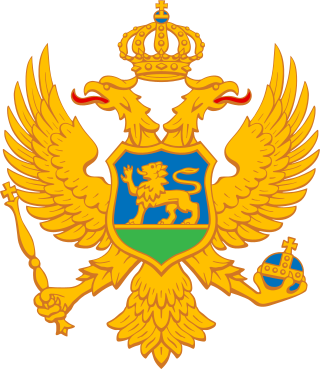
The Politics of Montenegro takes place in a framework of a parliamentary representative democratic republic, whereby the Prime Minister of Montenegro is the head of government, and of a multi-party system. Executive power is exercised by the government. Legislative power is vested in both the government and the Parliament of Montenegro. The Judiciary is independent of the executive and the legislature. The Economist Intelligence Unit rated Montenegro a "flawed democracy" in 2022.

Sharif Hassan Sheikh Adan (Somali: Shariif Xasan Sheekh Aadan, Arabic: شريف حسن الشيخ آدم; is a Somali politician. He is a former Minister of Finance of Somalia, and the last Speaker of the Transitional Federal Parliament.
The People's Radical Party was the dominant ruling party of Kingdom of Serbia and later Kingdom of Serbs, Croats and Slovenes from the late 1880s until 1928.

The Serbian Revolution was a national uprising and constitutional change in Serbia that took place between 1804 and 1835, during which this territory evolved from an Ottoman province into a rebel territory, a constitutional monarchy, and modern Serbia. The first part of the period, from 1804 to 1817, was marked by a violent struggle for independence from the Ottoman Empire with two armed uprisings taking place, ending with a ceasefire. The later period (1817–1835) witnessed a peaceful consolidation of political power of the increasingly autonomous Serbia, culminating in the recognition of the right to hereditary rule by Serbian princes in 1830 and 1833 and the territorial expansion of the young monarchy. The adoption of the first written Constitution in 1835 abolished feudalism and serfdom, and made the country suzerain. The term Serbian Revolution was coined by a German academic historiographer, Leopold von Ranke, in his book Die Serbische Revolution, published in 1829. These events marked the foundation of modern Serbia.
Dimitrije is a masculine given name. Dimitrije is a Serbian variant of a Greek name Demetrius. It may refer to:

Avram Petronijević was a Serbian politician serving as Minister of Foreign Affairs of the Principality of Serbia on several terms and holding the longest term by one Prime Minister in the political history of Serbia.

Aleksa Simić was a Serbian politician serving as Prime Minister on three terms and Government Minister on multiple terms.
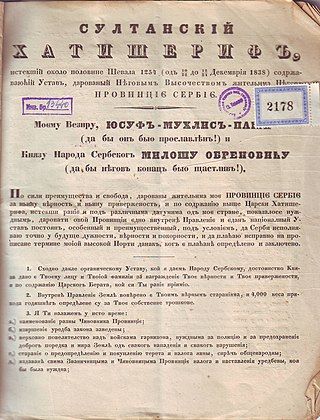
The Constitution of 1838, often called the Turkish constitution, was a constitution of the Principality of Serbia from 1838 until 1869. Through this, the Ottoman Empire wanted to show that Serbia was subservient to it. Although the new constitution was less liberal than the preceding Sretenje Constitution, Serbian prince Miloš Obrenović did not want to rule under it, so he abdicated in favor of his son Milan Obrenović.

A cabinet is a body of high-ranking state officials, typically consisting of the executive branch's top leaders. Members of a cabinet are usually called cabinet ministers or secretaries. The function of a cabinet varies: in some countries, it is a collegiate decision-making body with collective responsibility, while in others it may function either as a purely advisory body or an assisting institution to a decision-making head of state or head of government. Cabinets are typically the body responsible for the day-to-day management of the government and response to sudden events, whereas the legislative and judicial branches work in a measured pace, in sessions according to lengthy procedures.
The Serbian Civil Code was the first and only complete Civil Code in Serbia. It was enacted on the 25th of March1844, modeled mostly after the Civil Code of Austria, during the reign of the Defenders of the Constitution and Prince Aleksandar Karađorđević.

Dimitrije "Mita" Davidović was a Serbian politician serving as the Prime Minister of Serbia, Minister of Education and chief secretary of cabinet to Prince Miloš Obrenović I. He was also a writer, philosopher, journalist, publisher, historian, diplomat and the founder of modern Serbian journalism and publishing.

The Constitution of the Principality of Serbia known as the Sretenje Constitution, was the first constitution of the Principality of Serbia, adopted in Kragujevac in 1835. The Constitution was written by Dimitrije Davidović. The Constitution divided the power into legislative, executive and judicial branches, which is still considered the standard of democracy and constitutionality today.

Dimitrije Matić was a Serbian philosopher, jurist, professor, and politician who served as Minister of Education, Minister of Justice and Minister of Foreign Affairs. He was President of the National Assembly, which ratified the 1878 Treaty of Berlin proclaiming Serbia's independence.
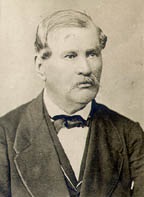
Stevan Magazinović was a Serbian politician and judge. He was minister and representative of the Prince Miloš Obrenović, at a time when Serbia was an autonomous province within the Ottoman Empire.

Lazar Arsenijević Batalaka was a Serbian participant in the First Serbian Uprising and later a state adviser, diplomatic representative of Serbian to Constantinople, Minister of Justice and Minister of Education and a historian.
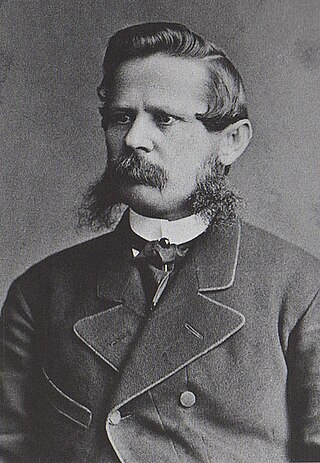
Aćim Čumić was a Serbian jurist and politician who served as Prime Minister of the Principality of Serbia.