1914 Belgian general election

Last updated

1914 Belgian general election
Flag of Belgium (civil).svg
←  1912 24 May 1914 1919  →

88 of the 186 seats in the Chamber of Representatives
 First partySecond partyThird party
  DeBroqueville.jpg 3x4.svg 3x4.svg
Leader Charles de Broqueville Laurent Vandersmissen
Party Catholic Labour Liberal
Seats won412620
Popular vote570,806404,701326,922
Percentage42.77%30.32%24.50%

Government before election

De Broqueville I
Catholic

Government after election

De Broqueville I
Catholic

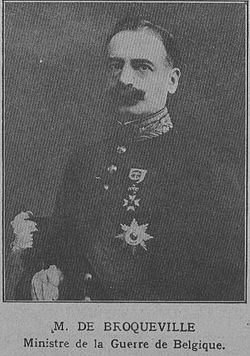
Prime Minister Charles de Broqueville M 37 4 Charles de Brocqueville.jpg
Prime Minister Charles de Broqueville

Partial general elections were held in Belgium on 24 May 1914. [1] The result was a victory for the Catholic Party, which won 41 of the 88 seats up for election in the Chamber of Representatives. [2]

Contents

The Catholics had formed the government continuously since 1884; the incumbent de Broqueville government was in office since 1911.

Under the alternating system, elections were only held in four out of the nine provinces: Hainaut, Limburg, Liège and East Flanders. This was the last time this system was applied, as the next elections in 1919 saw the introduction of full four-year terms.

The elections occurred shortly before the outbreak of World War I. The newly elected legislature met for just one day in a special session: on 4 August 1914, when King Albert I addressed the United Chambers of Parliament upon the German invasion of Belgium. The parliament met again after the war in November 1918.

Results

PartyVotes%Seats
Won
Catholic Party 570,80642.7741
Belgian Labour Party 404,70130.3226
Liberal Party 326,92224.5020
Christene Volkspartij 22,2191.661
Socialist dissidents2,0520.150
Catholic dissidents1,7860.130
Independents6,0950.460
Total1,334,581100.0088
Source: Belgian Elections [3]

Seats up for election

Seats in the provinces of Antwerp, Brabant, Luxembourg, Namur and West Flanders were not up for election.

ProvinceArrondissement(s)Chamber
Limburg Hasselt 3
Tongeren-Maaseik 4
East Flanders Aalst 5
Oudenaarde 3
Gent-Eeklo 12
Dendermonde 4
Sint-Niklaas 4
Hainaut Tournai-Ath 6
Charleroi 11
Thuin 3
Mons 7
Soignies 4
Liège Huy-Waremme 4
Liège 13
Verviers 5
Total88

Elected members

Apart from the re-elected members, the following six members were newly elected:

References

  1. ↑ Nohlen, Dieter; Stöver, Philip (31 May 2010). Elections in Europe: A data handbook. Nomos Verlagsgesellschaft. p. 289. ISBN   978-3-8329-5609-7.
  2. ↑ Nohlen & Stöver, p308
  3. ↑ Belgian Elections