
Eden was a local government district in Cumbria, England, based at Penrith Town Hall in Penrith. It was named after the River Eden, which flowed north through the district toward Carlisle. Its population of 49,777 at the 2001 census, increased to 52,564 at the 2011 Census. A 2019 estimate was 53,253. In July 2021 it was announced that, in April 2023, Cumbria would be divided into two unitary authorities. On 1 April 2023, Eden District Council was abolished and its functions transferred to the new authority Westmorland and Furness, which also covers the former districts of Barrow-in-Furness and South Lakeland.

A civil parish in England is the lowest unit of local government. There are 284 civil parishes in the ceremonial county of Cumbria, with most of the county being parished. At the 2001 census, there were 359,692 people living in those 284 parishes, accounting for 73.8 per cent of the county's population.

Westmorland and Lonsdale is a constituency in the south of Cumbria, represented in the House of Commons of the UK Parliament since 2005 by Tim Farron, the former leader of the Liberal Democrats (2015–2017).

The Barony of Kendal is a subdivision of the English historic county of Westmorland. It evolved from one of two ancient baronies that make up the county, the other being the Barony of Westmorland. In 1974, the entire county became part of the modern county of Cumbria and ceased to have an administrative function. At the same time, Kendal borough along with some other rural and urban districts in Westmorland was merged with the neighbouring parts of Lancashire, Furness and Cartmel, and also the Sedbergh Rural District of the West Riding of Yorkshire into the new South Lakeland district of the new county.

Askam and Ireleth is a civil parish close to Barrow-in-Furness in Westmorland and Furness, Cumbria, England. Historically part of Lancashire, it originally consisted of two separate coastal villages with different origins and histories which, in recent times, have merged to become one continuous settlement. In the 2001 census the parish had a population of 3,632, reducing at the 2011 census to 3,462.

This is an as yet incomplete list of listed buildings in England, which are the majority of the listed buildings of the United Kingdom.

Staveley-in-Cartmel is a village and civil parish in Westmorland and Furness Unitary Authority, Cumbria, England. It lies east of Newby Bridge, near the south end of Windermere, 9 miles (14 km) northeast of Ulverston. It is sometimes known as Staveley-in-Furness. Both names distinguish it from another Staveley in Cumbria. In the 2001 census the parish had a population of 428, decreasing at the 2011 census to 405.

St Mary's Church is in the village of Staveley-in-Cartmel, Cumbria, England. It is an active Anglican parish church in the deanery of Windermere, the archdeaconry of Westmorland and Furness, and the diocese of Carlisle. It is recorded in the National Heritage List for England as a designated Grade II listed building.
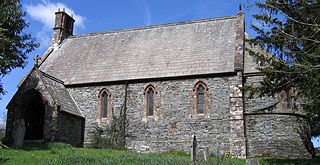
Woodland is a dispersed hamlet within the civil parish of Kirkby Ireleth in the Furness region of Cumbria, England, and is located in the southern part of the Lake District National Park, west of Coniston Water, between Torver and Broughton-in-Furness.
The Manor of Hougun is the historic name for an area which now forms part of the county of Cumbria in North West England. Only the southern band of land in the south of Cumbria was surveyed in the Domesday Book. The westernmost entries for Cumbria, covering the Duddon and Furness Peninsulas are largely recorded as part of the Manor of Hougun. The entry in Domesday Book covering Hougun refers to the time when it was held by Tostig Godwinson, Earl of Northumbria.

Strickland Roger is a civil parish in Westmorland and Furness, Cumbria, England. In the 2001 census the parish had a population of 544, decreasing at the 2011 census to 480. It lies north of Burneside and west of the A6 road, and is bordered by the parishes of Strickland Ketel to the south west, Nether Staveley and Kentmere to the west, Whitwell and Selside to the north, and Skelsmergh to the east. From 1974 to 2023 it was in South Lakeland district.

