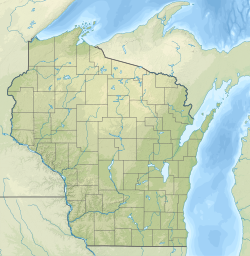
Plover is a village in Portage County, Wisconsin, United States. A central hub of the Stevens PointMicropolitan Statistical Area, it is the most populous village and the second-largest municipality in the county. With a population of 13,519 at the 2020 United States census and an estimated 14,531 in 2026, Plover has emerged as a major regional center for agriculture, food processing, and "Silent Sports" recreation.
Situated within the "Central Sands" region of Wisconsin, Plover features a unique topography defined by a flat glacial outwash plain that transitions into rugged terminal moraines to the east. The village is known for its high-density irrigated cropland, lush recreational trails, and its position along the Wisconsin River and Little Plover River.
Plover’s modern demographic profile is defined by a period of explosive growth following its 1971 re-incorporation. While the original 19th-century settlement was a small river-bound village, the late 20th century saw Plover transition from a rural town to the primary residential and commercial engine of southern Portage County. Between 1970 and 2020, the village population grew by 416%, far outstripping the growth rates of both Stevens Point and the State of Wisconsin.
Racial and ethnic composition
Historically a culturally homogenous settlement of European-descendant "Yankee" and Polish farmers, Plover has gradually diversified over the last 30 years as its economy shifted toward global food processing and retail.
The "Hmong Influx" (2000–2020): One of the most significant demographic shifts occurred at the turn of the century as Plover became a destination for Hmong American families. The Asian population grew from less than 1% in 1990 to 5% by 2020, contributing to the village's cultural fabric through local businesses and educational contributions.
Hispanic Growth: Reflecting national trends, the Hispanic and Latino community in Plover has increased nearly fivefold since 1990, driven largely by employment in the Central Sands' agricultural and food-manufacturing sectors.
Socioeconomics and Education
As of the 2020–2024 American Community Survey estimates, Plover maintains a significantly higher economic profile than its neighboring municipalities:
Household Income: The median household income of $88,042 is roughly 15% higher than the state average and 20% higher than the Stevens Point metropolitan average. This wealth is largely concentrated in the newer suburban developments on the village's east side.
Educational Attainment: Plover is a highly educated community; 42.2% of residents aged 25 and older hold a bachelor's degree or higher, compared to the Wisconsin state average of 33.4%. This is attributed to the village's role as a bedroom community for faculty and staff at the University of Wisconsin–Stevens Point.
Poverty: Despite rapid growth, Plover has maintained a low poverty rate of 9.2%, which is consistently lower than the national average.
Age and Gender Distribution
Plover has historically been younger than the surrounding county due to the influx of young families. However, as the "original" 1970s suburban generation ages, the median age has crept upward:
Median Age: 36.0 years (2020), up from 33.0 in 2000.
Family Structure: 65.7% of households are family units, reflecting the village's primary reputation as a suburban family hub.
Gender Balance: 52.1% Female, 47.9% Male.
History
Early settlement and portage
The area was originally recognized as "Plover Portage," a name derived from the portage between the lower and upper Wisconsin River. In 1825, a treaty established the site as a boundary between the Chippewa and Winnebago tribes. In 1844, the site was selected as the first county seat of Portage County, with the village officially platted in 1845.
Incorporation and seat removal
Plover was incorporated as a village on March 6, 1857. However, after a heated legislative battle in 1868, the county seat was moved to Stevens Point. The loss of its administrative status led to the village's dissolution in 1870. The village underwent two further cycles of incorporation and dissolution in 1912 and 1931, primarily due to financial instability during the Great Depression. Its fourth and current incorporation was finalized on September 28, 1971. Since the 1970s, the village has expanded its land area significantly through nearly annual annexations of the surrounding Town of Plover.
Geography
Plover sits atop a massive glacial outwash plain within the Central Sands region. This geography consists of deep sandy soils and a high water table, which supports intensive irrigation for agriculture. The village encompasses 11.09 square miles (28.7km2), of which 10.61 square miles (27.5km2) is land.
The village is bordered to the west by the Wisconsin River and is bisected by the Little Plover River, a rare spring-fed "Class I" trout stream noted for its hydrologic importance to regional groundwater levels. To the east, the landscape transitions into terminal moraines, creating hilly terrain that contrasts with the village's central plains.
Climate
Plover has a humid continental climate (Dfb), characterized by warm, wet summers and freezing, snowy winters. Over the course of the year, temperatures typically vary from 9°F to 82°F.
Economy
Plover's economy is a powerhouse of the Wisconsin agricultural corridor, centered on vegetable processing and food manufacturing. The village serves as a major hub for large-scale operations utilizing the Central Sands' irrigated plains.
Key Employers: Major companies include Monogram Food Solutions, Basic American Foods, and specialized machining facilities.
Retail: Plover is a premier regional shopping destination, with annual retail sales exceeding $546 million, serving as the commercial core for southern Portage County.
Agri-Tourism: The recently developed Food + Farm Exploration Center provides a high-tech venue for agricultural education, reflecting the village's heritage.
Geography and recreation
Plover is a gateway to one of the Midwest's most interconnected trail networks and diverse aquatic ecosystems.
Waterways
The Wisconsin River, forming the western boundary, is accessed via Galecke County Park for powerboating and fishing for walleye and bass. The Little Plover River is a premier destination for fly-fishing. At the village center, Lake Pacawa offers a 36-acre man-made recreational space featuring the Wisconsin Korean War Veterans Memorial.
Outdoor Activities
Trail Systems: Plover is a hub for the "Silent Sports" community, featuring the Green Circle Trail (27-mile loop) and the Tomorrow River State Trail (29-mile rail trail).
Parks: Standing Rocks County Park, located on glacial terminal moraines, offers over 10 miles of technical mountain biking trails and groomed cross-country ski trails.
Government
Plover is governed by a Village President and a six-member Board of Trustees. The current Village President is Gary Wolf. Public safety is maintained by the Plover Police Department and the Plover Fire Department, which provides emergency services for both the village and the surrounding town.
Transportation in Plover is dominated by the private automobile, though the village is a leader in regional bicycle infrastructure.
Highways: Plover is served by Interstate 39 and U.S. Route 51, which provide primary north-south access through Central Wisconsin. Wisconsin Highway 54 serves as the major east-west artery.
Cycling: The village is integrated into the regional trail system, aiming to double bicycle trip frequency through extensive bike lanes and paths.
This page is based on this Wikipedia article Text is available under the CC BY-SA 4.0 license; additional terms may apply. Images, videos and audio are available under their respective licenses.