The Marion Star (known as The Marion Daily Star until 1926) is a daily newspaper in Marion, Ohio. The paper is owned by USA Today Co., formerly the Gannett Newspaper organization. It was founded in 1877 by Sam Hume and, in its early years, was so unprofitable that it became insolvent in 1884. After the business was put up for auction at a sheriff's sale, it was purchased by Warren G. Harding, future president of the United States of America. Harding made the newspaper commercially successful and owned it until he sold the business to Roy D. Moore and Louis H. Brush, who later founded Brush-Moore Newspapers, in 1923, two months before his death. The Star was acquired by Thomson Newspapers in 1967 and the Gannett Company in 2000.
The print version of the The Marion Star has a circulation of 13,929 on afternoons and 13,790 on Sundays. In 2007 it reported having 66 employees.[2]
History
Early history (1877–1884)
The Marion Daily Pebble was founded in 1877 by Sam Hume, a lumber salesman who had moved from Pleasant Township, Ohio to Marion, and his young sons Willis and Harry. Sam, Willis and Harry had previous but trivial experience in publishing, and Sam Hume thought that the city of Marion "needed a daily". Sam Hume's wife, Maria P. Hoxter, proofread the newspaper. The paper changed its name shortly after its creation to The Marion Daily Star.[3][4]
Despite its name, the Marion Daily Star usually sent out only twice a week. Having the paper delivered to one's home cost ten cents, and picking it up at the post office cost seven.[3][5] The newspaper's editorials and features were at first highly comedic, but because readers quickly lost interest in the comedy, the business began to struggle financially.[6] It was described in The World's Work as having been a "hell-box full of pied type and a broken-down press" during that time.[7]
In 1884, the Humes sold the newspaper to Ben Dempster and moved to Indiana. Dempster sold it to Kelley Mount, but Mount, after alienating many of the paper's subscribers because of his outspoken praise for James G. Blaine,[4] resold it to Dempster in the same year.[8] According to Warren G. Harding, Dempster put the Star, which by then had gone insolvent, up for auction at a sheriff's sale.[9][10] Harding's father, George Tryon Harding, bought it with real estate instead of cash, paid off its debts and gave his son ownership of the newspaper. George Tryon Harding claimed that he himself never had any influence or control over the editorial policy of the Star.[11] Warren lost his proprietorship shortly thereafter, when it was ruled in court that the real estate George had traded was invalid.[12]
Management by Warren G. Harding (1884–1923)
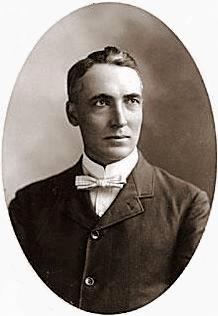
Warren G. Harding in 1882, aged 17
Later in 1884, an eighteen-year-old Warren Harding, along with his friends John O. Sickle[a] and Jack Warwick,[13] repurchased The Marion Daily Star for either $300 or $450 (Harding's recollection of the price varied). It is not clear whose money bought the newspaper. George may have paid for it,[5] or Warren, Sickle and Warwick may have pooled their money.[14] Harding named the business under which he published the Star the Star Publishing Company; it later became the Harding Publishing Company.[3] Within weeks after the purchase, Sickle, frustrated with the poor quality and difficulty of the printing equipment available at the office, quit.[10][14] Warwick, though, kept a job at the Star as a rewrite man.[15][3]
Harding began editing at the newspaper immediately after he acquired it.[14] Harding was responsible for writing, proofreading, typesetting and printing the newspaper, and for managing the business component of it; Warwick assisted him in proofreading, typesetting and printing.[16][3] Harding furnished the headquarters with new printing presses, a telephone and a telegraph, and hired reporters so that he could spend his time requesting advertisements and writing editorials instead of doing the reporting himself.[13] Warwick got into an argument with Harding over Harding's decision to install the telephone, but remained with the newspaper until he found a new job at the Toledo Blade in 1904.[3][17]
Harding believed that classified advertisements were an important aspect to a newspaper's financial success and ability to beat competition. His preferred method of convincing people to pay to put advertisements in the Star was to meet with them personally and explain the advantages of advertising in a newspaper.[18] He paid the Star's staff better than competitor newspapers paid their own staff, which kept his employees satisfied and deterred strikes.[19]
Harding working at The Marion Star
Harding increased the length of the Star from four pages to an average of fourteen, with a comic strip and extra pages on Saturdays.[20] The paper's circulation increased from 1,000 to 15,000,[21] it began to publish six days each week instead of semiweekly and by 1885 it had financially recovered; while Harding was a senator he jested to a man who offered to buy the newspaper from him that it would cost $200,000.[22][23] However, his success as an editor took a toll on his health; he was hospitalized five times between 1889 and 1901 at the Battle Creek Sanitorium for reasons his biographer, Andrew Sinclair, described as "fatigue, overstrain, and nervous illnesses".[24] Florence Kling, who became Florence Harding after Warren married her in 1891, acted as the Star's business manager and accountant but did not influence the actual editing or publication of the newspaper.[13]
The Star encouraged industrialists to make improvements to the city of Marion, including through the development of new railroads; it supported the Black Diamond railroad, which was to send coal to Marion from Coshocton County mines. The railroad was never completed, and after the project's failure became apparent Harding denounced Albert E. Boone, the railroad's original proponent.[25] In 1890, Harding wrote in the Star that promoting Marion, which was not legally a city, to the status of a city would permit its municipal government to pave the then-dirt streets properly, because only a city council could handle the expenses to do so. On April 7 of that year, the majority of Marion citizens voted to make Marion a city. The pavement project was delayed by several years, after Harding wrote an editorial on April 9 that disparaged wealthy people who did not want the pavement.[26]
Office of The Marion Daily Star in 1915
Later in the 1890s, Harding and George Crawford, publisher of the Independent (a competitor to the Star), insulted and degraded each other via their own editorials. After Crawford published one in 1894 referring to Harding as a "moral leper" by whom "[s]ome of the best men in the city have been assailed", Harding called Crawford a "lickspittle organ" and a "parasite" in return.[27] James H. Vaughn, the publisher of another competitor, the Democratic Mirror, accused Harding's father of being black ("woolly-headed"); Harding responded, "The Mirror grows amusing on the subject of wool. The suspicion is abroad that Colonel Vaughn has been chased by a vicious ram".[28]
The Star reported on Harding's campaigns for Ohio senator in 1914 and United States president in 1920. When Harding announced his campaign for senatorship in May of 1914, the Star portrayed him on May 28 as a politician whose appeal crossed economic, party and county lines: "His assurance of support come from every class, every faction and every locality in the state... The home sentiment is apparently very favorable to the candidacy".[29] In July of 1920, the Star claimed that the ceremony in which Harding was formally notified of his selection as the primary Republican candidate for president "was the most notable exercise of its kind in history and drew more people than any similar ceremony within memory".[30] On October 4, 1920, the Star published an opinion piece by Gifford Pinchot in which he explained why he wanted Harding to become president.[31]
After Harding won the presidential election on November 2, employees of the Star gifted him a golden printer's rule and gave Florence a flower bouquet.[32] A few weeks afterward, Harding announced at a meeting with shareholders that, because he could not simultaneously work full-time at the Star and fulfill his obligations as president, he would give up his responsibilities as editor. Harding was sad to retire; he claimed that he loved the Star as if it were "a part of [his] body" and that he had had no regrets in becoming a newspaper publisher.[3] One of the last columns he wrote for the Star celebrated the centennial of Marion's founding.[33]
Later history (1923–present)
Harding retained ownership of the Star until June of 1923, when he sold the business to Louis H. Brush and Roy D. Moore (who also purchased the Marion Tribune around the same time)[8] for $480,000, although he intended to keep writing editorials for it.[34][35] Two months later, on August 2, 1923, Harding fell ill and died unexpectedly while in San Francisco, California. The Star's obituary of Harding on August 3 stated that "[w]ith a profound feeling of personal loss... the national capital was plunged into deepest mourning today as it awaited the return of [Harding's] body".[36] On that day, the Star also published an editorial about Harding's death:[37]
President Harding is dead. This brief message, flashed around the globe, brought sorrow to the Nation and touched the tenderest sympathies of the liberty-loving people of every land. But here in Marion, where we knew and loved him as Harding, the man; Harding, the Fellow-citizen; Harding, the neighbor, and Harding, the friend—rather than Harding, the President—the blackest grief obtains. Those who were close to him can hardly escape the feeling that it must have been given to him to have seen into the future, when, robust and the picture of health, he told them shortly before his inauguration that he would never come out of the Presidency alive. Those close to him know that, contrary to the general view, he left the Senate with the deepest regret to enter the Presidency. Those close to him know that he realized that the burden he was about to assume was such as never attempted by mortal man, yet they hoped for the best. Now in sorrow they realize that he was a true prophet—that he knowingly gave himself a sacrifice to his country. And it may be said here that his great heart—which was alike his strength and his weakness—proved his undoing. Of all our Presidents, he was the most democratic at heart—the most approachable. He added to his already mighty burden by taking on those of others. No appeal, no matter how lowly, was passed over by him. He gave freely—too freely—of his time and effort. He never counted the cost nor spared himself. In this regard the course which was his as a citizen was his as the President. The load he was bearing became staggering, and this, and the fact that he was weakened by the attack of influenza some months since, and from which he never recovered, made him especially susceptible to the subtle attack of ptomaine poisoning which led to his death. Full appreciation of Warren G. Harding, the President, will not be written today—probably not in this generation—but posterity will weigh his achievements as President—and they have been many and great—at their full worth. But the measure of Warren G. Harding, the man, is today beyond all question. That he was a man among men, all will concede. None will question his bigness of heart, his greatness of soul. He thought and lived above the little things of life, and yet was so thoroughly human that to know him was to love him, and thus it is that today, while the Nation mourns, our people are stunned by the passing of our citizen and friend—greatest and best beloved.
—"Greatest and Best Beloved", The Marion Star, August 3, 1923
Roy D. Moore (left) and Louis H. Brush (right)
In February of 1924, Brush and Moore filed a libel lawsuit against banker Frank A. Vanderlip, seeking 1.2 million dollars in damages. Vanderlip had alleged in the New-York Tribune that the $480,000 that Brush and Moore had given Harding was a much higher amount than the newspaper's supposed actual value of $200,000, meaning that they had bribed Harding into selling them the Star.[38] The case was settled in January of 1925 with Vanderlip paying an undisclosed amount of money to Brush and Moore.[39]The Marion Daily Star became The Marion Star some time thereafter.[40] Brush and Moore founded Brush-Moore Newspapers with William H. Vodrey in 1927.[3]
In March of 1928 the Senate reopened the investigation into Harding's sale of The Marion Star, at the same time it was investigating the Teapot Dome scandal, due to allegations that Harding had invested the money he received from selling the Star in oil bonds from Continental Trading Co. that were now missing.[41] George H. Van Fleet, an editorial writer for the Star, denied that Harding had invested in those securities and dismissed the allegations as a posthumous smear campaign against Harding.[42] It was found a few days later that Harding could not have purchased the oil bonds, because the serial numbers of the ones he had purchased did not correspond to the Continental ones.[43] In 1935, Brush and Moore made a request to the Board of Tax Appeals that they be permitted to deduct a $13,300 annual salary, which Harding would have received from The Marion Star had he lived to retire from the presidency, from their income tax; they claimed that Harding's estate had been using legal threats to make them pay the salary out to them.[44] The Board, however, denied the request after finding that the salary was "capital outlay".[35]
Thomson Newspapers acquired Brush-Moore Newspapers in 1967 for 72 million dollars, whereupon The Marion Star became part of the Thomson Newspaper chain, which already possessed 23 newspapers in the United States and 26 in Canada.[45] At the time, this was the most expensive sale of a newspaper group in history.[46] In 1994, Thomson Newspapers changed The Marion Star's name to simply The Star. The change was reversed in 1996; Tim Dowd, its then-publisher, stated that he wanted readers to continue associating The Marion Star with the city of Marion.[40]
In June of 2000, the Gannett Company, now USA Today Co., purchased Thomson's Central Ohio group of eight newspapers (including the Star), plus 13 other Thomson papers.[47]The Marion Star is headquartered on 163 East Center Street in Marion, Ohio.[48] Since 2014 the Star and other Ohio newspapers in the USA Today Co. network have been printed by the Dispatch Printing Company in Columbus, Ohio.[49] In 2015 nine awards from the annual Associated Press Media Editors (APME) contest in Columbus were given to journalists of The Marion Star; the Star was also third place in the APME's General Excellence category.[50] The APME lauded the Star for "outstanding journalism" in 2021 and, again, gave it third place in General Excellence in 2022.[51] In April 2024 The Marion Star switched from carrier to postal delivery, as its website had grown more popular, and thus more profitable to maintain, than its print edition.[52] The Marion Public Library and the Ohio History Connection maintain microfilm collections of the Star for public research;[53] the paper is also accessible for a monthly subscription fee through Newspapers.com and NewspaperArchive.[54][55]
Political views
Harding refrained from letting his Republican political views dictate the Star, because he thought that a conspicuous political slant would ruin its profits by offending Democratic and nonpartisan readers.[56] Though it often praised the Republican Party and repeated many of Harding's political views, it never scorned the Democratic Party. The Marion Star gave no commentary about the 1885 or 1887 gubernatorial elections of Ohio.[57][56]
In the 1880s during the temperance movement, the Star repeated Harding's belief that, if the government wanted people to stop drinking alcohol, it would be more effective to tax people for alcohol than to ban it altogether. Harding supported the Dow Law, an act created in 1886 by Ohio governor Joseph B. Foraker that taxed alcohol vendors a yearly $100 or $200 depending on whether they sold wine/beer or liquor.[58] A September 10, 1886 editorial in the Star opined that the only reason prohibitionists opposed the Dow Law was "the fallacious idea that taxing the liquor traffic legalizes it".[59]
The Marion Star claimed in a list of ethical policies in December 2023 that it, like all other USA Today Co. publications, would not and would never endorse or financially support any political parties, candidates or campaigns, nor allow its staff (barring opinion and editorial writers) to publicly express their political beliefs.[60]
Notable staff
Gary Abernathy – Political commentator who was a city editor for the Star between 1991 and 1993.[61]
Sinclair, Andrew (1969) [1965]. The Available Man: The Life behind the Masks of Warren Gamaliel Harding (1st Quadrangle Paperbacked.). Chicago: Quadrangle Books. OCLC422550801.
This page is based on this Wikipedia article Text is available under the CC BY-SA 4.0 license; additional terms may apply. Images, videos and audio are available under their respective licenses.