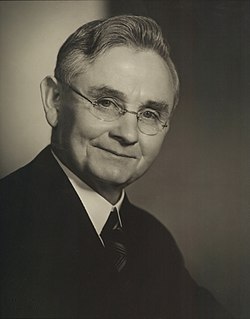
Background
Reed was first elected to the Bay of Islands electorate in the 1908 general election as a candidate of the Liberal Party. The 1911 election resulted in significant losses for the Liberal Party and Joseph Ward's government survived a no-confidence motion on the casting vote of the speaker only. Ward chose to resign, though, and made way for a new liberal Prime Minister, Thomas Mackenzie. [2] [3] Reed expected to be part of the new cabinet and the media discussed that he might be appointed Attorney-General due to his legal background. [4] Reed was invited to cabinet, but he did not join because the majority of the cabinet did not support his views of freehold. [5] When the Mackenzie government faced a no-confidence vote in July 1912, Reed voted with the opposition, thus effectively joining the Reform Party. [6]

Sir Joseph George Ward of Wellington, 1st Baronet, was a New Zealand politician who served as the 17th Prime Minister of New Zealand from 1906 to 1912 and from 1928 to 1930. He was a dominant figure in the Liberal and United ministries of the late 19th and early 20th centuries.
Table footnotes:
Reed's switch to Reform caused problems in the 1914 election. George Wilkinson had been the Reform candidate in the Bay of Islands electorate in 1911, he was keen to represent Reform in that electorate in 1914, and he had the backing of the local electorate committee. [9] Reed also wanted to run for Reform, and as he had the backing of the party head office, he was declared the official Reform candidate. [10] Reed narrowly won the election against Te Rangi Hīroa of the Liberal Party, with Wilkinson coming third. [11] Bill Veitch, at the time a United Labour Party MP in Wanganui, claimed that Wilkinson had been under immense pressure from the Reform Party not to contest the Bay of Islands election, and that William Massey had promised him a seat in the Legislative Council in return, [12] an allegation later picked up by other media outlets but also implicating Reed in the affair. [13]

Te Rangi Hīroa, also known as Sir Peter Henry Buck, was a prominent member of the Ngāti Mutunga Māori iwi. He was a doctor, military leader, health administrator, politician, anthropologist and museum director.
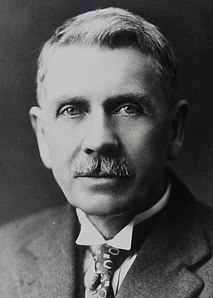
William Andrew Veitch was a New Zealand politician. He began his career in the labour movement, but was a strong opponent of socialism, and rejected the militant views held by many of his colleagues.
This complaint was elevated to a formal election petition in April 1915 by Waipapakauri resident Edward Evans and Edward Parsons of Waipuna on the Whangaroa Harbour, who engaged a King's Counsel, John Findlay, and a solicitor, Bill Endean, as their counsel. Reed used his brother John, also a King's Counsel, as his legal representative. The primary complaint was that Reed had, through an intermediary, tried to convince Wilkinson to retire by promising him a seat on the Legislative Council, and to reimburse him for his election campaign expenses. On 8 May 1915, the petition was upheld Justice Chapman and Justice Hosking, the election declared void, and Reed barred from standing in another election for one year. [14] [15] Since 1913, there have been over 100 by-elections held in New Zealand, and this was one of only five cases where a general election was declared void by the courts. [16]
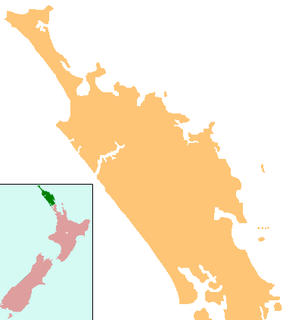
Whangaroa Harbour, previously spelled Wangaroa Harbour, is an inlet on the northern coast of Northland, New Zealand. Whangaroa Bay and the Pacific Ocean are to the north. The small settlements of Totara North and Saies are on the west side of the harbour, Waitaruke on the south side, and Whangaroa on the east. State Highway 10 runs through Waitaruke. The name comes from the lament "Whaingaroa" or "what a long wait" of a woman whose warrior husband had left for a foray to the south. The harbour was formed when rising sea levels drowned a river valley about 6,000 years ago. Steep outcrops remain from ancient volcanic rocks.

Sir John George Findlay was a New Zealand politician of the Liberal Party, and was a Cabinet minister from 1906 to 1911.

William Phillips "Bill" Endean was a New Zealand politician, first of the Reform Party then from 1935 the National Party. He failed to be selected for the 1943 election and was the first sitting National MP with that fate, but was called to the Legislative Council in 1950 as part of the Suicide squad. He was a lawyer by trade.
1915, Stewart won the 8 June 1915 by-election against George Gardiner Menzies of the Liberal Party.
The New Zealand Liberal Party was the first organised political party in New Zealand. It governed from 1891 until 1912. The Liberal strategy was to create a large class of small land-owning farmers who supported Liberal ideals, by buying large tracts of Māori land and selling it to small farmers on credit. The Liberal Government also established the basis of the later welfare state, with old age pensions, developed a system for settling industrial disputes, which was accepted by both employers and trade unions. In 1893 it extended voting rights to women, making New Zealand the first country in the world to enact universal female suffrage.
The New Zealand Herald was the first newspaper to report on 5 March 1917 that Stewart had resigned; [21] the effective resignation date is recorded as 2 March. The editor of the North Otago Times offered the following explanation: [22]

The New Zealand Herald is a daily newspaper published in Auckland, New Zealand, owned by New Zealand Media and Entertainment. It has the largest newspaper circulation of all newspapers in New Zealand, peaking at over 200,000 copies in 2006, although circulation of the daily Herald had declined to 115,213 copies on average by December 2017. Its main circulation area is the Auckland region. It is also delivered to much of the north of the North Island including Northland, Waikato and King Country.
Mr Stewart silently served in the House of Representatives as a sort of political warming pan for the Bay of Islands seat while Mr Vernon Reed, its former occupier as a supporter of the Reform Party, marked time during the period of his technical disqualification as a candidate at the 1914 election. Immediately that time was over, Mr Stewart resigned owing to pressure of private business.
Stewart's explanation, however, was that he had made a hurried decision when he consented to standing in the 1915 by-election, and that soon after, he realised that he would have to give up his business if he wanted to effectively represent his constituency. [23] Stewart maintained that he had intended to hand in his resignation several months earlier, but was persuaded to await the return of William Massey and Joseph Ward, who were in England to attend the Imperial War Conference. [23] Massey and Ward left with their wives sometime after the 1916 session of Parliament finished on 8 August (newspapers had been instructed to not report their travel arrangements, but the news leaked out that they were travelling on the Rotorua via the Panama Canal), and they arrived in England in early October, expecting to leave again in November. [25] But there were significant delays with the Imperial War Conference and in the end, it occurred from 21 March to 27 April 1917. As the next session of the New Zealand Parliament was expected to begin in June 1917, Stewart went ahead and handed in his resignation in early March, so that a new representative could be chosen before the session would begin, even though Massey and Ward were still in England. [23]
After the 1914 election, the Reform and Liberal parties had reluctantly entered into a wartime coalition. Part of the agreement was that in case of a by-election, the incumbent party would not be opposed by the other coalition party. [27]
Result and aftermath
The writ was immediately issued when the resignation was announced, with a 10 March newspaper advertisement giving 19 March as the nomination date, and an election to be held on 29 March (if necessary). [28] Reed announced his candidacy on the day the news of Stewart's resignation broke. [29] [30] Frank Herbert Phillips, who had been interpreter for the Legislative Council for many years, claimed to have received a strong requisition, but did not come forward as a candidate. [23] Various chambers of commerce in Northland passed resolutions calling for the unopposed return of Reed to save the costs of a by-election. [31] No other candidate coming forward, Reed was declared elected unopposed on nomination day. [32]
One year later on 7 May 1918, Stewart was appointed to the Legislative Council. Reed remained the representative of the Bay of Islands electorate until he was defeated in the 1922 election.