
Brilliant Blue FCF

Last updated
Brilliant Blue FCF
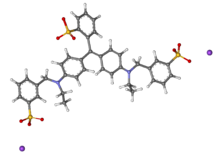
Brilliant Blue FCF ball-and-stick.png
Acid Blue 9.svg
Names
IUPAC name
disodium;2-[[4-[ethyl-[(3-sulfonatophenyl)methyl]amino]phenyl]-[4-[ethyl-[(3-sulfonatophenyl)methyl]azaniumylidene]cyclohexa-2,5-dien-1-ylidene]methyl]benzenesulfonate
Other names
FD&C Blue No.1
Acid Blue 9
D&C Blue No. 4
Alzen Food Blue No. 1
Atracid Blue FG
Blue #1 Lake
Erioglaucine
Eriosky blue
Patent Blue AR
Xylene Blue VSG
C.I. 42090, Basacid Blue 755, Sulfacid Brilliant Blue 5 J, Neolan Blue E-A
Brilliant Blue FD
Identifiers
  • 3844-45-9 Yes check.svgY
3D model (JSmol)
ChEBI
ChEMBL
ChemSpider
ECHA InfoCard 100.021.219 OOjs UI icon edit-ltr-progressive.svg
E number E133 (colours)
KEGG
PubChem CID
UNII
  • InChI=1S/C37H36N2O9S3.2Na/c1-3-38(25-27-9-7-11-33(23-27)49(40,41)42)31-19-15-29(16-20-31)37(35-13-5-6-14-36(35)51(46,47)48)30-17-21-32(22-18-30)39(4-2)26-28-10-8-12-34(24-28)50(43,44)45;;/h5-24H,3-4,25-26H2,1-2H3,(H2-,40,41,42,43,44,45,46,47,48);;/q;2*+1/p-2 Yes check.svgY
    Key: SGHZXLIDFTYFHQ-UHFFFAOYSA-L Yes check.svgY
  • InChI=1/C37H36N2O9S3.2Na/c1-3-38(25-27-9-7-11-33(23-27)49(40,41)42)31-19-15-29(16-20-31)37(35-13-5-6-14-36(35)51(46,47)48)30-17-21-32(22-18-30)39(4-2)26-28-10-8-12-34(24-28)50(43,44)45;;/h5-24H,3-4,25-26H2,1-2H3,(H2-,40,41,42,43,44,45,46,47,48);;/q;2*+1/p-2
    Key: SGHZXLIDFTYFHQ-NUQVWONBAU
  • CCN(CC1=CC(=CC=C1)S(=O)(=O)[O-])C2=CC=C(C=C2)C(=C3C=CC(=[N+](CC)CC4=CC(=CC=C4)S(=O)(=O)[O-])C=C3)C5=CC=CC=C5S(=O)(=O)[O-].[Na+].[Na+]
Properties
C37H34N2Na2O9S3
Molar mass 792.85 g/mol
soluble
Hazards
NFPA 704 (fire diamond)
2
1
0
Except where otherwise noted, data are given for materials in their standard state (at 25 °C [77 °F], 100 kPa).
X mark.svgN  verify  (what is  Yes check.svgYX mark.svgN ?)
Infobox references

Brilliant Blue FCF (Blue 1) is a synthetic organic compound used primarily as a blue colorant for processed foods, medications, dietary supplements, and cosmetics. [1] It is classified as a triarylmethane dye and is known under various names, such as FD&C Blue No. 1 or Acid Blue 9. It is denoted by E number E133 and has a color index of 42090. It has the appearance of a blue powder and is soluble in water and glycerol, [2] with a maximum absorption at about 628 nanometers. It is one of the oldest FDA-approved color additives and is generally considered nontoxic and safe. [3]

Contents

Production

Brilliant Blue FCF is synthetic dye produced by the condensation of 2-formylbenzenesulfonic acid and the appropriate aniline followed by oxidation. [4] It can be combined with tartrazine (E102) to produce various shades of green.

It is usually a disodium salt. The diammonium salt has CAS number 2650-18-2 . Calcium and potassium salts are also permitted. It can also appear as an aluminum lake. The chemical formation is C37H34N2Na2O9S3.

Related dyes are C.I. acid green 3 (CAS#4680-78-8) and acid green 9 (CAS#4857-81-2). In these dyes, the 2-sulfonic acid group is replaced by H and Cl, respectively. [5]

Many attempts have been made to find similarly colored natural dyes that are as stable as Brilliant Blue FCF. Blue pigments must possess many chemical traits, including pi-bond conjugation, aromatic rings, heteroatoms and heteroatom groups, and ionic charges in order to absorb low energy red light. Most natural blue dyes are either unstable, blue only in alkaline conditions, or toxic; good candidates for further research into use as natural dyes include anthocyanin and trichotomine derivatives. No replacement for Brilliant Blue FCF has been found for use in beverages. [6]

Blue and red Jolly Rancher candy. The blue color is Brilliant Blue FCF dye Jolly Ranchers - blue and red (cropped).png
Blue and red Jolly Rancher candy. The blue color is Brilliant Blue FCF dye

Applications

Vodka with Blue Curacao syrup Vodka and Blue Curacao (with Brilliant Blue FCF).jpg
Vodka with Blue Curaçao syrup

Like many other color additives, the primary use of Blue No. 1 is to correct or enhance natural coloring or to give colorless compounds a vivid hue. [7]

In the United States, of the two approved blue dyes (the other being Indigo carmine, or FD&C Blue #2), Brilliant Blue FCF is the more common of the two. As a blue color, Brilliant Blue FCF is often found in cotton candy, ice cream, canned processed peas, packet soups, bottled food colorings, icings, ice pops, blueberry flavored products, children's medications, dairy products, sweets [8] soft drinks, and drinks, especially the liqueur Blue Curaçao. It is also used in soaps, shampoos, mouthwash [9] and other hygiene and cosmetics applications.

Brilliant Blue FCF is extensively used as a water tracer agent. [10] Due to its ability to retain color for long periods of time, Brilliant Blue FCF outperforms other dye tracers. Additionally, Brilliant Blue FCF has a low toxicity level that is favorable for the environment. However, Brilliant Blue FCF has different impacts on varying soils. Brilliant Blue FCF is attracted to and sorbed in acidic soils due to its large size and ionic charge. Soil composition and flow velocity also affect the level of sorption of Brilliant Blue FCF. [11]

Brilliant Blue FCF dye within beverages items—such as soda—can be used in the blue bottle experiment. In such foods, both the dye and reducing agents are incorporated in the same solution. When the solution is blue, oxygen is present. On the addition of NaOH, a reaction occurs that removes the oxygen, turning the solution clear. The dye turns back to blue once it is reoxidized by swirling the solution, incorporating oxygen from the air as an oxidizing agent. [12]

Health and safety

In the United Kingdom, Smarties chocolates were colored with Brilliant Blue FCF (top) until 2008, later being replaced with a natural spirulina coloring (bottom). Blue smarties.JPG
In the United Kingdom, Smarties chocolates were colored with Brilliant Blue FCF (top) until 2008, later being replaced with a natural spirulina coloring (bottom).

The dye is poorly absorbed from the gastrointestinal tract and 95% of the ingested dye can be found in the feces.

When applied to the tongue or shaved skin, Brilliant Blue FCF can be absorbed directly into the bloodstream. [13]

Due to its nontoxic properties, Brilliant Blue FCF has been used as a biological stain. When dissolved in an acidic medium, this dye has been used to stain cell walls, bacteria, and fungal cells. The dye does not inhibit the growth of any of these species. [14]

For similar reasons, Brilliant Blue FCF is also being utilized in hemostatic medical devices, most notably the HEMOPATCH—designed to be placed on bleeding tissues and coagulate the blood. A low concentration of Brilliant Blue FCF is placed on the backside of the HEMOPATCH at 1 cm increments, allowing surgeons to cut precisely and indicate the side of the HEMOPATCH that is an active hemostatic agent for correct placement. [15]

Brilliant Blue FCF is an approved food colorant and pharmacologically inactive substance for drug formulations in the EU and the United States. It is also legal in other countries. It has the capacity for inducing allergic reactions in individuals with pre-existing moderate asthma. [16] In 2003, the U.S. FDA issued a public health advisory to warn health care providers of the potential toxicity of this synthetic dye in enteral feeding solutions. [17] The following legal limits apply in the EU (E 131) and other countries: 150–300 mg/kg depending on the type of food. Safety limit for foods and drugs: 0.1 mg/day per kg body weight. [18] The ADI for Brilliant Blue FCF is 6 mg/kg.

Biomedical research

Brilliant Blue FCF and similar dyes such as Brilliant Blue G are inhibitors to purinergic receptors—receptors that are responsible for inflammatory responses and other cell process. [19]

Scientists who were conducting in-vivo studies of compounds to lessen the severity of inflammation following experimental spinal cord injury had previously tested a compound called OxATP to block a key ATP receptor in spinal neurons. However, OxATP has toxic side effects and must be injected directly into the spinal cord; in searching for alternatives they noted that Brilliant Blue FCF has a similar structure. This led them to test a related dye, Brilliant Blue G (also known as Coomassie Brilliant Blue) in rats, which improved recovery from spinal cord injury while temporarily turning them blue. [20]

When human washed platelets are evaluated using turbidimetry it was found that Brilliant Blue FCF affects platelet aggregation by blocking the Panx1 channels. These inhibitory effects on collagen-induced shape change and maximal aggregation were shown by high (1 mM) concentrations of the dye but not by lower concentrations (100 μM). The 1 mM effective concentration is 1.59 times greater than the approximately 0.63 mM maximal allowable Brilliant Blue FCF concentration according to the European Food Safety Authority. [21]

Scientists are performing studies to better understand the effects of Brilliant Blue FCF during vein graft explantation. Brilliant Blue FCF hinders the purinergic receptors, limiting cell proliferation that may lead to intimal hyperplasia. The effects of Brilliant Blue FCF were tested on rat aortic cells. It was found that Brilliant Blue FCF had a positive impact in limiting the development of intimal hyperplasia following a vein graft procedure. [22] [23]

Related Research Articles

Aspartame Artificial non-saccharide sweetener

Aspartame is an artificial non-saccharide sweetener 200 times sweeter than sucrose, and is commonly used as a sugar substitute in foods and beverages. It is a methyl ester of the aspartic acid/phenylalanine dipeptide with the trade names NutraSweet, Equal, and Canderel. Aspartame was first made in 1965 and approved for use in food products by the U.S. Food and Drug Administration (FDA) in 1981.

<i>gamma</i>-Hydroxybutyric acid Chemical compound

gamma-Hydroxybutyric acid or γ-Hydroxybutyric acid (GHB), also known as 4-hydroxybutanoic acid, is a naturally occurring neurotransmitter and a psychoactive drug. It is a precursor to GABA, glutamate, and glycine in certain brain areas. It acts on the GHB receptor and is a weak agonist at the GABAB receptor. GHB has been used in the medical setting as a general anesthetic and as a treatment for cataplexy, narcolepsy, and alcoholism. It is also used illegally as an intoxicant, as an athletic-performance enhancer, as a date-rape drug, and as a recreational drug.

Food coloring Dye, pigment, or substance that imparts color when it is added to food or drink

Food coloring, or color additive, is any dye, pigment, or substance that imparts color when it is added to food or drink. They come in many forms consisting of liquids, powders, gels, and pastes. Food coloring is used in both commercial food production and domestic cooking. Food colorants are also used in a variety of non-food applications, including cosmetics, pharmaceuticals, home craft projects, and medical devices.
Quinoline Yellow WS Chemical compound

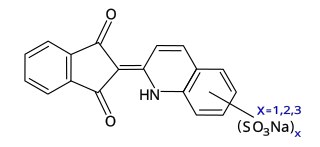
Quinoline Yellow WS is a mixture of organic compounds derived from the dye Quinoline Yellow SS. Owing to the presence of sulfonate groups, the WS dyes are water-soluble (WS). It is a mixture of disulfonates (principally), monosulfonates and trisulfonates of 2-(2-quinolyl)indan-1,3-dione with a maximum absorption wavelength of 416 nm.p. 119

Cosmetology is the study and application of beauty treatment. Branches of specialty include hairstyling, skin care, cosmetics, manicures/pedicures, non-permanent hair removal such as waxing and sugaring, and permanent hair removal processes such as electrology and intense pulsed light (IPL).
Tartrazine Chemical compound

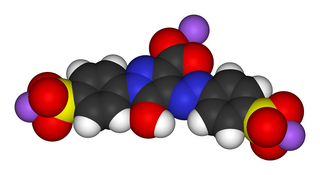
Tartrazine is a synthetic lemon yellow azo dye primarily used as a food coloring. It is also known as E number E102, C.I. 19140, FD&C Yellow 5, Acid Yellow 23, Food Yellow 4, and trisodium 1-(4-sulfonatophenyl)-4-(4-sulfonatophenylazo)-5-pyrazolone-3-carboxylate).

Sunset Yellow FCF Chemical compound used as colorant

Sunset Yellow FCF is a petroleum-derived orange azo dye with a pH dependent maximum absorption at about 480 nm at pH 1 and 443 nm at pH 13 with a shoulder at 500 nm. When added to foods sold in the United States it is known as FD&C Yellow 6; when sold in Europe, it is denoted by E Number E110.

Coomassie Brilliant Blue Chemical compound

Coomassie Brilliant Blue is the name of two similar triphenylmethane dyes that were developed for use in the textile industry but are now commonly used for staining proteins in analytical biochemistry. Coomassie Brilliant Blue G-250 differs from Coomassie Brilliant Blue R-250 by the addition of two methyl groups. The name "Coomassie" is a registered trademark of Imperial Chemical Industries.

Crystal violet microbial stain

Crystal violet or gentian violet, also known as methyl violet 10B or hexamethyl pararosaniline chloride, is a triarylmethane dye used as a histological stain and in Gram's method of classifying bacteria. Crystal violet has antibacterial, antifungal, and anthelmintic properties and was formerly important as a topical antiseptic. The medical use of the dye has been largely superseded by more modern drugs, although it is still listed by the World Health Organization.

Erythrosine Derivative of fluorine used as a pink dye

Erythrosine, also known as Red No. 3, is an organoiodine compound, specifically a derivative of fluorone. It is a pink dye which is primarily used for food coloring. It is the disodium salt of 2,4,5,7-tetraiodofluorescein. Its maximum absorbance is at 530 nm in an aqueous solution, and it is subject to photodegradation.

Sudan II Chemical compound

Sudan II (C18H16N2O) is a lysochrome (fat-soluble dye) azo dye used for staining of triglycerides in frozen sections, and some protein bound lipids and lipoproteins on paraffin sections. It has the appearance of red powder with melting point 156–158 °C and maximum absorption at 493(420) nm.

Allura Red AC Chemical compound

Allura Red AC is a red azo dye that goes by several names, including FD&C Red 40. It is used as a food dye and has the E number E129.

Fast Green FCF Chemical compound

Fast Green FCF, also called Food green 3, FD&C Green No. 3, Green 1724, Solid Green FCF, and C.I. 42053, is a turquoise triarylmethane food dye. Its E number is E143.

Tetramethylenedisulfotetramine Chemical compound

Tetramethylenedisulfotetramine (TETS) is an organic compound that is used as a rodenticide. It is an odorless, tasteless white powder that is slightly soluble in water, DMSO and acetone, and insoluble in methanol and ethanol. TETS is a sulfamide derivative. It can be synthesized by reacting sulfamide with formaldehyde under acidic condition. When crystallized from acetone, it forms cubic crystals with a melting point of 255–260 °C.

Ingredients of cosmetics

Cosmetics ingredients come from a variety of sources but, unlike the ingredients of food, are often not considered by most consumers. Cosmetics often use vibrant colors that are derived from a wide variety of sources, ranging from crushed insects to rust.

Acid orange 20 Chemical compound

Acid orange 20 is an organic compound and an azo dye. It is one of the first water soluble dyes to be commercialized, and one of seven original food dyes allowed under the U.S. Pure Food and Drug Act of June 30, 1906. It is analyzed by HPLC.

GPR17

Uracil nucleotide/cysteinyl leukotriene receptor is a G protein-coupled receptor that in humans is encoded by the GPR17 gene located on chromosome 2 at position q21. The actual activating ligands for and some functions of this receptor are disputed.

Anthocyanin

Anthocyanins are water-soluble vacuolar pigments that, depending on their pH, may appear red, purple, blue or black. Food plants rich in anthocyanins include the blueberry, raspberry, black rice, and black soybean, among many others that are red, blue, purple, or black. Some of the colors of autumn leaves are derived from anthocyanins.

Rostral ventromedial medulla

The rostral ventromedial medulla (RVM), or ventromedial nucleus of the spinal cord, is a group of neurons located close to the midline on the floor of the medulla oblongata (myelencephalon). The rostral ventromedial medulla sends descending inhibitory and excitatory fibers to the dorsal horn spinal cord neurons. There are 3 categories of neurons in the RVM: on-cells, off-cells, and neutral cells. They are characterized by their response to nociceptive input. Off-cells show a transitory decrease in firing rate right before a nociceptive reflex, and are theorized to be inhibitory. Activation of off-cells, either by morphine or by any other means, results in antinociception. On-cells show a burst of activity immediately preceding nociceptive input, and are theorized to be contributing to the excitatory drive. Neutral cells show no response to nociceptive input.

Botanical drug

A botanical drug is defined in the United States Federal Food, Drug, and Cosmetic Act as a botanical product that is marketed as diagnosing, mitigating, treating, or curing a disease; a botanical product in turn, is a finished, labeled product that contains ingredients from plants. Chemicals that are purified from plants, like paclitaxel, and highly purified products of industrial fermentation, like biopharmaceuticals, are not considered to be botanical products.

References

  1. "FD&C Blue 1 (Brilliant Blue)". International Association of Color Manufacturers. Archived from the original on 2019-05-06. Retrieved 2019-05-06.
  2. "FD&C Blue No. 1: Brilliant Blue FCF Food Dye". culinarylore.com. 2015-08-04. Retrieved 2019-06-03.
  3. Nutrition, Center for Food Safety and Applied (2019-03-16). "Color Additives History". FDA. Retrieved 2019-05-06.
  4. El Ali, Bassam M.; Bassam El Ali; Ali, Mohammad Farahat (2005). Handbook of industrial chemistry: organic chemicals . New York: McGraw-Hill. ISBN   978-0-07-141037-3.
  5. Gessner T, Mayer U (2002). "Triarylmethane and Diarylmethane Dyes". Ullmann's Encyclopedia of Industrial Chemistry. Weinheim: Wiley-VCH. doi:10.1002/14356007.a27_179. ISBN   3527306730.
  6. Newsome, Andrew G.; Culver, Catherine A.; van Breemen, Richard B. (2014-07-16). "Nature's Palette: The Search for Natural Blue Colorants". Journal of Agricultural and Food Chemistry. 62 (28): 6498–6511. doi:10.1021/jf501419q. ISSN   0021-8561. PMID   24930897.
  7. Nutrition, Center for Food Safety and Applied (2019-04-14). "Overview of Food Ingredients, Additives & Colors". FDA.
  8. Nestle Aero packet ingredients listing barcode: 7613031579334
  9. "LISTERINE Antiseptic Mouthwash, Smart Rinse, Whitening, Advanced, Fluoride Rinse, and Tartar Protection Products". Listerine.com. Archived from the original on 2011-01-02. Retrieved 2009-07-31.
  10. Flury M, Flühler H (1994). "Brilliant Blue FCF as a Dye Tracer for Solute Transport Studies—A Toxicological Overview". Journal of Environmental Quality. 23 (5): 1108–1112. doi:10.2134/jeq1994.00472425002300050037x.
  11. Allaire SE, Roulier S, Cessna AJ (2009-11-15). "Quantifying preferential flow in soils: A review of different techniques". Journal of Hydrology. 378 (1): 179–204. Bibcode:2009JHyd..378..179A. doi:10.1016/j.jhydrol.2009.08.013.
  12. Staiger FA, Peterson JP, Campbell DJ (2015-10-13). "Variations on the "Blue-Bottle" Demonstration Using Food Items That Contain FD&C Blue #1". Journal of Chemical Education. 92 (10): 1684–1686. Bibcode:2015JChEd..92.1684S. doi:10.1021/acs.jchemed.5b00190.
  13. Lucová M, Hojerová J, Pažoureková S, Klimová Z (February 2013). "Absorption of triphenylmethane dyes Brilliant Blue and Patent Blue through intact skin, shaven skin and lingual mucosa from daily life products". Food and Chemical Toxicology. 52: 19–27. doi:10.1016/j.fct.2012.10.027. PMID   23127598. porcine tongue dorsum was exposed to human saliva with 15,000 ng/cm2 of dye for 20 min. 24-h diffusion resulted in 34 ng/cm2 of BB and 86 ng/cm2 of PB which can be directly absorbed into the blood system.
  14. Chau HW, Goh YK, Si BC, Vujanovic V (August 2011). "An innovative brilliant blue FCF method for fluorescent staining of fungi and bacteria". Biotechnic & Histochemistry. 86 (4): 280–7. doi:10.3109/10520295.2010.492733. PMID   20560873. S2CID   37175297.
  15. Lewis KM, Kuntze CE, Gulle H (2015-12-22). "Control of bleeding in surgical procedures: critical appraisal of HEMOPATCH (Sealing Hemostat)". Medical Devices: Evidence and Research. 9: 1–10. doi:10.2147/mder.s90591. PMC   4694675 . PMID   26730213.
  16. Weber RW, Hoffman M, Raine DA, Nelson HS (July 1979). "Incidence of bronchoconstriction due to aspirin, azo dyes, non-azo dyes, and preservatives in a population of perennial asthmatics". The Journal of Allergy and Clinical Immunology. 64 (1): 32–7. doi:10.1016/0091-6749(79)90080-0. PMID   447949.
  17. "FD&C Blue No. 1". Drugs.com. Retrieved 16 November 2013.
  18. "E133". zusatzstoffe-online.de. Archived from the original on 2013-05-27. Retrieved 2013-11-16.
  19. Ferreira LG, Faria RX, Ferreira NC, Soares-Bezerra RJ (2016). "Brilliant Blue Dyes in Daily Food: How Could Purinergic System Be Affected?". International Journal of Food Science. 2016: 7548498. doi:10.1155/2016/7548498. PMC   5090090 . PMID   27833914.
  20. Peng W, Cotrina ML, Han X, Yu H, Bekar L, Blum L, Takano T, Tian GF, Goldman SA, Nedergaard M (July 2009). "Systemic administration of an antagonist of the ATP-sensitive receptor P2X7 improves recovery after spinal cord injury". Proceedings of the National Academy of Sciences of the United States of America. 106 (30): 12489–93. doi:10.1073/pnas.0902531106. PMC   2718350 . PMID   19666625.
  21. Molica F, Nolli S, Fontana P, Kwak BR (April 2017). "Turbidimetry on Human Washed Platelets: The Effect of the Pannexin1-inhibitor Brilliant Blue FCF on Collagen-induced Aggregation". Journal of Visualized Experiments (122). doi:10.3791/55525. PMC   5564473 . PMID   28448011.
  22. Osgood MJ, Sexton K, Voskresensky I, Hocking K, Song J, Komalavilas P, Brophy C, Cheung-Flynn J (August 2016). "Use of Brilliant Blue FCF during vein graft preparation inhibits intimal hyperplasia". Journal of Vascular Surgery. 64 (2): 471–478. doi:10.1016/j.jvs.2015.02.028. PMC   5480606 . PMID   27763268.
  23. Voskresensky, Igor V.; Wise, Eric S.; Hocking, Kyle M.; Li, Fan Dong; Osgood, Michael J.; Komalavilas, Padmini; Brophy, Colleen; Cheung-Flynn, Joyce (2014-11-01). "Brilliant Blue FCF as an Alternative Dye for Saphenous Vein Graft Marking: Effect on Conduit Function". JAMA Surgery. 149 (11): 1176–81. doi:10.1001/jamasurg.2014.2029. ISSN   2168-6254. PMC   4237645 . PMID   25251505.

Further reading