Hauser, Idaho

Last updated

Hauser, Idaho
City
Kootenai County Idaho Incorporated and Unincorporated areas Hauser Highlighted 1635830.svg
Location of Hauser in Kootenai County, Idaho.
Usa edcp location map.svg
Red pog.svg
Hauser, Idaho
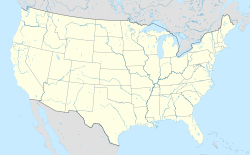
Location in the United States
Coordinates: 47°45′20″N117°00′25″W / 47.75556°N 117.00694°W / 47.75556; -117.00694
Country United States
State Idaho
County Kootenai
Area
[1]
  Total
0.99 sq mi (2.56 km2)
  Land0.99 sq mi (2.56 km2)
  Water0 sq mi (0.00 km2)
Elevation
[2]
2,205 ft (672 m)
Population
 (2010) [3]
  Total
678
  Density747.3/sq mi (288.53/km2)
Time zone UTC-8 (Pacific (PST))
  Summer (DST) UTC-7 (PDT)
ZIP code
83854
Area code 208
FIPS code 16-35830
GNIS feature ID2410714 [2]
Website www.cityofhauser.us

Hauser is a city in Kootenai County, Idaho, United States. The population was 678 at the 2010 census. [4] The city is located on the southern end of Hauser Lake.

Contents

Geography

The Washington-Idaho state line lies just to the west of Hauser. Idaho State Highway 53 runs along the southern edge of the city, providing transportation east to Rathdrum and west into Spokane metropolitan area. Hauser is part of the larger Spokane–Coeur d'Alene combined statistical area.

According to the United States Census Bureau, the city has a total area of 0.94 square miles (2.43 km2), all land. [5]

Hauser Lake

Hauser Lake is a freshwater lake just above Hauser. It covers 625 acres of land has an average depth of 21 feet. [6] It originally went by a couple different names like, Sucker lake and Mud Lake until the lake was renamed Hauser Lake in honor of Samuel Thomas Hauser who was a governor of Montana Territory and good friend of Daniel Chase Corbin, the baron of the Spokane Falls and Northern Railway. [7]

Demographics

Historical population
CensusPop.Note
1950 70
1960 12781.4%
1970 349174.8%
1980 305−12.6%
1990 38024.6%
2000 66875.8%
2010 6781.5%
2020 76112.2%
U.S. Decennial Census [8]

2010 census

As of the census [3] of 2010, there were 678 people, 302 households, and 190 families living in the city. The population density was 721.3 inhabitants per square mile (278.5/km2). There were 326 housing units at an average density of 346.8 units per square mile (133.9 units/km2). The racial makeup of the city was 94.5% White, 0.3% African American, 1.0% Native American, 0.4% Asian, 0.1% Pacific Islander, 0.3% from other races, and 3.2% from two or more races. Hispanic or Latino of any race were 2.1% of the population.

There were 302 households, of which 26.5% had children under the age of 18 living with them, 48.7% were married couples living together, 9.9% had a female householder with no husband present, 4.3% had a male householder with no wife present, and 37.1% were non-families. 28.1% of all households were made up of individuals, and 6.6% had someone living alone who was 65 years of age or older. The average household size was 2.25 and the average family size was 2.72.

The median age in the city was 44.2 years. 19.8% of residents were under the age of 18; 6.5% were between the ages of 18 and 24; 25.4% were from 25 to 44; 35.8% were from 45 to 64; and 12.5% were 65 years of age or older. The gender makeup of the city was 49.1% male and 50.9% female.

2000 census

As of the census [9] of 2000, there were 668 people, 273 households, and 197 families living in the city. The population density was 753.4 inhabitants per square mile (290.9/km2). There were 296 housing units at an average density of 333.8 units per square mile (128.9 units/km2). The racial makeup of the city was 95.36% White, 1.20% Native American, 0.30% Asian, and 3.14% from two or more races. Hispanic or Latino of any race were 2.25% of the population.

There were 273 households, out of which 32.6% had children under the age of 18 living with them, 57.9% were married couples living together, 9.5% had a female householder with no husband present, and 27.8% were non-families. 20.5% of all households were made up of individuals, and 5.1% had someone living alone who was 65 years of age or older. The average household size was 2.45 and the average family size was 2.83.

In the city, the population was spread out, with 24.3% under the age of 18, 8.1% from 18 to 24, 31.6% from 25 to 44, 27.2% from 45 to 64, and 8.8% who were 65 years of age or older. The median age was 36 years. For every 100 females, there were 95.3 males. For every 100 females age 18 and over, there were 94.6 males.

The median income for a household in the city was $30,268, and the median income for a family was $32,344. Males had a median income of $30,000 versus $21,125 for females. The per capita income for the city was $15,085. About 10.3% of families and 10.6% of the population were below the poverty line, including 13.0% of those under age 18 and 12.5% of those age 65 or over.

See also

References

  1. "2019 U.S. Gazetteer Files". United States Census Bureau. Retrieved July 9, 2020.
  2. 1 2 U.S. Geological Survey Geographic Names Information System: Hauser, Idaho
  3. 1 2 "U.S. Census website". United States Census Bureau . Retrieved December 18, 2012.
  4. "Profile of General Population and Housing Characteristics: 2010 Demographic Profile Data (DP-1): Hauser city, Idaho". United States Census Bureau . Retrieved September 6, 2012.
  5. "US Gazetteer files 2010". United States Census Bureau . Retrieved December 18, 2012.
  6. "Hauser Lake Idaho | The Idaho Washington Aquifer Collaborative". www.iwac.us. Retrieved December 1, 2025.
  7. "Hauser has its own unique claim to fame". Spokesman.com. November 22, 2007. Retrieved December 1, 2025.
  8. "Census of Population and Housing". Census.gov. Retrieved June 4, 2015.
  9. "U.S. Census website". United States Census Bureau . Retrieved January 31, 2008.