 | The examples and perspective in this article may not represent a worldwide view of the subject.(September 2016) |
The following is a timeline of lesbian, gay, bisexual, transgender and queer (LGBTQ) journalism history.
| The examples and perspective in this article may not represent a worldwide view of the subject.(September 2016) |
The following is a timeline of lesbian, gay, bisexual, transgender and queer (LGBTQ) journalism history.

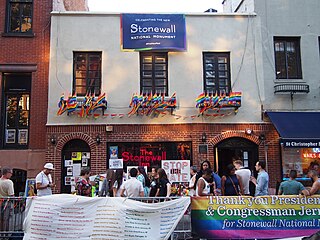
Lesbian, gay, bisexual, and transgender (LGBT) movements are social movements that advocate for LGBT people in society. Although there is not a primary or an overarching central organization that represents all LGBT people and their interests, numerous LGBT rights organizations are active worldwide. The first organization to promote LGBT rights was the Scientific-Humanitarian Committee, founded in 1897 in Berlin.
The subject of homosexuality and Judaism dates back to the Torah. The book of Vayikra (Leviticus) is traditionally regarded as classifying sexual intercourse between males as a to'eivah that can be subject to capital punishment by the current Sanhedrin under halakha.
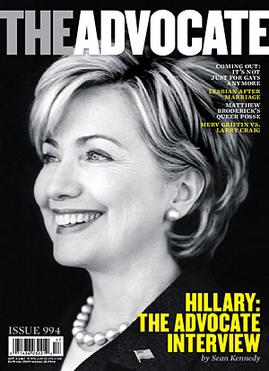
The Advocate is an American LGBT magazine, printed bi-monthly and available by subscription. The Advocate brand also includes a website. Both magazine and website have an editorial focus on news, politics, opinion, and arts and entertainment of interest to lesbians, gay men, bisexuals and transgender (LGBT) people. The magazine, established in 1967, is the oldest and largest LGBT publication in the United States and the only surviving one of its kind that was founded before the 1969 Stonewall riots in Manhattan, an uprising that was a major milestone in the LGBT rights movement. On June 9, 2022, Pride Media was acquired by Equal Entertainment LLC.
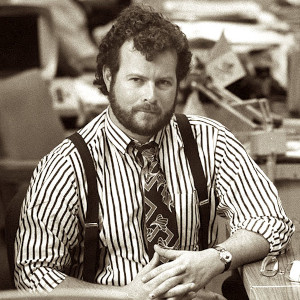
Randy Shilts was an American journalist and author. After studying journalism at the University of Oregon, Shilts began working as a reporter for both The Advocate and the San Francisco Chronicle, as well as for San Francisco Bay Area television stations. In the 1980s, he was noted for being the first openly gay reporter for the San Francisco Chronicle.

Founded in 1952, One Institute, is the oldest active LGBTQ+ organization in the United States, dedicated to telling LGBTQ+ history and stories through education, arts, and social justice programs. Since its inception, the organization has been headquartered in Los Angeles, California.

ONE National Gay and Lesbian Archives at the University of Southern California Libraries is the oldest existing lesbian, gay, bisexual, and transgender (LGBT) organization in the United States and one of the largest repositories of LGBT materials in the world. Located in Los Angeles, California, ONE Archives has been a part of the University of Southern California Libraries since 2010. ONE Archives' collections contain over two million items including periodicals; books; film, video and audio recordings; photographs; artworks; ephemera, such as clothing, costumes, and buttons; organizational records; and personal papers. ONE Archives also operates a small gallery and museum space devoted to LGBT art and history in West Hollywood, California. Use of the collections is free during regular business hours.
Gaysweek was an American weekly gay and lesbian newspaper based in New York City printed from 1977 until 1979. Considered the city's first mainstream weekly lesbian and gay newspaper, it was founded by Alan Bell in 1977 as an 8-page single-color tabloid and finished its run in 1979 as a 24-page two-color publication. It featured articles, letter, art and poetry. It was, at the time, only one of three weekly publications geared towards gay people. It was also the first mainstream gay publication published by an African-American.

Diane Anderson-Minshall is an American journalist and author best known for writing about lesbian, gay, bisexual, and transgender subjects. She is the first female CEO of Pride Media. She is also the editorial director of The Advocate and Chill magazines, the editor-in-chief of HIV Plus magazine, while still contributing editor to OutTraveler. Diane co-authored the 2014 memoir Queerly Beloved about her relationship with her husband Jacob Anderson-Minshall throughout his gender transition.
This is a list of notable events in the history of LGBT rights that took place in the 1970s.
The first openly lesbian, gay, bisexual, and transgender clergy in Judaism were ordained as rabbis and/or cantors in the second half of the 20th century.
Lesbian, gay, bisexual, transgender (LGBT) affirming denominations in Judaism are Jewish religious groups that welcome LGBT members and do not consider homosexuality to be a sin. They include both entire Jewish denominations, as well as individual synagogues. Some are composed mainly of non-LGBT members and also have specific programs to welcome LGBT people, while others are composed mainly of LGBT members.
Same-sex marriage in Judaism has been a subject of debate within Jewish denominations. The traditional view among Jews is to regard same-sex relationships as categorically forbidden by the Torah. This remains the current view of Orthodox Judaism.
Congregation Beit Simchat Torah ("CBST") is a non-denominational, pluralistic, progressive LGBTQ+ Jewish synagogue located at 130 West 30th Street, in Manhattan New York City, New York, United States.
The following outline offers an overview and guide to LGBT topics:
This is a timeline of LGBT Jewish history, which consists of events at the intersection of Judaism and queer people.

The following is a timeline of lesbian, gay, bisexual, and transgender (LGBT) history in the 20th century.

LGBT culture in Baltimore, Maryland is an important part of the culture of Baltimore, as well as being a focal point for the wider LGBT community in the Baltimore metropolitan area. Mount Vernon, known as Baltimore's gay village, is the central hub of the city's lesbian, gay, bisexual, and transgender communities.
| By regions |
| ||||||||||||||||||
|---|---|---|---|---|---|---|---|---|---|---|---|---|---|---|---|---|---|---|---|
| Timelines |
| ||||||||||||||||||
| By topic |
| ||||||||||||||||||
| Related | |||||||||||||||||||
