If you have just labeled this page as a potential copyright issue, please follow the instructions for filing at the bottom of the box.
The previous content of this page or section has been identified as posing a potential copyright issue, as a copy or modification of the text from the source(s) below, and is now listed on Wikipedia:Copyright problems(listing):
Unless the copyright status of the text on this page is clarified, the problematic text or the entire page may be deleted one week after the time of its listing.
Temporarily, the original posting is still accessible for viewing in the page history.
To confirm your permission, you can either display a notice to this effect at the site of original publication or send an e-mail from an address associated with the original publication to permissions-enwikimedia.org or a postal letter to the Wikimedia Foundation. These messages must explicitly permit use under CC-BY-SA and the GFDL. See Wikipedia:Donating copyrighted materials.
Note that articles on Wikipedia must be written from a neutral point of view and must be verifiable in published third-party sources; consider whether, copyright issues aside, your text is appropriate for inclusion in Wikipedia.
You can demonstrate that this text is in the public domain, or is already under a license suitable for Wikipedia. Click "Show" to see how.
Otherwise, you may write a new article without copyright-infringing material. Click "Show" to read where and how.
Your rewrite should be placed on this page, where it will be available for an administrator or clerk to review it at the end of the listing period. Follow this link to create the temporary subpage.
Simply modifying copyrighted text is not sufficient to avoid copyright infringement—if the original copyright violation cannot be cleanly removed or the article reverted to a prior version, it is best to write the article from scratch. (See Wikipedia:Close paraphrasing.)
For license compliance, any content used from the original article must be properly attributed; if you use content from the original, please leave a note at the top of your rewrite saying as much. You may duplicate non-infringing text that you had contributed yourself.
It is always a good idea, if rewriting, to identify the point where the copyrighted content was imported to Wikipedia and to check to make sure that the contributor did not add content imported from other sources. When closing investigations, clerks and administrators may find other copyright problems than the one identified. If this material is in the proposed rewrite and cannot be easily removed, the rewrite may not be usable.
Posting copyrighted material without the express permission of the copyright holder is unlawful and against Wikipedia policy.
If you have express permission, this must be verified either by explicit release at the source or by e-mail or letter to the Wikimedia Foundation. See Wikipedia:Declaration of consent for all enquiries.
Policy requires that we block those who repeatedly post copyrighted material without express permission.
Instructions for filing
If you have tagged the article for investigation, please complete the following steps:
Place this notice on the talk page of the contributor of the copyrighted material: {{subst:Nothanks-web|pg=Ken Coon|url=see talk}} ~~~~
To blank a section instead of an entire article, add the template to the beginning of the section and {{Copyvio/bottom}} at the end of the portion you intend to blank.
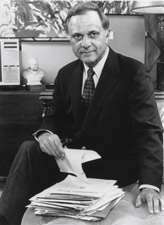
(1) Though he polled relatively few votes in his 1974 campaign for governor of Arkansas against David Pryor, Coon was part of the persistent organization which attempted to establish a two-party system in the heavily Democratic state.
(2) Before his political career, Coon was president of the Arkansas Junior Chamber.
In 1956, Coon married the former Sue Lynn Thompson (born 1938), also of Calhoun. They have two children, Catherine Lynn Coon (born 1957) of El Dorado, the seat of Union County in southern Arkansas, and Kenneth Coon Jr. (born 1962),[1] of Mountain View, the seat of Stone County in northern Arkansas, and two grandchildren.
After receipt of the graduate degree in Utah, Coon took a job with a federal agency, the Bureau of Commercial Fisheries, in Dumas, the seat of Desha County in southeastern Arkansas. He then worked for a catfish farmer in Tuckerman in Jackson County and in 1968 was president of the American Fish Farmers trade association.[1]
While he was in Dumas, Coon joined the Arkansas Jaycees. He was charter president of the Tuckerman Jaycees from 1966-1967. The group is now known as the United States Junior Chamber. From 1971-1972, while in Fort Smith, Coon was the Arkansas state Jaycee president.[1]
Running for lieutenant governor, 1972
Recruited to run for office by both political parties, he chose the more difficult route in Arkansas: the fledgling Republican Party. It was not even until he ran for lieutenant governor in 1972 that his state party had even won its first presidential election since Reconstruction.
When he announced that he would seek the office of lieutenant governor, Coon was in his third year as a biology instructor at the University of Arkansas at Fort Smith (then West Ark Community College) in Sebastian County in western Arkansas, the more politically conservative part of the state. He challenged Democratic incumbent Bob C. Riley (1924–1994), a political science professor from Ouachita Baptist University in Arkadelphia, the seat of Clark County in south central Arkansas.[2] Having lost an eye in World War II, Riley wore a trademark black patch.[3] He claimed on several occasions not even "to know" Coon when the Republican entered the race.[4] Coon tried to tie Riley to Democratic presidential nominee George McGovern of South Dakota after Riley urged Arkansans to cast straight Democratic ballots. "Arkansans just don't believe that being a Democrat is reason enough to vote for McGovern, as my opponent suggests."[5]
The gubernatorial contest featured incumbent Democrat Dale Bumpers of Charleston in Franklin County against Rockefeller's preferred successor, Len E. Blaylock of Perryville, who polled barely a fourth of the ballots. Bumpers had unseated Rockefeller in 1970.
Riley defeated Coon, 392,869 (62.8 percent) to 233,090 (37.2 percent). Coon won only three of the state's seventy-five counties: Pope, Searcy, and his home base of Sebastian. Coon almost won in frequently Republican Crawford County, where he received 49.6 percent of the vote.[6]
In addition to Coon and Blaylock, the other Republican statewide candidates lost in Arkansas that year, including Wayne H. Babbitt for the U.S. Senate, future U.S. Representative Edwin R. Bethune for attorney general, and Jerry Climer for secretary of state.
After the race for lieutenant governor, Coon succeeded Neal Sox Johnson, a businessman from Nashville, the seat of Howard County in southwestern Arkansas, as the party's paid executive director. It was his job to build up a party with little allegiance among the Arkansas electorate.[7] Johnson, meanwhile, accepted a federal position with the Farmers Home Administration in the Nixon, Ford, Reagan, and first Bush administrations.
Gubernatorial race, 1974
Coon first faced opposition within the Republican primary from Joseph H. Weston, the editor of the Sharp Citizen newspaper in Cave City in Sharp County in northern Arkansas, whose work had led to a change in state libel law.[8] Republicans tried to keep Weston off the state ballot on grounds that he was not a "registered" Republican. Though voters in Arkansas do not register by party, officials of the party must register their affiliation and become an automatic member of the Republican executive committee. The party opposed Weston because of his strident criticism of many elected officials, accusing most of "moral rot" and demanding mass resignations.[9]
In a statewide turnout of fewer than 5,000, Coon easily prevailed over Weston, 3,698 (81.9 percent) to 815 (18.1 percent).[10]
In his gubernatorial announcement, Coon outlined in generalities three reasons he was seeking to succeed Bumpers as governor:
(1) Belief in competition in government
(2) Deep concern for people
(3) Positive conviction that we can succeed in creating the kind of world the majority of us want.
Coon said that the Rockefeller and Bumpers administrations had succeeded because of their "lack of attachment to and connections with the ongoing political power structure in our state." Coon said that Arkansas was "an emerging state in the New South. We still have a long way to go. The work started in the last eight years is not complete . . . the job is not yet finished. He vowed if elected to focus upon (1) education), (2) constitutional revision, and (3) electoral reform.[11]
Coon and Nixon
The gubernatorial race was overshadowed by the Watergate scandal, which caused the defeat of many Republicans nationwide who had no connection to the stunning developments. Coon made a bold proposal: U.S. PresidentRichard Nixon should "for the good of the country... temporarily turn over his duties" to then Vice PresidentGerald Ford. Coon suggested that Nixon request an immediate trial on impeachment (then pending in the United States House of Representatives before the U.S. Senate, but he said that Nixon should not resign because the public needed the "absolute truth". Therefore, he maintained that a trial should be staged in the Senate once the House voted articles of impeachment.[12]
"With the President's own admission that he lied to the American people about previous Watergate statements, that he kept pertinent information from the House Judiciary Committee, the courts, as well as his own lawyer, and his admission that, it is a foregone conclusion that the House will impeach him, it might seem to some that he should resign.... However, we must remain calm and not overreact. Our system of government provides that a man, even the President is innocent until proven guilty," Coon said in a press release.[13]
Coon said that if Nixon resigned because of adverse poll ratings, the precedent would cause "irreparable damage" to the United States because "future presidents, if they made an unpopular decision, might also capitulate, leaving government solely in the hands of Congress." Coon's remarks came three days before Nixon resigned the presidency.[13]
Challenging David Pryor, 1974
Coon's gubernatorial opponent was former U.S. RepresentativeDavid H. Pryor, originally from Camden, the seat of Ouachita County in southern Arkansas. Two years earlier, Pryor had lost the Democratic senatorial primary to the more conservative incumbent John L. McClellan, also of Camden. Pryor emerged as a powerful candidate for governor after he defeated both Bob Riley and former Governor Orval Faubus in the Democratic primary.[14] Pryor repeatedly refused to debate Coon.[15]
While he ran for governor, Coon was enrolled in a Master of Arts program in career counseling at the University of Central Arkansas in Conway. He recalled that his wife often sat in on the classes with a tape recorder while he was campaigning.[16]
Coon's campaign strategist was Odell Pollard, an attorney from Searcy in White County, who was state party chairman from 1966-1970. Pollard called upon nursing home owners to support Coon because of Pryor's earlier congressional actions to increase federal regulations on the facilities. "He [Pryor] demeaned the nursing homes just so he could get national publicity," alleged Pollard, who became Republican national committeeman upon the death of Winthrop Rockefeller in 1973.[17] Pollard served as national committeeman until 1976, when U.S. Representative John Paul Hammerschmidt assumed the position.
Coon filed a complaint with the Fair Campaign Practices Committee in Washington, D.C., that Pryor was "smearing" him. Pryor earlier had said that he might filed charges against Coon after Coon alleged that Pryor had received funds from Associated Milk Producers, Inc., which had also made an infamous illegal donation to U.S. Representative Wilbur Mills of Arkansas' Second Congressional District.[18]
Coon proposed a one-year moratorium on construction of the proposed state office complex at the capitol grounds in Little Rock because of spiraling costs.[15]
Arkansas voters chose Pryor for governor in an overwhelming vote in the Watergate year: 358,018 (65.6 percent) to Coon's 187,872 (34.4 percent). Coon won two of the three counties that he had carried for lieutenant governor in 1972: Sebastian and Searcy, and he polled at least 40 percent in twelve other counties. His defeat was nearly as bad numerically as had been Bumpers' margin over Rockefeller four years earlier. Coon's running mate for lieutenant governor, Leona Troxell of Rose Bud in White County north of Little Rock, was handily defeated by the Democrat former Attorney GeneralJoe Purcell of Benton, the seat of Saline County.[19]
Educational counseling
Coon left the GOP executive director's position in the fall of 1975 to begin work on his Ed.D. in counselor education at the University of Arkansas at Fayetteville. He completed the program in 1979 and worked for two years for Blue Cross Blue Shield of Arkansas. He was licensed as a counselor in 1980.[20]
Coon established his counseling and motivational speaking bureau, the Life Guide Center of Human Resource Development and Career Counseling.[21] He was licensed as a psychologist in 1985. He is also an adjunct professor of human resources development for the Little Rock campus of Webster University of St. Louis.[22]
In 1976, Coon favored the nomination of former California Governor Ronald Reagan as the GOP standard-bearer, rather than the unelected incumbent President Ford, the choice of most of the Arkansas Rockefeller Republicans. The Arkansas delegation to the national convention in Kansas City was led by the 1974 (and later 1984 as well) congressional candidate Judy C. Petty, the former Winthrop Rockefeller staffer pledged to Reagan in 1976. Petty claimed that the old Rockefeller coalition in Arkansas could not be revived because of the strength of Bumpers and Pryor. She therefore proposed a conservative coalition of Republicans and dissident Democrats, many of whom had been backers of Orval Faubus.[23] In the general election in Arkansas, Ford barely polled a third of the ballots against the Democrat Jimmy Carter.[24] Coon similarly supported Reagan in 1980 and 1984.[16]
Coon resurfaced politically in 1981, not as a candidate, but as the appointee of newly elected Republican Governor Frank D. White to head the Arkansas Employment Security Division in Little Rock. He served until White was unseated after a single term in 1982 by Bill Clinton. Mrs. Troxell, his former ticket-mate, had held the same position for a time in the Rockefeller administration.[25]
Coon's chairmanship of the Arkansas party, which was considered quite successful overall, coincided with a heated 1990 Republican gubernatorial primary between then U.S. Representative Tommy F. Robinson, a controversial former Democratic sheriff known for shoot-at-the-hip remarks, and the more conventional Sheffield Nelson, also a former Democrat and the favorite of the business establishment. The Robinson-Nelson contest was believed to have so divided the minority GOP that once again it could not compete effectively, with Nelson as the nominee, against Governor Clinton.[26] The primary even split many Republican families. Coon himself insists that he has never told anyone how he personally voted in the Robinson-Nelson contest.[16] Clinton went on to defeat Nelson and then announced his presidential candidacy less than a year later even though he had pledged if reelected governor to have served a full four-year term from 1991 to 1995.
In 1996, Coon ran unsuccessfully in the Republican primary for the Little Rock-based open Second Congressional District seat, which was ultimately won by the liberal Democrat Victor F. Snyder. Later GOP efforts to topple Snyder failed.[27]
In retrospect, Coon appears to have been something of a Republican transitional figure between the governorships of Winthrop Rockefeller (1967–1971) and the later Mike Huckabee (1994–2007).
Whitewater, David Hale, and Ken Coon
Coon was a tangential figure in the Arkansas Whitewater scandal of the 1990s. Judge David Hale made Coon an officer of the National Savings Life Insurance Company, a burial insurance firm. In 1998, Hale was scheduled to be tried in Arkansas state court for fraud in connection with the company, but his medical needs – a heart condition – halted the proceedings. In 1995, Samuel Dash, the ethics counsel to Whitewater special prosecutor Ken Starr informed Mark Stodola of the Pulaski County (Little Rock) prosecutor's office, that Stodola, a Democrat, could be prosecuted for obstruction of justice if he proceeded with charges against Hale. Dash told Stodola that Hale was cooperating in a federal investigation. Starr said that he would like to handle the insurance fraud matter at Hale's federal sentencing, but Stodola filed state charges against Hale.[28]
No charges were brought against Coon, who in 1974 had declared that he was "so honest that I might appear to be naive."[29]
Orval Eugene Faubus was an American politician who served as the 36th Governor of Arkansas from 1955 to 1967. In 1957, he refused to comply with a unanimous decision of the United States Supreme Court in the 1954 case Brown v. Board of Education, and ordered the Arkansas National Guard to prevent black students from attending Little Rock Central High School. This event became known as the Little Rock Crisis.
Winthrop Rockefeller was an American politician and philanthropist, who served as the first Republican governor of Arkansas since Reconstruction. He was a third-generation member of the Rockefeller family.
Frank Durward White was an American banker and politician who served as the 41st governor of Arkansas. He served a single two-year term from 1981 to 1983. He is one of two people to have defeated Bill Clinton in an election, the other being the late U.S. Representative John Paul Hammerschmidt of Arkansas' 3rd congressional district.
David Hampton Pryor is an American politician and former Democratic United States Representative and United States Senator from the State of Arkansas. Pryor also served as 39th Governor of Arkansas from 1975 to 1979 and was a member of the Arkansas House of Representatives from 1960 to 1966. He served as the interim chairman of the Arkansas Democratic Party, following Bill Gwatney's assassination.
Bob Cowley Riley was an American educator and politician who served as Acting Governor of Arkansas for 11 days in 1975. He had previously been a member of the Arkansas House of Representatives from 1946 to 1950, the mayor of Arkadelphia, Arkansas, in 1966 and 1967, and the 12th Lieutenant Governor of Arkansas from 1971 to 1975. Riley wore a black eyepatch because of an injury sustained in World War II.
Joe Edward Purcell was Acting Governor of Arkansas for six days in 1979 as well as Arkansas Attorney General from 1967–1971 and the 13th Lieutenant Governor of Arkansas from 1975–1981.
The Democratic Party of Arkansas is the affiliate of the Democratic Party in the state of Arkansas. It is responsible for promoting the ideologies and core values of the national Democratic Party in Arkansas.
Leona Anderson Troxell Dodd, known politically as Leona Troxell, was a New York-born politician who became a pioneer in the development of the Republican Party in her adopted state of Arkansas. She was president of the National Federation of Republican Women from 1963 to 1967, during which time she became involved in the gubernatorial campaigns of Winthrop Rockefeller, originally from New York City. She was also a former Republican national committeewoman from Arkansas. For a time, she was director of the Arkansas Employment Security Division in the Rockefeller administration.
Len Everette Blaylock Sr., was an American businessman, and Republican politician from Nimrod in Perry County in northwestern Arkansas. He was state welfare commissioner under Governor Winthrop Rockefeller, the GOP gubernatorial nominee (1972), the United States marshal for the Eastern District of Arkansas (1975–1978), the appointments secretary for Governor Frank D. White (1981–1983), and the chairman of the Arkansas Republican Party (1985–1986).
Charles Taylor Bernard, Sr. was an American businessman and politician originally from Earle in Crittenden County in eastern Arkansas. He is best known as the 1968 Republican nominee for the United States Senate seat held by long-time Democrat J. William Fulbright of Fayetteville.
Henry Middleton Britt, III, was a Hot Springs lawyer and a pioneer in the revitalization of the Republican Party in the heavily Democratic state of Arkansas, primarily during the 1960s and 1970s. He was the Republican gubernatorial nominee in 1960, having been decisively defeated by Orval Eugene Faubus. In 1966, he was elected judge of the 18th Judicial Circuit of Arkansas, having served from 1967 to 1983. Britt was also a peripheral figure in the granting of repeated draft deferments in the late 1960s to future Governor of Arkansas and US President Bill Clinton, which made not have to join the US Army.
The Arkansas gubernatorial election of 1978, held on November 7, was the first time that Bill Clinton was elected Governor of Arkansas.
Aylmer Lynn Lowe, known as A. Lynn Lowe, was an American farmer and politician from Garland near Texarkana in Miller County in southwestern Arkansas, who was a major figure in the Arkansas Republican Party. He was the Republican gubernatorial nominee in 1978 against the Democrat Bill Clinton, served as state party chairman from 1974 to 1980, and was the GOP candidate in Arkansas's 4th congressional district in 1966, having been defeated by the Democrat David Pryor, then a state representative and a future governor and U.S. Senator, originally from Camden in Ouachita County in south Arkansas.
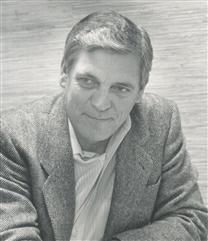
Joseph H. Weston was a controversial newspaper editor in Cave City in Sharp County in northern Arkansas, whose work led to a change in his state's libel law.
Hayes C. McClerkin was an American politician who served as a member of the Arkansas House of Representatives from 1961 to 1970 and as Speaker from 1969 to 1970. He succeeded Speaker Sterling R. Cockrill of Little Rock, who in 1970 switched parties and ran as the unsuccessful Republican nominee for lieutenant governor. McClerkin worked as a commercial and environmental law attorney in Texarkana, Arkansas.
Odell Pollard was an attorney in Searcy in White County in central Arkansas, who was a pioneer in the revitalization of the Arkansas Republican Party in the 1960s and 1970s.
Danny Lee Patrick was an educator and farmer from rural Delaney in Madison County, Arkansas, who served from 1967 to 1970 as a Republican member of the Arkansas House of Representatives for Madison and neighboring Carroll counties in the northwestern corner of his state. His legislative service coincided exactly with the administration of Winthrop Rockefeller, Arkansas' first GOP governor since Reconstruction.
James Ray Caldwell, known as Jim R. Caldwell, is a retired Church of Christ minister in Tulsa, Oklahoma, who was a Republican member of the Arkansas State Senate from 1969 to 1978, the first member of his party to sit in the legislative upper chamber in the 20th century. His first two years as a senator corresponded with the second two-year term of Winthrop Rockefeller, the first Republican governor of Arkansas since Reconstruction. Caldwell was closely allied with Rockefeller during the 1969-1970 legislative sessions.
Sterling Robertson Cockrill, Jr., is a retired politician and civic leader and an active artist in Little Rock, Arkansas.
References
1 2 3 4 5 6 Ken Coon campaign card, 1972 race for lieutenant governor of Arkansas
This page is based on this Wikipedia article Text is available under the CC BY-SA 4.0 license; additional terms may apply. Images, videos and audio are available under their respective licenses.