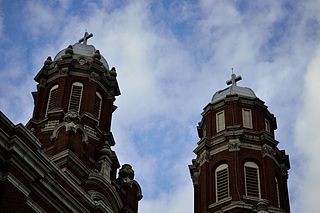
Avondale is one of Chicago's 77 officially designated community areas. It is on the Northwest Side of the city. The northern border is Addison Street from the north branch of the Chicago River in the east to Pulaski Road in the west. The neighborhood extends further west along Belmont Avenue to the Union Pacific/Northwest Line. Its southern border is Diversey Avenue from the Union Pacific/Northwest Line to the Chicago River.
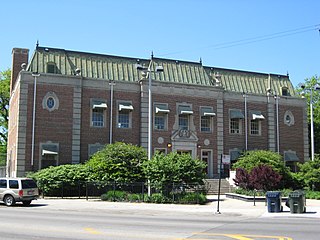
Belmont Cragin is one of 77 officially designated Chicago community areas located on the Northwest Side of the City of Chicago, Illinois. It is designated Community Area 19, and is located 8 miles (13 km) NW of the Loop. Surrounding community areas include: Portage Park, Hermosa, Austin, Montclare, Dunning.

Portage Park is located on the northwest side of the City of Chicago, Illinois and is one of 77 officially designated Chicago community areas. Portage Park is bordered by the community areas of Jefferson Park and Forest Glen to the north, Dunning and the suburb of Harwood Heights to the west, Irving Park to the east and Belmont-Cragin to the south.

California bungalow is an alternative name for the American Craftsman style of residential architecture, when it was applied to small-to-medium-sized homes rather than the large "ultimate bungalow" houses of designers like Greene and Greene. California bungalows became popular in suburban neighborhoods across the United States, and to varying extents elsewhere, from around 1910 to 1939.
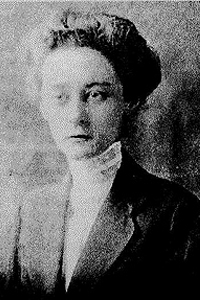
Leila Ross Wilburn (1885–1967) was an early 20th-century architect, one of the first women in Georgia to enter that profession.

The Arden Park–East Boston Historic District is a neighborhood located in Detroit, Michigan, bounded on the west by Woodward Avenue, on the north by East Boston Boulevard, on the east by Oakland Avenue, and on the south by Arden Park Boulevard. The area is immediately adjacent to the much larger and better-known Boston-Edison Historic District, which is on the west side of Woodward Avenue, and also close to the Atkinson Avenue which is just south of Boston-Edison. There are 92 homes in the district, all on East Boston or Arden Park Boulevards. Arden Park Boulevard and East Boston Boulevard feature prominent grassy medians with richly planted trees and flowers. The setbacks of the homes are deep, with oversized lots. The district was listed on the National Register of Historic Places in 1982.

The Middlesex Plat Historic District is located in Des Moines, Iowa, United States. It was an upper-middle-class neighborhood of two-story square houses and bungalows that were built from 1910 to 1923. The district has been listed on the National Register of Historic Places since 2000. It is part of The Bungalow and Square House--Des Moines Residential Growth and Development MPS.
Ida F. McCain (1884–1949) was an early 20th-century American architect active on the West Coast at a time when there were few women in the profession.

The Washington Street Historic District is north of Valparaiso's downtown. The neighborhood has tree-lined streets with many examples of late nineteenth- and early twentieth-century houses and public buildings. Valparaiso began to expand after the railroads came through the township in the 1860s; Pittsburgh, Fort Wayne and Chicago Railroad, the New York, Chicago and St. Louis Railroad and the Grand Trunk Railroad. Residential neighborhoods grew up between the business district and the railroads. On Valparaiso's south side industrial and transportation area expanded, thus residential development was north of downtown.

The South Park Manor Historic District is a residential historic district in the Greater Grand Crossing neighborhood of Chicago, Illinois. The district includes 263 Chicago bungalows built between 1915 and 1927. At the time, single-family homeownership was becoming broadly accessible to Chicagoans, and the bungalow was a popular choice for dense urban housing. The bungalows in the district were designed by several developers, but the district has a consistent appearance nonetheless. The use of a single home type throughout provided uniformity to the neighborhood, while stylistic variations such as the placement of dormers and porches gave each house its own character. The developers also gave their homes spacious lawns and private backyards to preserve green space in an urban setting.

The South Shore Bungalow Historic District is a residential historic district in the South Shore neighborhood of Chicago, Illinois. The district contains 229 Chicago bungalows and twenty other residential buildings built between 1911 and 1930. As homes became more accessible to families in early 20th century Chicago, thousands of bungalows were built to meet the housing demand. While bungalows were affordable mainly due to their uniform designs, their builders changed details such as color and entrance position to keep each home unique. The South Shore bungalows were among the first built in the city, as South Shore was already a popular neighborhood when the bungalow boom began, and the district contains many 1910s stucco bungalows; however, every bungalow built after 1917 is brick.
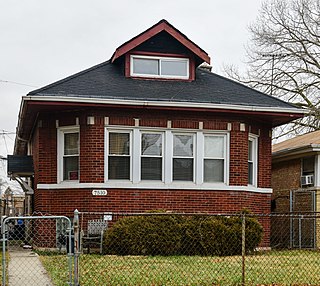
The Auburn Gresham Bungalow Historic District is a residential historic district in the Auburn Gresham neighborhood of Chicago, Illinois. The district includes 264 Chicago bungalows built from 1918 to 1932 along with a variety of other residential buildings. Homeownership became more attainable for working-class Chicagoans in the early twentieth century, and affordable bungalows played a key role in this pattern, with tens of thousands of the homes built in the city. Auburn Gresham, a South Side neighborhood with railroad access and little prior development, was one of the many parts of the city developed during the bungalow boom. While thirty-two different architects designed homes in the district, the bungalows are still relatively similar, as the uniform building design was a major factor in their affordability; however, elements such as color and brickwork distinguish the individual homes.

The Brainerd Bungalow Historic District is a residential historic district in the Brainerd neighborhood of the Washington Heights community area of Chicago, Illinois. The district includes 527 Chicago bungalows built between 1915 and 1931 and a small number of other residential buildings. Brainerd, an outlying neighborhood of Chicago, was developed in the 1910s and 1920s as the increasing accessibility of homeownership spurred new home construction in underpopulated areas of the city. As bungalows were affordable to construct, they became popular in newly developed neighborhoods, and tens of thousands of them were built throughout the city. While 42 different architects designed Brainerd's bungalows, the neighborhood has a consistent appearance nonetheless, as the affordability of bungalows came in part from how easy the design was to duplicate; however, architects used color and detail work to give each home a unique design.

The Schorsch Irving Park Gardens Historic District is a residential historic district in the Dunning neighborhood of Chicago, Illinois. The district includes 255 buildings, all but three of which are Chicago bungalows. In the early twentieth century, tens of thousands of Chicago bungalows were built in the city; as homeownership became more accessible to working-class Chicagoans, demand for housing increased, and bungalows were an affordable way of meeting this demand due to their relatively uniform design. The bungalows in the district were largely built either between 1917 and 1918 or between 1922 and 1926. Unlike Chicago's other bungalow-dominated neighborhoods, which often had several different developers, developer Albert J. Schorsch built every bungalow in the district, and architech Ernest N. Braucher designed all of them. To add diversity to a neighborhood made up of only one style of house, the two men varied the homes' roof shapes, colors, and dormers.

The Wrightwood Bungalow Historic District is a residential historic district encompassing the 4600 and 4700 blocks of Wrightwood Avenue in the Belmont Cragin neighborhood of Chicago, Illinois. The district includes 58 houses built between 1916 and 1926, 55 of which are Chicago bungalows. As homeownership became more accessible in early twentieth century Chicago, the bungalow became popular as an affordable home design, and tens of thousands of the houses were built throughout Chicago. Like many of Chicago's bungalow-heavy neighborhoods, both the district and the Belmont Cragin neighborhood in general saw little residential development before the bungalow boom; however, the area was much more industrial than most similar neighborhoods. While several developers built bungalows in the district, the Stolzner Construction Company built over half of them, including every bungalow on the 4600 block. The company's architect, Joseph Klafter, differentiated the bungalows by changing details such as their color, entrance position, and dormer design.

The Rogers Park Manor Bungalow Historic District is a residential historic district in the West Ridge neighborhood of Chicago, Illinois. The district includes 329 buildings, 247 of which are Chicago bungalows built in the 1920s. As homeownership became more accessible to working-class Chicagoans in the early twentieth century, bungalows became an affordable and popular style due to their easily replicable design, and tens of thousands of the houses were built throughout Chicago. The Rogers Park Manor area was typical of new bungalow neighborhoods, as it was an underdeveloped outlying neighborhood near the city's northern edge. The bungalows in Rogers Park Manor were built by several different developers and architects, which led to variation in the size and shape of the homes despite their similar designs.

The Talman West Ridge Bungalow Historic District is a residential historic district in the West Ridge neighborhood of Chicago, Illinois. 181 of the district's 272 buildings are either brick Chicago bungalows or older stucco bungalows built from 1919 to 1930. As homeownership became more affordable in early twentieth century Chicago, the bungalow became popular for its easily and cheaply replicated design, and tens of thousands of the homes were built throughout the city. West Ridge, a lightly developed area on Chicago's northern border, was typical of the neighborhoods that were dominated by new bungalows. While a variety of developers and architects built the district's bungalows in distinctive fashions, the homes' similar designs and consistent setbacks from the street give the district a cohesive appearance.

The Portage Park Bungalow Historic District is a residential historic district in the Portage Park neighborhood of Chicago, Illinois. The district includes 225 buildings, 189 of which are brick Chicago bungalows built between 1915 and 1930. As homeownership became broadly accessible to Chicagoans in the early twentieth century, the bungalow emerged as a popular and affordable house design, and tens of thousands of the homes were built throughout Chicago. Portage Park was one of the many outlying neighborhoods of Chicago which grew dramatically as a result of the housing boom; new residents were also attracted to the neighborhood's eponymous park. While the district was developed by many different builders and architects, the use of a single home type with uniform setbacks from the street gives the neighborhood a consistent appearance.
George C. Hield was a real estate businessman from Wisconsin. He was a prominent player of real estate in Chicago. Previously, he was a hay dealer.

The Central Berwyn Bungalow Historic District is a residential historic district in Berwyn, Illinois. The district includes 1,358 contributing buildings, 1,109 of which are brick Chicago bungalows and another 156 of which are bungalows in other styles. The homes were built between 1900 and 1949, with the majority of them being built in the mid-1920s. Tens of thousands of bungalows were built in the Chicago area in the early twentieth century, as their affordability made them popular with the working class. Many of Berwyn's bungalows were purchased by Czech Americans, who moved to Berwyn in great numbers in the 1920s and accounted for 25% of the city's population by 1930. While bungalows typically had uniform designs, they were distinguished by their entrances, porches, and roofs, and nearly every possible variation on those features can be found in the district.