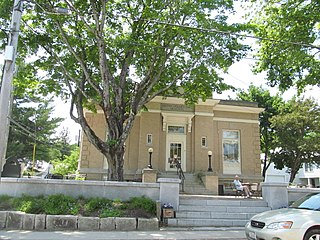
The Bridgton Public Library, formerly the Dalton Holmes Davis Memorial Library, is the public library of Bridgton, Maine. It is located at 1 Church Street, in an architecturally distinguished Classical Revival building designed by Harry S. Coombs and built in 1913. The building is listed on the National Register of Historic Places.

Cumston Hall is a historic community building at 796 Main Street in downtown Monmouth, Maine. Built in 1900, it is one of the most flamboyant examples of wooden Romanesque Revival architecture to be found in a small-town setting in the entire state. It was a gift to the town of Dr. Charles M. Cumston, and presently houses the local public library and local theatrical companies. It was listed on the National Register of Historic Places in 1973.

The First Universalist Church is a historic church building on the corner of Pleasant, Elm, and Spring Streets in Auburn, Maine. It was built in 1876 to a design by John Stevens of Boston, Massachusetts, and has been a significant landmark in the city since its construction. It is a fine local example of Gothic Revival architecture executed in brick, and was listed on the National Register of Historic Places in 1979.

The Ocean Park Historic Buildings are a group of four religious community structures in the center of the Ocean Park area of Old Orchard Beach, Maine. Also known as Temple Square, they form the heart of the summer camp meeting established in 1881. The buildings include The Temple, one of the only octagonal church buildings in the state. The buildings were listed as a historic district on the National Register of Historic Places in 1982.

The Opera House at Boothbay Harbor, also known historically as the Boothbay Harbor Opera House, Knights of Pythias Hall, The Opera House, and as the Pythian Opera House, is a historic meeting hall and multifunction building at 86 Townsend Avenue in Boothbay Harbor, Maine. Built in 1894, it has housed government offices of the town, and the meeting spaces of fraternal organizations, prior to its present use as a performance venue. It was listed on the National Register of Historic Places on December 30, 2008.

The Former First Congregational Church is a historic church building at 938 Post Road, on the corner of Rt. 1 and Buzzell Road in Wells, Maine. It was built in 1862 on the site of the first colonial meeting house in Wells, believed to have been built in 1664. The building is a fine example of Romanesque and Gothic architecture. It now serves as the museum of the Historical Society of Wells and Ogunquit. The building was listed on the National Register of Historic Places in 1991.
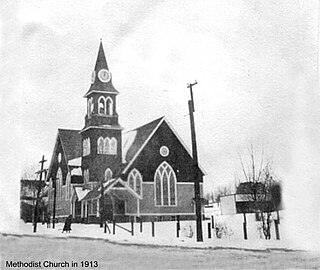
The Gray Memorial United Methodist Church and Parsonage is a historic church complex at 8 Prospect Street in Caribou, Maine. The Gothic Revival wood-frame church, built in 1912-14 for a Methodist congregation founded in 1860, is the most architecturally sophisticated church in Caribou. It was built on the lot of the Colonial Revival parsonage house, which was moved to make way for the church. The complex was listed on the National Register of Historic Places in 1995. The current pastor is Pastor Richard Rego.
Dexter Universalist Church, or the First Universalist Church of Dexter, is a historic church on Church Street in Dexter, Maine. Built in the 1820s and restyled in the 1860s, it is a distinctive work of Boston, Massachusetts architect Thomas Silloway. The building was listed on the National Register of Historic Places in 1985.

Pittsfield Universalist Church is a historic church at 112 Easy Streets in Pittsfield, Maine. Built in 1898–99 with parts dating to 1857, it is one of the town's finest examples of Queen Anne architecture and is noted for its artwork and stained glass. The building was listed on the National Register of Historic Places in 1983.

The Memorial United Methodist Church is a historic church in the village of Swanton, Vermont. Built in 1895, it is an architecturally distinctive example of Queen Anne architecture executed in brick. It was listed on the National Register of Historic Places in 2001.

The Milo Public Library is located at 121 Main Street in Milo, Maine, USA. It is located in a small, architecturally distinguished building, built with funding assistance from Andrew Carnegie. The building was added to the National Register of Historic Places in 1989.
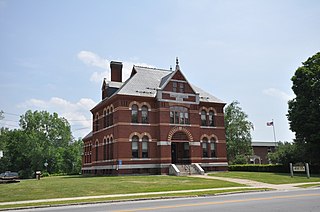
The Conant Public Library is the public library of Winchester, New Hampshire. It is located at 111 Main Street, in a fine Victorian Romanesque Revival building erected in 1891, funded by a bequest from Winchester resident Ezra Conant. The building's design, by Springfield, Massachusetts architect, J. M. Currier, is based on his design of the 1886 library building in Brattleboro, Vermont, and is one of the most architecturally distinguished buildings in Cheshire County. It was listed on the National Register of Historic Places in 1987.
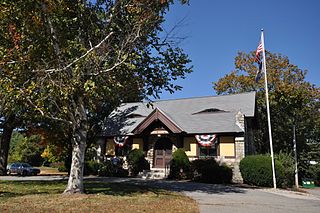
The Old North Hampton Library is a historic library building at 237 Atlantic Avenue in North Hampton, New Hampshire. The small, single-story Tudor Revival structure was designed by Boston architect J. Lawrence Berry and built in 1907. It was the town's first purpose-built library building, and was used as such until a new library was built nearby in 1973. It presently houses town offices. The building was listed on the National Register of Historic Places in 2014, and the New Hampshire State Register of Historic Places in 2013.

The Rumford Public Library is a library in Rumford, Maine. The building it is in was designed by Maine architect John Calvin Stevens and was built with a funding grant from Andrew Carnegie in 1903. The architecturally distinguished building was listed on the National Register of Historic Places in 1989.

The Soldiers Memorial Library is the public library of Hiram, Maine. It is located at 85 Main Street in the center of the small town, in a small concrete-block building erected in 1915–16. It is architecturally significant as one only two library buildings in the state built using ornamental concrete blocks, and was for this reason listed on the National Register of Historic Places in 2008.

Sangerville Town Hall is located at 1 Town Hall Lane in the village center of Sangerville, Maine. Built in 1902, it is one of the rural community's most sophisticated architectural buildings. It was designed and built by a local contractor, and has well-proportioned Colonial Revival features. It was listed on the National Register of Historic Places in 1991.
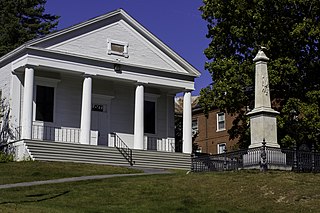
The Art Gallery of the University of Southern Maine, Gorham campus, is located at 5 University Way, at the main campus entrance. The building in which it is located was built in 1822 as a non-denominational church building, and has also served as Gorham's town hall. It has been part of the campus since the early 1960s, and was listed on the National Register of Historic Places in 1972.

The former Corinth Town Hall and Corinthian Lodge No. 59, I.O.O.F. is a historic community building at 328 Main Street in Corinth, Maine. Built in 1880 as a joint venture by the town and the local Odd Fellows chapter, it served as Corinth's town hall for about 100 years, and as a major social meeting and event location for the town. The building was listed on the National Register of Historic Places in 2008. The building continues to be used as a community center.
The Star of Hope Lodge is a historic former commercial and fraternal society building on Main Street in downtown Vinalhaven, Maine. Built in 1885, this large Second Empire building is one of a few commercial buildings to survive in the island community. It was restored in the 1980s by artist Robert Indiana for use as an art gallery and studio space. It was listed on the National Register of Historic Places in 1982.
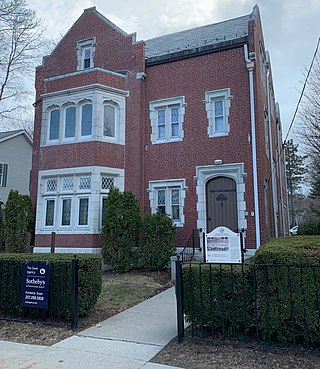
33 Ledgelawn Avenue is an historic building in Bar Harbor, Maine, formerly St. Edward's Convent. It is an architecturally distinguished building designed by local architect Milton Stratton and built in 1917 in the Jacobethan style. The building was listed on the National Register of Historic Places in 1998. It was home to the Bar Harbor Historical Society until early 2019.