Elsham Hall is a 17th-century English country house situated in its own parkland in Elsham, North Lincolnshire. The park and gardens are open to the public.
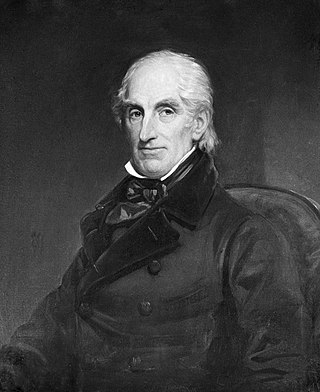
Isaac Daniel Roosevelt was an American doctor and farmer. He was the paternal grandfather of U.S. President Franklin D. Roosevelt.
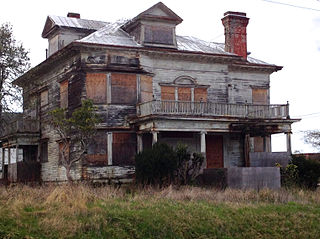
The Captain George Conrad Flavel House is a house built in 1901 in Astoria, Oregon. It was listed on the National Register of Historic Places in 1986.

Liberty Hall, also known as the Governor William Livingston House, located on Morris Avenue in Union, Union County, New Jersey, United States, is a historic home where many leading influential people lived. It was documented by the Historic American Buildings Survey (HABS) in 1938. The house was added to the National Register of Historic Places as a National Historic Landmark on November 28, 1972, for its significance in politics and government. It is now the Liberty Hall Museum.
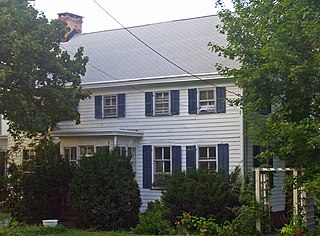
The Homestead is a historic house on Hudson Avenue in the village of Haverstraw, New York, United States. It is one of the oldest buildings in the village, dating to the early 19th century.

The Isaac Onderdonk House, also known as the Walter C. and Julia Meuly House, is a historic house located at 685 River Road in the township of Piscataway in Middlesex County, New Jersey, United States. It was added to the National Register of Historic Places on October 30, 1973, for its significance in architecture. It was listed as a contributing property of the Road Up Raritan Historic District in 1997.
Airdrie, a.k.a. Petway House or the Buell-King House, is a historic house and former plantation in Nashville, Tennessee. Built as a log house from 1797 to 1808, it was a Southern plantation with African slaves in the Antebellum era. After the American Civil War, it belonged to Union veterans.

The Smith Farmhouse, also known as the Smith Homestead Farmhouse, is a historic dwelling located in Lake City, Iowa, United States. This house's significance is due to its association with the pioneer Smith family. Peter and Sarah Smith and their four young sons settled here from Cass County, Michigan in 1855. Their first two houses were built on the same property to the north of this one. Their first house and barn were log structures, and their second was frame construction. What is now known as Lake City was chosen as the county seat for Calhoun County because it was the area with the highest population. Smith donated 40 acres (16 ha) of land for the town.

The Andrew Scott House is a historic two-story farmhouse in Culleoka, Tennessee, U.S.

The Isaac A. Wetherby House is a historic building located in Iowa City, Iowa, United States. This house was built in two parts. The original two story frame section was built in 1854 by Patrick Doyle, an Irish immigrant and teamster. A single story frame addition was built by portrait painter and photographer Isaac Augustus Wetherby in 1860. He had acquired the house from Doyle, who could no longer afford the taxes. Wetherby lived here until 1887 when he sought economic opportunities elsewhere, but probably visited from time to time until his death in 1904. His family continued to reside here until 1948. The house was originally located on Market Street and was moved to this location on Governor in 2008 when a developer threatened to tear it down. It is the only extant building associated with Isaac Wetherby. The house was listed on the National Register of Historic Places in 2009.

The Absalom Scales House is a historic house in Eagleville, Tennessee, U.S..
Greenfield, also known as the David Chenault Home, is a historic farmhouse in Castalian Springs, Tennessee, U.S..

The Andrew J. Cheney House is a historic house on a former plantation in Marietta, Georgia, U.S.. Built in the Antebellum Era, it was used by Union General William Tecumseh Sherman during the American Civil War, and it was the private residence of a state representative after the war. It is listed on the National Register of Historic Places.
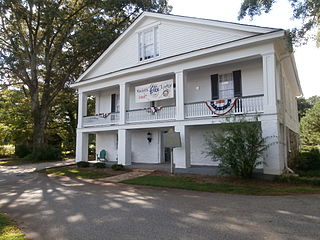
The William Gibbs McAdoo House is a historic house in Marietta, Georgia, U.S.. Built in the Antebellum Era, it was the birthplace of U.S. Treasury Secretary William Gibbs McAdoo, and it belonged to Georgia Governor Charles J. McDonald's daughter after the war. It is listed on the National Register of Historic Places.

The Benjamin Franklin Smyth House is a historic house in Louisville, Mississippi. It was built in 1840 for John Brown Smyth, a settler who owned slaves, and his four sons. After his death, his son Benjamin Franklin Smyth inherited the house and expanded it with the help of another brother, Samuel Washington Smyth, who also built the Foster-Fair House. Benjamin Franklin Smyth lived in this house with his wife, née Margaret Tankersley, and at least one son, Sylvester. By the 1990s, the house still belonged to the Smyth family.

The Alfred A. Robb House is a historic house in Clarksville, Tennessee. It was built in 1859 for Alfred Robb, a graduate of the University of Nashville and lawyer who served on the board of the Masonic College, now known as Austin Peay State University. Robb lived here with his wife, née Mary E. Conrad, and their five children. One of their sons, James E. Bailey, served as a United States Senator from Tennessee from 1877 to 1881.

The Ward-Meade House is a historic house in Topeka, Kansas. It was built in 1870 for Anthony A. Ward and his wife, née Mary Jane Foster. It was inherited by their daughter Jennie, who lived here with her husband John Meade, an engineer for the Atchison, Topeka and Santa Fe Railway. It remained in the Ward-Meade family until 1961, when it was acquired by the city of Topeka.

The Hugh Bright Douglas House is a historic house in Fayetteville, Tennessee. It was built in 1894 for a Confederate veteran. It is listed on the National Register of Historic Places.

The Jonathan and Jennie Knudson House is a historic house in Brigham City, Utah. It was built in 1898-1901 by Jonathan Chester Knudson, a Mormon businessman whose father was a Danish-born convert to the Church of Jesus Christ of Latter-day Saints. Knudson lived here with his wife, née Jennie Ellen Pritchard. In the 1930s, the house was inherited by their son, Jonathan Chester Knudson Jr., also a Mormon businessman, who lived here with his wife, Lucille. It was later deeded to their son, Jake, who lived here with his Japanese wife, Tomie Kono, a Tenrikyo minister. The house remained in the Knudson family until 1998.

The George Carter Whitmore Mansion is a historic house in Nephi, Utah. It was built in 1898 for George Carter Whitmore, who founded the First National Bank of Nephi and served as a Democratic member of the Utah Senate from 1900 to 1908. The house was designed in the Queen Anne and Eastlake styles by architect Oscar Booth. Whitmore, his wife née Mary Elizabeth Hague, and their eight children, lived here until his death in 1917. It was inherited by one of his sons, George M. Whitmore. It has been listed on the National Register of Historic Places since December 12, 1978.