The Chief Justice of India (CJI) is the chief judge of the Supreme Court of India and the highest-ranking officer of the Indian judiciary. The Constitution of India grants power to the president of India to appoint the chief justice, as recommended by the outgoing chief justice in consultation with other judges of the Supreme Court.The chief justice serves until the age of 65 or if removed early by the constitutional process of impeachment. The chief justice ranks sixth in the Order of precedence in India.[5] As head of the Supreme Court, the chief justice is responsible for the allocation of cases and other administrative functions of the Court.
The Constitution of India grants power to the president of India to appoint the chief justice, as recommended by the outgoing chief justice in consultation with other judges of the Supreme Court.[8] As an incumbent chief justice approaches retirement, the ministry of law and justice seeks a recommendation for the next chief justice from the incumbent office holder. The recommendation is then presented to the prime minister, who will advice the president in the matter of appointment.[9]
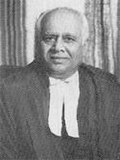
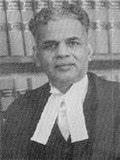
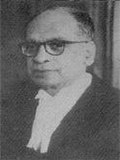
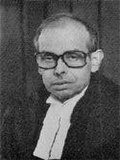
As per convention, the successor suggested by the incumbent chief justice is most often the next senior most judge of the Supreme Court by tenure. However, this convention has been broken twice, when A. N. Ray was appointed in 1973, superseding three senior judges–J. M. Shelat, A. N. Grover and K. S. Hegde,[10] and when M. H. Beg was appointed in 1977, superseding H. R. Khanna.[11]
Tenure and removal
Once appointed, the chief justice remains in office until the age 65, unless removed earlier.[12] As per the Article 124(4) of the Constitution of India, the procedure for the removal of a judge of the Supreme Court, is applicable to the chief justice as well. The chief justice can be removed through impeachment by the parliament.[13]
A Judge of the Supreme Court shall not be removed from his office except by an order of the President passed after an address by each House of Parliament supported by a majority of the total membership of that House and by a majority of not less than two-thirds of the members of that House present and voting has been presented to the President in the same session for such removal on the ground of proved misbehaviour or incapacity.
For initiating impeachment proceedings against a chief justice, at least 50 members of Rajya Sabha or 100 members of Lok Sabha shall issue the notice as per the Judges (Inquiry) Act of 1968.[14] Post the notice, a judicial committee would be formed to frame charges against the judge, to conduct a fair trial and to submit a report to parliament. When the judicial committee report finds the judge guilty of misbehavior or incapacity, further removal proceedings would be taken up by the parliament if the judge is not resigning himself.[15][16][17] The judge upon proven guilty is also liable for punishment per applicable laws or for contempt of the constitution by breaching the oath under the Prevention of Insults to National Honour Act, 1971.[18]
Emoluments
As per the Article 125 of the constitution, the Indian parliament is responsible for determining the salary, and other emolutments of the judges. However, the parliament is not allowed alter any of these privileges rights to the judge's disadvantage after their appointment. Accordingly, such provisions have been laid down in The Supreme Court Judges (Salaries and Conditions of Service) Act, 1958.[19][20] This remuneration was revised in 2006–2008 after the Sixth Central Pay Commission's recommendation,[21] and increased further in 2016 as per the seventh pay commission.[22] The chief justice earns basic salary of ₹280,000 (US$3,300) per month.[23]
Powers and functions
As the head of the Supreme Court, the chief justice is responsible for the allocation of cases to the other judges, and the appointment of constitutional benches that deal with important matters of law or the interpretation of the constitution. If the chief justice allocates a work to the other judges, they are bound to refer the matter back to the chief justice for re-allocation if it to be looked into by another group of experienced judges or conflict of interest. The chief justice carries out administrative functions such as the maintenance of the roster, appointment of court officials, and general and miscellaneous matters relating to the supervision and functioning of the Supreme Court, and is aided by the officials of the Court.[24] The chief justice also serves as the de facto chancellor of National Law School of India University and West Bengal National University of Juridical Sciences.[25]
Acting president
As per the President (Discharge of Functions) Act, 1969, the chief justice shall act as the president if the offices of both the president and the vice president are vacant. As per the convention, then the senior most judge of the Supreme Court takes over as the role of the chief justice.[26] When president Zakir Hussain died in office in May 1969, vice president V. V. Giri acted as the president. Later, when Giri resigned as the vice president, to contest in the 1969 Indian presidential election, Mohammad Hidayatullah, then chief justice, became the acting president. When the newly elected president took office a month later, Hidayatullah reverted to his role as the chief justice.[27]
↑Bhushan, Prashant (4 June 1993). "A historic non-impeachment"(PDF). Frontline. Archived(PDF) from the original on 9 December 2014. Retrieved 5 December 2014.
↑Archived copy(PDF). 2008. Archived from the original(PDF) on 26 June 2020. Retrieved 17 December 2018.{{cite book}}: CS1 maint: archived copy as title (link)
↑George H. Gadbois Jr. (1964). "The Federal Court of India: 1937-1950". Journal of the Indian Law Institute. 6 (2/3): 253–315. JSTOR43949806. Archived from the original on 17 November 2022. Retrieved 21 April 2024. Gwyer retired in 1943 and was replaced by Sir William Patrick Spens. ...Varadachariar served very briefly as acting Chief Justice in 1943 between the date of Gwyer's retirement and the arrival in India of Spens. ... Two days before independence Chief Justice Spens resigned, and the then seniormost puisne judge, Kania, became the first Indian to hold India's highest judicial office.
This page is based on this Wikipedia article Text is available under the CC BY-SA 4.0 license; additional terms may apply. Images, videos and audio are available under their respective licenses.