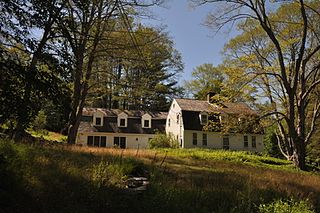
The Simon Tiffany House, also known as the Ebenezer Tiffany House, is a historic house on Darling Road in Salem, Connecticut. Built about 1793, it is a well-preserved example of a rural vernacular farmhouse of the period. It was listed on the National Register of Historic Places in 1983.

The Edward Waldo House is a historic house museum at 96 Waldo Road in Scotland, Connecticut. Built about 1715, it is a well-preserved example of colonial residential architecture, which was occupied by a single family for over 250 years. The house was listed on the National Register of Historic Places in 1978. It is now owned by the local historical society.

The Daniel and Esther Bartlett House is at historic house and farmstead at 43 Lonetown Road in Redding, Connecticut. Built in 1796, it is a good local example of well-preserved Federal architecture, somewhat unusual for its shingle siding. The property, now owned by the town and managed by the local historical society, also includes an 18th-century barn. The property was listed on the National Register of Historic Places on April 15, 1993.

The Raymond-Bradford Homestead is a historic house on Raymond Hill Road in Montville, Connecticut. Built about 1710, it is notable for its history of alteration, dating into the late 19th century, its construction by a woman, Mercy Sands Raymond, in the colonial period, and its continuous ownership by a single family line. The house was listed on the National Register of Historic Places on April 16, 1982.

The John Glover House is a historic house at 53 Echo Valley Road in Newtown, Connecticut. Built about 1708 by an early town settler, it is a remarkably well-preserved example of 18th-century residential architecture, owned for generations by a locally prominent farming family. The house was listed on the National Register of Historic Places in 2001.

The Jared Cone House is a historic house at 25 Hebron Road in Bolton, Connecticut. Probably built around the turn of the 19th century but also including an older ell, it is one of the rural community's finest examples of Federal period architecture. It was listed on the National Register of Historic Places in 1990.
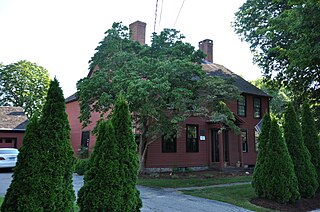
The Samuel Eliot House is a historic house at 500 Main Street in Old Saybrook, Connecticut. Probably built in 1737, it is a well-preserved example of Georgian residential architecture, and one of Old Saybrook's older buildings. The house was listed on the National Register of Historic Places in 1972.

The Jedidiah Dudley House, is a historic house on Springbrook Road in Old Saybrook, Connecticut. Built in the second half of the 18th century, it is a good example of period architecture, and is notable for its association with a family of ferry operators on the nearby Connecticut River. It was listed on the National Register of Historic Places in 1982.

The Lay-Pritchett House is a historic house on Stevenstown Road in Westbrook, Connecticut. Built about 1737 and enlarged several times since, it is distinctive for retaining its core elements in their original configuration and without significant alteration. The house was listed on the National Register of Historic Places in 1978.

The Moses Kent House is a historic house on River Road in Lyme, New Hampshire. Built in 1811, it is a good local example of Federal period architecture, most notable for the well-preserved murals on its interior walls, drawn by the itinerant artist Rufus Porter. The house was listed on the National Register of Historic Places in 1984.

The Dr. Daniel Adams House is a historic house at 324 Main Street in Keene, New Hampshire. Built about 1795, it is a good example of transitional Federal-Greek Revival architecture, with a well documented history of alterations by its first owner. The house was listed on the National Register of Historic Places in 1989.

The Cornet Thomas Wiggin House is a historic house at 249 Portsmouth Avenue in Stratham, New Hampshire. Probably built in the 1770s, it is a remarkably little-altered example of vernacular Federal period architecture. It was listed on the National Register of Historic Places in 1983.

The Simeon Smith Mansion is a historic farm property on Smith Road in West Haven, Vermont. The property, more than 100 acres (40 ha) includes a farmhouse dating to the 1790s, which was the seat of Simeon Smith, a prominent local doctor, politician, and landowner. The property was listed on the National Register of Historic Places in 1991.

The Evarts-McWilliams House is a historic house on Georgia Shore Road in Georgia, Vermont. Built about 1799, it is a prominent example of Federal period architecture in northwestern Vermont. It was listed on the National Register of Historic Places in 1982.

The Francis Benedict Jr. House, or Benedict–Smith House, is a historic house at 85 North Colebrook Road in Norfolk, Connecticut. Erected sometime between about 1795 and 1811, it is a high-quality example of late Colonial and early Federal architecture, and a well-preserved surviving example of the town's early architecture. It was listed on the National Register of Historic Places in 2002.
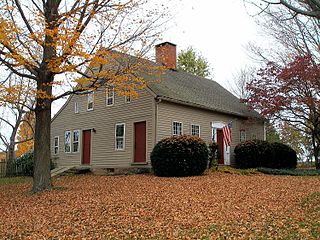
The Roderick Bryan House is a historic house at 867 Linkfield Road in Watertown, Connecticut. Built about 1820, it is a well-preserved example of a rural Cape style farmhouse. It was listed on the National Register of Historic Places in 2000.
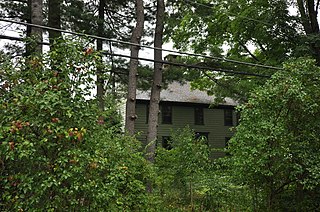
The Holabird House is a historic house on Kellog Road in Canaan, Connecticut. Built about 1740, it is one of the town's oldest surviving buildings, and a well-preserved example of Georgian architecture. It was listed on the National Register of Historic Places in 1982.

The John Wiard House is a historic house on Spielman Highway in Burlington, Connecticut. Probably built about 1754, it is a well-preserved example of period rural vernacular residential architecture. It was listed on the National Register of Historic Places in 1982.

The Reuben Curtiss House is a historic house at 1770 Bucks Hill Road in Southbury, Connecticut. With a construction and alteration history dating from the late 18th to 20th centuries, the house is one of Southbury's finest examples of residential Greek Revival architecture. It was listed on the National Register of Historic Places in 1993.

The Edward Frisbie Homestead is a historic house at 240 Stony Creek Road in Branford, Connecticut, United States. Built about 1790 by the grandson of one of Branford's first settlers, it is a little-altered and well-preserved example of Federal period architecture. It was listed on the National Register of Historic Places in 1985.