| Part of the Politics series | ||||
| Elections | ||||
|---|---|---|---|---|
| Basic types | ||||
| Terminology | ||||
| Subseries | ||||
| Lists | ||||
| ||||
| Related | ||||
| Politics portal | ||||
This local electoral calendar for the year 2012 lists the subnational elections held in 2012 in the de jure and de facto sovereign states. By-elections and sub-national referenda are also included.
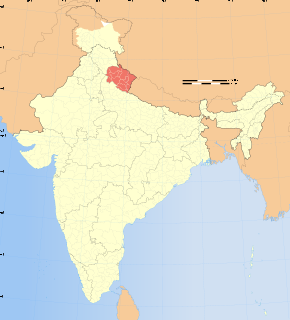
Elections for the Uttarakhand Legislative Assembly in Uttarakhand state, India are conducted in accordance with the Constitution of India. The Assembly of Uttarakhand creates laws regarding the conduct of local body elections unilaterally while any changes by the state legislature to the conduct of state level elections need to be approved by the Parliament of India. In addition, the state legislature may be dismissed by the Parliament according to Article 356 of the Indian Constitution and President's rule may be imposed.
India is a federation with a parliamentary system governed under the Constitution of India, which defines the power distribution between the union, or central, government and the states.
Manipur is a state in northeastern India, with the city of Imphal as its capital. It is bounded by Nagaland to the north, Mizoram to the south, and Assam to the west; Burma (Myanmar) lies to its east. The state covers an area of 22,327 square kilometres (8,621 sq mi) and has a population of almost 3 million, including the Meitei, who are the majority group in the state, the Pangals or the Pangans, Kuki, and Naga people, who speak a variety of Sino-Tibetan languages. Manipur has been at the crossroads of Asian economic and cultural exchange for more than 2,500 years. It has long connected the Indian subcontinent to Southeast Asia, China, Siberia, Micronesia and Polynesia, enabling migration of people, cultures, and religions.
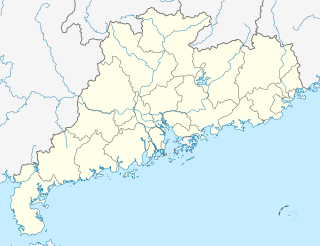
Wukan is a coastal fishing village in Donghai Subdistrict (东海街道), in the city of Lufeng, Guangdong. It has a population of approximately 13,000 residents, and is located approximately 120 km (75 mi) east of Hong Kong near the South China Sea coast.
Philippine elections are of several types. The president, vice-president, and the senators are elected for a six-year term, while the members of the House of Representatives, governors, vice-governors, members of the Sangguniang Panlalawigan, mayors, vice-mayors, members of the Sangguniang Panlungsod/members of the Sangguniang Bayan, barangay officials, and the members of the Sangguniang Kabataan are elected to serve for a three-year term.
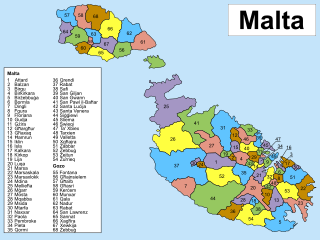
Since June 30, 1993, Malta has been subdivided into 68 localities, governed by local councils, Maltese: kunsilli lokali, meaning municipalities or borough. These form the most basic form of local government and there are no intermediate levels between it and the national level. The levels of the 6 districts and of the 3 regions serve statistical purposes.
Elections in Switzerland gives information on election and election results in Switzerland.
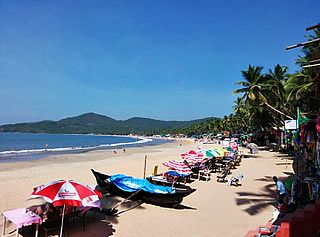
Goa is a state on the south-western coast of India within the coastal region known as the Konkan, separated from the Deccan highlands of the state of Karnataka by the Western Ghats. It is bounded by Maharashtra to the north and Karnataka to the east and south, with the Arabian Sea forming its western coast. It is India's smallest state by area and the fourth-smallest by population. Goa has the highest GDP per capita among all Indian states, two and a half times that of the country. It was ranked the best-placed state by the Eleventh Finance Commission for its infrastructure and ranked on top for the best quality of life in India by the National Commission on Population based on the 12 Indicators.
Elections in Belize are the duly held elections held at various levels of government in the nation of Belize.
Malta elects on a national level 6 MEPs representing Malta in the European Parliament, on a district level the legislature, On a local level the Local Councils and on a community level the Administrative Committees.
This national electoral calendar for the year 2011 lists the national/federal direct elections held in 2011 in the de jure and de facto sovereign states and their dependent territories. By-elections are excluded, though national referendums are included.
This local electoral calendar for the year 2011 lists the subnational elections held in 2011 in the de jure and de facto sovereign states. By-elections and sub-national referenda are also included.
This local electoral calendar for 2013 lists the subnational elections held in 2013 in the de jure and de facto sovereign states. By-elections and sub-national referenda are also included.
This local electoral calendar for 2015 lists the subnational elections held in 2015 in de jure and de facto sovereign states. By-elections and sub-national referenda are also included.
This local electoral calendar for 2014 lists the subnational elections held in 2014 in the de jure and de facto sovereign states. By-elections and sub-national referenda are also included.
This local electoral calendar for 2016 lists the subnational elections held in 2016 in the de jure and de facto sovereign states. By-elections and sub-national referenda are also included.
The Electoral cycle of Turkey is composed of three different types of elections, namely general elections every five years, local elections every five years and presidential elections every five years. Occasionally, referendums may be held if at least 360 Members of Parliament in the Grand National Assembly vote in favour of a constitutional amendment. Elections are overseen by the Supreme Electoral Council of Turkey.
This local electoral calendar for 2017 lists the subnational elections held in 2017 in the de jure and de facto sovereign states. By-elections and sub-national referendums are also included.
This local electoral calendar for 2018 lists the subnational elections to be held in 2018 in the de jure and de facto sovereign states. By-elections and sub-national referendums are also included.
This local electoral calendar for 2019 lists the subnational elections to be held in 2019 in the de jure and de facto sovereign states. By-elections and sub-national referendums are also included.