| Part of the Politics series | ||||
| Elections | ||||
|---|---|---|---|---|
| Basic types | ||||
| Terminology | ||||
| Subseries | ||||
| Lists | ||||
| ||||
| Related | ||||
| Politics portal | ||||
This local electoral calendar for 2014 lists the subnational elections held in 2014 in the de jure and de facto sovereign states. By-elections and sub-national referenda are also included.
Popular elections are to be held in 2020 for the first time since 1969. UNSOM has been mandated to support the preparations universal elections.
The 2014 Puntland presidential election was held on 8 January 2014 in Garowe, the administrative capital of the autonomous Puntland region in northeastern Somalia. The third such vote to be held in the state since its formation in 1998, it followed the election of a new Parliament Speaker and Deputy Speakers on 4 January 2014 by the 66-seat regional legislature. Candidates included officials from the incumbent Puntland administration, former government ministers and prominent local entrepreneurs. The ballot saw the election of former Prime Minister of Somalia Abdiweli Mohamed Ali as the 5th President of Puntland, narrowly defeating the incumbent Abdirahman Mohamud Farole. Parliament concurrently elected Abdihakim Abdullahi Haji Omar as Puntland's new Vice President in place of Abdisamad Ali Shire.
Manitoba is a province at the longitudinal centre of Canada. It is often considered one of the three prairie provinces and is Canada's fifth-most populous province with its estimated 1.3 million people. Manitoba covers 649,950 square kilometres (250,900 sq mi) with a widely varied landscape, stretching from the northern oceanic coastline to the southern border with the United States. The province is bordered by the provinces of Ontario to the east and Saskatchewan to the west, the territories of Nunavut to the north, and Northwest Territories to the northwest, and the U.S. states of North Dakota and Minnesota to the south.
Gagauzia or Gagauz Yeri, officially the Autonomous Territorial Unit of Gagauzia, is an autonomous region of Moldova. Its name comes from the Gagauz people. Gagauz Yeri literally means "place of the Gagauz".
Moldova, officially the Republic of Moldova, is a landlocked country in Eastern Europe, bordered by Romania to the west and Ukraine to the north, east, and south. The capital city is Chișinău.
Elections in Australia take place periodically to elect the legislature of the Commonwealth of Australia, as well as for each Australian state and territory. Elections in all jurisdictions follow similar principles, though there are minor variations between them. The elections for the Australian Parliament are held under the federal electoral system, which is uniform throughout the country, and the elections for state and territory Parliaments are held under the electoral system of each state and territory.
Serbia elects a legislature and a president on a national level. The National Assembly of Serbia has 250 members elected for a four-year term. Serbia has a multi-party system, with numerous parties in which no one party often has a chance of gaining power alone, and parties must work with each other to form coalition governments. A party must receive at least 5% of the votes in the entire country to qualify for any seats, except for national minorities' parties, who only have to reach 0.4%.
Elections in Ukraine are held to choose the President, Verkhovna Rada, and local governments. Referendums may be held on special occasions. Ukraine has a multi-party system, with numerous parties in which often not a single party has a chance of gaining power alone, and parties must work with each other to form coalition governments.
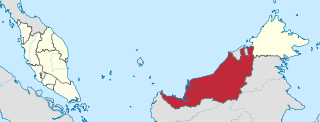
Sarawak is a state of Malaysia. The largest among the 13 states, with an area almost equal to that of Peninsular Malaysia, Sarawak is located in northwest Borneo Island, and is bordered by the Malaysian state of Sabah to the northeast, Kalimantan to the south, and Brunei in the north. The capital city, Kuching, is the largest city in Sarawak, the economic centre of the state, and the seat of the Sarawak state government. Other cities and towns in Sarawak include Miri, Sibu, and Bintulu. As of the 2015 census, the population of Sarawak was 2,636,000. Sarawak has an equatorial climate with tropical rainforests and abundant animal and plant species. It has several prominent cave systems at Gunung Mulu National Park. Rajang River is the longest river in Malaysia; Bakun Dam, one of the largest dams in Southeast Asia, is located on one of its tributaries, the Balui River. Mount Murud is the highest point in Sarawak.
Elections in Malaysia exist at two levels: federal level and state level. Federal level elections are those for membership in the Dewan Rakyat, the lower house of Parliament, while state level elections are for membership in the various State Legislative Assemblies. The heads of executive branch at both the federal and state levels, the Prime Minister and Menteri Besar/Chief Ministers respectively, are indirectly elected, usually filled by a member of the majority party/coalition in the respective legislatures.
Italy elects, at the national level, a Parliament consisting of two houses: the Chamber of Deputies with 630 members; and the Senate of the Republic with 315 elected members, plus a few senators for life. The President of the Republic is elected for a seven-year term by the two houses of Parliament in joint session.
This local electoral calendar for the year 2011 lists the subnational elections held in 2011 in the de jure and de facto sovereign states. By-elections and sub-national referenda are also included.
This local electoral calendar for the year 2012 lists the subnational elections held in 2012 in the de jure and de facto sovereign states. By-elections and sub-national referenda are also included.
This local electoral calendar for 2013 lists the subnational elections held in 2013 in the de jure and de facto sovereign states. By-elections and sub-national referenda are also included.
This local electoral calendar for 2015 lists the subnational elections held in 2015 in de jure and de facto sovereign states. By-elections and sub-national referenda are also included.
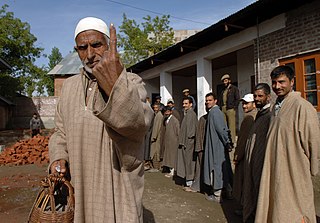
Elections in Jammu and Kashmir include elections to the Parliament of India, both houses of the bicameral state legislature, and various other local level bodies such as municipalities and Panchayat constituencies. The legal authority to conduct elections in Jammu and Kashmir is drawn from provisions in both the Constitution of India and the Constitution of Jammu and Kashmir.
This local electoral calendar for 2016 lists the subnational elections held in 2016 in the de jure and de facto sovereign states. By-elections and sub-national referenda are also included.
The Jammu and Kashmir Legislative Assembly election, 2014 was held in the Indian state of Jammu and Kashmir in five phases from 25 November – 20 December 2014. Voters elected 87 members to the Jammu and Kashmir Legislative Assembly, which ends its six-year term on 19 January 2015. The results were declared on 23 December 2014. Voter-verified paper audit trail (VVPAT) along with EVMs were used in 3 assembly seats out of 87 in Jammu Kashmir elections.
This local electoral calendar for 2017 lists the subnational elections held in 2017 in the de jure and de facto sovereign states. By-elections and sub-national referendums are also included.
This local electoral calendar for 2018 lists the subnational elections to be held in 2018 in the de jure and de facto sovereign states. By-elections and sub-national referendums are also included.
This local electoral calendar for 2019 lists the subnational elections to be held in 2019 in the de jure and de facto sovereign states. By-elections and sub-national referendums are also included.
| Wikimedia Commons has media related to Elections in 2014 . |