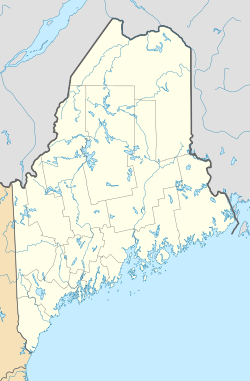
Orono is a town in Penobscot County, Maine, United States. Located on the Penobscot and Stillwater rivers, it was first settled by American colonists in 1774. They named it in honor of Chief Joseph Orono, a sachem of the indigenous Penobscot nation who long occupied this territory.

The Vernon House is a historic house in Newport, Rhode Island built in 1758 for Metcalf Bowler. The house is an architecturally distinguished colonial-era house with a construction history probably dating back to the late 17th century, with alterations made in the 18th century, possibly by architect Peter Harrison. During the American Revolutionary War this house served as the headquarters of the Comte de Rochambeau, commander of the French forces stationed in Newport 1780–1783. The house was designated a National Historic Landmark in 1968.

The Captain Holland House is an historic house in Lewiston, Maine. Built in 1872, this three-story brick building is a fine local example of the Second Empire style. It was built by Daniel Holland, one of the city's leading industrialists. The house was listed on the National Register of Historic Places in 1985.

The Former First Baptist Church is a historic church building at 37 Main Street in Skowhegan, Maine. Built in 1842-44, this Greek Revival brick building is one of the few works attributable to a local master builder, Joseph Bigelow. It was used as a church until 1919, after which it was used as a community center, and then a VFW hall until 2009. It is vacant, with plans to establish a performance and meeting venue; it was listed on the National Register of Historic Places in 1991.

The Jonas Cutting–Edward Kent House is a historic house at 48-50 Penobscot Street in Bangor, Maine. Built in 1836–37, it is one of the city's most unusual and elaborate examples of Greek Revival architecture. Built as a duplex, its first owners and occupants were Edward Kent, mayor and a future Governor of Maine, and his law partner, Jonas Cutting, a future Maine Supreme Judicial Court justice. The house was listed on the National Register of Historic Places in 1973.

The Old Fire Engine House is a historic fire station on North Main Avenue in Orono, Maine. Built in 1892, it is a well-preserved example of a late-19th century wooden fire station. It was added to the National Register of Historic Places on September 12, 1985. It is now used by Boy Scout Troop 478, which is in the Katahdin Area Council.
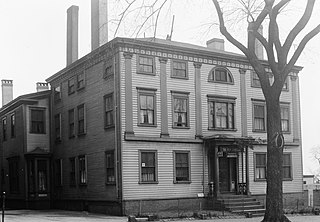
The Joseph Holt Ingraham House, also known as the Churchill House, is an historic house at 51 State Street in Portland, Maine. Built in 1801, it is an important early design by architect Alexander Parris. State Street, on which the house stands, was laid out by its first owner. The house was listed on the National Register of Historic Places in 1973.

The George F. Clifford House is a historic house located in Cornish, York County, Maine. Built c. 1874, the house is a high-quality example of Greek Revival style, despite being built nearly 15 years after the style fell out of favor. It was built for George Franklin Clifford, son of United States Supreme Court Justice Nathan Clifford. The property was listed on the National Register of Historic Places on April 10, 2010.

The Upham-Walker House is a historic house located at 18 Park Street in Concord, New Hampshire. Built in 1831, it is the only remaining Federal-style house in central Concord. It is now owned by the state and used for special functions. It was listed on the National Register of Historic Places on May 15, 1980.

The Phineas Heywood House is a historic house at 343 Maine Street in the center of Bucksport, Maine. Built c. 1824, it is one of the finest Federal style brick houses in the region, and was probably the first brick building erected in Bucksport and its surrounding towns. It was listed on the National Register of Historic Places in 1988.
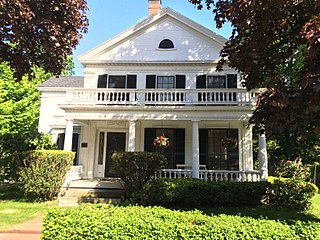
The Gov. Israel Washburn House is a historic house at 120 Main Street in Orono, Maine. Built in 1840, it is architecturally significant as a fine local example of Greek Revival architecture, and is historically significant as the long-time home of Governor of Maine Israel Washburn, Jr. It was listed on the National Register of Historic Places in 1973.

The Somerset County Courthouse is a historic county government building on Court Street in downtown Skowhegan, Maine, the county seat of Somerset County. The brick building was designed by local architect Charles F. Douglas and built in 1873, with an addition by John Calvin Stevens in 1904, and a second addition added in 1938. The building continues to serve county functions; it was listed on the National Register of Historic Places in 1984.

The Zebulon Smith House is a historic house at 55 Summer Street in Bangor, Maine. Built in 1832, it is one of the two oldest houses in the state of Maine to be built with a Greek Revival temple front. The house was listed on the National Register of Historic Places in 1974.
The Spaulding House is a historic house on Main Street in Norridgewock, Maine. Built about 1835 by one of the town's early settlers, it is a fine local example of Greek Revival executed in brick. The house was listed on the National Register of Historic Places in 1978.
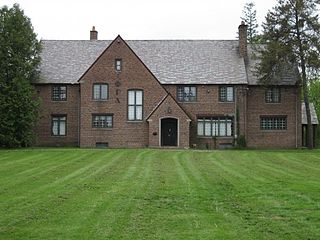
Phi Gamma Delta House is an historic fraternity house at 79 College Avenue, near the campus of the University of Maine in Orono. It is the only Tudor Revival fraternity house on that campus, and was built to provide increased housing to the school's male student population. The architects were C. Parker Crowell and Walter Lancaster. It was listed on the National Register of Historic Places in 2013.
The Orono Main Street Historic District encompasses a well-preserved collection of predominantly residential 19th century buildings in Orono, Maine. It extends along Main Street's west side between Maplewood Avenue and Goodridge Road, and on the east side between Spencer and Pine Streets. The area was part of Orono's early settlement, and of a period of rapid growth in the first half of the 19th century. The district was listed on the National Register of Historic Places in 1977.

The Thacher-Goodale House is a historic house at 121 North Street in Saco, Maine. Built in 1827, it is a sophisticated early expression of Greek Revival architecture, retaining significant Federal period details. Built for George Thacher, Jr., a lawyer, it was owned for many years by members of the Goodale family, most notably the botanist George Lincoln Goodale. The house was listed on the National Register of Historic Places in 1976.
Charles J. Dunn was an American jurist, lawyer, and politician.

The Blake House is a historic house at 107 Court Street in Bangor, Maine. Built in 1858 to a design by local architect Calvin Ryder, it is one of the first Second Empire houses to be built in the state of Maine. It was listed on the National Register of Historic Places on October 31, 1972.
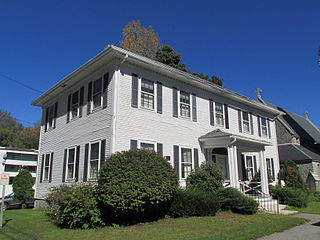
The Fuller-Weston House is a historic house at 11 Summer Street in Augusta, Maine. Built in 1818, it is a fine local example of Federal period architecture, and is further notable for several of its occupants, who include the Chief Justice of the United States Melville Fuller. The house was listed on the National Register of Historic Places in 1984. It now serves as the rectory of St. Mark's Church.