| The Right Reverend Joseph Lightfoot | |
|---|---|
| Bishop of Durham | |
| Diocese | Durham |
| Elected | 15 March 1879 |
| In office | 10 April 1879 (conf.)–1889 (died) |
| Predecessor | Charles Baring |
| Successor | Brooke Foss Westcott |
| Other posts | Hulsean Professor of Divinity (1861–1875) Lady Margaret's Professor of Divinity (1875–1879) Deputy Clerk of the Closet (1875–?) |
| Personal details | |
| Born | 13 April 1828 Liverpool, Lancashire, United Kingdom |
| Died | 21 December 1889 (aged 61) Bournemouth, Hampshire, UK |
| Buried | Auckland Castle chapel |
| Nationality | British |
| Denomination | Anglican |
| Residence | Auckland Castle (as Bishop of Durham) |
| Parents | John Lightfoot & Ann Lightfoot (née Barber) |
| Spouse | never married |
| Profession | academic; biblical scholar; bible translator; theologian; tutor |
| Education | King Edward's School, Birmingham |
| Alma mater | Trinity College, Cambridge |
Ordination history of Joseph Lightfoot | |||||||||||||||||||||||||
|---|---|---|---|---|---|---|---|---|---|---|---|---|---|---|---|---|---|---|---|---|---|---|---|---|---|
| |||||||||||||||||||||||||
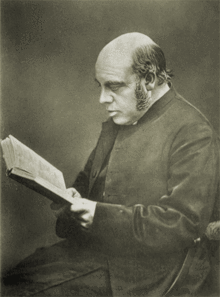
Joseph Barber Lightfoot (13 April 1828 – 21 December 1889), also known as J. B. Lightfoot, was an English theologian and Bishop of Durham.
England is a country that is part of the United Kingdom. It shares land borders with Wales to the west and Scotland to the north-northwest. The Irish Sea lies west of England and the Celtic Sea lies to the southwest. England is separated from continental Europe by the North Sea to the east and the English Channel to the south. The country covers five-eighths of the island of Great Britain, which lies in the North Atlantic, and includes over 100 smaller islands, such as the Isles of Scilly and the Isle of Wight.
Theology is the critical study of the nature of the divine. It is taught as an academic discipline, typically in universities and seminaries.
The Bishop of Durham is the Anglican bishop responsible for the Diocese of Durham in the Province of York. The diocese is one of the oldest in England and its bishop is a member of the House of Lords. Paul Butler has been the Bishop of Durham since his election was confirmed at York Minster on 20 January 2014. The previous bishop was Justin Welby, Archbishop of Canterbury. The bishop is one of two who escort the sovereign at the coronation.
Lightfoot was born in Liverpool, where his father John Jackson Lightfoot was an accountant. His mother, Ann Matilda Barber was from a family of Birmingham artists. He was educated at King Edward's School, Birmingham, under James Prince Lee. His contemporaries included Brooke Foss Westcott and Edward White Benson. In 1847 Lightfoot went to Trinity College, Cambridge, and read for his degree along with Westcott. He graduated senior classic and 30th wrangler, and was elected a fellow of his college. [1] From 1854 to 1859 he edited the Journal of Classical and Sacred Philology. In 1857 he became tutor and his fame as a scholar grew. He was made Hulsean professor in 1861, and shortly afterwards chaplain to the Prince Consort and honorary chaplain in ordinary to Queen Victoria.
Liverpool is a city in North West England, with an estimated population of 491,500 within the Liverpool City Council local authority in 2017. Its metropolitan area is the fifth-largest in the UK, with a population of 2.24 million in 2011. The local authority is Liverpool City Council, the most populous local government district in the metropolitan county of Merseyside and the largest in the Liverpool City Region.
King Edward's School (KES) is an independent day school for boys in Edgbaston, an area of Birmingham, England. Founded by King Edward VI in 1552, it is part of the Foundation of the Schools of King Edward VI in Birmingham.
James Prince Lee was an English clergyman and schoolmaster who became head master of King Edward's School, Birmingham, and later the first Bishop of Manchester.
In 1866 he was Whitehall preacher, and in 1871 he became canon of St Paul's Cathedral. The Times wrote after his death that
St Paul's Cathedral, London, is an Anglican cathedral, the seat of the Bishop of London and the mother church of the Diocese of London. It sits on Ludgate Hill at the highest point of the City of London and is a Grade I listed building. Its dedication to Paul the Apostle dates back to the original church on this site, founded in AD 604. The present cathedral, dating from the late 17th century, was designed in the English Baroque style by Sir Christopher Wren. Its construction, completed in Wren's lifetime, was part of a major rebuilding programme in the City after the Great Fire of London. The cathedral building largely destroyed in the Great Fire, now often referred to as Old St Paul's Cathedral, was a central focus for medieval and early modern London, including Paul's walk and St. Paul's Churchyard being the site of St. Paul's Cross.
The Times is a British daily national newspaper based in London. It began in 1785 under the title The Daily Universal Register, adopting its current name on 1 January 1788. The Times and its sister paper The Sunday Times are published by Times Newspapers, since 1981 a subsidiary of News UK, itself wholly owned by News Corp. The Times and The Sunday Times do not share editorial staff, were founded independently, and have only had common ownership since 1967.
It was always patent that what he was chiefly concerned with was the substance and the life of Christian truth, and that his whole energies were employed in this inquiry because his whole heart was engaged in the truths and facts which were at stake.
In 1875 Lightfoot became Lady Margaret's Professor of Divinity in succession to William Selwyn. In 1879 he was consecrated bishop of Durham in succession to Charles Baring; he was enthroned at Durham Cathedral on 15 May. He soon surrounded himself with a band of scholarly young men.
The Lady Margaret's Professor of Divinity is the oldest professorship at the University of Cambridge. It was founded initially as a readership by Lady Margaret Beaufort, mother of King Henry VII, in 1502.
William Selwyn DD, FRS, FRAS was a Church of England clergyman, canon of Ely Cathedral, Lady Margaret's Professor of Divinity, and amateur astronomer.
Charles Thomas Baring was an English bishop, noted as an Evangelical.
Lightfoot was never married. He died at Bournemouth and was succeeded in the episcopate by Westcott, his schoolfellow and lifelong friend. He served as President of the first day of the 1880 Co-operative Congress. [2]
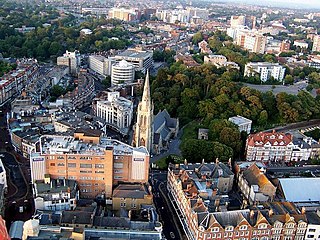
Bournemouth is a large coastal resort town on the south coast of England, east of the 96-mile-long (155 km) Jurassic Coast, a World Heritage Site. At the 2011 census, the town had a population of 183,491, making it the largest in Dorset. With Poole to the west and Christchurch in the east, Bournemouth is part of the South East Dorset conurbation, which has a population of 465,000.
The Co-operative Congress is the national conference of the UK Co-operative Movement. The first of the modern congresses took place in 1869 following a series of meetings called the "Owenite Congress" in the 1830s. Members of Co-operatives UK send delegates to the annual congress, where reports of national bodies are made and debates held on subjects of importance to the Co-operative Movement. The meetings also include the Annual General Meeting of Co-operatives UK.
Lightfoot wrote commentaries on the Epistle to the Galatians (1865), Epistle to Philippians (1868) and Epistle to the Colossians (1875). In 1874, the anonymous publication of Supernatural Religion, a work speculated by some to be authored by Walter Richard Cassels, attracted attention. In a series of papers in the Contemporary Review, between December 1874 and May 1877, Lightfoot undertook the defense of the New Testament canon. The articles were published in collected form in 1889. About the same time he was engaged in contributions to William Smith's Dictionary of Christian Biography and Dictionary of the Bible, and he also joined the committee for revising the translation of the New Testament.
The Epistle to the Galatians, often shortened to Galatians, is the ninth book of the New Testament. It is a letter from Paul the Apostle to a number of Early Christian communities in Galatia. Scholars have suggested that this is either the Roman province of Galatia in southern Anatolia, or a large region defined by an ethnic group of Celtic people in central Anatolia.
The Epistle of Paul to the Colossians, often referred to simply as Colossians, is the twelfth book of the New Testament. It was written, according to the text, by Paul the Apostle and Timothy to the Church in Colossae, a small Phrygian city near Laodicea and approximately 100 miles (160 km) from Ephesus in Asia Minor.
Walter Richard Cassels is the speculated author of the anonymous work Supernatural Religion.
The corpus of Lightfoot's writings include essays on biblical and historical subject matter, commentaries on Pauline epistles, and studies on the Apostolic Fathers . His sermons were posthumously published in four official volumes, and additionally in the Contemporary Pulpit Library series. At Durham he continued to work at his editions of the Apostolic Fathers, and in 1885 published an edition of the Epistles of Ignatius and Polycarp , collecting also materials for a second edition of Clement of Rome , which was published after his death (1st ed., 1869). He defended the authenticity of the Epistles of Ignatius.
In 2014, it was announced that InterVarsity Press had agreed to publish about 1500 pages of previously unpublished biblical commentaries and essays by Lightfoot found in Durham Cathedral. [3] The first of the three volume set covers the Acts of the Apostles, [4] the second is a commentary on the Gospel of John [5] and the third is on the Second Epistle to the Corinthians and the First Epistle of Peter. [6]
Lightfoot was the nephew of the artists Joseph Vincent Barber and Charles Vincent Barber and grandson of the artist and founding member of the Birmingham School of Art, Joseph Barber and great grandson of the founder of Newcastle's first library, Joseph Barber whose tomb is in Newcastle Cathedral. [7]
The Epistle of Jude, often shortened to Jude, is the penultimate book of the New Testament and is traditionally attributed to Jude, the servant of Jesus and the brother of James the Just.
The Epistle of Paul to the Philippians, often referred to simply as Philippians, is the eleventh book in the New Testament. Paul and Silas first visited Philippi in Greece during Paul's second missionary journey, which occurred between approximately 49 and 51 AD. Philippi was the location of the first Christian community established in Europe.
The Epistle of Paul to Titus, usually referred to simply as Titus, is one of the three Pastoral Epistles in the New Testament, historically attributed to Paul the Apostle. It is addressed to Saint Titus and describes the requirements and duties of elders and bishops.
Brooke Foss Westcott was a British bishop, biblical scholar and theologian, serving as Bishop of Durham from 1890 until his death. He is perhaps most known for co-editing The New Testament in the Original Greek in 1881.
The Pauline epistles, Epistles of Paul, or Letters of Paul, are the thirteen books of the New Testament, composed of letters which are largely attributed to Paul the Apostle, although authorship of some is in dispute. Among these letters are some of the earliest extant Christian documents. They provide an insight into the beliefs and controversies of early Christianity. As part of the canon of the New Testament, they are foundational texts for both Christian theology and ethics. The Epistle to the Hebrews, although it does not bear his name, was traditionally considered Pauline for a thousand years, but from the 16th century onwards opinion steadily moved against Pauline authorship and few scholars now ascribe it to Paul, mostly because it does not read like any of his other epistles in style and content. Most scholars agree that Paul really wrote seven of the Pauline epistles, but that four of the epistles in Paul's name are pseudepigraphic ; scholars are divided on the authenticity of two of the epistles.
The Apostolic Fathers were Christian theologians who lived in the 1st and 2nd centuries AD, who are believed to have personally known some of the Twelve Apostles, or to have been significantly influenced by them. Their writings, though popular in Early Christianity, were not included in the canon of the New Testament. Many of the writings derive from the same time period and geographical location as other works of early Christian literature which came to be part of the New Testament. Some of the writings found among the Apostolic Fathers appear to have been highly regarded as some of the writings which became the New Testament.
The pastoral epistles are three books of the canonical New Testament: the First Epistle to Timothy the Second Epistle to Timothy, and the Epistle to Titus. They are presented as letters from Paul the Apostle to Timothy and to Titus. They are generally discussed as a group and are given the title pastoral because they are addressed to individuals with pastoral oversight of churches and discuss issues of Christian living, doctrine and leadership. The term "pastorals" was popularized in 1703 by D. N. Berdot and in 1726 by Paul Anton.
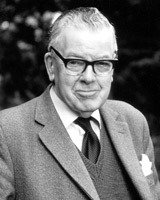
Frederick Fyvie Bruce, usually cited as F. F. Bruce, was a biblical scholar who supported the historical reliability of the New Testament. His first book, New Testament Documents: Are They Reliable? (1943), was voted by the American evangelical periodical Christianity Today in 2006 as one of the top 50 books "which had shaped evangelicals".
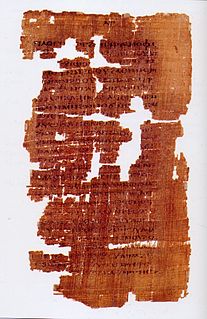
The Correspondence ofPaul and Seneca, also known as the Letters of Paul and Seneca or Epistle to Seneca the Younger, is a collection of correspondence claiming to be from Paul the Apostle to Seneca the Younger. There are 8 epistles from Seneca, and 6 replies from Paul. Jerome mentioned them in his De Viris Illustribus. Until the Renaissance, the epistles were seen as genuine, but scholars began to critically examine them in the 15th century, and today they are universally held to be forged. J. B. Lightfoot noted:
James Douglas Grant Dunn, also known as Jimmy Dunn, is a British New Testament scholar who was for many years the Lightfoot Professor of Divinity in the Department of Theology at the University of Durham, now Emeritus Lightfoot Professor. He has worked broadly within the Protestant tradition.
The Laodicean Church was a Christian community established in the ancient city of Laodicea. The church was established in the Apostolic Age, the earliest period of Christianity, and is probably best known for being one of the Seven churches of Asia addressed by name in the Book of Revelation.
Leon Lamb Morris was an Australian New Testament scholar.
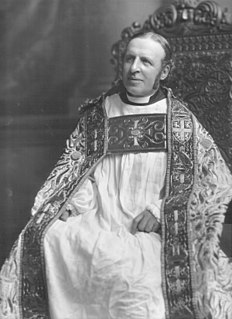
Handley Carr Glyn Moule was an evangelical Anglican theologian, writer, poet, and Bishop of Durham from 1901–1920.
Joseph Armitage Robinson, KCVO, FBA, DD was a priest in the Church of England and scholar. He was successively Dean of Westminster (1902–1911) and of Wells (1911–1933).
John Rogers Pitman was an English clergyman and author.
Ralph Philip Martin was a British New Testament scholar.
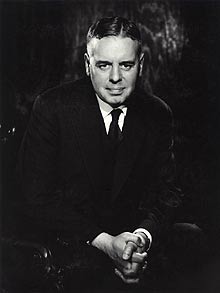
Charles Kingsley Barrett, was a British biblical scholar and Methodist minister. He served as Professor of Divinity at the University of Durham and wrote commentaries on the Acts of the Apostles, John, Romans, 1 Corinthians and 2 Corinthians.
Joseph Hirst Lupton (1836–1905) was an English schoolmaster, cleric and writer.
| Church of England titles | ||
|---|---|---|
| Preceded by Charles Baring | Bishop of Durham 1879–1889 | Succeeded by Brooke Foss Westcott |