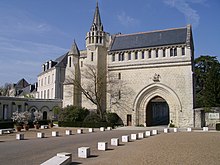
La Charité-sur-Loire, known simply as La Charité until 1961, is a riverside commune in the western part of the French department of Nièvre. It is located on the departmental border with Cher, which is also the regional border with Centre-Val de Loire.

The arrondissement of Tours is an arrondissement of France in the Indre-et-Loire department in the Centre-Val de Loire region. It has 54 communes. Its population is 384,117 (2016), and its area is 1,087.6 km2 (419.9 sq mi).

Saint-Cyr-sur-Loire is a commune in the department of Indre-et-Loire in central France.
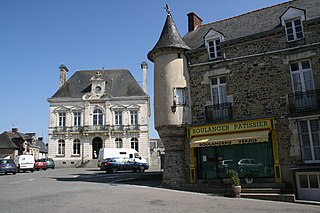
Janzé is a commune in the Ille-et-Vilaine department in Brittany in northwestern France. It is also the seat of the Canton of Janzé. The inhabitants of Janzé are called Janzéens in French.

Saint-Cyr-la-Rosière is a commune in the Orne department in north-western France.

Matour is a commune in the department of Saône-et-Loire in Bourgogne-Franche-Comté, France. Its territory is classified Natura 2000. The commune is located in a zone de revitalisation rurale.
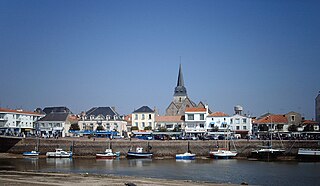
Saint-Gilles-Croix-de-Vie is a commune in the Vendée department, region of Pays de la Loire, western France.

The Île Barbe is an island situated in the middle of the Saône, in the 9th arrondissement de Lyon, the quartier Saint-Rambert-l'Île-Barbe. Its name comes from the Latin insula barbara, "Barbarians' Island", suggesting that it was one of the last locales to be occupied.

The canton of Sainte-Maure-de-Touraine is an administrative division of the Indre-et-Loire department, central France. Its borders were modified at the French canton reorganisation which came into effect in March 2015. Its seat is in Sainte-Maure-de-Touraine.
The canton of Vouvray is an administrative division of the Indre-et-Loire department, central France. Its borders were modified at the French canton reorganisation which came into effect in March 2015. Its seat is in Vouvray.

Tours Métropole Val de Loire is the métropole, an intercommunal structure, centered on the city of Tours. It is located in the Indre-et-Loire department, in the Centre-Val de Loire region, central France. It was created in March 2017, replacing the previous Communauté urbaine Tour(S) Plus. Its area is 389.2 km2. Its population was 294,220 in 2018, of which 136,463 in Tours proper.

The Louroux Priory, also known as Château du Louroux, is located in the commune of Louroux in the French department of Indre-et-Loire, Centre-Val de Loire region. It was founded in the 12th century by the Marmoutier Abbey. At the time, the Benedictine monastery was one of nine priories belonging to the Touraine abbacy and located in the Tours diocese.

Primaudière Priory is an ancient priory dating from the 13th and 18th centuries, located in the French communes of Armaillé in Maine-et-Loire and Juigné-des-Moutiers in Loire-Atlantique.

Notre-Dame-de-Roscudon is a Catholic church in Pont-Croix, in the French department of Finistère. Built from the 13th century through successive additions, until the second quarter of the 16th century thanks to the patronage of the lords of Pont-Croix, then their allies and descendants from the House of Rosmadec, it is an example of the patronage of the local Breton aristocracy, and bears witness to the permanence of this noble lineage throughout the three centuries of its construction.