The Forest Landscape Integrity Index (FLII) is a global, map-based indicator of forest condition that estimates the degree of anthropogenic modification of forest ecosystems.[1] Developed by an international research team led by the Wildlife Conservation Society, the index integrates spatial data on observed and inferred human pressures and loss of forest connectivity to produce a continuous score from 0 (most modified) to 10 (least modified) for each ~300m forest pixel.[1][2]
In the study's global map for early 2019, 40.5% of forest area (about 17.4millionkm2) was classified as high integrity (FLII ≥ 9.6), 33.9% (14.6millionkm2) as medium integrity and 25.6% (11millionkm2) as low integrity (FLII ≤ 6.0).[1] High-integrity forests were concentrated in boreal regions of Russia and Canada and in large tropical forest blocks such as the Amazon, Central Africa and New Guinea.[1]
FLII has been used in forest-condition monitoring and referenced in policy and research contexts, including discussions of ecosystem integrity indicators under the Kunming-Montreal Global Biodiversity Framework.[3][4]
Forest integrity
In ecology, ecological integrity (sometimes ecosystem integrity) refers to the extent to which an ecosystem's structure, species composition and ecological processes fall within their natural range of variation.[5] In forests, integrity is often discussed alongside, but distinct from, deforestation (area loss) and forest degradation (declines in condition or function without complete land-cover conversion).[1]
The FLII operationalizes forest integrity as the inverse of cumulative human modification at the landscape scale, combining mapped pressures, modeled indirect effects and changes in connectivity to generate a globally consistent, continuous integrity score.[1]
Methodology
Grantham et al. calculated FLII by integrating four main spatial inputs—forest extent, observed pressures, inferred pressures and loss of forest connectivity—with processing carried out in Google Earth Engine.[1]
Forest extent and temporal baseline
The forest extent layer was designed to represent forest at the start of 2019. Forest was defined as woody vegetation taller than 5m with at least 20% canopy cover. To map extent, the authors used global tree-cover estimates for 2000 and subtracted mapped tree-cover loss from 2001–2018 (excluding temporary canopy loss).[1]
Observed and inferred pressures
Observed pressures represent human activities that can be mapped directly at global scale (e.g. built infrastructure, agriculture and recent deforestation). Inferred pressures represent additional impacts that tend to occur around observed pressures but are harder to map directly (e.g. access-related extraction such as selective logging, fuelwood collection and hunting), modeled as a decay function of proximity to observed pressure sources and access networks.[1]
Connectivity loss
The connectivity component estimates reductions in forest connectivity caused by forest loss and fragmentation, capturing the influence of surrounding forest cover on a given pixel's integrity.[1]
Scores and classes
The continuous FLII ranges from 0 to 10. For communication and reporting, the authors also provided an illustrative three-class map: low (≤6.0), medium (>6.0 and <9.6) and high (≥9.6), with thresholds benchmarked against reference locations of known ecological integrity.[1] The study noted the approach could be updated as new global datasets become available, including potentially on an annual basis.[1]
Global results
In the 2019 map, the authors estimated that 91.2% of the world's remaining forests were affected by some degree of human pressure, and 31.2% experienced observed pressures.[1] They reported a global mean FLII score of 7.76; 18 countries had mean scores greater than 9, and no biome or biogeographic realm contained more than half of its forest area in the high-integrity class.[1][3]
High-integrity forests were disproportionately concentrated in a small number of countries (with Russia and Canada together containing about half of the global high-integrity forest area).[1] Only about 27% of high-integrity forest area fell within nationally designated protected areas, while 56% of forests within protected areas were classed as high integrity.[1]
The 2023 Forest Declaration Assessment includes "FLII units lost per year" as an indicator of forest degradation for tracking progress toward international forest goals.[7][8]
The European Commission's Joint Research Centre has incorporated a Forest Landscape Integrity layer in its Global Forest Types 2020 map product and related "primary forest" outputs.[9]
Research
Researchers have used FLII to compare forest condition across governance and conservation regimes. For example, Sze et al. (2022) used FLII in a pan-tropical analysis of forest integrity across overlaps of protected areas and Indigenous peoples' lands.[10]
Crowe et al. (2023) applied FLII to assess forest integrity within thousands of Key Biodiversity Areas (KBAs), highlighting its potential role in monitoring the condition of biodiversity-important sites.[11] BirdLife International has used FLII-based analyses to communicate trends in forest integrity within KBAs identified for forest species.[12]
FLII has also been used as an input or comparison layer in composite integrity metrics and validation studies, including an ecosystem integrity index integrating multiple global datasets[13] and field-based evaluation of how FLII corresponds to ecological indicators in boreal forests.[14]
Standards and finance
The High Integrity Forest (HIFOR) methodology incorporates FLII thresholds in eligibility criteria for "high integrity" forest areas in its monitoring framework.[15]
Limitations
The original study described FLII as a conservative estimate and noted several limitations. Some pressures are difficult to map consistently at global scale (e.g. finer-scale infrastructure or small-scale extraction), and forest modification prior to 2000 may not be reflected in the underlying global datasets.[1] The authors also noted that the index does not explicitly account for all drivers of integrity loss (such as climate change and invasive species), and that the forest extent definition can include tree crops and plantations, which typically score as low integrity under the model.[1]
Data and availability
An interactive map and downloadable data products (including continuous and classified layers) are provided via the project website.[16][17]
Background
The FLII was first published on 8 December 2020 in Nature Communications.[1] An author correction published in 2021 corrected an error in a protected-area table in the original article.[18]
The index was authored by a global team of forest conservation experts, including:[1]
H.S. Grantham; A. Duncan; T. D. Evans; K. R. Jones; J. Walston; J. G. Robinson; M. Callow; T. Clements; H. M. Costa; A. DeGemmis; P. R. Elsen; P. Franco; S. Jupiter; A. Kang; S. Lieberman; M. Linkie; M. Mendez; C. Samper; J. Silverman; T. Stevens; E. Stokes; T. Tear; R. Tizard; S. Wang; J. E. M. Watson
123"Forest degradation". Global Forest Review. World Resources Institute. Retrieved 15 December 2025.
12"Target 2". Kunming–Montreal Global Biodiversity Framework. Convention on Biological Diversity. Retrieved 15 December 2025.
↑Parrish, Jeffrey D.; Braun, David P.; Unnasch, Robert S. (2003). "Are We Conserving What We Say We Are? Measuring Ecological Integrity within Protected Areas". BioScience. 53 (9): 851–860. doi:10.1641/0006-3568(2003)053[0851:AWCWWS]2.0.CO;2.
↑Grantham, H. S.; Duncan, A.; Evans, T. D.; Jones, K. R.; Beyer, H. L.; Schuster, R.; Walston, J.; Ray, J. C.; Robinson, J. G.; Callow, M.; Clements, T.; Costa, H. M.; DeGemmis, A.; Elsen, P. R.; Ervin, J.; Franco, P.; Goldman, E.; Goetz, S.; Hansen, A.; Hofsvang, E.; Jantz, P.; Jupiter, S.; Kang, A.; Langhammer, P.; Laurance, W. F.; Lieberman, S.; Linkie, M.; Malhi, Y.; Maxwell, S.; Mendez, M.; Mittermeier, R.; Murray, N. J.; Possingham, H.; Radachowsky, J.; Saatchi, S.; Samper, C.; Silverman, J.; Shapiro, A.; Strassburg, B.; Stevens, T.; Stokes, E.; Taylor, R.; Tear, T.; Tizard, R.; Venter, O.; Visconti, P.; Wang, S.; Watson, J. E. M. (2020). "Anthropogenic modification of forests means only 40% of remaining forests have high ecosystem integrity - Supplementary Material". Nature Communications. 11 (1): 5978. Bibcode:2020NatCo..11.5978G. doi:10.1038/s41467-020-19493-3. ISSN2041-1723. PMC7723057. PMID33293507.
↑Dias, F.; etal. (2023). "An ecosystem integrity index for the global assessment of human impacts on ecosystems". Frontiers in Ecology and Evolution. 11. doi:10.3389/fevo.2023.1111947 (inactive 15 December 2025).{{cite journal}}: CS1 maint: DOI inactive as of December 2025 (link)
This page is based on this Wikipedia article Text is available under the CC BY-SA 4.0 license; additional terms may apply. Images, videos and audio are available under their respective licenses.
 Seychelles
 Sudan
Sudan 
 Guyana
 South Sudan
 Suriname
 Mongolia
 Central African Republic
 Botswana
 Gabon
Gabon 
 Russia
 Canada
 Congo
Congo 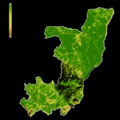
 Kyrgyzstan
 Peru
Peru 
 Afghanistan
 Bhutan
 Papua New Guinea
 Vanuatu
 Venezuela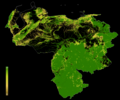
 Tajikistan
 Bolivia
 Namibia
 Angola
 Fiji
Fiji 
 Colombia
 Kazakhstan
 Palau
Palau 
 North Korea
 Cameroon
 Equatorial Guinea
 Georgia
 Brunei Darussalam
 Comoros
 Iran
Iran 
 Ecuador
 DRC
DRC 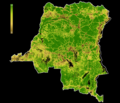
 Micronesia
 Brazil
 Zambia
 North Macedonia
 Pakistan
 Lesotho
 Chile
Chile 
 Bahamas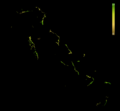
 Nepal
Nepal 
 Australia
 Argentina
 Solomon Islands
 Myanmar
 Ethiopia
 Mali
Mali 
 Somalia
 China
China 
 Tanzania
 New Zealand
 Senegal
 Timor-Leste
 India
India 
 Cyprus
 Norway
 Saint Vincent and the Grenadines
 Mozambique
 Mexico
 Albania
 Uzbekistan
 Morocco
 United States
 Sao Tome and Principe
 Trinidad and Tobago
 Greece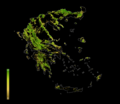
 Indonesia
 Azerbaijan
 Montenegro
 Paraguay
 Turkey
 Taiwan
 Cabo Verde
 Panama
 Cambodia
 Turkmenistan
 Zimbabwe
 Nigeria
 Chad
Chad 
 Saint Lucia
 Belize
 Bulgaria
 South Korea
 Thailand
 Bosnia and Herzegovina
 Romania
 Philippines
 Togo
Togo 
 Benin
Benin 
 Sri Lanka
 Japan
Japan 
 Malawi
 Guinea-Bissau
 Laos
Laos 
 Armenia
 Mauritius
 Bangladesh
 Cuba
Cuba 
 Sweden
 Vietnam
 Serbia
 Algeria
 Kosovo
 Tunisia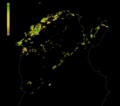
 Finland
 Jamaica
 Malaysia
 South Africa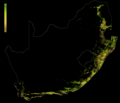
 Croatia
 Guinea
 Libya
Libya 
 Liberia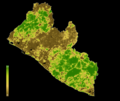
 Antigua and Barbuda
 Costa Rica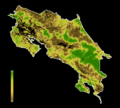
 Madagascar
 Gambia
 Saint Kitts and Nevis
 Ghana
Ghana 
 France
 Burundi
 Liechtenstein
 Honduras
 Andorra
 Uganda
 Slovakia
 Spain
Spain 
 Grenada
 Eswatini
 Kenya
Kenya 
 Dominican Republic
 Israel
 El Salvador
 Haiti
Haiti 
 Guatemala
 Rwanda
 Slovenia
 Lebanon
 Italy
Italy 
 Cote d'Ivoire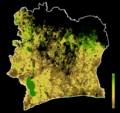
 Syria
Syria 
 Belarus
 Nicaragua
 Uruguay
 Iraq
Iraq 
 Austria
 Switzerland
 Ukraine
 Estonia
 Jordan
 Sierra Leone
 Germany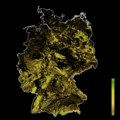
 Hungary
 Poland
 Moldova
 Latvia
 Czechia
 United Kingdom
 Lithuania
 Belgium
 Luxembourg
 Singapore
 Dominica
 Ireland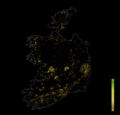
 Portugal
 Netherlands
 Egypt
Egypt 
 Denmark
 San Marino
