Samson Indian Reserve No. 137

Last updated

Samson Indian Reserve No. 137, also known as Samson No. 137 and Samson 137, and as the Samson Reserve, is an Indian reserve in Maskwacis, Alberta, Canada.

In Canada, an Indian reserve is specified by the Indian Act as a "tract of land, the legal title to which is vested in Her Majesty, that has been set apart by Her Majesty for the use and benefit of a band."

Maskwacis Unincorporated community in Alberta, Canada

Maskwacis, renamed in 2014 from Hobbema, is an unincorporated community in central Alberta, Canada, a portion of which is designated a hamlet within Ponoka County. A portion of the community is also recognized as a designated place by Statistics Canada under its previous name of Hobbema. Maskwacis is located near the intersection of Highway 2A and Highway 611, approximately 70 kilometres (43 mi) south of the City of Edmonton.

Alberta Province in Canada

Alberta is a western province of Canada. With an estimated population of 4,067,175 as of 2016 census, it is Canada's fourth most populous province and the most populous of Canada's three prairie provinces. Its area is about 660,000 square kilometres (250,000 sq mi). Alberta and its neighbour Saskatchewan were districts of the Northwest Territories until they were established as provinces on September 1, 1905. The premier has been Rachel Notley since May 2015.

Contents

It is inhabited by members of the Samson Cree Nation and was established under the provisions of Treaty 6. [1]

The Samson Cree Nation, also known as the Samson First Nation, is one of four band governments in the area of Maskwacis, Alberta, Canada.

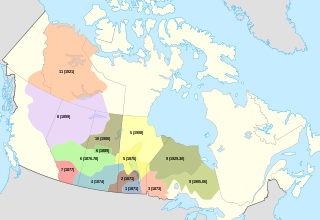
Treaty 6

Treaty 6 is the sixth of seven numbered treaties that were signed by the Canadian Crown and various First Nations between 1871 and 1877. Specifically, Treaty 6 is an agreement between the Crown and the Plains and Woods Cree, Assiniboine, and other band governments at Fort Carlton and Fort Pitt. Key figures, representing the Crown, involved in the negotiations were Alexander Morris, Lieutenant Governor of the North-West Territories; James McKay, The Minister of Agriculture for Manitoba; and W.J. Christie, the Chief Factor of the Hudson's Bay Company. Chief Mistawasis and Chief Ahtahkakoop represented the Carlton Cree.

The reserve is located in Central Alberta, near Maskwacis and south of Wetaskiwin.

Central Alberta region in the province of Alberta, Canada

Central Alberta is a region located in the Canadian province of Alberta.

Wetaskiwin City in Alberta, Canada

Wetaskiwin is a city in the province of Alberta, Canada. The city is located 70 kilometres (43 mi) south of the provincial capital of Edmonton. The city name comes from the Cree word wītaskiwinihk, meaning "the hills where peace was made".

Demographics

In 2006, Samson IR No.137 had a population of 3,295 residents in 929 dwellings, a 7.4% increase from 2001. The Indian reserve has a land area of 128.07 km2 (49.45 sq mi) and a population density of 25.7/km2 (67/sq mi). [2] By 2009, the Alberta government estimated that the on-reserve population of the nation was 5,550, making the Samson Cree the third largest First Nation in Alberta. [3]

House Building that functions as a dwelling

A house is a building that functions as a home. They can range from simple dwellings such as rudimentary huts of nomadic tribes and the improvised shacks in shantytowns to complex, fixed structures of wood, brick, concrete or other materials containing plumbing, ventilation, and electrical systems. Houses use a range of different roofing systems to keep precipitation such as rain from getting into the dwelling space. Houses may have doors or locks to secure the dwelling space and protect its inhabitants and contents from burglars or other trespassers. Most conventional modern houses in Western cultures will contain one or more bedrooms and bathrooms, a kitchen or cooking area, and a living room. A house may have a separate dining room, or the eating area may be integrated into another room. Some large houses in North America have a recreation room. In traditional agriculture-oriented societies, domestic animals such as chickens or larger livestock may share part of the house with humans. The social unit that lives in a house is known as a household.

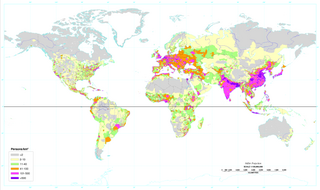
Population density A measurement of population numbers per unit area or volume

Population density is a measurement of population per unit area or unit volume; it is a quantity of type number density. It is frequently applied to living organisms, and most of the time to humans. It is a key geographical term. In simple terms population density refers to the number of people living in an area per kilometer square.

Government

Under the British North America Act, legislative authority over Indian reserves is placed exclusively with the national parliament and specifically the Department of Indian Affairs and Northern Development. The reserve is governed by a band council led by Chief Kurt Buffalo. [4]

See also

Related Research Articles

First Nations in Alberta are Indigenous peoples who live in the Canadian province of Alberta. The First Nations are peoples recognized as Aboriginal peoples in Canada excluding the Inuit and the Métis. According to the 2011 Census, a population of 116,670 Albertans self-identified as First Nations. Specifically there were 96,730 First Nations people with registered Indian Status and 19,945 First Nations people without registered Indian Status. Alberta has the third largest First Nations population among the provinces and territories. From this total population, 47.3% of the population lives on an Indian reserve and the other 52.7% live in urban centres. According to the 2011 Census, the First Nations population in Edmonton totalled at 31,780, which is the second highest for any city in Canada. The First Nations population in Calgary, in reference to the 2011 Census, totalled at 17,040. There are 48 First Nations or "bands" in Alberta, belonging to nine different ethnic groups or "tribes" based on their ancestral languages.

Stony Plain Indian Reserve No. 135 Indian reserve in Alberta, Canada

Stony Plain 135 is an Indian reserve in central Alberta, Canada in Division No. 11. It is located adjacent to Parkland County and the City of Edmonton, Alberta. It is home to the Enoch Cree Nation. The postal address of the reserve is Enoch, Alberta.

The Sunchild First Nation is a Cree First Nation in Alberta, Canada part of Treaty 6, signed on May 25, 1944 under the leadership of Chief Louis Sunchild. The First Nation has one reserve, Sunchild 202. The reserve, 52.18 km2 (20.15 sq mi) in size, is located approximately 60 km (37 mi) northwest of Rocky Mountain House. It shares the western border of the O'Chiese First Nation.

Division No. 8, Alberta Census division in Alberta in Canada

Division No. 8 is a census division in Alberta, Canada. It is located in the south-central portion of central Alberta and surrounds the City of Red Deer. The division forms the central segment of the Calgary–Edmonton Corridor. Division No. 8 is the smallest census division in Alberta according to area.

Division No. 17, Alberta Census division in Alberta in Canada

Division No. 17 is a census division in Alberta, Canada. It spans the central and northwest portions of northern Alberta and its largest urban community is the Town of Slave Lake. Division No. 17 is the largest census division in Alberta according to area and also has the lowest population density.

Kinuso Hamlet in Alberta, Canada

Kinuso is a hamlet in northern Alberta, Canada within Big Lakes County, and surrounded by the Swan River First Nation reserve. It is located approximately 48 kilometres (30 mi) west of Slave Lake and 71 km east of High Prairie along Highway 2, south of the southern shore of Lesser Slave Lake.

Wabasca, Alberta Hamlet in Alberta, Canada

Wabasca, also known as Wabasca-Desmarais, is a hamlet in northern Alberta, Canada, within the Municipal District of Opportunity No. 17. It is located between and along the South and North Wabasca Lakes, at the intersection of Highway 813 and Highway 754. It is approximately 123 kilometres (76 mi) northeast of Slave Lake.

Cadotte Lake lake in Canada

Cadotte Lake is an unincorporated community in northern Alberta, Canada within Northern Sunrise County. It is located on the northern shore of the homonymous lake, along Highway 986, 79 km (49 mi) east of Peace River and 68 km (42 mi) west of the Bicentennial Highway.

Calling Lake, Alberta Hamlet in Alberta, Canada

Calling Lake is a hamlet in northern Alberta, Canada within the Municipal District of Opportunity No. 17. It is located on Highway 813 along the eastern shore of Calling Lake, immediately north of Calling Lake Provincial Park. It is approximately 59 km (37 mi) north of Athabasca and 113 km (70 mi) south of Wabasca and has an elevation of 595 m (1,952 ft).

Blood Indian Reserve No. 148 Indian reserve in Alberta, Canada

Blood 148 is a First Nations reserve in Alberta, Canada. It is inhabited by the Blood (Kainai) First Nations and was established under the provisions of the Treaty 7. This reserve is located in Stand Off along Highway 2 and the Belly River.

Kapasiwin Summer village in Alberta, Canada

Kapasiwin is a summer village in Alberta, Canada. It is located in the eastern shore of Wabamun Lake, south of Wabamun Lake Provincial Park and the Yellowhead Highway. The name derives from kapesiwin (ᑲᐯᓯᐃᐧᐣ), the Cree word for "campground". It was known as the Village of Wabamun Beach from 1913 to 1918.

Ermineskin Cree Nation also known as the Ermineskin Tribe, is a band government in Alberta, Canada, a western branch of the large Cree Nation, and a Treaty 6 nation.

Little Buffalo, Alberta Hamlet in Alberta, Canada

Little Buffalo is a hamlet in northern Alberta, Canada within Northern Sunrise County. It is located on Highway 986, approximately 100 kilometres (62 mi) northeast of the Town of Peace River and 47 kilometres (29 mi) west of Highway 88. Little Buffalo Lake is to the south of the community.

Lousana

Lousana is a hamlet in central Alberta, Canada within Red Deer County. It is located 4 kilometres (2.5 mi) east of the junction of Highway 21 and Highway 42, approximately 45 kilometres (28 mi) southeast of Red Deer.

Montana Indian Reserve No. 139

Montana 139 is an Indian reserve in Alberta. It is located 26 kilometres (16 mi) south of Wetaskiwin. It is at an elevation of 796 metres (2,612 ft). Located near Maskwacis, it is one of two reserves under the governance of the Montana First Nation. The other is Pigeon Lake 138A, which is shared with three other First Nations, the Ermineskin Tribe, the Louis Bull First Nation and the Samson Indian Reserve No. 137.

Pigeon Lake 138A

Pigeon Lake 138A is an Indian reserve in Alberta. It is located 39 kilometres (24 mi) west of Wetaskiwin along Pigeon Lake. It is at an elevation of 860 metres (2,820 ft). It is shared between the Samson Cree Nation, the Montana Cree Nation, the Louis Bull Tribe, and the Ermineskin Cree Nation.

Maskwacis Cultural College

Maskwacis Cultural College (MCC) is a private post-secondary institution within the Four Nations of Maskwacis, Alberta, Canada. MCC offers programs from basic adult literacy, two-year college diplomas, to university transfer programs.

Duncan's First Nation is a First Nation in northwestern Alberta, Canada. It operates as an Indian band under the Indian Act representing a community of Aboriginal Canadians, in this case from the Woods Cree ethnic group. The band became a party to Treaty 8 with the Canadian Crown on July 1, 1899. Indian reserves were surveyed for the band in 1905, but the reserves were not confirmed by Order-in-Council until 1907 and 1925. All but one reserves (#151A) were later surrendered to the Canadian government in 1928. One of them, #151K, was later returned to the band in 1965. The two remaining reserves are #151A, located 52 kilometres (32 mi) west of Peace River, Alberta and #151K, located in the McLennon/Reno area, southeast of Peace River. The two reserves comprise a total area of 2,426.1 hectares, and the majority of the population lives on #151A. In 2012, the band had a registered population of 269, of whom 142 members living the band's reserves.

References

  1. Canada Indian and Northern Affairs. "First Nations in Alberta" (PDF). Archived from the original (PDF) on April 22, 2006. Retrieved 2007-09-24.
  2. Statistics Canada. "Canada 2006 Census: Samson 137 - Community Profile" . Retrieved 2007-09-24.
  3. http://municipalaffairs.gov.ab.ca/images/2008pop(2).pdf
  4. Samson Cree Nation. "Chief and Council". Archived from the original on 2007-08-09. Retrieved 2007-09-24.

Coordinates: 52°47.32′N113°23.32′W / 52.78867°N 113.38867°W / 52.78867; -113.38867 (Samson 137)

Geographic coordinate system Coordinate system

A geographic coordinate system is a coordinate system that enables every location on Earth to be specified by a set of numbers, letters or symbols. The coordinates are often chosen such that one of the numbers represents a vertical position and two or three of the numbers represent a horizontal position; alternatively, a geographic position may be expressed in a combined three-dimensional Cartesian vector. A common choice of coordinates is latitude, longitude and elevation. To specify a location on a plane requires a map projection.