Bagar (region)

Last updated

Historical region
Bagar
The Bagar region.png
LocationNorthwestern India

29°58′N74°32′E / 29.967°N 74.533°E / 29.967; 74.533

Contents

Language Bagri
Dynasties Yaudheya
  • Established 5th century BCE
  • Disestablished 3rd-4th century CE

Bhati

  • Established 255 AD
  • Disestablished 1527 AD at Bhatner

Rathore

  • Established – 1488(15th century) in Lower Bagar region
  • Established – 1527 AD in Bhatner
  • Disestablished –1949(20th century)
Historical capitals Bikaner, Shaikhsar, Hanumangarh

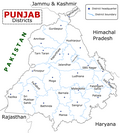
Bagar, also Bagad, a term meaning the "dry country", [1] is a reference to a region in north-western India in north Rajasthan, West Haryana, south-west Punjab, India where the Bagri language is spoken and which is inhabited by the Bagri people. The region is characterised by sandy tracks and shifting sand dunes which are now irrigated by canals. [2]

Etymology

Bagar means the prairie (grazing shrubs and grassland) of northern Rajputana, [3] which likely comes from eponymous Arabic word "baqar" or "bagar" (بقرة) meaning "cow" (sacred to Hindus), [4] derived from the Arabic word "cattle". [5] [6] Baggara in Arabic means "cattle herders". [5] [7] Bagar tract refers to the semi-arid semi-fertile rain-fed sandy shrubby grassland tract at the confluence of arid Thar Desert and fertile bangar and khadir areas of Indo-Gangetic Plain, which as historically inhabited by the cattle herders who remained semi-nomadic until they began to adapt to settled life in the mid to late Medieval Period. Before the adoption of the Arabic name bagar, the area was earlier known as Jangladesh during the Vedic era of Mahabharata and even in early medieval times at least until the end of Hindu reign of Prithviraj Chauhan.

Bagar tracts

Bagar (Hindi: बागड़) region is characterised by Bagar tracts which are long strips of shifting sand dunes called tibba (टिब्बा) and relatively semi-fertile lands and the area between them is called lal (लाळ) in northern districts of Rajasthan and along the northwestern districts of Haryana. [8]

Geography

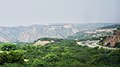
The Bagar region has potentially very fertile alluvial soil interspersed with highly permeable very sandy tracts in several places with water table more than 100 feet below ground containing brackish water usually unfit for human consumption, where dust storms frequent during the warm summer months from April till the end of July when monsoon arrives.

Previously, the drinking water availability in the Bagar tract was solely based on the rain & wells and irrigation was possible only in the small areas of Ghaggar basin of Bagar region in districts of Fatehabad, Sirsa, Hanumangarh, Sri Ganganagar and Anupgarh where the seasonal Ghaggar river flows.

Earlier Western Yamuna Canal and after 1963 Bhakra Nangal Dam canal system provides the water for irrigation in most of Haryana including all of the Bagar region falling in Haryana on its western border.

The Ganga canal in 1927 and in 1984 Indira Gandhi Canal irrigation also known as Rajasthan Canal brought the water of Sutlej and Beas rivers to the fields of Rajasthan including its Bagar tract, stabilizing the sand dunes and soil erosion by preventing the expansion of desert. [9] [8]

Geographically, the Bagar region lies between the:

Geographical extent of Bagar region.
StatesDistricts
Rajasthan
Punjab
Haryana

Bagri language

A Bagri speaker.

Bagri (बागड़ी), a dialect of overlapping Rajasthani language, Haryanvi language and Punjabi language of the Indo-Aryan family, is spoken by about five million speakers residing in Bagar region of Rajasthan, Haryana and Punjab states in India. [10] [11]

Politics of Bagar Region (Constituencies and MLA)

There are 40 Constituencies of Haryana, Punjab and Rajasthan legislative assemblies where the Bagri language is spoken by majority of the population.

Rajasthan

Following is the list of the constituencies and the candidates from Bhartiya Janata Party, [14] Congress party [15] and the Independent candidates [16] appeared in 2023 Rajasthan Legislative Assembly election [17] from the Bagri speaking region of Rajasthan.

Source: [18] [19]
DistrictConstituencyMember of Legislative AssemblyRemarks
No.NameNameParty
Sri Ganganagar 1 Sadulshahar Gurveer Singh Brar BJP
2 Ganganagar Jaydeep Bihani BJP
3 Karanpur Rupinder Singh Kooner INC
4 Suratgarh Dungar Ram Gedar INC
5 Raisinghnagar (SC) Sohan Lal Nayak INC
6 Anupgarh (SC) Shimla Devi INC
Hanumangarh 7 Sangaria Abhimanyu Poonia INC
8 Hanumangarh Ganesh Raj Bansal IND
9 Pilibanga (SC) Vinod Gothwal INC
10 Nohar Amit Chachan INC
11 Bhadra Sanjeev Kumar Beniwal BJP
Bikaner 12 Khajuwala (SC) Vishwanath Meghwal BJP
13 Bikaner West Jethanand Vyas BJP
14 Bikaner East Siddhi Kumari BJP
15 Kolayat Anshuman Singh Bhati BJP
16 Lunkaransar Sumit Godara BJP Cabinet Minister
17 Dungargarh Tarachand Saraswat BJP
18 Nokha Sushila Rameshwar Dudi INC
Churu 19 Sadulpur Manoj Nyangli SHS Merged With Shiv Sena From BSP
20 Taranagar Narendra Budania INC
21 Sardarshahar Anil Kumar Sharma INC

Haryana

Following is the list of constituencies and Members of Legislative Assembly from the Bagri speaking region of North Western Haryana.

DistrictNo.ConstituencyNamePartyAllianceRemarksReservation
Fatehabad 1 Tohana -(39) Paramvir Singh Indian National Congress INDIA
2 Fatehabad – (40) Dura Ram Bharatiya Janata Party NDA
3 Ratia – (41) Jarnail Singh Indian National Congress INDIA SC
Sirsa 4 Kalanwali – (42) Shishpal Singh Indian National Congress INDIA SC
5 Dabwali – (43) Aditya Devilal Indian National Lok Dal None
6 Rania – (44) Arjun Chautala INLD None
7 Sirsa – (45) Gokul Setia Indian National Congress INDIA
8 Ellenabad – (46) Bharat Singh Beniwal Indian National Congress INDIA
Hisar 9 Adampur (46) Chander Parkash Indian National Congress INDIA
10 Uklana (48) Naresh Selwal Indian National Congress INDIA
11 Barwala (51) Ranbir Singh Gangwa Bhartiya Janata Party NDA Cabinet Minister
12 Hisar – (52) Savitri Jindal Independent NDA
Bhiwani 13 Loharu (54) Rajbir Fartia Indian National Congress INDIA
14 Tosham (58) Shruti Choudhry Bhartiya Janata Party NDA Cabinet minister
Charkhi Dadri 15 Badhra (55) Umed Singh Bharatiya Janata Party NDA

Punjab

Following is the list of constituencies and MLA in the Punjab Legislative Assembly from Fazilka district and southern part of Sri Muktsar Sahib district with the significant presence of Bagri Speakers in South Punjab, India.

DistrictNo.ConstituencyNamePartyBench
Fazilka 1 Fazilka – (80) Narinderpal Singh Sawna Aam Aadmi Party Government
2 Abohar – (81) Sandeep Jakhar Independent politician Opposition
3 Balluana – (82) (SC) Amandeep Singh ‘Goldy’ Musafir Aam Aadmi Party Government
Sri Muktsar Sahib 4 Lambi – (83) Gurmeet Singh Khudian Aam Aadmi Party Government

See also

References

  1. Nonica Datta, "Forming an identity", The Tribune, 3 July 1999.
  2. "Revised Land and Revenue Settlement of Hisar District 9006-9011" (PDF). Archived from the original (PDF) on 17 May 2017. Retrieved 26 March 2016.
  3. Elaine King,1998, Tales & legends of India, Page 61.
  4. 2002, Abubakar Garba, "State, city and society: processes of urbanisation", University of Maiduguri – Centre for Trans Saharan Studies, Archaeological Association of Nigeria, Page 82.
  5. 1 2 Deepak Kumar Behera, Georg Pfeffer, 2002, The concept of tribal society, Page 284.
  6. Mohamet Lawan, 1997, No travel is little, Page 66.
  7. Jemera Rone, Brian Owsley, Human Rights Watch/Africa, 1996, Behind the Red Line: Political Repression in Sudan, Page 274.
  8. 1 2 3 4 India. Superintendent of Census Operations, Punjab; Anand, R. L. (1965). District census handbook, Punjab. University of California Libraries. [Chandigarh] : Govt. of Punjab.
  9. E. Walter Coward, 1980, "Irrigation and Agricultural Development in Asia: Perspectives from the social sciences", Cornell University press, page 302, ISBN   0801498716.
  10. 1 2 3 4 Gusain, Lakhan: Reflexives in Bagri. Jawaharlal Nehru University, New Delhi, 1994
  11. 1 2 3 Gusain, Lakhan: Limitations of Literacy in Bagri. Nicholas Ostler & Blair Rudes (eds.). Endangered Languages and Literacy. Proceedings of the Fourth FEL Conference. University of North Carolina, Charlotte, 21–24 September 2000
  12. Census India 2001
  13. 1 2 3 "The map shows study area and the Eco-cultural regions of Haryana (Modified after Singh, 1994; Khan and Dahiya, 2021) [, 10]". www.researchgate.net. Retrieved 13 November 2024.
  14. "Election Commission of India".
  15. "Election Commission of India".
  16. "Election Commission of India".
  17. "Election".
  18. India Today (4 December 2023). "Rajasthan Election Results 2023: Full list of winners". Archived from the original on 12 December 2023. Retrieved 12 December 2023.
  19. India TV (3 December 2023). "Rajasthan Election Result 2023: Constituency-wise full list of BJP, Congress, BSP and RLP winners". Archived from the original on 12 December 2023. Retrieved 12 December 2023.