Related Research Articles
The General Anthroposophical Society is an "association of people whose will it is to nurture the life of the soul, both in the individual and in human society, on the basis of a true knowledge of the spiritual world." As an organization, it is dedicated to supporting the community of those interested in the inner path of schooling known as anthroposophy, developed by Rudolf Steiner.
Anthroposophic medicine is a form of alternative medicine based on pseudoscientific and occult notions. Devised in the 1920s by Rudolf Steiner (1861–1925) in conjunction with Ita Wegman (1876–1943), anthroposophical medicine draws on Steiner's spiritual philosophy, which he called anthroposophy. Practitioners employ a variety of treatment techniques based upon anthroposophic precepts, including massage, exercise, counselling, and administration of substances.

Ita Wegman co-founded Anthroposophical Medicine with Rudolf Steiner. In 1921, she founded the first anthroposophical medical clinic in Arlesheim, known until 2014 as the Ita Wegman Clinic. She also developed a special form of massage therapy, called rhythmical massage, and other self-claimed therapeutic treatments.
Karl König was an Austrian paediatrician who founded the Camphill Movement, an international movement of therapeutic intentional communities for those with special needs or disabilities.

Elisabeth Vreede was a Dutch mathematician, astronomer and anthroposophist.

Louisa Edith Church Maryon, better known as Edith Maryon, was an English sculptor. Along with Ita Wegman, she belonged to the innermost circle of founders of anthroposophy and those around Rudolf Steiner.
Rudolf Hauschka was an Austrian chemist, author, inventor, entrepreneur and anthroposophist.
Walther Cloos was a pharmacist, alchemist, Anthroposophist, lecturer, researcher, inventor, author and pioneer in anthroposophical pharmacy.
Willem Frans Daems, PhD was a pharmacist, anthroposophist, pianist, teacher and editor.
Hans Krüger was a pharmacist, anthroposophist, botanist, lecturer and researcher.
Wilhelm Pelikan was a German-Austrian chemist, anthroposophist, pharmacist, gardener, and practitioner of anthroposophical medicine practitioner.

Weleda is a multinational company that produces both beauty products and naturopathic medicines. Both branches design their products based on anthroposophic principles, an alternative medicine.
Peter Selg is a German psychiatrist. He was born in Stuttgart and studied medicine in Witten-Herdecke, Zurich, and Berlin. Until 2000, he worked as the head physician of the juvenile psychiatry department of Herdecke hospital in Germany. Selg is director of the Ita Wegman Institute for Basic Research into Anthroposophy and professor of medicine at the Alanus University of Arts and Social Sciences (Germany). He lectures extensively and is the author of numerous books.
Carl Friedrich Wilhelm "Fried" Geuter, was a pioneer of anthroposophical Special Needs education, the co-founder of Sunfield Children's Home and teacher at the Ravenswood Village Settlement near Crowthorne in Berkshire.
Sunfield is a private special school, Children's Home and charity on the border of Worcestershire and the West Midlands in England. It was founded in 1930 and now supports boys and girls, aged 6 – 19 years, with complex learning needs, including autism.
George Adams Kaufmann, also George Adams and George von Kaufmann, was a British mathematician, translator and anthroposophist. He travelled widely, spoke several languages and translated many of Rudolf Steiner’s lectures into English. Through his studies in theoretical physics, he contributed to the expansion and development of the natural sciences as extended by the concepts of anthroposophy.
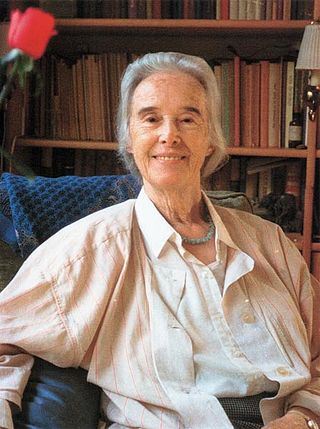
Liane Collot d'Herbois was a British painter and anthroposophical painting therapist. She researched light, dark, colour and their application in painting and therapy.
Rudolf Steiner wrote four plays that follow the initiation journeys of a group of fictional characters through a series of lives. These plays were intended to be modern mystery plays. Steiner outlined the plot of a fifth play to be set at the Castalian spring at Delphi, but due to the outbreak of First World War, this remained an unfulfilled project.
Johannes Tautz (30 September 1914 in Koblenz am Rhein to 13 March 2008 in Dortmund, was a historian, religious scholar, anthroposophist, author and Waldorf teacher. He concerned himself with a better understanding of National Socialism and with questions of education in the twentieth century.
Frederik Willem Zeylmans van Emmichoven, was a Dutch psychiatrist and anthroposophist. From 1923 until his death in 1961 he was chairman of the Dutch Anthroposophical Society. He was a familiar figure in public life and had a considerable influence on the anthroposophic movement, particularly through his numerous lectures and his work as an author, which included the first biography of Rudolf Steiner.
References
- 1 2 3 4 5 6 7 http://www.iaap.org.uk/downloads/pioneers-in-anthroposophic-pharmacy-june-2006.pdf Archived 2011-10-02 at the Wayback Machine Pioneers in Anthroposophic Pharmacy. Accessed on: 2009-13-4
| International | |
|---|---|
| National | |
| People | |
