List of common misconceptions about history

Last updated

Each entry on this list of common misconceptions is worded as a correction; the misconceptions themselves are implied rather than stated. These entries are concise summaries; the main subject articles can be consulted for more detail.

Contents

Ancient history

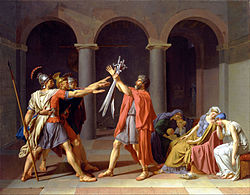
The ancient Romans did not use the Roman salute depicted in The Oath of the Horatii (1784). Jacques-Louis David - Oath of the Horatii - Google Art Project.jpg
The ancient Romans did not use the Roman salute depicted in The Oath of the Horatii (1784).

Ancient Rome

A vomitorium in a Roman amphitheater Amphitheatre-Toulouse 2.JPG
A vomitorium in a Roman amphitheater

Middle Ages

Europe

Medieval depiction of a spherical Earth Gossuin de Metz - L'image du monde - BNF Fr. 574 fo42 - miniature.jpg
Medieval depiction of a spherical Earth

Vikings

Early modern

The phrase "let them eat cake" is misattributed to Marie Antoinette. Marie-Antoinette, 1775 - Musee Antoine Lecuyer.jpg
The phrase "let them eat cake" is misattributed to Marie Antoinette.

North America

George Washington's dentures Washington Teeth.jpg
George Washington's dentures

Modern

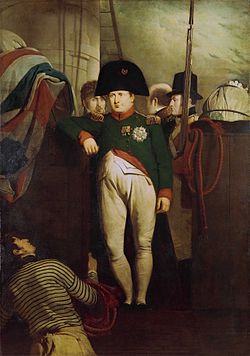
Napoleon was not especially short. Eastlake - Napoleon on the Bellerophon.jpg
Napoleon was not especially short.
Albert Einstein, photographed at 14, did not fail mathematics at school. Albert Einstein as a child.jpg
Albert Einstein, photographed at 14, did not fail mathematics at school.

United States

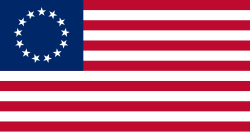
The flag that Betsy Ross purportedly designed Betsy Ross flag.svg
The flag that Betsy Ross purportedly designed
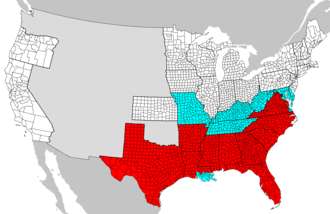
The Thirteenth Amendment abolished chattel slavery in the United States nationwide, not the Emancipation Proclamation (red areas only). Emancipation Proclamation.PNG
The Thirteenth Amendment abolished chattel slavery in the United States nationwide, not the Emancipation Proclamation (red areas only).
The Wendell O. Pruitt Homes and William Igoe Apartments complex Pruitt-igoeUSGS02.jpg
The Wendell O. Pruitt Homes and William Igoe Apartments complex

References

  1. a. Shaw, Johnathan (July–August 2003). "Who Built the Pyramids?". Harvard Magazine . Archived from the original on March 19, 2023. Retrieved August 14, 2022.
    b. "Egypt tombs suggest pyramids not built by slaves". Reuters. January 10, 2010. Archived from the original on December 20, 2022. Retrieved August 14, 2022.
    c. Weiss, Daniel (July–August 2022). "Journeys of the Pyramid Builders". Archaeology . Archaeological Institute of America. Archived from the original on March 14, 2023. Retrieved August 14, 2022. Based on the contents of the papyri, Tallet believes that at least some workers in the time of Khufu were highly skilled and well rewarded for their labor, contradicting the popular notion that the Great Pyramid was built by masses of oppressed slaves.
  2. 1 2 Watterson, Barbara (1997). "The Era of Pyramid-builders". The Egyptians . Blackwell. p. 63. Herodotus claimed that the Great Pyramid at Giza was built with the labour of 100,000 slaves working in three-monthly shifts, a charge that cannot be substantiated. Much of the non-skilled labour on the pyramids was undertaken by peasants working during the Inundation season when they could not farm their lands. In return for their services they were given rations of food, a welcome addition to the family diet.
  3. Kratovac, Katarina (January 12, 2010). "Egypt: New Find Shows Slaves Didn't Build Pyramids". U.S. News. Archived from the original on May 12, 2019. Retrieved August 14, 2022.
  4. Casson, Lionel (1966). "Galley Slaves". Transactions and Proceedings of the American Philological Association. 97: 35–36. doi:10.2307/2936000. JSTOR   2936000.
  5. Sargent, Rachel L (July 1927). "The Use of Slaves by the Athenians in Warfare II. In Warfare by Sea" (PDF). Classical Philology. 22 (3): 264–279. doi:10.1086/360910. JSTOR   262754.
  6. Unger, Richard (1980). The ship in the medieval economy, 600–1600. London: Croom Helm. p. 37. ISBN   0-85664-949-X.
  7. "Tutankhamun's Curse? | History Today". www.historytoday.com. Retrieved 2026-02-03.
  8. Hamilton-Paterson, James; Andrews, Carol (1978). Mummies: death and life in ancient Egypt. London: Collins in association with British Museum Publications Ltd. p. 191. ISBN   978-0-00-195532-5.
  9. Booth, Charlotte (2007). The boy behind the mask: meeting the real Tutankhamun. Oxford: Oneworld. pp. xvi. ISBN   978-1-85168-544-8.
  10. a. Neer, Richard (2012). Art and Archaeology of the Greek World. Thames and Hudson. p. 37. ISBN   978-0-500-05166-5. "...popular associations of the eruption with a legend of Atlantis should be dismissed...nor is there good evidence to suggest that the eruption...brought about the collapse of Minoan Crete
    b. Manning, Stuart (2012). "Eruption of Thera/Santorini". In Cline, Eric (ed.). The Oxford Handbook of the Bronze Age Aegean. Oxford University Press. pp. 457–454. doi:10.1093/oxfordhb/9780199873609.013.0034. ISBN   978-0-19-987360-9. Marinatos (1939) famously suggested that the eruption might even have caused the destruction of Minoan Crete (also Page 1970). Although this simple hypothesis has been negated by the findings of excavation and other research since the late 1960s... which demonstrate that the eruption occurred late in the Late Minoan IA ceramic period, whereas the destructions of the Cretan palaces and so on are some time subsequent (late in the following Late Minoan IB ceramic period)
  11. Kampouris, Nick. "Spectacular Findings Uncovered in Santorini's Akrotiri Archaeological Dig". Greek Reporter. GreekReporter.com. Retrieved 2026-02-03.
  12. Sparkes A.W. (1988). "Idiots, Ancient and Modern". Australian Journal of Political Science. 23: 101–102. doi:10.1080/00323268808402051.
  13. "idiot, n. & adj. meanings, etymology and more | Oxford English Dictionary". www.oed.com. Archived from the original on 2024-08-08. Retrieved 2026-02-03.
  14. Winkler, Martin M. (2009). The Roman Salute: Cinema, History, Ideology. Columbus: Ohio State University Press. p. 56. ISBN   978-0-8142-0864-9.
  15. 1 2 McKeown, J.C. (2010). A Cabinet of Roman Curiosities: Strange Tales and Surprising Facts from the World's Greatest Empire. Oxford University Press. pp. 153–54. ISBN   978-0-19-539375-0.
  16. Fass, Patrick (1994). Around the Roman Table. University of Chicago Press. pp. 66–67. ISBN   978-0-226-23347-5. Archived from the original on January 21, 2023. Retrieved September 21, 2016.
  17. a. Ridley, R.T. (1986). "To Be Taken with a Pinch of Salt: The Destruction of Carthage". Classical Philology. 81 (2): 140–146. doi:10.1086/366973. JSTOR   269786. S2CID   161696751.: "a tradition in Roman history well known to most students"
    b. Stevens, Susan T. (1988). "A Legend of the Destruction of Carthage". Classical Philology. 83 (1): 39–41. doi:10.1086/367078. JSTOR   269635. S2CID   161764925.
    c. Visona, Paolo (1988). "Passing the Salt: On the Destruction of Carthage Again". Classical Philology. 83 (1): 41–42. doi:10.1086/367079. JSTOR   269636. S2CID   162289604.: "this story... had already gained widespread currency"
    d. Warmington, B.H. (1988). "The Destruction of Carthage: A Retractatio". Classical Philology. 83 (4): 308–10. doi:10.1086/367123. JSTOR   269510. S2CID   162850949.: "the frequently repeated story"
  18. "[A mother in the 1st century AD] could not survive the trauma of a Caesarean" Oxford Classical Dictionary, Third Edition, "Childbirth"
  19. Wanjek, Christopher (2003). Bad Medicine: Misconceptions and Misuses Revealed, from Distance Healing to Vitamin O. John Wiley & Sons. p. 5. ISBN   978-0-471-46315-3.
  20. Tempest, Kathryn (2017). Brutus: the noble conspirator. New Haven: Yale University Press. ISBN   978-0-300-18009-1. OCLC   982651923.
  21. "Vad sa?". Språktidningen (in Swedish). 2014-06-02. Retrieved 2025-04-28.
  22. a. Lindberg, David C. (2003). "The Medieval Church Encounters the Classical Tradition: Saint Augustine, Roger Bacon, and the Handmaiden Metaphor". In Lindberg, David C.; Numbers, Ronald L. (eds.). When Science & Christianity Meet. Chicago: University of Chicago Press. p. 8.
    b. Grant, Edward (2001). God and Reason in the Middle Ages. Cambridge. p. 9.
    c. Peters, Ted (2005). "Science and Religion". In Jones, Lindsay (ed.). Encyclopedia of Religion (2nd ed.). Thomson Gale. p. 8182.
    d. Snyder, Christopher A. (1998). An Age of Tyrants: Britain and the Britons A.D. 400–600. University Park: Pennsylvania State University Press. pp. xiii–xiv. ISBN   978-0-271-01780-8.
  23. Bitel LM (2002-10-24). Women in Early Medieval Europe, 400–1100. Cambridge University Press. ISBN   978-0-521-59773-9.
  24. "World Population Prospects 2019" (PDF). Population Division. U.N. Department of Economic and Social Affairs.
  25. 1 2 Wanjek, Christopher (2002). Bad Medicine: Misconceptions and Misuses Revealed, from Distance Healing to Vitamin O. Wiley. pp. 70–71. ISBN   978-0-471-43499-3.
  26. "'Expectations of Life' by H.O. Lancaster as per". Archived from the original on September 4, 2012.
  27. "Is King Canute misunderstood?". BBC News. Archived from the original on 2014-04-20. Retrieved 2026-02-03.
  28. Schild, Wolfgang (2000). Die eiserne Jungfrau. Dichtung und Wahrheit (Schriftenreihe des Mittelalterlichen Kriminalmuseums Rothenburg o. d. Tauber Nr. 3). Rothenburg ob der Tauber: Mittelalterl. Kriminalmuseum.
  29. "The Rise of the Anticlockwise Newel Stair" (PDF). www.castlestudiesgroup.org.uk. Archived from the original (PDF) on 2020-08-07. Retrieved 2026-02-03.
  30. "Guest Post: Busting Mediaeval Building Myths: Part One". History... the interesting bits!. 2019-10-09. Archived from the original on 2020-01-08. Retrieved 2026-02-03.
  31. Ryder, Charles (February 2011). "The spiral stair or vice: Its origins, role and meaning in medieval stone castles". University of Chester. Archived from the original on 2020-02-23.
  32. "Arms and Armor—Common Misconceptions and Frequently Asked Questions | Thematic Essay | Heilbrunn Timeline of Art History | The Metropolitan Museum of Art". www.metmuseum.org. Archived from the original on 2014-04-26. Retrieved 2026-02-03.
  33. "Medieval Anachronisms, Part 3: Cranes Hoisting Armored Knights". Made of Ƿ. Archived from the original on 2013-10-29. Retrieved 2026-02-03.
  34. Keyser, Linda Migl (2008). "The Medieval Chastity Belt Unbuckled". In Harris, Stephen J.; Grigsby, Bryon L. (eds.). Misconceptions About the Middle Ages. Routledge.
  35. 1 2 "Busting a myth about Columbus and a flat Earth". Washington Post. Archived from the original on 2022-02-20. Retrieved 2026-02-03.
  36. a. Meyer, Robinson (December 12, 2013). "No Old Maps Actually Say 'Here Be Dragons'". The Atlantic. Archived from the original on February 1, 2023. Retrieved June 24, 2022.
    b. Van Duzer, Chet (June 4, 2014). "Bring on the Monsters and Marvels: Non-Ptolemaic Legends on Manuscript Maps of Ptolemy's Geography". Viator. 45 (2): 303–334. doi:10.1484/J.VIATOR.1.103923. ISSN   0083-5897.
    c. Kim, Meeri (August 19, 2013). "Oldest globe to depict the New World may have been discovered". The Washington Post. Archived from the original on September 30, 2021. Retrieved July 2, 2022. The only other map or globe on which this specific phrase appears is what can arguably be called the egg's twin: the copper Hunt-Lenox Globe, dated around 1510 and housed by the Rare Book Division of the New York Public Library.
  37. Misconceptions About the Middle Ages. Archived from the original on 2024-08-08.
  38. "Columbus's Geographical Miscalculations". IEEE Spectrum: Technology, Engineering, and Science News. Archived from the original on 2018-10-03. Retrieved 2026-02-03.
  39. a. Eviatar Zerubavel (2003). Terra cognita: the mental discovery of America. Transaction Publishers. pp. 90–91. ISBN   978-0-7658-0987-2. Archived from the original on January 21, 2023. Retrieved September 21, 2016.
    b. Sale, Kirkpatrick (1991). The Conquest of Paradise: Christopher Columbus and the Columbian Legacy. Plume. pp. 204–09. ISBN   978-1-84511-154-0 via Google Books.
  40. Kahn, Charles (2005). World History: Societies of the Past. Ken Osborne. Newburyport: Portage & Main Press. p. 9. ISBN   978-1-55379-045-7.
  41. "Helmets". National Museum of Denmark. Archived from the original on 2026-01-07. Retrieved 2026-02-03.
  42. E. W. Gordon, Introduction to Old Norse (2nd edition, Oxford 1962) pp. lxix–lxx.
  43. "Is Iceland Really Green and Greenland Really Icy?". 2016-06-30. Archived from the original on 2016-06-30. Retrieved 2026-02-03.
  44. a. Eirik the Red's Saga. Gutenberg.org. March 8, 2006. Archived from the original on May 11, 2011. Retrieved September 6, 2010.
    b. "How Greenland Got Its Name". The Ancient Standard. December 17, 2010. Archived from the original on March 19, 2012. Retrieved January 24, 2020..
    c. Grove, Jonathan (2009). "The place of Greenland in medieval Icelandic saga narrative". Journal of the North Atlantic. 2: 30–51. doi:10.3721/037.002.s206. S2CID   163032041. Archived from the original on April 11, 2012.
  45. Wills, Matthew (2020-01-17). "The Mexica Didn't Believe the Conquistadors Were Gods". JSTOR Daily. Retrieved 2026-02-03.
  46. Pound, Cath (2018-03-14). "When the Old Masters Were the P.R. Agents of the Rich and Powerful". The New York Times. ISSN   0362-4331 . Retrieved 2026-02-03.
  47. Higgins, Charlotte (2007-06-22). "The old black". The Guardian. ISSN   0261-3077 . Retrieved 2026-02-03.
  48. Archit (2021-12-24). "Fact-check: Did Shah Jahan chop off the hands of Taj Mahal workers?". Alt News. Retrieved 2026-02-03.
  49. "Debunking an urban myth about Taj Mahal". Archived from the original on 2023-07-09. Retrieved 2026-02-03.
  50. "Busting the Taj fake news - Times of India". The Times of India. Archived from the original on 2023-10-04. Retrieved 2026-02-03.
  51. "CultureLab: Newton's apple: The real story". www.newscientist.com. Archived from the original on 2017-07-11. Retrieved 2026-02-03.
  52. "Top 5 Marie Antoinette Scandals". HowStuffWorks. 2008-09-02. Retrieved 2026-02-03.
  53. "Plymouth Colony Clothing". web.ccsd.k12.wy.us. Archived from the original on 2013-10-22. Retrieved 2026-02-03.
  54. a. Schenone, Laura (2004). A Thousand Years Over A Hot Stove: A History Of American Women Told Through Food, Recipes, And Remembrances. New York: W. W. Norton & Company. p. 118. ISBN   978-0-393-32627-7.
    b. Wilson, Susan (2000). Literary Trail of Greater Boston. Boston: Houghton Mifflin Company. p. 23. ISBN   978-0-618-05013-0. Archived from the original on May 23, 2024. Retrieved April 18, 2021 via Google Books.
  55. Brooks, Rebecca Beatrice (2018-07-22). "What Did the Pilgrims Wear?". History of Massachusetts Blog. Retrieved 2026-02-03.
  56. a. Rosenthal, Bernard (1995). Salem Story: Reading the Witch Trials of 1692. Cambridge University Press. p. 209. ISBN   978-0-521-55820-4. Archived from the original on January 21, 2023. Retrieved September 21, 2016.
    b. Adams, Gretchen (2010). The Specter of Salem: Remembering the Witch Trials in Nineteenth-Century America. ReadHowYouWant.com. p. xxii. ISBN   978-1-4596-0582-4. Archived from the original on January 21, 2023. Retrieved September 21, 2016 via Google Books.
    c. Kruse, Colton (March 22, 2018). "Salem Never Burned Any Witches At The Stake". Ripley's Believe It or Not!. Archived from the original on December 3, 2022. Retrieved July 18, 2022.
  57. "George Washington's false teeth not wooden". msnbc.com. 2005-01-27. Archived from the original on 2013-02-11. Retrieved 2026-02-03.
  58. 1 2 "Wooden Teeth Myth". George Washington's Mount Vernon. Archived from the original on 2024-01-10. Retrieved 2026-02-03.
  59. "Special Video Reports - The Private Lives Of George Washington's Slaves | Jefferson's Blood | FRONTLINE | PBS". www.pbs.org. Retrieved 2026-02-03.
  60. "Washington's Dentures FAQ | George Washington's Mount Vernon". www.mountvernon.org. Retrieved 2026-02-03.
  61. "Did George Washington Really Say, "I Can't Tell a Lie"? | Britannica". Encyclopedia Britannica. Archived from the original on 2026-01-04. Retrieved 2026-02-03.
  62. "Declaration of Independence - A History". www.archives.gov. Archived from the original on 2010-01-26. Retrieved 2026-02-03.
  63. Crabtree, Steve (1999-07-06). "New Poll Gauges Americans' General Knowledge Levels". Gallup.com. Retrieved 2026-02-03.
  64. a. Lund, Nicholas (November 21, 2013). "Did Benjamin Franklin Really Say the National Symbol Should Be the Turkey?". Slate . Archived from the original on April 27, 2014. Retrieved November 22, 2013.
    b. McMillan, Joseph (May 18, 2007). "The Arms of the United States: Benjamin Franklin and the Turkey". American Heraldry Society. Archived from the original on April 27, 2014. Retrieved November 24, 2013.
  65. a. Sick, Bastian (2004). Der Dativ ist dem Genetiv sein Tod (in German). Kiepenheuer & Witsch. pp. 131–135. ISBN   978-3-462-03448-6 via Internet Archive.
    b. "Willi Paul Adams: The German Americans. Chapter 7: German or English". Archived from the original on June 24, 2010.
    c. "The German Vote". Snopes . July 9, 2007. Archived from the original on December 16, 2008. Retrieved August 31, 2013.
  66. a. Owen Connelly (2006). Blundering to Glory: Napoleon's Military Campaigns. Rowman & Littlefield. p. 7. ISBN   978-0-7425-5318-7.
    b. Evans, Rod L. (2010). Sorry, Wrong Answer: Trivia Questions That Even Know-It-Alls Get Wrong. Penguin Books. ISBN   978-0-399-53586-4. Archived from the original on January 21, 2023. Retrieved December 31, 2011.
    c. "Forget Napoleon – Height Rules". CBS News. February 11, 2009. Archived from the original on July 2, 2013. Retrieved December 31, 2011.
  67. a. "Fondation Napoléon". Napoleon.org. Archived from the original on April 17, 2014. Retrieved August 29, 2009.
    b. "La taille de Napoléon" (in French). Archived from the original on September 12, 2009. Retrieved July 22, 2010.
  68. "Napoleon's Old and Young Guard Infantry : Uniforms : Organization : Weapons". napoleonistyka.atspace.com. Retrieved 2026-02-03.
  69. a. "The nose of the Great Sphinx". britannica.com . Archived from the original on February 27, 2023. Retrieved 2022-11-27.
    b. Feder, Kenneth L. (2010). Encyclopedia of Dubious Archaeology: From Atlantis to the Walam Olum: From Atlantis to the Walam Olum. ABC-CLIO. ISBN   978-0-313-37919-2. Archived from the original on April 3, 2023. Retrieved December 18, 2022.
    c. Zivie-Coche, Christiane (2002). Sphinx: History of a Monument. Cornell University Press. p. 16. ISBN   978-0-8014-3962-9.
  70. a. Lovgren, Stefan (May 5, 2006). "Cinco de Mayo, From Mexican Fiesta to Popular U.S. Holiday". National Geographic News. Archived from the original on July 9, 2007.
    b. Lauren Effron (May 5, 2010). "Cinco de Mayo: NOT Mexico's Independence Day". Discovery News. Discovery Channel. Archived from the original on March 21, 2012. Retrieved May 5, 2011.
  71. a. "Hysteria". Welcome Collection. August 12, 2015. Archived from the original on August 8, 2018. Retrieved September 25, 2018.
    b. King, Helen (2011). "Galen and the widow. Towards a history of therapeutic masturbation in ancient gynaecology". Eugesta, Journal of Gender Studies in Antiquity: 227–31.
    c. "Victorian-Era Orgasms and the Crisis of Peer Review". The Atlantic. September 6, 2018. Archived from the original on September 20, 2018. Retrieved September 25, 2018.
    d. "Why the Movie "Hysteria" Gets Its Vibrator History Wrong". dildographer. May 4, 2012. Archived from the original on April 15, 2019. Retrieved September 25, 2018.
    e. King, Helen (2011). "Galen and the widow. Towards a history of therapeutic masturbation in ancient gynaecology". Eugesta, Journal of Gender Studies in Antiquity: 206–08.
    f. "Buzzkill: Vibrators and the Victorians (NSFW)". The Whores of Yore. Archived from the original on August 9, 2018. Retrieved September 25, 2018.
    g. Riddell, Fern (November 10, 2014). "No, no, no! Victorians didn't invent the vibrator". The Guardian. Archived from the original on April 15, 2019. Retrieved September 25, 2018.
  72. Isaacson, Walter (2007-04-05). "20 Things You Need to Know About Einstein - TIME". Time. ISSN   0040-781X . Retrieved 2026-02-03.
  73. Kruszelnicki, Karl S. (2004-06-23). "Einstein Failed School". www.abc.net.au. Retrieved 2026-02-03.
  74. mdr.de. "❌ Stimmt nicht: Albert Einstein war schlecht in der Schule | MDR.DE". www.mdr.de (in German). Retrieved 2025-06-24.
  75. a. López-Ortiz, Alex (February 20, 1998). "Why is there no Nobel in mathematics?". University of Waterloo . Archived from the original on February 17, 2023. Retrieved June 28, 2022.
    b. Mikkelson, David (October 4, 2013). "No Nobel Prize for Math". Snopes . Archived from the original on November 12, 2021. Retrieved June 28, 2022.
    c. Firaque, Kabir (October 16, 2019). "Explained: Why is there no mathematics Nobel? The theories, the facts, the myths". The Indian Express . Archived from the original on March 24, 2023. Retrieved June 28, 2022.
  76. Dash, Mike (September 15, 2011). "The Origin of the Tale that Gavrilo Princip Was Eating a Sandwich When He Assassinated Franz Ferdinand". Smithsonian Magazine . Retrieved September 28, 2025.
  77. Harris, Carolyn (March 4, 2024) [December 27, 2016]. "What Really Happened During the Murder of Rasputin, Russia's 'Mad Monk'?". Smithsonian Magazine. Updated by Sonja Anderson. Retrieved 2026-02-03.
  78. "How was Russian mystic Rasputin murdered?". BBC News. 2016-12-31. Retrieved 2026-02-03.
  79. Smith, Douglas (2016). Rasputin: faith, power, and the twilight of the Romanovs. New York: Farrar, Straus and Giroux. pp. 590–592. ISBN   978-0-374-71123-8.
  80. "Rear Window: Making Italy work: Did Mussolini really get the trains". The Independent. 1994-04-02. Retrieved 2026-02-03.
  81. a. Ankerstjerne, Christian. "The myth of Polish cavalry charges". Panzerworld. Archived from the original on August 4, 2012. Retrieved April 5, 2011.
    b. "The Mythical Polish Cavalry Charge". Polish American Journal. Polamjournal.com. July 2008. Archived from the original on September 24, 2012. Retrieved February 9, 2012.
  82. a. Vilhjálmur Örn Vilhjálmsson. "The King and the Star – Myths created during the Occupation of Denmark" (PDF). Danish institute for international studies. Archived from the original (PDF) on July 16, 2011. Retrieved April 5, 2011.
    b. "Some Essential Definitions & Myths Associated with the Holocaust". Center for Holocaust and Genocide Studies – University of Minnesota. Archived from the original on May 15, 2011. Retrieved April 5, 2011.
    c. "King Christian and the Star of David". The National Museum of Denmark. Archived from the original on September 28, 2011. Retrieved February 21, 2017.
  83. a. Craig, Laura; Young, Kevin (2008). "Beyond White Pride: Identity, Meaning and Contradiction in the Canadian Skinhead Subculture*". Canadian Review of Sociology/Revue Canadienne de Sociologie. 34 (2): 175–206. doi:10.1111/j.1755-618x.1997.tb00206.x . Retrieved July 2, 2022.
    b. Borgeson, Kevin; Valeri, Robin (Fall 2005). "Examining Differences in Skinhead Ideology and Culture Through an Analysis of Skinhead Websites". Michigan Sociological Review. 19: 45–62. JSTOR   40969104.
    c. Lambert, Chris (November 12, 2017). "'Black Skinhead': The politics of New Kanye". Daily Dot. Retrieved July 2, 2022. "Skinhead" was a term originally used to describe a 1960s British working-class subculture that revolved around fashion and music and that would heavily inspire the punk rock scene. While it has harmless roots, the skinhead movement fell into polemic politics. Nowadays, it's popularly associated with neo-Nazis, despite having split demographics of far-right, far-left, and apolitical.
  84. Brown, Timothy S. (January 1, 2004). "Subcultures, Pop Music and Politics: Skinheads and 'Nazi Rock' in England and Germany". Journal of Social History. 38 (1): 157–178. doi:10.1353/jsh.2004.0079. JSTOR   3790031. S2CID   42029805.
  85. Cotter, John M. (1999). "Sounds of hate: White power rock and roll and the neo-nazi skinhead subculture". Terrorism and Political Violence. 11 (2): 111–140. doi:10.1080/09546559908427509. ISSN   0954-6553.
  86. Shaffer, Ryan (2013). "The soundtrack of neo-fascism: youth and music in the National Front". Patterns of Prejudice. 47 (4–5): 458–482. doi:10.1080/0031322X.2013.842289. ISSN   0031-322X. S2CID   144461518.
  87. "Opinion | Five myths about the American flag". The Washington Post. 2011-06-10. ISSN   0190-8286 . Retrieved 2026-02-03.
  88. "The Lincoln Presidency: Last Full Measure of Devotion". rmc.library.cornell.edu. Retrieved 2026-02-03.
  89. Green, Joey (2005). Contrary to popular belief: more than 250 false facts revealed (1st ed.). New York: Broadway Books. ISBN   978-0-7679-1992-0.
  90. 1 2 Stewart, Alicia W. (1 January 2013). "150 years later, myths persist about the Emancipation Proclamation". CNN. Retrieved 29 July 2024.
  91. 1 2 Berlin, Ira; Fields, Barbara J.; Glymph, Thavolia; Reidy, Joseph P.; Rowland, Leslie S., eds. (1985). Freedom: A Documentary History of Emancipation, 1861–1867: Series 1, Volume 1: The Destruction of Slavery . Cambridge University Press. p. 69. ISBN   978-0-521-22979-1.
  92. Foner, Eric (2010). The fiery trial: Abraham Lincoln and American slavery. New York: W. W. Norton. pp. 241–242. ISBN   978-0-393-06618-0. OCLC   601096674.
  93. a. Haycox, Stephen (1990). "Truth and Expectation: Myth in Alaska History". Northern Review. 6. Retrieved August 31, 2015.
    b. Welch, Richard E. Jr. (1958). "American Public Opinion and the Purchase of Russian America". American Slavic and East European Review . 17 (4): 481–94. doi:10.2307/3001132. JSTOR   3001132.
    c. Howard I. Kushner, "'Seward's Folly'?: American Commerce in Russian America and the Alaska Purchase". California Historical Quarterly (1975): 4–26. JSTOR   25157541.
    d. "Biographer calls Seward's Folly a myth". The Seward Phoenix LOG. April 3, 2014. Archived from the original on June 22, 2017. Retrieved August 31, 2015.
    e. Professor Preston Jones (Featured Speaker) (July 9, 2015). Founding of Anchorage, Alaska (Adobe Flash). C-SPAN . Retrieved December 22, 2017.
  94. Cook, Mary Alice (Spring 2011). "Manifest Opportunity: The Alaska Purchase as a Bridge Between United States Expansion and Imperialism" (PDF). Alaska History. 26 (1): 1–10.
  95. "The Deseret News - Google News Archive Search". news.google.com. Retrieved 2026-02-03.
  96. Snyder, Jeffrey B. (1997). Stetson hats and the John B. Stetson Hat Company, 1865-1970. A Schiffer book with values. Atglen, PA: Schiffer Pub. ISBN   978-0-7643-0211-4.
  97. "The O'Leary Legend 2". www.chicagohistory.org. Archived from the original on 2011-01-10. Retrieved 2026-02-03.
  98. a. Campbell, W. Joseph (2010). Getting it Wrong: Ten of the Greatest Misreported Stories in American Journalism . Berkeley: University of California Press. pp.  9–25. ISBN   978-0-520-26209-6 via Internet Archive.
    b. Campbell, W. Joseph (2003). Yellow Journalism: Puncturing the Myths, Defining the Legacies. Praeger. p. 72. ISBN   978-0-275-98113-6.
  99. "Myth Buster - The Edison Papers". edison.rutgers.edu. Archived from the original on 2013-11-13. Retrieved 2026-02-03.
  100. Foss, Katherine A. (2020-04-24). "#TyphoidMary – now a hashtag – was a maligned immigrant who got a bum rap". The Conversation. Retrieved 2026-02-03.
  101. "Why Your Family Name Was Not Changed at Ellis Island (and One That Was)". www.nypl.org. Archived from the original on 2015-12-08. Retrieved 2026-02-03.
  102. "Prohibition | Definition, History, Eighteenth Amendment, & Repeal". britannica.com . Retrieved 2022-10-24.
  103. "Market Crash Exacts a Toll in Suicides". January 12, 2009. Retrieved 2024-08-24.
  104. a. Pooley, Jefferson; Socolow, Michael (October 28, 2013). "The Myth of the War of the Worlds Panic". Slate . Archived from the original on May 9, 2014. Retrieved November 24, 2013.
    b. Campbell, W. Joseph (2010). Getting it wrong: ten of the greatest misreported stories in American Journalism. Berkeley: University of California Press. pp. 26–44. ISBN   978-0-520-26209-6 via Google Books.
  105. a. "Florida: Anything Goes". Time. April 17, 1950. Archived from the original on June 24, 2013. Retrieved May 3, 2010.
    b. Nohlgren, Stephen (November 29, 2003). "A born winner, if not a native Floridian". St. Petersburg Times . Archived from the original on October 5, 2012. Retrieved October 8, 2011.
  106. "Interstate Highway System – The Myths". Federal Highway Administration . Archived from the original on April 29, 2024. Retrieved June 24, 2024.
  107. Laskow, Sarah (August 24, 2015). "Eisenhower and History's Worst Cross-Country Road Trip". Slate . Retrieved June 24, 2024.
  108. "An Act of Courage, The Arrest Records of Rosa Parks". National Archives. August 15, 2015. Retrieved December 1, 2020.
  109. 1 2 Bass, Amy (2009). Those about Him Remained Silent: The Battle Over W.E.B. Du Bois. University of Minnesota Press. p. 155. ISBN   978-0-8166-4495-7.
  110. a. "Renouncing citizenship is usually all about the Benjamins, say experts". Fox News. May 11, 2012. Retrieved May 18, 2015.
    b. "Celebrities Who Renounced Their Citizenship". Huffington Post. February 1, 2012. Retrieved May 18, 2015.
    c. Aberjhani, Sandra L. West (2003). Encyclopedia of the Harlem Renaissance. Infobase Publishing. p. 89. ISBN   978-1-4381-3017-0.
  111. Lewis, David (2009). W.E.B. Du Bois: A Biography. MacMillan. p. 841. ISBN   978-0-8050-8805-2.
  112. a. Daum, Andreas W. (2007). Kennedy in Berlin. Cambridge University Press. pp. 148–49. ISBN   978-3-506-71991-1. Archived from the original on January 21, 2023. Retrieved May 13, 2018.
    b. "Gebrauch des unbestimmten Artikels (German, "Use of the indefinite article")". Canoo Engineering AG. Archived from the original on March 28, 2014. Retrieved July 5, 2010.
  113. a. Ryan, Halford Ross (1995). U.S. presidents as orators: a bio-critical sourcebook. Greenwood. pp. 219–20. ISBN   978-0-313-29059-6. Archived from the original on May 23, 2024. Retrieved May 23, 2024.
    b. "Ich bin ein Pfannkuchen. Oder ein Berliner?" [I am a jelly doughnut. Or a Berliner?] (in German). Stadtkind. August 22, 2005. Archived from the original on June 19, 2008. Retrieved June 26, 2013.
  114. Rüther, Tobias (March 5, 2019). "Essen und Sprechen Geben Sie mir ein Semmelbrötchen!". Faz.net. Archived from the original on October 20, 2021. Retrieved May 23, 2024.
  115. Gansberg, Martin (March 27, 1964). "37 Who Saw Murder Didn't Call the Police" (PDF). The New York Times. Archived from the original (PDF) on August 7, 2015.
  116. Bregman, Rutger (2020). "9". Humankind: A Hopeful History. Bloomsbury Publishing. ISBN   978-1-4088-9896-3.
  117. Rasenberger, Jim (October 2006). "Nightmare on Austin Street". American Heritage . Retrieved May 18, 2015.
  118. Cendón, Sara Fernández (February 3, 2012). "Pruitt-Igoe 40 Years Later". American Institute of Architects. Archived from the original on March 14, 2014. Retrieved December 31, 2014. For example, Pruitt-Igoe is often cited as an AIA-award recipient, but the project never won any architectural awards.
  119. Bristol, Katharine (May 1991). "The Pruitt–Igoe Myth" (PDF). Journal of Architectural Education . 44 (3): 168. doi:10.1111/j.1531-314X.2010.01093.x. ISSN   1531-314X. S2CID   219542179. Archived from the original (PDF) on September 24, 2015. Retrieved December 31, 2014. Though it is commonly accorded the epithet 'award-winning,"' Pruitt-Igoe never won any kind of architectural prize. An earlier St. Louis housing project by the same team of architects, the John Cochran Garden Apartments, did win two architectural awards. At some point this prize seems to have been incorrectly attributed to Pruitt-Igoe
  120. Jerry Lembcke, The Spitting Image: Myth, Memory and the Legacy of Vietnam, 1998, ISBN   978-0-8147-5147-3
  121. Greene, Bob (1989). Homecoming: When the Soldier Returned from Vietnam. G. P. Putnam's Sons. ISBN   978-0-399-13386-2.
  122. Vlieg, Heather (September 2019). "Were They Spat On? Understanding The Homecoming Experience of Vietnam Veterans". The Grand Valley Journal of History. 7 (1).
  123. "100 Women: The truth behind the 'bra-burning' feminists". BBC News. September 6, 2018.
  124. Novak, Matt (May 15, 2012). "How Space-Age Nostalgia Hobbles Our Future". Slate . Retrieved June 26, 2024.
  125. Saripalli, Srikanth (September 19, 2013). "To Boldly Go Nowhere, for Now". Slate . Retrieved June 26, 2024.
  126. Strauss, Mark (April 14, 2011). "Ten Enduring Myths About the U.S. Space Program". Smithsonian . Retrieved June 26, 2024.
  127. "Kool Aid/Flavor Aid: Inaccuracies vs. Facts Part 7". Alternative Considerations of Jonestown & Peoples Temple. Archived from the original on July 13, 2020. Retrieved June 20, 2022.
  128. Higgins, Chris (November 8, 2012). "Stop Saying 'Drink the Kool-Aid'". The Atlantic. Retrieved June 20, 2022.
  129. Krause, Charles A. (December 17, 1978). "Jonestown Is an Eerie Ghost Town Now". Washington Post. Retrieved June 20, 2022. A pair of woman's eyelasses, a towel, a pair of shorts, packets of unopened Flavor-Aid lie scattered about waiting for the final cleanup that may one day return Jonestown to the tidy, if overcrowded, little community it once was.
  130. Kihn, Martin (March 2005). "Don't Drink the Grape-Flavored Sugar Water..." Fast Company. Archived from the original on April 7, 2005. Retrieved June 20, 2022.