Related Research Articles

In public health, contact tracing is the process of identification of persons who may have come into contact with an infected person ("contacts") and subsequent collection of further information about these contacts. By tracing the contacts of infected individuals, testing them for infection, treating the infected and tracing their contacts in turn, public health aims to reduce infections in the population. Diseases for which contact tracing is commonly performed for include tuberculosis, vaccine-preventable infections like measles, sexually transmitted infections, blood-borne infections, some serious bacterial infections, and novel infections. The goals of contact tracing are:
Zoom Video Communications, Inc., organized in Delaware and headquartered in San Jose, California, provides software, including a mobile app, for videotelephony, online chat, and business telephone systems.

Signal is a cross-platform encrypted messaging service developed by the Signal Foundation and Signal Messenger LLC. It uses the Internet to send one-to-one and group messages, which can include files, voice notes, images and videos. Its mobile apps can also make one-to-one voice and video calls, and the Android version can optionally function as an SMS app.

Clearview AI is an American technology company that provides facial recognition software, which they claim is marketed primarily for law enforcement agencies. The company has developed technology that can match faces to a database of more than three billion images scraped from the Internet, including social media applications. Founded by Hoan Ton-That and Richard Schwartz, the company maintained a low profile until late 2019, when its usage by law enforcement was reported on.

The 2020 coronavirus pandemic in Singapore is part of the ongoing global pandemic of coronavirus disease 2019 (COVID-19), a novel infectious disease caused by severe acute respiratory syndrome coronavirus 2 (SARS-CoV-2). The first case of COVID-19 was confirmed on 23 January. To combat COVID-19, a multi-ministerial committee was formed on 22 January with Minister for National Development Lawrence Wong and Minister for Health Gan Kim Yong as the co-chairs and Prime Minister Lee Hsien Loong and Deputy Prime Minister and Minister for Finance Heng Swee Keat as advisors.

Laboratory testing for SARS-CoV-2 includes methods that detect the presence of virus and those that detect antibodies produced in response to infection.

The 2019–20 coronavirus pandemic was confirmed to have spread to Spain on 31 January 2020, when a German tourist tested positive for SARS-CoV-2 in La Gomera, Canary Islands. By 24 February, Spain confirmed multiple cases related to the Italian cluster, originating from a medical doctor from Lombardy, Italy, who was on holiday in Tenerife. Other cases involving individuals who visited Italy were also discovered in Peninsular Spain.
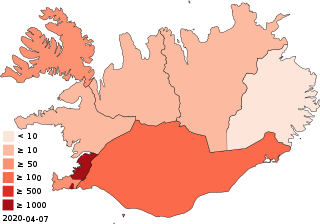
The 2019–20 coronavirus pandemic was confirmed to have reached Iceland in February 2020. As of 12 April 2020, the total number of cases registered is 1,711, of which 933 have recovered and 8 have died.With a total population of 364,260, the infection rate is 1 case per 213 inhabitants, one of the highest in the world, though this is attributed to more tests have been carried out per capita in Iceland than any other country. These include a screening of the general population run by Icelandic company deCODE genetics to determine the true spread of the virus in the community.
The 2020 coronavirus pandemic in Jamaica is part of an ongoing global pandemic of coronavirus disease 2019 (COVID-19), an infectious disease caused by severe acute respiratory syndrome coronavirus 2 (SARS-CoV-2). On 12 January, the World Health Organization (WHO) confirmed that a novel coronavirus was the cause of a respiratory illness in a cluster of people in Wuhan City, Hubei Province, China, who had initially come to the attention of the WHO on 31 December 2019. Unlike SARS outbreak of 2003, the case fatality ratio for COVID-19 has been much lower, but the transmission has been significantly greater, with a significant total death toll.
During the 2019–20 coronavirus pandemic, human rights violations including censorship, discrimination, arbitrary detention, xenophobia were reported from different parts of the world. Amnesty International has responded that "Human rights violations hinder, rather than facilitate, responses to public health emergencies, and undercut their efficiency." The World Health Organization has stated that stay-at-home measures for slowing down the pandemic must not be done at the expense of human rights.
The 2020 coronavirus pandemic in the U.S. state of Nebraska is part of an ongoing worldwide pandemic of coronavirus disease 2019, a novel infectious disease caused by severe acute respiratory syndrome coronavirus 2. As of April 12, 2020, the Nebraska Department of Health & Human Services (DHHS) has confirmed 814 cases and 17 deaths in the state.
The 2019–20 coronavirus pandemic was confirmed to have reached Liberia in March 2020.
The 2019–2020 coronavirus pandemic was first confirmed to have spread to Scotland on 1 March 2020 with the positive test of a male Tayside resident who recently travelled to and from northern Italy. Scottish coronavirus cases are also included in the 2020 coronavirus pandemic in the United Kingdom.

The 2019-20 coronavirus pandemic was first confirmed in the Indian state of West Bengal on 17 March 2020, with first positive case in Kolkata. As of 13 April 2020, the state has reported 152 COVID-19 positive cases, including 116 active cases, 7 deaths and 29 recoveries.

The first case of the 2019–20 coronavirus pandemic in the Indian state of Tamil Nadu was reported on 7 March 2020. The Department of Health and Family Welfare has confirmed a total of 1173cases, including 11 deaths and 58 recoveries, as of 13 April 2020. Among the reported cases, 1058(90%) cases were from one cluster linked to a Tablighi Jamaat religious congregation event took place in Delhi. The state is the third worst-affected in the country after Maharashtra and Delhi. The state government has created containment zones in 16 affected districts to screen residents for checking community spread and to prevent more infections.
COVID-19 surveillance involves monitoring the spread of the coronavirus disease in order to establish the patterns of disease progression. The World Health Organization (WHO) recommends active surveillance, with focus of case finding, testing and contact tracing in all transmission scenarios. COVID-19 surveillance is expected to monitor epidemiological trends, rapidly detect new cases, and based on this information, provide epidemiological information to conduct risk assessment and guide disease preparedness.
Aarogya Setu is a COVID-19 tracking mobile application developed by the National Informatics Centre that comes under the Ministry of Electronics and Information Technology, Government of India.

Coronavirus Australia is an app released by the Australian Government designed to allow users to access information about the 2020 coronavirus pandemic in Australia. The app was developed by Delv Pty Ltd for the Department of Health and released on 29 March 2020. Since release the app has been downloaded over a million times and ranked first in the Apple App Store's "Health and Fitness" category. Due to the short development period of two weeks, the app initially served primarily as an aggregate of links to official government websites. Shortly after an update was released adding a voluntary "isolation registration" form that collected the location, name, age, mobile number, isolation start date, and various other details about users who were self isolating.
BlueTrace is an open source application protocol that facilitates digital contact tracing of infected participants. Initially developed by the Singaporean Government for the TraceTogether app and the 2019–20 coronavirus pandemic, it has since been considered for adoption by multiple other countries including New Zealand and Australia. A core principle of the protocol is the preservation of privacy and health authority cooperation.

TraceTogether is an app released by the Singaporean Government that allows for digital contact tracing using the custom BlueTrace protocol. The app was developed by the Government Digital Services agency and released on 20 March 2020. Since release the app has been downloaded over a 500,000 times. The app and protocol were also open sourced as OpenTrace and BlueTrace respectively.
References
- ↑ Mehta, Ivan (2020-03-03). "China's coronavirus detection app is reportedly sharing citizen data with police". The Next Web. Retrieved 2020-04-01.
- ↑ Dudden, Alexis; Marks, Andrew (2020-03-20). "South Korea took rapid, intrusive measures against Covid-19 – and they worked". The Guardian . ISSN 0261-3077 . Retrieved 2020-04-01.
- ↑ Kharpal, Arjun (2020-03-26). "Use of surveillance to fight coronavirus raises concerns about government power after pandemic ends". CNBC . Retrieved 2020-04-01.
- ↑ "Singapore government to open source contact-tracing protocol". ComputerWeekly.com. Retrieved 2020-04-13.
- ↑ Kelion, Leo (2020-04-01). "Moscow coronavirus app raises privacy concerns". BBC News . Retrieved 2020-04-01.
- 1 2 "V Česku se spouští aplikace eRouška. Staví na ochraně soukromí a upozorní, pokud jste přišli do kontaktu s nakaženým - CzechCrunch". Czechcrunch.cz. Retrieved 2020-04-13.
- ↑ Kelion, Leo (2020-03-31). "UK considers virus-tracing app to ease lockdown". www.bbc.co.uk. Retrieved 2020-04-01.
- ↑ Gorey, Colm (2020-03-30). "HSE announces coronavirus contact-tracing app, but privacy concerns remain". Silicon Republic. Retrieved 2020-04-01.
- ↑ Power, Ben (2020-03-27). "The coronavirus is expanding the surveillance state. How will this play out?". Washington Post . Analysis. Retrieved 2020-04-01.
- 1 2 3 Ingram, David; Ward, Jacob (2020-04-07). "Behind the global efforts to make a privacy-first coronavirus tracking app". NBC News . Retrieved 2020-04-10.
- ↑ Neumann, Linus, ed. (2020-04-06). "10 Prüfsteine für die Beurteilung von „Contact Tracing"-Apps" (in German). Chaos Computer Club (CCC). Archived from the original on 2020-04-11. Retrieved 2020-04-11.
- ↑ "Corona-App in Deutschland - Anonymität und Quellenschutz gewährleisten" (in German). Reporter ohne Grenzen. 2020-04-06. Archived from the original on 2020-04-11. Retrieved 2020-04-11.
- ↑ Holmes, Oliver (2020-03-17). "Israel to track mobile phones of suspected coronavirus cases". The Guardian . ISSN 0261-3077 . Retrieved 2020-04-01.
- ↑ "ACLU White Paper: The Limits of Location Tracking in an Epidemic". American Civil Liberties Union. Retrieved 2020-04-10.
- ↑ "OpenTrace".
- 1 2 Lomas, Natasha (2020-04-06). "EU privacy experts push a decentralized approach to COVID-19 contacts tracing". TechCrunch . Archived from the original on 2020-04-10. Retrieved 2020-04-11.
- ↑ "Pan-European Privacy-Preserving Proximity Tracing" . Retrieved 2020-04-06.
- ↑ Delcker, Janosch; Brown, Stephen (2020-04-01). "Europe shares code for new coronavirus warning app". POLITICO. Retrieved 2020-04-01.
- ↑ Schmitz, Rob (2020-04-02). "In Germany, High Hopes For New COVID-19 Contact Tracing App That Protects Privacy". NPR.org. Retrieved 2020-04-07.
- ↑ Lomas, Natasha (2020-04-01). "An EU coalition of techies is backing a 'privacy-preserving' standard for COVID-19 contacts tracing". TechCrunch . Archived from the original on 2020-04-10. Retrieved 2020-04-11.
- ↑ DP-3T. "documents/README.md at master · DP-3T/documents · GitHub". Github.com. Retrieved 2020-04-13.
- ↑ DP-3T. "documents/DP3T White Paper.pdf at master · DP-3T/documents · GitHub" (PDF). Github.com. Retrieved 2020-04-13.
- ↑ Chan, Justin; Gollakota, Shyam; Horvitz, Eric; Jaeger, Joseph; Kakade, Sham; Kohno, Tadayoshi; Langford, John; Larson, Jonathan; Singanamalla, Sudheesh; Sunshine, Jacob; Tessaro, Stefano (2020-04-07). "PACT: Privacy Sensitive Protocols And Mechanisms for Mobile Contact Tracing" (PDF). arXiv: 2004.03544v1 . Archived (PDF) from the original on 2020-03-10. Retrieved 2020-04-11.
- ↑ "SafePaths". 2020-04-09. Retrieved 2020-04-09.
- ↑ "Apps Gone Rogue: Maintaining Personal Privacy in an Epidemic" (PDF). 2020-03-17. Retrieved 2020-04-09.
- ↑ hermesauto (2020-04-10). "Coronavirus: S'pore contact tracing app now open-sourced, 1 in 5 here have downloaded". The Straits Times. Retrieved 2020-04-14.
- ↑ "Apple and Google are launching a joint COVID-19 tracing tool for iOS and Android". TechCrunch . Retrieved 2020-04-10.
- ↑ Sherr, Ian; Nieva, Richard (2020-04-10). "Apple and Google are building coronavirus tracking tech into iOS and Android – The two companies are working together, representing most of the phones used around the world". CNET. Archived from the original on 2020-04-10. Retrieved 2020-04-10.
- ↑ "Privacy-Preserving Contact Tracing". Apple. 2020-04-10.
- ↑ "Contact Tracing – Bluetooth Specification" (PDF) (Preliminary ed.). Google. 2020-04-10. Archived (PDF) from the original on 2020-04-10. Retrieved 2020-04-10.
- ↑ "Apple and Google partner on COVID-19 contact tracing technology". Google. 2020-04-10. Retrieved 2020-04-10.
- ↑ "Apple and Google partner on COVID-19 contact tracing technology". Apple. 2020-04-10. Retrieved 2020-04-10.
- ↑ "An EU coalition of techies is backing a 'privacy-preserving' standard for COVID-19 contacts tracing". TechCrunch. Retrieved 2020-04-02.
- ↑ Sam Schechner and Rolfe Winkler (2020-04-11). "Here's How Apple and Google Plan to Track the Coronavirus Through Your Phone". The Wall Street Journal. Retrieved 2020-04-11.
- ↑ "Call for common EU approach to apps and data to fight COVID-19 and protect citizens' rights". TechCrunch. 2020-04-08. Retrieved 2020-04-13.
- ↑ "Singapore government to open source contact-tracing protocol". ComputerWeekly.com. Retrieved 2020-04-13.
- ↑ "Government launches Coronavirus Australia app, WhatsApp feature". ABC News. 2020-03-29. Retrieved 2020-04-11.
- ↑ "Stopp Corona". participate.roteskreuz.at. Retrieved 2020-04-14.
- ↑ Mehta, Ivan (2020-03-03). "China's coronavirus detection app is reportedly sharing citizen data with police". The Next Web. Retrieved 2020-04-13.
- ↑ "Mapy.cz". En.mapy.cz. Retrieved 2020-04-13.
- ↑ "Aplikace Mapy.cz bojuje proti koronaviru COVID19 sdílením polohy - Seznam Zprávy". Native.seznamzpravy.cz. 2020-03-23. Retrieved 2020-04-13.
- ↑ "eRouška - Chráním sebe, chráním tebe". Erouska.cz. Retrieved 2020-04-13.
- ↑ "Government Launches Aarogya Setu COVID-19 Tracker App on Android, iOS". NDTV Gadgets 360. Retrieved 2020-04-02.
- 1 2 3 4 5 6 7 8 "Government Launches Coronavirus-Tracker Apps: The List So Far". NDTV Gadgets 360. Retrieved 2020-04-02.
- ↑ "Govt discontinues Corona Kavach, Aarogya Setu is now India's go-to COVID-19 tracking app". The Financial Express. 2020-04-05. Retrieved 2020-04-13.
- ↑ GoK Direct
- ↑ "Kerala govt launches mobile app for details of COVID-19". MathrubhumI English. Retrieved 2020-03-12.
- ↑ "The Ministry of Health launches "HAMAGEN" - an App to Prevent the Spread of Coronavirus". GOV.IL. Retrieved 2020-04-02.
- ↑ "How Israeli apps are helping check corona". The Economic Times . 2020-04-01. Retrieved 2020-04-02.
- ↑ "Appen Smittestopp skal bli trygg i bruk". Folkehelseinstituttet (in Norwegian). Retrieved 2020-04-13.
- ↑ Kelion, Leo (2020-04-01). "Moscow coronavirus app raises privacy concerns". BBC News. Retrieved 2020-04-13.
- ↑ Koh, Dean (2020-03-20). "Singapore government launches new app for contact tracing to combat spread of COVID-19". MobiHealthNews. Retrieved 2020-04-02.
- ↑ Dudden, Alexis; Marks, Andrew (2020-03-20). "South Korea took rapid, intrusive measures against Covid-19 – and they worked | Alexis Dudden and Andrew Marks". The Guardian. ISSN 0261-3077 . Retrieved 2020-04-13.
- ↑ Business, Ivan Watson and Sophie Jeong, CNN. "Coronavirus mobile apps are surging in popularity in South Korea". CNN. Retrieved 2020-04-14.
- 1 2 O'Malley, Katie (2020-03-27). "16 Apps Everyone Should Have On Their Phone During Coronavirus". ELLE. Retrieved 2020-04-02.
- ↑ "CDC Statement on COVID-19 Apple App". Centers for Disease Control and Prevention. 2020-03-27. Retrieved 2020-04-02.
- ↑ Hartmans, Avery (2020-04-03). "Pinterest CEO launches How We Feel app to track coronavirus symptoms". Business Insider. Retrieved 2020-04-10.
- ↑ "Private Kit: Safe Paths; Privacy-by-Design Contact Tracing using GPS+Bluetooth | safepaths". Safepaths.mit.edu. 2020-03-27. Retrieved 2020-04-10.


