
The economy of France is highly developed and free-market-oriented. It is the world's seventh-largest economy by 2020 nominal figures and the tenth-largest economy by PPP. As of September 30, 2020, it is the 3rd largest economy of Europe, after the economy of Germany and the United Kingdom.

The economy of Australia is a highly developed mixed economy. As of 2021, Australia was the 12th-largest national economy by nominal GDP, 18th-largest by PPP-adjusted GDP, and was the 25th-largest goods exporter and 20th-largest goods importer. Australia took the record for the longest run of uninterrupted GDP growth in the developed world with the March 2017 financial quarter, the 103rd quarter and marked 26 years since the country had a technical recession. Its GDP was estimated at A$1.7 trillion as of 2021.

Wealth is the abundance of valuable financial assets or physical possessions which can be converted into a form that can be used for transactions. This includes the core meaning as held in the originating old English word weal, which is from an Indo-European word stem. The modern concept of wealth is of significance in all areas of economics, and clearly so for growth economics and development economics, yet the meaning of wealth is context-dependent. An individual possessing a substantial net worth is known as wealthy. Net worth is defined as the current value of one's assets less liabilities.
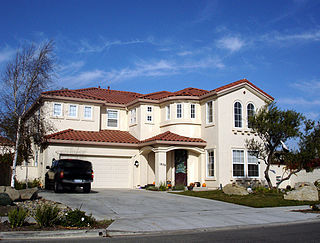
A millionaire is an individual whose net worth or wealth is equal to or exceeds one million units of currency. Depending on the currency, a certain level of prestige is associated with being a millionaire. In countries that use the short scale number naming system, a billionaire is someone who has at least a thousand times a million dollars, euros or the currency of the given country.

The distribution of wealth is a comparison of the wealth of various members or groups in a society. It shows one aspect of economic inequality or economic heterogeneity.
A wealth tax is a tax on an entity's holdings of assets. This includes the total value of personal assets, including cash, bank deposits, real estate, assets in insurance and pension plans, ownership of unincorporated businesses, financial securities, and personal trusts. Typically, liabilities are deducted from an individual's wealth, hence it is sometimes called a net wealth tax. Wealth taxes are in use in many countries around the world and seek to reduce the accumulation of wealth by individuals.
The median income is the income amount that divides a population into two equal groups, half having an income above that amount, and half having an income below that amount. It may differ from the mean income. The income that occurs most frequently is the income mode. Each of these is a way of understanding income distribution.
High-net-worth individual (HNWI) is a term used by some segments of the financial services industry to designate persons whose investible wealth exceed a given amount. Typically, these individuals are defined as holding financial assets with a value greater than US$1 million.

International inequality refers to the topic of inequality between countries and can be compared to global inequality, which refers to inequality between people across countries. Recent international inequality research has primarily been concentrated on the rise of international income inequality, but a broadens scope of international disparity may also include factors such as educational and health inequality, as well as differences in medical access.

Household income is a measure of the combined incomes of all people sharing a particular household or place of residence. It includes every form of income, e.g., salaries and wages, retirement income, near cash government transfers like food stamps, and investment gains.
Affluence refers to an individual's or household's economical and financial advantage in comparison to others. It may be assessed through either income or wealth.
Poverty in Switzerland refers to people who are living in relative poverty in Switzerland. In 2018, 7.9% of the population or some 660,000 people in Switzerland were affected by income poverty. Switzerland has also a significant number of working poor, estimated at 145,000 in 2015.

Wealth inequality in the United States, also known as the wealth gap, is the unequal distribution of assets among residents of the United States. Wealth commonly includes the values of any homes, automobiles, personal valuables, businesses, savings, and investments, as well as any associated debts. As of Q3 2019, the top 10% of households held 70% of the country's wealth, while the bottom 50% held 2%. From an international perspective, the difference in US median and mean wealth per adult is over 600%.

Median household disposable income in the UK was £29,400 in the financial year ending (FYE) 2019, up 1.4% (£400) compared with growth over recent years; median income grew by an average of 0.7% per year between FYE 2017 and FYE 2019, compared with 2.8% between FYE 2013 and FYE 2017.
Household total net is the net worth for individuals and is used as a measure in economics to compare the wealth of different groups. The net worth is the value of total assets minus the total value of outstanding liabilities. Household financial net worth is the balancing item of their financial balance sheet recorded at current market values. The total net worth is measured as a percentage of net disposable income.


