Domestic policy
General features
Greek domestic politics in the interwar period, which for Greece properly began with the end of the war with Turkey in 1922-1923, was mainly characterised by the confrontation between two blocs, which emerged after 1909 and became entrenched during the First World War: they played a leading role in the so-called ‘national schism’: the Venizelist and the anti-Venizelist blocs, names derived from one of the leading politicians in Greek history in the first third of the 20th century, Eleftherios Venizelos. [8] The supporters of the former were mainly republicans, like other minor left-wing groups such as the agrarians and the communists, while the latter were monarchists. [9] The two groups were organised around a main party, which was accompanied by others, sometimes with a short-lived existence. [10] That of the Venizelos group was the Liberal Party, founded and led by Venizelos himself and then, towards the end of the period, by Themistoklis Sophoulis. [11] [Note 1] That of the anti-Venizelist was the People's Party (sometimes called Populist Party), founded by Dimitrios Gounaris and later chaired by Panagis Tsaldaris, absorbed the structures of the old parties that had been swept away by Venizelos' accession to national politics in 1909. [12] The Liberal Party was the political organisation par excellence of the bourgeoisie, made up of merchants, shipowners, small bankers and industrialists. [13]
The war with Turkey also had a considerable influence on Greek politics at the time: it ended the fundamental importance of irredentism as the focus of foreign policy, radically changed the composition of the electoral roll due to the arrival of more than a million people, made the refugee problem the country's main internal problem, and facilitated the temporary end of the monarchy. [14]
Political parties were generally clientelist and caudillista structures, which membership groups failed to eliminate. [15] The two main parties were so, despite attempts, particularly in the case of the Liberal Party, to transform themselves into a modern mass party based on membership groups rather than patronage groups of local notables, which were thwarted by them. [16] The caudillista and clientelist character of the political organisations was even more evident in the case of the minor parties, which were essentially made up of their founder, the notables who split with him from the parent party out of dissatisfaction, and their clientelist networks, mainly corresponding to their regions of origin. [17] Clientelism was also more accentuated in the right-wing parties than in the left-wing ones —none in the case of the Communist party— in rural areas than in urban areas and in the territories of the old kingdom than in those annexed after 1912. [18]
Defeat against Turkey and its consequences (1923-1925)


The interwar period in Greece began after a series of major changes, some of which extended into the 1920s: the decade of almost uninterrupted wars from 1912 to 1922, the large population exchange with Turkey that took place between 1919 and 1924, and the implementation of a major land reform between 1917 and 1927. [19]
When Greece was defeated in the war against the new Turkish republic, [20] a coup in 1922 overthrew the monarchical government that had led the last years of the campaign and established one of the briefest periods of non-parliamentary government in modern Greek history. [14] [21] It was led by Colonels Plastiras and Gonatas, who were supported by 20,000 troops who landed at Lavrio. [22] The coup plotters presented the king with an ultimatum of 26 September, which he accepted before leaving the throne to his son George and going into exile. [22] The coup, which was widely supported, [2] gave way once again to a civilian government. [2] Republican officers temporarily gained control of the army after the defeat in Asia Minor [6] and executed six royalist ministers and military officers, [Note 2] who were considered the main perpetrators of the defeat in November 1922. [4] [14] [23] [24] Those executed served primarily as scapegoats for the military failure, thereby exonerating the army as a whole for the defeat and assuaging the desire for revenge among soldiers and refugees, but also perpetuated the division that had emerged during the world war between supporters of the king and Venizelos. [25] The new military government headed by Colonel Nikolaos Plastiras was initially intended to present itself as non-partisan, but the repression of anti-Venizelos supporters and the execution of ‘the six’ caused it to take a Venizelosist turn. [14] The military coup had two main consequences: it divided the Venizelists into supporters and opponents of the republican system, and it emancipated the military from the civilian political leadership. [14]
One of the first tasks of the military government was to negotiate peace with Turkey, which was finally signed at Lausanne on 24 July 1923, [20] and to settle the refugees from Turkish territory. [26] The Greek military defeat by Turkey led to a population exchange agreement between the two countries (January 30, 1923): [20] some 1.4 million refugees [Note 3] from Turkish territory were transferred to Greece, [23] and some 350,000 Turks and Bulgarians left. [27] The only exceptions were the Turkish population of Western Thrace and the Greek population of Constantinople. [20] [26] [Note 4] This made Greece one of the nation states with the lowest percentage of minorities —6 %— [28] and concentrated almost the entire Greek-speaking population in the country. [23] [29] For Greece, then home to some five million people, the settlement and integration of refugees was a major problem that successive governments had to deal with. [30] The exchange did, however, eliminate [23] one of the pillars of Greece's previous foreign policy since independence in the 19th century, namely irredentism, which has since been reduced to the Greek minority in Albania, Cyprus and the Dodecanese, which is of secondary importance. [4] [28] [31] [32] The settlement of some 700,000 refugees in Macedonia, a region in dispute with Serbia (later Yugoslavia) and Bulgaria, ensured the Hellenisation of the territory: if the population of Greek culture had been approximately 43% of the total in 1913 compared to 39% of Muslims, by 1926 it was already 89%. [28] The same was true of the important cosmopolitan city of Thessaloniki, which in 1912 had a majority Sephardic Jewish population. [33]
The main threat to the military government of Plastiras, the ‘leader’ of the ‘revolution’, and Gonatas, the prime minister, were the officers who thought the overthrow of Constantine and the shooting of the political and military leaders of November 1922 were insufficient and who demanded the end of the monarchy, who banded together in a military league in July 1923. [34] The league undermined discipline in the army and increased the political influence of some officers: Generals Theodoros Pangalos, Georgios Kondylis and Alexandros Othonaios and Admiral Alexandros Chatzykiriakos. [35] This grouping of the republican military brought together their opponents. [35]
Monarchist and liberal military officers opposed to the Republicans tried in vain to overthrow the Republican government of General Stylianos Gonatas in a failed coup d'état on 23 October 1923. [23] [36] [37] [38] [39] The great purge of anti-Venizelist officers that followed the failed attempt —more than a thousand were expelled from the army— [Note 5] and the fear that the anti-Venizelists would take revenge for the executions of November 1922 made the officers determined defenders of the republic. [37] The failure also ended the hopes of Ioannis Metaxas' party, which until then had preoccupied his Venizellist opponents, for an electoral victory in the planned elections, and Metaxas himself fled the country. [37] [38] It also temporarily sealed the fate of the monarchy, which was abolished shortly afterwards. [37] [40]
(16/12/1923) seats
- Independent Venizelists (7) (2.00%)
- Liberal Party (250) (63.0%)
- Republican Liberals and Republican Union (120) (30.0%)
- Independent Republicans (7) (2.00%)
- Agrarian Party (3) (1.00%)
- Others (11) (3.00%)
The military government held elections at the end of 1923 (16 December), in which the ‘populists’ (royalists) did not participate and which resulted in a broadly republican Parliament divided among various currents of the ‘Venizelism’. [36] [40] [41] [42] The military forced King George II into exile two days after the December elections, despite the fact that the majority in Parliament was liberal-conservative and not particularly in favour of a republic. [40] [43] The military government handed over power to the Constituent Assembly elected in December 1923 in January the following year. [40] [43] [44]
Venizelos had been victorious in the elections at the end of 1923, but he did not want the proclamation of a republic, but rather the maintenance of the constitutional monarchy. [41] He returned to the country after the handover of power to the Constituent Assembly, [43] but resigned after only nineteen days when he saw the attitude of Parliament in favour of the republic. [41] [45] He had been called to the country by both his opponents and his supporters in the hope that he could bridge the deep divisions between them. [46] He did not succeed, nor did he succeed in preventing the disintegration of the liberals or in subjecting the military to civilian authority. [47] His withdrawal in 1924 paved the way for military intervention in national politics through a series of coups d'état that reflected the often conflicting interests of the officers and led to great instability. [48] [Note 6] The first cabinet after Venizelos' resignation and re-exile, the one headed by Georgios Kafantaris, resigned precisely at the insistence of the military and the Liberal Party split [49] into three formations (the Progressive Liberals of the resigned Kafantaris, the Conservative Liberals of Andreas Michalakopoulos and the group of Themistoklis Sofoulis). [47]
The Republican military, who had purged the armed forces of their adversaries after the failed coup of October 1923, put pressure on the politicians to proclaim the republic, which was approved almost unanimously in the Cortes. [36] [41] While the Venizellists wanted the model of the state to be decided by plebiscite, the radical republicans succeeded in having it chosen by parliamentary vote; thus the proclamation of the republic and the expulsion of the reigning dynasty were approved on 25 March 19240. [7] [47] [50] A subsequent plebiscite (13 April) confirmed the preference for the republic. [7] [47] [51] The campaign clearly separated the two Greek political groupings, with the Venizellists advocating the proclamation of the republic and the anti-Venizellists the permanence of the monarchy. [24] [47] Despite the clear result in favour of the republic, the main anti-Venizellist party, the People's Party led by Panagis Tsaldaris, refused to recognise the legitimacy of the new state system, which it took eight years to do. [52]
The republic did not solve the economic problems, the refugee settlement problem or the successive clashes with neighbouring countries. [53] It relied on countless parties, many of them mere platforms for their candidates and lacking a programme. [54] Given the weakness of the political formations, there was a succession of unstable coalition governments. [54] Cabinets were quickly replaced until the first military coup by the republican General Pangalos (25 June 1925), [53] followed by the formal establishment of the dictatorship the following year (3 January 1926). [54] [55] Kafantaris was followed by a ministry headed by Alexandros Papanastasiou, [49] supported until July 1924 by the liberal groups of Sophoulis and Michalakopoulos. [56] Papanastasiu lost the support of the other groups and of important military officers after he succeeded in establishing the republic, as they rejected the economic and social reforms he intended to carry out. [51] The presidency of the government then passed to Sophoulis and in October of the same year to Michalakopoulos, [51] who suffered the Pangalos coup in June of the following year. [52] The various liberal groups that emerged from the break-up of the Liberal Party competed during the months leading up to the establishment of General Pangalos' dictatorship to take over the government, while at the same time trying to win the support of the military, thereby fomenting indiscipline in the armed forces. [49] Continued military meddling in politics, government instability, the country's growing disrepute abroad and workers‘ discontent, especially in the urban refugee settlements, led some of the bourgeoisie to welcome Pangalos’ coup d'état on 25 June 1925 with relief. [57]
Pangalos dictatorship and Government of Unity (1925-1928)
(7/11/1926, seats)
- Popular Party (60) (21.0%)
- Free Opinion Party (52) (18.0%)
- Other anti-Venizelists (15) (5.00%)
- Union of Liberals (108) (38.0%)
- Agrarian-Labour Party (17) (6.00%)
- Other Venizelists (18) (6.00%)
- Agrarian Party (4) (1.00%)
- Communist Party (10) (3.00%)
- Others (2) (0.00%)
The second period of dictatorship of the period began in 1925, when General Theodoros Pangalos seized power; it lasted a few months before he himself was deposed in a new coup. [2] Paradoxically, his coup d'état was expected, aroused almost no opposition and his military government even had the backing of Parliament, which he dissolved three months later, on 30 September. [52] [58] The day before, the Assembly had approved the promulgation of a new republican constitution. [58] The general openly proclaimed himself dictator in January 1926. [52] Pangalos, with no political programme [58] beyond ending party disputes [52] and press agitation, [59] tried to calm national politics and improve the economy. [59] Autocratic and sometimes eccentric, [58] his government was also benevolent despite the condemnation of some political leaders. [59] The general presented himself as the active militar ready to solve the country's problems, as he did with some of them before he earned the enmity of some of his republican and military followers with his purges. [53] He was elected president of the republic with no real opponents on the ballot in April 1926. [52] [58] By then he was opposed by all parties, which initially supported an alternative presidential candidate, but decided at the last minute not to participate in the election. [60] Party hostility and mismanagement of both the economy and foreign policy facilitated Pangalos' downfall. [61] [Note 7]

His Republican Guard, led by General Georgios Kondylis, overthrew him on 22 August 1926. [53] [54] [61] [62] The inability of the party leaders to agree on a grand coalition government, a demand with broad public support, especially among the urban middle classes, allowed Kondylis to temporarily preside over the Council of Ministers, although he was eventually pressured into abandoning the planned elections. [61] Elections were held at the end of the year, this time with the participation of the populists, who were narrowly defeated by the republican parties. [59] [62] It was the first election to use proportional seat allocation. [63] [62] The victory was partly due to the fact that Kondylis made a first payment of promised compensation to the refugees, who until then had not received it and were threatening to abandon their traditional support for liberal candidates and put forward their own. [61]
A broad coalition Council of Ministers was then chosen [63] [64] to approve the constitution, which had been pending since 1923. [59] [65] This was finally approved on 3 June 1927. [53] [54] [65] The new cabinet was headed by the grey Alexandros Zaimis, who had the backing of all the major parties. [64] [65] The new government managed to balance the budget by raising taxes and reducing currency issuance. [64] The board set up to consider the reinstatement of the monarchist soldiers expelled between 1917 and 1923 to reconcile republicans and monarchists failed to achieve its goal under the threat of the republican soldiers, who opposed it. [66] Some of them regained their seats, however. [65]
The first party to leave the grand coalition was the Popular Party in August 1927, which left its former allies the task of stabilising the economy. [65] It was followed by the Agrarian-Labourites in February 1928. [64] [65] The disintegrating coalition gave way to a new Venizelos government months after he returned to the country in April 1927 and took office as Prime Minister on 3 July 1928; [54] [65] this cabinet immediately abolished proportional representation and called elections. [59] [64] [67] Venizelos had also just regained the leadership of the liberals after ousting Kafantaris, [64] who in May had finally managed to stabilise the drachma by imposing heavy taxation and raising costly foreign loans. [68]
Return of Venizelos and republican crisis (1928-1932)
(7/11/1926, seats)
- Popular Party (23.94) (24.0%)
- Free Opinion Party (5.3) (5.00%)
- Independent Royalists (3.79) (4.00%)
- Liberal Party (46.94) (47.0%)
- Agrarian-Labour Party (6.71) (7.00%)
- National Republican Party (2.71) (3.00%)
- Progresist Party (2.53) (2.00%)
- Conservative Republican Party (1.56) (2.00%)
- Progresist Union (1.32) (1.00%)
- Independent Republicans (1.78) (2.00%)
- Others (3.24) (3.00%)
(19/8/1928, seats)
- Popular Party (19) (8.00%)
- Free Opinion Party (1) (0.00%)
- Independent Royalists (4) (2.00%)
- Liberal Party (178) (71.0%)
- Agrarian-Labour Party (20) (8.00%)
- National Republican Party (9) (4.00%)
- Progresist Party (3) (1.00%)
- Conservative Republican Party (5) (2.00%)
- Progresist Union (5) (2.00%)
- Independent Republicans (6) (2.00%)
Venizelos returned to the presidency on 4 July 1928 for the fifth time, [69] and won a landslide victory over his rivals in the following elections on 19 August (223 seats out of 250, [54] although a third of the votes went to the monarchists). [69] [70] [71] [72] Essentially, he rallied almost all of Venizelism around him, with the exception of Kafantaris, who stood on his own with his new Progressive Party, while his anti-Venizelist opponents were divided to their disadvantage, because of the allocation of seats by the majority system. [71] [72] Only fifteen royalist MPs were elected and the country, tired of past instability, opted for Venizelos as a strong leader to lead the government. [69] The republic had had ten cabinets in five years until Venizelos' return to power. [73] Representatives of all parties had called for an end to his exile in order to end political instability. [59]
Venizelos' was the third longest cabinet in Greek history until then, lasting until 1932, and was one of the few with a real government programme that had social, economic and administrative modernisation as its main objective. [71] Venizelos implemented some reforms quickly, such as the restoration of the Senate, [67] and signed a friendship agreement with Italy in an attempt to improve relations with the neighbouring country, which aspired to dominate the Mediterranean and held the Dodecanese. [74] One of the government's main goals was economic development by promoting agricultural production for domestic consumption rather than for export, which was to serve both to improve the domestic supply of wheat, traditionally in short supply, and to increase farmers' incomes and thus domestic demand. [75] This was to encourage the growth of domestic industry, which was supported by protectionist measures and which had cheap labour at its disposal (refugees and peasant immigration to the cities). [75] His government carried out a number of reforms, such as the creation of an Agricultural Bank, the implementation of public works to drain marshes and the creation of new schools, as well as major investments in communications, financed on credit (foreign loans). [54] He did not, however, put an end to military meddling in Greek politics, but used those who supported him against the opposition. [48] Nor did he put an end to corruption, [66] and Venizelos himself generally disengaged from domestic politics to concentrate on international politics, where he achieved notable successes. [59] The development plan required a long period of political, social and economic stability, which was not forthcoming. [76] The economic crisis and the growing conservatism of the bourgeoisie undermined support for Venizelism, which had already lost the support of the workers in the post-war period. [77]
(25/9/1932, seats)
- Popular Party (95) (37.0%)
- Free Opinion Party (3) (1.00%)
- Liberal Party (98) (38.0%)
- Agrarian-Labour Party (8) (3.00%)
- National Radical Party (6) (2.00%)
- Progresist Party (15) (6.00%)
- Conservative Republican Party (2) (1.00%)
- Independent Venizelists (2) (1.00%)
- Independent Republicans (6) (2.00%)
- Agrarian Party (11) (4.00%)
- Communist Party (10) (4.00%)
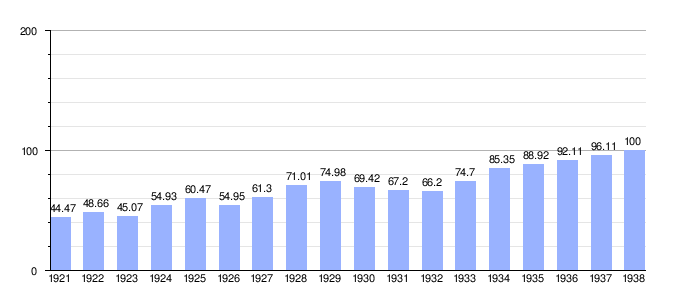
The division among the Republicans, who were sometimes willing to oppose Venizelos in order to regain the limelight, the corruption of some of his collaborators and, above all, the growing economic depression, took their toll on the Prime Minister's popularity in the early 1930s. [78] Nor did Venizelos manage to avoid worsening relations with both the anti-Venizelist opposition and with some of the Venizelos factions, which from 1930 onwards began to strongly oppose the government. [79] [80] Depression hit the country at the end of 1931, following the British abandonment of the gold standard in September. [54] [79] [81] [82] [Note 8] Faced with the depression, the two main parties, the right-wing liberal Venizelos party and the monarchist populist party, were neither prepared nor willing to implement far-reaching reforms that could have alleviated the economic crisis. [83] The populists, however, had the advantage of being in opposition and being able to blame the crisis on the Liberal government. [83] The Liberals tried to maintain development projects for several months despite the economic situation. [79] The Republicans, for their part, feared that the monarchists would use the discontent over the economic crisis to try to restore the monarchy. [66] Despite the seriousness of the economic and social situation, the Communist Party won just eight MPs and the fascists were down to two. [84]
In March 1932 Tsaldaris refused to form a Council of Ministers with Venizelos; in May the formation of a broad coalition government or a government uniting the Venizelos groups failed again, and Venizelos resumed the premiership. [85] [86] In June he had to make cuts in the face of a lack of foreign loans, decided to apply the system of proportional allocation of seats for the next elections, and tensed the political situation to hide the government's failures, presenting himself as the champion of the republic in the face of the opposition, which he accused of wanting to restore the monarchy. [87] [88] Venizelos' weakening was evident in the elections of 25 September 1932, [88] in which he lost his parliamentary majority, although he did manage to undermine his rivals from the minor parties. [83] [87] [89]
When the populist Tsaldaris again refused to enter into a coalition government with Venizelos, the latter allowed him to form a cabinet of his own which, [89] with only 103 representatives, was at the mercy of the opposition. [90] [83] [91] It lasted barely two months, while parliament was not in session. [90] Venizelos forced Tsaldaris to resign in January 1933 [83] [89] and called new elections to break the political deadlock. [90] [83] [91] The Venizelists had sacked Tsaldaris' cabinet for fear that Kondyilis and Metaxas, his allies, would undermine their position in the civil service and especially in the army. [90] Venizelos became Prime Minister for the seventh and last time, at the head of a coalition of Venizelos' parties and the Agrarian Party, with which he contested the elections, held once again under the majority system of seat allocation. [80] [92] The United Opposition, made up of the parties of Tsaldaris, Metaxas, some agrarian parties and Kondilis‘ National Radical Party, which had tried in vain to join the Prime Minister's alliance, stood against Venizelos’ National Coalition. [91] [93] It was the most polarised political moment since the 1920 elections and the election campaign was mainly about the economic crisis, with mutual attacks. [93]
Defeat of Venizelos (1933-1935)
(5/3/1933, seats)
- Popular Party (118) (48.0%)
- Free Opinion Party (6) (2.00%)
- National Radical Party (11) (4.00%)
- Agrarians (1) (0.00%)
- Liberal Party (80) (32.0%)
- Agrarian-Labour (13) (5.00%)
- Progresist Party (10) (5.00%)
- Conservative Republican Party (2) (1.00%)
- Agrarians (Mylonas) (5) (2.00%)
- Agrarian Party (2) (1.00%)
(5/3/1933, % of votes)
- Popular Party (38.0%)
- Free Opinion Party (2.00%)
- National Radical Party (4.00%)
- Agrarian (2.00%)
- Liberal Party (33.0%)
- Agrarian-Labour Party (4.00%)
- Progresist Party (7.00%)
- Conservative Republican Party (1.00%)
- Agrarians (Mylonas) (1.00%)
- Agrarian Party (2.00%)
- Communist Party (5.00%)
- Others (1.00%)
The Populist party, monarchist and in opposition for most of the interwar period, [94] won the March 1933 elections, [95] mainly because of the system of distribution of seats, as the two electoral blocs were almost evenly matched in terms of votes. [89] [91] [93] [94] [96] Venizelos had been wrong in his assessment of the political situation, and Tsaldaris' recognition of the population had brought him part of the Republican vote dissatisfied with Venizelos. [83]
On 5 March 1933, when the Liberal defeat had just been announced, [96] General Nikolaos Plastiras tried in vain to overthrow the new conservative government, [48] [89] [97] from which he feared a restoration of the monarchy and a purge of republican officers. [83] [93] [96] Plastiras was forced to flee in the face of almost total lack of support, [66] [89] and Venizelos faced an unfounded parliamentary accusation [93] [96] of collusion in the coup brought by Metaxas. [98] [97] [99] The generals to whom Plastiras ceded power handed it over to the winners of the elections, and Tsaldaris formed his second and last government on 10 March, [44] [97] joined by Kondylis and Metaxas. [93] The failed coup and Venizelos' defence of Plastiras in the Cortes as he defended himself against the accusation of instigating the coup strained the transfer of power, the first to the anti-Venizelists in a decade. [98]
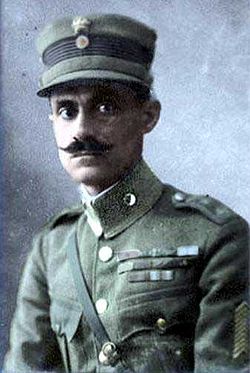
Venizelos suffered an assassination attempt on 6 June, [38] [97] organised by the new head of the Security Police appointed by Tsaldaris. [96] [99] [100] The coup and the attack on Venizelos radicalised the political situation between the two opposing camps. [66] [99] [100] The conservative government tried to delay the investigation into the attack, [100] which appeared to be the work of the police, [101] and this increased the discontent of the Republicans, who again backed Venizelos. [99] The National Coalition of the latter set up an organisation on 3 July in anticipation of armed clashes with the anti-Venizelos camp, which was joined by both active and reserve officers. [100] Tension grew in the following months for a variety of reasons: the slow investigation of the attack on Venizelos, Kondylis‘ attempts to reform the army and deprive republican officers of power, the government's electoral reforms, [44] the government's refusal to hold certain joint sessions between the lower and upper houses, Venizelos’ criticism of the signing of the Balkan Entente and the intense rumours that Metaxas and Kondylis were plotting a coup d'état and restoring the monarchy. [100] [102] Attempts to reconcile the moderates of the two groups failed successively, both because of the intransigence of Venizelos and Kondilis and because of Tsaldaris' inability to control his more radical supporters. [103]
Another failed coup in March 1935 by Venizelos‘ officers with the support of Venizelos’ Liberal Party, [66] [96] [101] [104] [105] [106] which sought to prevent monarchical restoration, had the opposite effect: the purge of Venizelos' officers [101] and the return of the ruler, George II of Greece. [48] [107] [108] Venizelos had agreed to support the coup in January, following repeated delays in the trial of the attempt on his life in November and December 1934. [107] The plan was to cede power to the military led by Plastiras. [107] The coup was thwarted by Kondylis, then Minister of War in the Tsaldaris government. [95] The populists also removed the liberals' supporters from the Public Administration, [101] [109] which strengthened their control of the state, along with the abolition of the hitherto Venizelist-controlled Senate. [94] [104] [110] [111] The rebel fleet units and Venizelos himself fled to the Italian Dodecanese. [104] [112] Venizelos was sentenced to death in absentia . [96] [112] Plastiras went into exile in France. [113]
Only conservative parties [96] [110] participated in the June elections. [109] [114] [115] The failure of the coup and the subsequent repression disarmed the Venizelists and favoured their more radical opponents, Metaxas and Kondylis, to whom Tsaldaris was losing ground. [109] [116] By then Metaxas had already left the government and was openly advocating the restoration of the monarchy, [117] despite Tsaldaris' statements that the republic was not in danger. [109] He defeated Metaxas by a wide margin in the June elections, presenting himself, with Kondylis, as the guarantor of the maintenance of the republic against the royalist Metaxas. [118] Fear of the violence that Metaxas could unleash, however, led Tsaldaris to maintain his call for a state model. [115] [118] Kondylis also surprisingly came out in favour of the monarchy on 3 July, which increased the pressure on Tsaldaris. [109] [115] [118] He yielded to pressure from monarchist radicals and officials and tabled a motion for a plebiscite on the state model on 10 July, [119] which was to be held on 15 November. [109] [120] Kondylis gradually moved away from Tsaldaris and towards fascist positions. [121]
The royalist military were suspicious of Tsaldaris' vacillations and the outcome of the plebiscite and forced his resignation in favour of Kondylis in a military coup on 10 October. [38] [104] [109] [119] [122] [123] [124] [125] Kondylis assumed the presidency of the Council of Ministers, [96] openly persecuting liberals and leftists. [109] [114] [Note 9] The coup was later backed by the British, who were eager to achieve monarchical restoration and not to disturb the new government during the Abyssinian crisis. [123] [126] The king allowed it, even though on the day of the coup the royalist foreign minister had assured him that it was unnecessary and that a vote was scheduled that would legally validate the restoration. [127] The remnants of Tsaldaris' party —eighty-two deputies, after the withdrawal of Tsaldaris and most of the party from the Cortes— assumed all powers, abolished the republic, restored the 1911 Constitution and held the plebiscite, rigged [38] to restore the monarchy [101] (3 November 1935, with 97% voting in favour of the king's return). [104] [110] [114] [119] [128] [129] [130]
Restoration (1935-1936)
- Popular Party (72) (24.0%)
- Free Opinion Party (7) (2.00%)
- General Popular Radical Union (60) (20.0%)
- National Reform Party (4) (1.00%)
- Liberal Party (126) (42.0%)
- Republican Coalition (11) (4.00%)
- Other Venizelists (4) (1.00%)
- Agrarian Party (1) (0.00%)
- Communist Party (15) (5.00%)
The monarchical restoration was widely [94] approved (97.87% of the votes in favour in the totally fraudulent plebiscite of 3 November 1935). [119] [123] [129] [130] [131] King George II of Greece returned to Athens after eleven years of British exile on 25 November. [119] [122] [130] [132] [133] [134] [135] The republican parties initially refused to accept regime change, but Venizelos thwarted the republican front by agreeing to recognise the legitimacy of the monarch in exchange for the restoration of the parliamentary system and the granting of a general amnesty. [136] The liberals also agreed with the Popular Party to a new constitution, the use of the proportional system for allocating seats in elections and a future joint Council of Ministers. [131]
After his return to Greece, George disappointed the ultra-monarchists by refusing to become their leader and granting an amnesty to the republicans, [133] leading to Kondylis' resignation on 30 November, [122] which was surprisingly accepted, [137] and his replacement by a new prime minister with no political experience, Konstantinos Demertzis, [132] [133] [138] a moderate. [119] [130] [134] [139] [140]
Demertzis returned the civil servants purged by the populists and the royalist military to their posts, but not the republican officers. [119] [132] [133] [134] [140] He called elections for January 1936, [132] the results of which showed a recovery of the Liberals, although both the Venizelists and the anti-Venizelists ran in a very fragmented way. [133] [134] The campaign was violent and acrimonious, and the Republicans suffered intense harassment. [141]
The elections of 26 January 1936 [122] produced a close result [119] that prevented the formation of a government, given the disagreements between the two major political blocs of Venizelists and anti-Venizelists. [130] [132] [142] [143] Rather than a difference of principle, the failure of the negotiations was due to the desire of the two sides to control the government and, with it, the ability of their respective supporters to be rewarded. [142] [144] Both parties also wanted to gain control of the army. [145] Between the 143 populists and the 142 liberals, the 15 communist deputies [122] [132] had the ability to give the government to one side or the other, [94] [119] in the absence of agreement between them. [143] [146]
The Liberals and Communists reached a pact on 19 February so that the Liberals could win the government in exchange for the approval of certain reformist measures, although the Communists had also negotiated with the Populists. [143] [147] [148] [149] The leader of the Liberals, Themistoklis Sofoulis, was elected President of Parliament, [143] but left Demertzis to form a new cabinet [145] that included Metaxas as Deputy Prime Minister and Minister of War [137] on 14 March in the face of the King's and the military's threat not to allow a communist-backed government. [147] [150] [151] Metaxas was supposed to subdue the military, [149] which had been on the verge of a coup d'état after the elections, which the king himself prevented. [143] [150] However, Demertzis died on 13 April [145] and the king appointed Metaxas in his place without consulting the parties, [137] [152] who nevertheless firmly backed him in the 25 April motion of confidence; he was seen as a mere transitional prime minister until the two major parties could reach a pact. [143] [147] [153] Despite the Communists‘ insistence on defeating Metaxas in Parliament, Sofoulis did not dare in the face of the military threat and approved Metaxas’ government by decree [145] for five months, [151] during which time Parliament was suspended, a situation imposed at the monarch's behest. [147] [154] Although a parliamentary committee was supposed to monitor the new prime minister's performance, in practice Metaxas ruled at will from then on, heading a royal dictatorship, according to the US ambassador. [154]
Metaxas dictatorship (1936-1941)
Metaxas deported the main trade union leaders and dissolved the most militant unions, while preparing a military coup. [147] The communists responded with strikes and demonstrations, which intensified after Metaxas took office as prime minister, although they had a strong economic motivation because of the country's poor economic situation. [147] [155] [156] A general strike [157] in Thessaloniki resulted in 30 deaths and 400 injuries. [147] The Macedonian government handed over to a general, who restored order in the area through violence. [118] The communist party then called a nationwide general strike for 5 August 1936. [147] [157] [158] [159] [160] Despite a last-minute agreement between liberals and monarchists to replace Metaxas in October, which was presented to the king on 22 July, he rejected the proposal on 3 August 1936 and supported [137] Metaxas' coup the day after. [38] [151] [157] [158] [159] [161] [162]

In the face of the inability of the Venizelists and the anti-Venizelists to agree, [94] retired General Ioannis Metaxas won the King's backing to impose a dictatorship, [94] [110] receiving the backing of the Cortes to suspend some fundamental rights. [163] [163] [164] The main Greek politicians who could have hindered the general's manoeuvres (Venizelos, Tsaldaris, Kondilis and Demertzis) died between November 1935 and August 1936, [163] when Metaxas finally established his authoritarian government with royal backing. [21] [145] [164] [165] [166] Metaxas, the prime minister, also took over the defence and foreign affairs portfolios. [167] The dictatorial regime became known as the regime’ after the day it was established. [38] [157] [168] [169] Metaxas eventually dissolved parliament, banned political parties [157] and arrested opponents of the dictatorship. [94] [161] The communist opposition was dismantled and the opposition of the traditional parties proved ineffective. [170] Metaxas used deportation to the islands to get rid of suspected opponents of the dictatorship, often communists or members of the banned parties. [171] The dictatorship entrenched state control by monarchical anti-Venizelism, a process that had begun with the election victory of 1933. [168]
The main mode of domination of Greek society, in addition to the tight control of the press and the strengthening of the security services, was the creation of the National Youth Organisation (EON), which was modelled on the German Hitler Youth and the Italian balillas and grew to a million members. [172] [173] [Note 10] It lacked, however, a mass organisation of its own, unlike the Italian and German ideological models. [174]
Metaxas worked hard to solve the country's serious problems, although the effectiveness of his actions is controversial. [175] He passed a series of social measures (creation of the minimum wage, paid holidays, social security) that significantly improved the situation of workers in theory. [163] [175] The implementation of these reforms was less ideal because of the absence of trade unions. [175] The dictatorship's public works plan, despite significantly increasing debt and inflation, provided jobs and strengthened the country's defences. [175] [Note 11] The dictatorship tried to present itself as pro-labour and an alternative to both communism and trade unions through its social measures. [176]
The Metaxas dictatorship, despite the profound changes it brought about in the country's domestic politics, did not substantially alter the nation's foreign policy, which remained favourable to the United Kingdom. [177] Greece's military and economic dependence on the UK ensured continuity. [177]
The Abyssinian crisis prompted the start of Greek rearmament in response to the concerns of the army's high command, which was convinced that it was not in a position to wage a modern war with the means that were being used in the African war. [178] In addition to certain reorganisation measures taken as early as the end of 1935, Greece began to buy armaments from Germany, taking advantage of the debt accumulated by Germany under the barter system. [179] The development of the domestic armaments industry was also undertaken, with German collaboration; by 1939, it was already the leading armaments industry in the Balkans and the Middle East. [180]
The regime, disliked by the middle classes and communists, survived until 1941 thanks to the disunity of the opposition and the apathy of the majority of the peasant population. [181] It also had the constant support of the king, who controlled the armed forces. [181]
World War II
Greece forged closer ties with the United Kingdom while trying not to displease Germany after the Italian occupation of Albania on 7 April 1939. [182] The UK granted a territorial guarantee to Greece against any Italian attack. [182]
With the outbreak of World War II, however, Metaxas tried to win Italy's sympathy, with the aim of keeping Greece out of the conflict, while signing a trade agreement with the United Kingdom. [177] [182] The fall of France in June 1940 made Greece's attitude towards Italy even more conciliatory, despite Italy's coolness towards Greek efforts to improve relations. [183] Greece's position was precarious: in 1939, 42.7% of its imports came from Germany and 10.9% from Italy. [184] The Greek government tried to get Germany to prevent Italian intervention in the Balkans. [185]
Italian propaganda against Greece enabled the country to prepare for the future attack, which on several occasions seemed imminent. [186] Finally, in the face of German victories and the dispatch, without consulting Rome, of a German military mission to Romania in October 1940 in what was theoretically an Italian zone of influence, Mussolini ordered the attack on Greece in an attempt to maintain control in his zone of influence in the Balkans. [187] The Italians presented an ultimatum to Greece on 28 October, which marked the beginning of the Greek-Italian War and the country's entry into World War II. [188]