It has been requested that the title of this article be changed to RIAA Certification . Please see the relevant discussion on the discussion page. Do not move the page until the discussion has reached consensus for the change and is closed. |
In the United States, the Recording Industry Association of America (RIAA) awards certification based on the number of albums and singles sold through retail and other ancillary markets. [1] Other countries have similar awards (see music recording sales certification). Certification is not automatic; for an award to be made, the record label must request certification. [2] The audit is conducted against net shipments after returns (most often an artist's royalty statement is used), which includes albums sold directly to retailers and one-stops, direct-to-consumer sales (music clubs and mail order) and other outlets.

The Recording Industry Association of America (RIAA) is a trade organization that represents the recording industry in the United States. Its members consist of record labels and distributors, which the RIAA says "create, manufacture and/or distribute approximately 85% of all legally sold recorded music in the United States." The RIAA headquarters is in Washington, D.C.
An album is a collection of audio recordings issued as a collection on compact disc (CD), vinyl, audio tape, or another medium. Albums of recorded music were developed in the early 20th century as individual 78-rpm records collected in a bound book resembling a photograph album; this format evolved after 1948 into single vinyl LP records played at 33 1⁄3 rpm. Vinyl LPs are still issued, though album sales in the 21st-century have mostly focused on CD and MP3 formats. The audio cassette was a format used alongside vinyl from the 1970s into the first decade of the 2000s.

In the music industry, a single is a type of release, typically a song recording of fewer tracks than an LP record or an album. This can be released for sale to the public in a variety of different formats. In most cases, a single is a song that is released separately from an album, although it usually also appears on an album. Typically, these are the songs from albums that are released separately for promotional uses such as digital download or commercial radio airplay and are expected to be the most popular. In other cases a recording released as a single may not appear on an album.
A Gold record is a single or album that has sold 500,000 units (records, tapes or compact discs). The award was launched in 1958; [3] originally, the requirement for a Gold single was one million units sold and a Gold album represented $1 million in sales (at wholesale value, around a third of the list price). [4] In 1975, the additional requirement of 500,000 units sold was added for Gold albums. [4] Reflecting growth in record sales, the Platinum award was added in 1976 for albums selling one million units, and singles selling two million units. [4] [5] The Multi-Platinum award was introduced in 1984, signifying multiple Platinum levels of albums and singles. [6] In 1989, the sales thresholds for singles were reduced to 500,000 for Gold and 1,000,000 for Platinum, reflecting a decrease in sales of singles. [7] In 1992, RIAA began counting each disc in a multi-disc set as one unit toward certification. Reflecting additional growth in music sales, the Diamond award was instituted in 1999 for albums or singles selling ten million units. [3] Because of these changes in criteria, the sales level associated with a particular award depends on when the award was made.
Nielsen SoundScan figures are not used in RIAA certification; the RIAA system predates Nielsen SoundScan and includes sales outlets Nielsen misses.[ citation needed ] Prior to Nielsen SoundScan, RIAA certification was the only audited and verifiable system for tracking music sales in the U.S.; it is still the only system capable of tracking 100% of sales (albeit as shipments less returns, not actual sales like Nielsen SoundScan).[ citation needed ] This system has allowed, at times, for record labels to promote an album as Gold or Platinum simply based on large shipments. For instance, in 1978 the Sgt. Pepper's Lonely Hearts Club Band soundtrack shipped Platinum but was a sales bust, with two million returns. [8] Similarly, all four solo albums by the members of Kiss simultaneously shipped Platinum that same year but did not reach the top 20 of the Billboard 200 album chart. [9] The following year, the RIAA began requiring 120 days from the release date before recordings were eligible for certification, although that requirement has been reduced over the years and currently stands at 30 days. Sony was widely criticized in 1995 for hyping Michael Jackson's double album HIStory as five times Platinum, based on shipments of 2.5 million and using the RIAA's recently adopted practice of counting each disc toward certification, while SoundScan was reporting only 1.3 million copies sold. [10] A similar discrepancy between shipments and sales was reported with The Lion King soundtrack. [11]
Nielsen SoundScan is an information and sales tracking system created by Mike Fine and Mike Shalett in 1991. SoundScan is a method of tracking sales of music and music video products throughout the United States and Canada. Data is collected weekly and made available every Sunday and every Monday to subscribers, which include record companies, publishing firms, music retailers, independent promoters, film and TV companies, and artist managers. The Nielsen SoundScan is the sales source for the Billboard music charts, making it the largest source of sales records in the music industry.

Sgt. Pepper's Lonely Hearts Club Band is a double album produced by George Martin, featuring covers of songs by the Beatles. It was released in July 1978, as the soundtrack to the film Sgt. Pepper's Lonely Hearts Club Band, which starred the Bee Gees, Peter Frampton and Steve Martin.
For further information, see Music recording sales certification.
Multi-disc albums are counted once for each disc within the album if it is over 100 minutes in length or is from the vinyl era. For example, each copy of Aaliyah's catalog, The Smashing Pumpkins's Mellon Collie and the Infinite Sadness (running time of 121:39), and OutKast's Speakerboxxx/The Love Below (running time of 134:56), both double albums, were counted twice, meaning each album was certified diamond after 5 million copies were shipped. Pink Floyd's The Wall and The Beatles' White Album , both vinyl-era, are also counted double even though their running times are under the minimum requirement. Rules may or may not apply depending on most recent staff within the Distributions position.
Aaliyah Dana Haughton was an American singer, actress, and model. Born in Brooklyn, New York, and raised in Detroit, Michigan, she first gained recognition at the age of 10, when she appeared on the television show Star Search and performed in concert alongside Gladys Knight. At the age of 12, Aaliyah signed with Jive Records and her uncle Barry Hankerson's Blackground Records. Hankerson introduced her to R. Kelly, who became her mentor, as well as lead songwriter and producer of her debut album, Age Ain't Nothing but a Number. The album sold 3 million copies in the United States and was certified double platinum by the Recording Industry Association of America (RIAA). After facing allegations of an illegal marriage with Kelly, Aaliyah ended her contract with Jive and signed with Atlantic Records.
The Smashing Pumpkins are an American alternative rock band from Chicago, Illinois. Formed in 1988 by frontman Billy Corgan, D'arcy Wretzky (bass), James Iha (guitar), and Jimmy Chamberlin (drums), the band has undergone many line-up changes. The current lineup features Corgan, Chamberlin, Iha and guitarist Jeff Schroeder.

Mellon Collie and the Infinite Sadness is the third studio album by American alternative rock band The Smashing Pumpkins, released on October 23, 1995 in the United Kingdom and a day later in the United States on Virgin Records. Produced by frontman Billy Corgan with Flood and Alan Moulder, the 28-track album was released as a two-disc CD and triple LP. The album features a wide array of styles, as well as greater musical input from bassist D'arcy Wretzky and second guitarist James Iha.
Since 2000, the RIAA also awards Los Premios de Oro y De Platino (Gold and Platinum Awards in Spanish) to Latin albums which are defined by the RIAA as a type of product that features at least 51% of content in Spanish. [12]
Spanish or Castilian is a Romance language that originated in the Castile region of Spain and today has hundreds of millions of native speakers in the Americas and Spain. It is a global language and the world's second-most spoken native language, after Mandarin Chinese.
As of December 20, 2013, the award levels for Latin certifications are: [13]
For certifications made before December 20, 2013, the award levels are: [14]
Note: The number of sales required to qualify for Oro and Platino awards was higher prior to January 1, 2008. [14] The thresholds were 100,000 units (Oro) and 200,000 units (Platino). All Spanish-language albums certified prior to 2008 were updated to match the current certification at the time. [14] [15] "La Bomba" by Bolivian group Azul Azul is the only single to receive a Latin certification based on shipments before the creation of the Latin digital singles awards in 2013. [16] The Disco de Diamante award was introduced after the RIAA updated the thresholds for Latin certifications in December 20, 2013. The Disco de Diamante is awarded to Latin albums that have been certified 10× Platinum. [17] [18]
Standard singles are certified:
Note: The number of sales required to qualify for Gold and Platinum discs was higher prior to January 1, 1989. The thresholds were previously 1,000,000 units (Gold) and 2,000,000 units (Platinum). [19]
Digital singles are certified:
From 2004 through July 2006, the certification level was 100,000 downloads for Gold and 200,000 for Platinum. When the RIAA changed the certification standards to match retail distribution in August 2006, all Platinum and Multi-Platinum awards for a digital release were withdrawn. Gold certifications, however, were not, meaning a song that was downloaded over 100,000 times and certified so by the RIAA during that time frame retains its Gold status. [20]
Starting May 9, 2013, RIAA certifications for singles in the "digital" category include on-demand audio and/or video song streams in addition to downloads at a rate of 100 streams=1 certification "unit". [21] [22] On January 2, 2016, this rate was updated to 150 streams = 1 certification unit. [23]
Latin digital singles are certified:
The Latin Digital Single Awards began on December 20, 2013. As with the digital sales, 100 streams count as one download sale. [13]
Along with albums, digital albums, and singles there is another classification of music release called "Video Longform." This release format includes DVD and VHS releases, and certain live albums and compilation albums. The certification criteria are slightly different from other styles. [24]
The video box set (or "Multi-Box Music Video Set") award is a classification for video compilations that include three or more videos that are grouped and marketed together as a set. Like Video Longform, this includes DVD and VHS releases and the certification criteria is the same. Each individual video within set is counted as one toward certification. [25]
The best-selling video box set as certified by the RIAA is The Rolling Stones' Four Flicks DVD compilation from their Licks World Tour, with a 19X Multi-Platinum designation. This was likely achieved due to exclusive distribution rights owned by Best Buy by their short-lived music production company, Redline Entertainment. [26] [27]
Lists from RIAA site showing current status holders of RIAA Certifications:
Albums that have been certified Gold might receive additional certifications for achieving Platinum and Multi-Platinum levels.
Note: The RIAA provides the Detailed List of Artists with Most Album Certified Units
Singles that have been certified Gold might receive additional certifications for achieving Platinum and Multi-Platinum levels. For example, Eminem has had 13 singles certified Gold, 8 of which went on to achieve Platinum certification as well.
This list includes the RIAA formats 'Single','12 inch single' and 'Video Single'. This list includes singles of the RIAA types 'standard' and 'digital'.
This table tracks artists with some number of singles that have received at least twenty total certifications.
| Artist | # Gold | # Platinum | # Multi-Platinum | Total | source |
|---|---|---|---|---|---|
| Eminem | 13 | 8 | 6 | 27 | [29] |
| Adele | 12 | 9 | 5 | 26 | [30] |
| Elvis Presley | 54 | 27 | 8 | 89 | [31] |
| Rihanna | 43 | 36 | 30 | 109 | [32] |
| Katy Perry | 17 | 17 | 13 | 47 | [33] |
| Lil Wayne | 25 | 21 | 10 | 56 | [34] |
| Mariah Carey | 25 | 12 | 2 | 39 | [35] |
| Taylor Swift | 52 | 35 | 20 | 107 | [36] |
| Madonna | 27+Gold 12 inch | 6 | 2 | 47 | [37] |
| Beyoncé | 25 | 13 | 5 | 43 | [38] [39] |
| The Beatles | 28 | 9 | 4 | 41 | [40] |
| Michael Jackson | 23 | 10 | 1 | 34 | [41] |
| Whitney Houston | 19 | 7 | 1 | 27 | [42] |
| Janet Jackson | 20 | 4 | - | 24 | [43] |
| Elton John | 18 | 8 | 1 | 27 | [44] |
| Lady Gaga | 15 | 13 | 12 | 40 | [45] |
| Bruno Mars | 18 | 16 | 13 | 47 | [46] |
| Kanye West | 31 | 24 | 13 | 68 | [47] |
| R. Kelly | 14 | 7 | - | 21 | [48] |
| Usher | 14 | 9 | 1 | 24 | [49] |
| Chris Brown | 38 | 28 | 10 | 76 | [50] |
| T.I. | 16 | 11 | 4 | 31 | [51] |
| Jay-Z | 22 | 15 | 7 | 44 | [52] |
| Linkin Park | 11 | 7 | 2 | 20 | [53] |
| Black Eyed Peas | 12 | 9 | 8 | 29 | [54] |
| Ariana Grande | 14 | 11 | 7 | 32 | [55] |
| Justin Timberlake | 12 | 9 | 4 | 25 | [56] |
| Ludacris | 10 | 7 | 3 | 20 | [57] |
| Kenny Chesney | 24 | 8 | - | 36 | [58] |
| Flo Rida | 13 | 11 | 10 | 34 | [59] |
| Brad Paisley | 17 | 8 | 4 | 29 | [60] |
| Tim McGraw | 24 | 12 | 3 | 39 | [61] |
| Jason Aldean | 21 | 15 | 5 | 41 | [62] |
| Nicki Minaj | 14 | 10 | 5 | 29 | [63] |
| Ne-Yo | 10 | 8 | 5 | 23 | [64] |
| Drake | 22 | 16 | 11 | 49 | [65] |
| Demi Lovato | 10 | 9 | 4 | 23 | [66] |
| Rascal Flatts | 13 | 8 | - | 21 | [67] |
| Fall Out Boy | 13 | 10 | 5 | 28 | [68] |
Note: The RIAA provides the Detailed List of Artists with Most Singles Certified Units
Diamond (10+ million) certified albums and singles [69]
Diamante certified Latin albums and singles (1+ million for Latin albums certified before December 2013 and 600,000+ for Latin albums and singles certified after December 2013) [17]
| Year of Release | Artist(s) | Title | Label(s) | Certification | Year of Certification | Release Type |
|---|---|---|---|---|---|---|
| 1995 | Selena | Dreaming of You | Universal Music Latino | 59× Platinum (Latin) | 2017 | Album |
| 2017 | Luis Fonsi & Daddy Yankee | "Despacito" | Universal Music Latino | 55× Platinum (Latin) | 2017 | Single |
| 1994 | Selena | Amor Prohibido | Universal Music Latino | 36× Platinum (Latin) | 2017 | Album |
| 2005 | Shakira | "La Tortura" | Epic | 32× Platinum (Latin) | 2018 | Single |
| 2017 | Maluma | "Felices los 4" | Sony Music Latin | 29× Platinum (Latin) | 2018 | Single |
| 2015 | Nicky Jam | "El Perdón" | Sony Music Latin | 27× Platinum (Latin) | 2017 | Single |
| 2016 | Nicky Jam | "Hasta el Amanecer" | Sony Music Latin | 22× Platinum (Latin) | 2017 | Single |
| 2017 | Becky G | "Mayores" (Featuring Bad Bunny) | Sony Music Latin | 21× Platinum (Latin) | 2018 | Single |
| 2017 | Christian Nodal | "Adiós Amor" | Fonovisa | 21× Platinum (Latin) | 2018 | Single |
| 2018 | Daddy Yankee | "Dura" | Universal Music Latino | 21× Platinum (Latin) | 2018 | Single |
| 2017 | Ozuna | "Se Preparó" | VP | 21× Platinum (Latin) | 2018 | Single |
| 2013 | Romeo Santos | "Propuesta Indecente" | Sony Music Latin | 20× Platinum (Latin) | 2017 | Single |
| 2011 | Romeo Santos | "Promise" (Featuring Usher) | Sony Music Latin | 19× Platinum (Latin) | 2017 | Single |
| 2002 | Selena | Ones | Universal Music Latino | 18× Platinum (Latin) | 2017 | Album (Greatest Hits) |
| 2016 | Carlos Vives & Shakira | "La Bicicleta" | Sony Music Latin | 17× Platinum (Latin) | 2018 | Single |
| 2017 | Daddy Yankee | "La Rompe Corazones" | Universal Music Latino | 17× Platinum (Latin) | 2018 | Single |
| 2016 | Daddy Yankee | "Shaky Shaky" | Universal Music Latino | 17× Platinum (Latin) | 2018 | Single |
| 2018 | Farruko | "Krippy Kush" | Sony Music Latin | 16× Platinum (Latin) | 2018 | Single |
| 1993 | Gloria Estefan | Mi Tierra | Epic | 16× Platinum (Latin) | 2000 | Album |
| 2013 | Marc Anthony | "Vivir Mi Vida" | Sony Music Latin | 16× Platinum (Latin) | 2015 | Single |
| 2016 | Shakira | "Chantaje" (Featuring Maluma) | Sony Music Latin | 16× Platinum (Latin) | 2017 | Single |
| 2017 | Natti Natasha & Ozuna | "Criminal" | Pina | 15× Platinum (Latin) | 2018 | Single |
| 1990 | Ottmar Liebert | Nouveau Flamenco | Higher Octave | 14× Platinum (Latin) | 2002 | Album |
| 2018 | Becky G & Natti Natasha | "Sin Pijama" | Sony Music Latin | 13× Platinum (Latin) | 2018 | Single |
| 2017 | Nicky Jam | "El Amante" | Sony Music Latin | 13× Platinum (Latin) | 2017 | Single |
| 2017 | Ozuna | "Siguelo Bailando" | VP | 13× Platinum (Latin) | 2018 | Single |
| 2014 | Romeo Santos | "Odio" (Featuring Drake) | Sony Music Latin | 13× Platinum (Latin) | 2017 | Single |
| 2016 | Enrique Iglesias | "Duele el Corazón" | Sony Music Latin | 12× Platinum (Latin) | 2017 | Single |
| 2015 | Gente de Zona | "La Gozadera" | Sony Music Latin | 12× Platinum (Latin) | 2017 | Single |
| 1992 | Maná | ¿Dónde Jugarán los Niños? | WEA Latina | 12× Platinum (Latin) | 2000 | Album |
| 2016 | Ozuna | "Dile Que Tu Me Quieres" | Rimas Music | 12× Platinum (Latin) | 2018 | Single |
| 2017 | Maluma | "Corazón" | Sony Music Latin | 11× Platinum (Latin) | 2018 | Single |
| 2017 | Nicky Jam | Fénix | Sony Music Latin | 11× Platinum (Latin) | 2018 | Album |
| 2017 | Ozuna | Odisea | VP/New Masters | 11× Platinum (Latin) | 2018 | Album |
| 2017 | Ozuna | "Tu Foto" | VP | 11× Platinum (Latin) | 2018 | Single |
| 2014 | Romeo Santos | "Eres Mía" | Sony Music Latin | 11× Platinum (Latin) | 2017 | Single |
| 2014 | Romeo Santos | Formula, Vol. 2 | Sony Music Latin | 11× Platinum (Latin) | 2016 | Album |
| 2005 | Shakira | Fijación Oral, Vol. 1 | Epic | 11× Platinum (Latin) | 2009 | Album |
| 1996 | Charlie Zaa | Sentimientos | Sonolux | 10× Platinum (Latin) | 2012 | Album |
| 2017 | Daddy Yankee | "Vuelve" | Universal Music Latino | 10× Platinum (Latin) | 2018 | Single |
| 2015 | J Balvin | "Ginza" | Capitol Latin | 10× Platinum (Latin) | 2016 | Single |
| 2014 | J Balvin | "Ay Vamos" | Capitol Latin | 10× Platinum (Latin) | 2015 | Single |
| 2013 | J Balvin | "6 AM" (Featuring Farruko) | Capitol Latin | 10× Platinum (Latin) | 2015 | Single |
| 2017 | Karol G | "Ahora Me Llama" | Universal Music Latino | 10× Platinum (Latin) | 2018 | Single |
| 1997 | Maná | Sueños Líquidos | WEA Latina | 10× Platinum (Latin) | 2000 | Album |
| 2017 | Nacho | "Báilame" | Universal Music Latino | 10× Platinum (Latin) | 2018 | Single |
| 2016 | Nio Garcia, Casper Magico, Bad Bunny, Ozuna, Darell & Nicky Jam | "Te Boté Remix" | Flow La Movie, Inc. | 10× Platinum (Latin) | 2018 | Single |
| 2018 | Reik | "Me niego" (Featuring Ozuna & Wisin) | Sony Music Latin | 10× Platinum (Latin) | 2018 | Single |
| 1998 | Selena | Anthology | Universal Music Latino | 10× Platinum (Latin) | 2017 | Album (Greatest Hits) |
| 1999 | Selena | All My Hits: Todos Mis Exitos | Universal Music Latino | 10× Platinum (Latin) | 2017 | Album (Greatest Hits) |
| 1992 | Selena | Entre a Mi Mundo | Universal Music Latino | 10× Platinum (Latin) | 2017 | Album |
| 1993 | Selena | Mis Mejores Canciones: 17 Super Exitos | Universal Music Latino | 10× Platinum (Latin) | 2017 | Album (Greatest Hits) |
| 2010 | Shakira | Sale El Sol | Sony Music Latin | 10× Platinum (Latin) | 2018 | Album |
| 2017 | Shakira | El Dorado | Sony Music Latin | 10× Platinum (Latin) | 2018 | Album |
| 2015 | Yandel | "Encantadora" | Sony Music Latin | 10× Platinum (Latin) | 2018 | Single |
Music recording certification is a system of certifying that a music recording has shipped, sold, or streamed a certain number of units. The threshold quantity varies by type and by nation or territory.
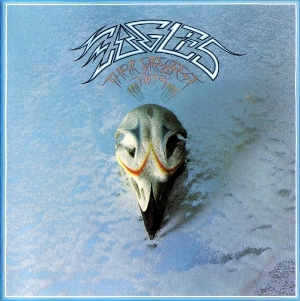
Their Greatest Hits (1971–1975) is the first compilation album by the Eagles, released in 1976. The album contains a selection of songs from the Eagles' first four albums released in the period from the Eagles' formation in 1971 up to 1975. It was the best-selling album of the 20th century in the United States, and it stayed the best-selling album in the U.S. for some years until it was surpassed by Michael Jackson's Thriller after the artist's death in 2009. In August 2018, it regained the title of the U.S.'s biggest-selling album, with a 38× Platinum certification by the Recording Industry Association of America.
Britney Spears: In the Zone is the fifth video and first extended play (EP) by American recording artist Britney Spears. It was released on February 24, 2004 through Jive Records, accompanying her fourth studio album In the Zone (2003). The video contains her ABC concert special Britney Spears: In the Zone, as well as footage from live performances to promote the album. It also includes the music videos for "Me Against the Music" and "Toxic" and their respective episodes of Making the Video, as well as unreleased material, such as several new tracks.
The Federazione Industria Musicale Italiana (FIMI) is an umbrella organization that keeps track of virtually all aspects of the music recording industry in Italy. It was established in 1992, when major corporate labels left the previously existing Associazione dei Fonografici Italiani (AFI). During the following years, most of the remaining Italian record labels left AFI to join the new organization. As of 2011, FIMI represents 2,500 companies operating in the music business.
American singer and songwriter Carrie Underwood has released six studio albums and 31 singles. Underwood rose to fame after winning the fourth season of American Idol in 2005. Her debut album, Some Hearts, was released in 2005 and is the fastest-selling debut country album in Nielsen SoundScan history. It also became the best-selling solo female country debut in Recording Industry Association of America (RIAA) history, as well as the top-selling debut album of any American Idol contestant in the United States.
Top Latin Albums is a record chart published by Billboard magazine and is labeled as the most important music chart for Spanish language, full-length albums in the American music market. Like all Billboard album charts, the chart is based on sales. Nielsen SoundScan compiles the sales data from merchants representing more than 90 percent of the U.S. music retail market. The sample includes sales at music stores, the music departments of electronics and department stores, direct-to-consumer transactions, and Internet sales of physical albums or digital downloads. A limited array of verifiable sales from concert venues is also tabulated. To rank on this chart, an album must have 51% or more of its content recorded in Spanish. Listings of Top Latin Albums are also shown on Telemundo's music page through a partnership between the two companies. Before this, the first chart regarding latin music albums in the magazine was published on December 30, 1972 issue. Then, all Latin music information was featured on the Latin Pop Albums chart, which began on June 29, 1985, and is still running along with the Regional Mexican Albums and Tropical Albums chart. The Latin Pop Albums chart features music only from the pop genre, while the Regional Mexican Albums chart includes information from different genres like duranguense, norteño, banda and mariachi, and the Tropical Albums includes different genres particularly salsa, merengue, bachata, and cumbia. In 2005, another chart; Latin Rhythm Albums was introduced in response to growing number of airplays from reggaeton. On the week ending January 31, 2017, Billboard updated the methodology to compile the Top Latin Albums chart into a multi-metric methodology to include track equivalent album units and streaming equivalent albums units.
The Regional Mexican Albums is a genre-specific record chart published weekly by Billboard magazine in the United States. The chart was established in June 1985 and originally listed the top twenty-five best-selling albums of mariachi, tejano, norteño, banda and duranguense, which are frequently considered regional Mexican. The genre is considered by musicologist as being "the biggest-selling Latin music genre in the United States", and represented the fastest ever growing Latin genre in the United States after tejano music entered the mainstream market during its 1990s golden age. Originally, Billboard based their methodology on sales surveys it sent out to record stores across the United States and by 1991 began monitoring point-of-sales compiled from Nielsen Soundscan. Musicologist and critics have since criticized the sales data compiled from Nielsen, finding that the company only provides sales from larger music chains than from small shops that specialized in Latin music—where the majority of Latin music sales are generated. The magazine decided to rank Latin music recordings in August 1970 under the title Hot Latin LPs, which only ranked the best-selling Latin albums in Los Angeles (Pop) and the East Coast (Salsa). Before the chart's inception, musicians' only chart success was the Texas Latin LPs section where regional Mexican music was more prominent. Beginning in November 1993, Billboard lowered the rankings from twenty-five to fifteen positions on its Latin genre-specific charts, while the Top Latin Albums expanded to fifty titles. From July 2001 until April 2005, the chart increased to twenty titles and then lowered back to fifteen titles. Since 2009, the Regional Mexican Albums chart list the top twenty best-selling albums determined by sales data compiled from Neilsen Soundscan.
Tropical Albums is a record chart published by Billboard magazine. Established in June 1985, the chart compiles information about the top-selling albums in genres like salsa, merengue, bachata, cumbia, and vallenato, which are frequently considered tropical music. The chart features only full-length albums and, like all Billboard album charts, is based on sales. The information is compiled by Nielsen SoundScan from a sample representing more than 90% of the U.S. music retail market, including not only music stores and music departments at electronics and department stores but also direct-to-consumer transactions and Internet sales. A limited number of verifiable sales at concert venues is also tabulated. Innovations by El Gran Combo de Puerto Rico was the first album to reach number-one in the chart. Up until May 21, 2005, reggaeton albums appeared on the chart. After the installation of the Latin Rhythm Albums chart, reggaeton titles could no longer appear on the Tropical Albums chart. By removing reggaeton albums from the Tropical Albums chart, it opened slots for re-entries and debuts. American bachata group Aventura claimed the top spot on the Tropical Albums chart, which marked the first time since the issue dated November 6, 2004 that an reggaeton album was not at the number-one spot.
This is a list of notable events in Latin music that took place in 2000.
This is a list of notable events in Latin music that took place in 2008.