| Name | Location | Autonomous Community | Diocese | Dedication [b] | Notes | Images |
|---|
| Cathedral of Saint John the Baptist | Albacete |  Castile-La Mancha Castile-La Mancha | Albacete | 1955 [8] | | 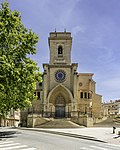 |
| Cathedral of the Saviour | Albarracín |  Aragon Aragon | Teruel and Albarracín | 1600 | |  |
| Magistral Cathedral of Saint Justus and Saint Pastor | Alcalá de Henares |  Madrid Madrid | Alcalá de Henares | 1991 [9] |  UNESCO World Heritage Site since 1998, as part of the site University and Historic Precinct of Alcalá de Henares. [10] Only church together with Saint Peter's of Leuven to have the rank of Magistral, as their canons are required to be doctors in Theology. [11] UNESCO World Heritage Site since 1998, as part of the site University and Historic Precinct of Alcalá de Henares. [10] Only church together with Saint Peter's of Leuven to have the rank of Magistral, as their canons are required to be doctors in Theology. [11] | 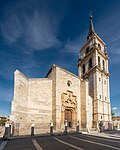 |
| Co-Cathedral of Saint Nicholas of Bari | Alicante |  Valencian Community Valencian Community | Orihuela-Alicante | 1959 [12] | |  |
| Cathedral of the Incarnation | Almería |  Andalusia Andalusia | Almería | 1551 [13] | |  |
| Cathedral of Saint Mary | Astorga |  Castile and León Castile and León | Astorga | 1069 [14] | | 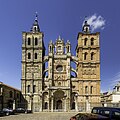 |
| Cathedral of the Saviour | Ávila | Castile and León | Ávila | | UNESCO World Heritage Site since 1985 as part of the site Old Town of Ávila with its Extra-Muros Churches. [15] | 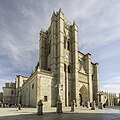 |
| Metropolitan Cathedral of Saint John the Baptist | Badajoz |  Extremadura Extremadura | Mérida-Badajoz | 1276 [16] | |  |
| Cathedral of Saint Mary of the Assumption | Barbastro | Aragon | Barbastro-Monzón | 1571 [17] | | 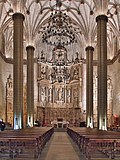 |
| Metropolitan Cathedral Basilica of the Holy Cross and Saint Eulalia | Barcelona |  Catalonia Catalonia | Barcelona | 1058 [c] | |  |
| Cathedral Basilica of Saint James | Bilbao |  Basque Country Basque Country | Bilbao | 1955 [19] | UNESCO World Heritage Site since 2015, as part of the site Routes of Santiago de Compostela: Camino Francés and Routes of Northern Spain. [20] |  |
| Metropolitan Cathedral Basilica of Saint Mary | Burgos | Castile and León | Burgos | 1260 [21] | UNESCO World Heritage Site since 1984, [22] Spain's first declared WHS. [23] | 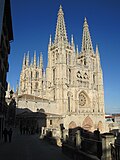 |
| Co-Cathedral of Saint Mary | Cáceres | Extremadura | Coria-Cáceres | 1957 [24] | UNESCO World Heritage Site since 1986, as part of the site Old Town of Cáceres. [25] |  |
| Cathedral of the Holy Cross over the Waters | Cádiz | Andalusia | Cádiz and Ceuta | 1838 [26] | | 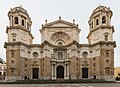 |
| Cathedral of Saint Mary | Calahorra |  La Rioja La Rioja | Calahorra and La Calzada-Logroño | | |  |
| Co-Cathedral of Saint Mary | Castellón de la Plana | Valencian Community | Segorbe-Castellón | 1961 [27] | | 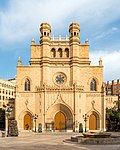 |
| Cathedral of the Assumption | Ceuta |  Ceuta Ceuta | Cádiz and Ceuta | 1726 [28] | |  |
| Cathedral Basilica of Saint Mary of the Prado | Ciudad Real | Castile-La Mancha | Ciudad Real | 1981 [29] | Since 1875 it holds the title of priory of the military orders of Santiago, Alcántara, Calatrava and Montesa. [30] | 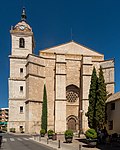 |
| Cathedral of Saint Mary | Ciudad Rodrigo | Castile and Leon | Ciudad Rodrigo | 1160 [21] | | 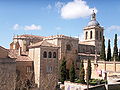 |
| Cathedral Basilica of Saint Mary | Ciutadella |  Balearic Islands Balearic Islands | Menorca | 1795 [31] | |  |
| Cathedral of the Assumption of our Lady | Córdoba | Andalusia | Córdoba | 1236 [32] | UNESCO World Heritage Site since 1984, and extended in 1994 to create the site Historic Centre of Cordoba. [33] Better known as the Mosque-Cathedral of Córdoba. [34] | 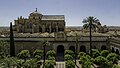 |
| Cathedral of Saint Mary of the Assumption | Coria | Extremadura | Coria-Cáceres | 1898 [35] | | 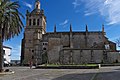 |
| Cathedral of Saint Mary and Saint Julian | Cuenca | Castile-La Mancha | Cuenca | 1196 [36] | UNESCO World Heritage Site since 1996 as part of the site Historic Walled Town of Cuenca. It is considered the first gothic cathedral in Spain. [37] |  |
| Cathedral of the Assumption of Mary | El Burgo de Osma | Castile and Leon | Osma-Soria | 1272 [38] | | 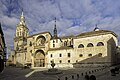 |
| Co-Cathedral of Saint Julian | Ferrol |  Galicia Galicia | Mondoñedo-Ferrol | 1959 [39] | | 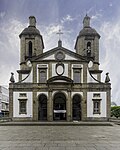 |
| Cathedral of Saint Mary Magdalene | Getafe | Madrid | Getafe | 1995 [40] | |  |
| Cathedral of Saint Mary | Girona | Catalonia | Girona | 1038 [41] | Widest gothic nave in the world at 23 m. [21] | 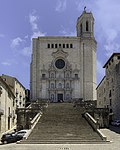 |
| Metropolitan Cathedral Basilica of the Incarnation | Granada | Andalusia | Granada | 1946 [d] | Burial place of the Catholic Monarchs. |  |
| Co-Cathedral of Saint Mary the Major | Guadalajara | Castile-La Mancha | Sigüenza-Guadalajara | 1959 [43] | | 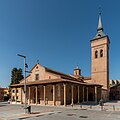 |
| Cathedral of the Incarnation | Guadix | Andalusia | Guadix | | Guadix is traditionally considered the oldest episcopal see in Spain, founded by Saint Torquatus in the 1st century AD. [44] |  |
| Cathedral of Our Lady of Mercy | Huelva | Andalusia | Huelva | 1954 [45] | |  |
| Cathedral of the Transfiguration of the Lord | Huesca | Aragon | Huesca | 1098 [46] | |  |
| Cathedral of Our Lady of the Snows | Ibiza | Balearic Islands | Ibiza | 1817 [47] | UNESCO World Heritage Site since 1999 as part of the site Ibiza, Biodiversity and Culture. [48] | 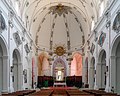 |
| Cathedral of Saint Peter | Jaca | Aragon | Jaca | 1063 [49] | |  |
| Cathedral of the Assumption | Jaen | Andalusia | Jaén | 1660 [50] | |  |
| Cathedral of the Holy Saviour | Jerez de la Frontera | Andalusia | Asidonia-Jerez | 1980 [51] | | 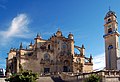 |
| Cathedral of Saint Mary | La Seu d'Urgell | Catalonia | Urgell | 1040 [e] | The town itself incorporated the cathedral to its name, being seo an alternate Latin name for cathedral church. Its bishop is one of the co-Princes of Andorra, ruling since 988. [53] |  |
| Cathedral Basilica of Saint Anne | Las Palmas |  Canary Islands Canary Islands | Canarias | 1871 [54] | |  |
| Cathedral of Saint Mary | León | Castile and Leon | León | 1303 [55] | |  |
| Cathedral of the Assumption | Lleida | Catalonia | Lleida | 1781 [56] | Commonly known as the New Cathedral of Lleida. |  |
| Co-Cathedral of Saint Mary of La Redonda | Logroño | La Rioja | Calahorra and La Calzada-Logroño | 1959 [57] | | 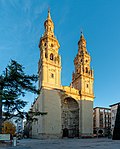 |
| Cathedral of the Assumption of Saint Mary | Lugo | Galicia | Lugo | 1273 [21] | UNESCO World Heritage Site since 2015, as part of the site Routes of Santiago de Compostela: Camino Francés and Routes of Northern Spain. [20] | 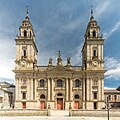 |
| Metropolitan Cathedral of Saint Mary the Royal of La Almudena | Madrid | Madrid | Madrid | 1993 [58] | Only cathedral in Spain and first one outside Rome to be consecrated by a pope. [59] |  |
| Cathedral of the Armed Forces | Madrid | Madrid | Military Archbishopric of Spain | 1985 [60] | |  |
| Cathedral Basilica of the Incarnation | Málaga | Andalusia | Málaga | 1588 [61] | |  |
| Metropolitan Co-Cathedral of Saint Mary the Major | Mérida | Extremadura | Mérida-Badajoz | 2006 [f] | |  |
| Cathedral Basilica of the Virgin of the Assumption | Mondoñedo | Galicia | Mondoñedo-Ferrol | 1246 [63] | UNESCO World Heritage Site since 2015, as part of the site Routes of Santiago de Compostela: Camino Francés and Routes of Northern Spain. [20] |  |
| Co-Cathedral of Saint Mary of the Romeral | Monzón | Aragon | Barbastro-Monzón | 1998 [64] | |  |
| Cathedral of Saint Mary | Murcia |  Murcia Murcia | Cartagena | 1467 [65] | | 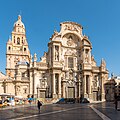 |
| Cathedral of the Saviour and Saint Mary | Orihuela | Valencian Community | Orihuela-Alicante | 1510 [66] | |  |
| Cathedral of Saint Martin | Ourense | Galicia | Ourense | 1188 [67] | | 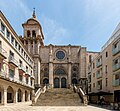 |
| Metropolitan Cathedral Basilica of the Holy Saviour | Oviedo |  Asturias Asturias | Oviedo | 821 [68] | UNESCO World Heritage Site since 2015, as part of the site Routes of Santiago de Compostela: Camino Francés and Routes of Northern Spain. [20] Its Cámara Santa (Holy Chamber) was previously designated in 1998, as part of site Monuments of Oviedo and the Kingdom of the Asturias. [69] | 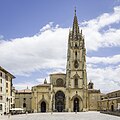 |
| Cathedral Basilica of Saint Antoninus | Palencia | Castile and Leon | Palencia | 1897 [g] | Third largest in total area in Spain. [71] | 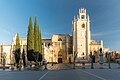 |
| Cathedral Basilica of Saint Mary | Palma | Balearic Islands | Majorca | 1346 [21] | Its gothic rose window is the largest in the world, at 13 m. [72] |  |
| Metropolitan Cathedral of Saint Mary of the Assumption | Pamplona |  Navarre Navarre | Pamplona and Tudela | 1127 [21] | | 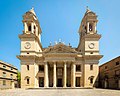 |
| Cathedral of the Assumption of our Lady | Plasencia | Extremadura | Plasencia | 1578 [73] | A complex of two cathedrals, an old and a new one, both unfinished and adjacent to each other. [74] |  |
| Cathedral of Saint Mary of the See | Salamanca | Castile and Leon | Salamanca | | UNESCO World Heritage Site since 1988 as part of the site Old City of Salamanca. [75] Better known as the Old Cathedral. |  |
| Cathedral of the Assumption of the Virgin | Salamanca | Castile and Leon | Salamanca | 1733 [76] | UNESCO World Heritage Site since 1988 as part of the site Old City of Salamanca. [75] Better known as the New Cathedral. | 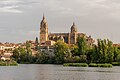 |
| Cathedral of Our Lady of Los Remedios | San Cristóbal de La Laguna | Canary Islands | San Cristóbal de La Laguna | 1819 [77] | UNESCO World Heritage Site since 1999 as part of the site San Cristóbal de La Laguna. [78] |  |
| Cathedral of the Good Shepherd | San Sebastian | Basque Country | San Sebastian | 1953 [79] | |  |
| Cathedral of Saint Lawrence | Sant Feliu de Llobregat | Catalonia | Sant Feliu de Llobregat | 2004 [80] | | 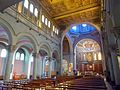 |
| Cathedral Basilica of Our Lady of the Assumption | Santander |  Cantabria Cantabria | Santander | 1754 [81] | |  |
| Metropolitan Cathedral Basilica of Saint James the Apostle | Santiago de Compostela | Galicia | Santiago de Compostela | 1211 [82] | UNESCO World Heritage Site since 1985, as part of the site Santiago de Compostela (Old Town). [83] Traditionally regarded as the burial place of the apostle James the Great, and the subject of pilgrimage for centuries. Depicted on Spanish 1, 2 and 5 Euro cent coins. [84] | 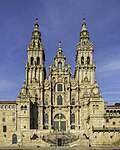 |
| Cathedral of the Saviour and Saint Mary | Santo Domingo de la Calzada | La Rioja | Calahorra and La Calzada-Logroño | 1232 [85] | |  |
| Cathedral Basilica of the Assumption of Our Lady | Segorbe | Valencian Community | Segorbe-Castellón | 1534 [86] | The interior was fully renovated between 1791 and 1795, becoming the only cathedral in the Academic style in Spain. [87] | 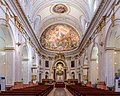 |
| Cathedral of Our Lady of the Assumption and of Saint Fructus | Segovia | Castile and Leon | Segovia | 1768 [88] | UNESCO World Heritage Site since 1985 as part of the site Old Town of Segovia and its Aqueduct. [89] |  |
| Metropolitan Cathedral of Saint Mary of the See | Seville | Andalusia | Seville | 1507 [90] | UNESCO World Heritage Site since 1987, as part of the site Cathedral, Alcázar and Archivo de Indias in Seville. [91] Largest gothic cathedral in the world. [92] | 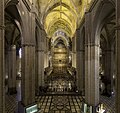 |
| Cathedral Basilica of Saint Mary | Sigüenza | Castile-La Mancha | Sigüenza-Guadalajara | 1169 [93] | | 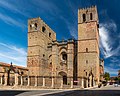 |
| Cathedral of Saint Mary | Solsona | Catalonia | Solsona | 1593 [94] | | 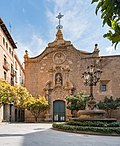 |
| Co-Cathedral of Saint Peter | Soria | Castile and Leon | Osma-Soria | 1959 [95] | Stills keep the older, Romanesque, cloister from the 12th century from a previous church that fell down around 1543. It was replaced with the current, Gothic building. [96] |  |
| Cathedral of Saint Mary of La Huerta | Tarazona | Aragon | Tarazona | 1235 [97] | Reopened in 2011 after a 30-year renovation that rediscovered a set of al fresco paintings from the 1540s showing nude mythological creatures, a unique feature for a cathedral in Europe. [98] |  |
| Primatial Metropolitan Cathedral Basilica of Saint Thecla | Tarragona | Catalonia | Tarragona | 1331 [99] | |  |
| Cathedral of the Holy Spirit | Terrassa | Catalonia | Terrassa | 2004 [100] | |  |
| Cathedral of Saint Mary of Mediavilla | Teruel | Aragon | Teruel and Albarracín | 1587 [101] | UNESCO World Heritage Site since 1986 as part of the site Mudéjar architecture of Aragon (specifically its bell tower, lantern tower, and wooden ceiling). [102] |  |
| Primatial Metropolitan Cathedral of Saint Mary of the Assumption | Toledo | Castile-La Mancha | Toledo | 1493 [103] | UNESCO World Heritage Site since 1986 as part of the site Historic City of Toledo. [104] Since 1088, it holds the honorific title of Primatial, granted by Urban II, establishing a higher rank over the rest in the Iberian Peninsula. [105] |  |
| Cathedral Basilica of Saint Mary | Tortosa | Catalonia | Tortosa | 1441 [106] | |  |
| Cathedral of Saint Mary the Major | Tudela | Navarre | Pamplona and Tudela | 1782 [107] | |  |
| Cathedral of Saint Mary of the Assumption | Tui | Galicia | Tui-Vigo | 1225 [108] | | 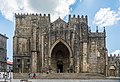 |
| Metropolitan Cathedral Basilica of the Assumption of our Lady | Valencia | Valencian Community | Valencia | 1238 [109] | Claims to house the Holy Grail since 1437. [110] |  |
| Metropolitan Cathedral of our Lady of the Assumption | Valladolid | Castile and Leon | Valladolid | 1668 [111] | Originally projected to be the largest cathedral in Christendom, it was left unfinished when less than half of the building was built. [112] |  |
| Cathedral Basilica of Saint Peter | Vic | Catalonia | Vic | 1803 [113] | |  |
| Co-Cathedral Basilica of Saint Mary | Vigo | Galicia | Tui-Vigo | 1959 [114] | |  |
| Cathedral of Saint Mary | Vitoria-Gasteiz | Basque Country | Vitoria | 1863 [115] | UNESCO World Heritage Site in 2015, as part of the Routes of Santiago de Compostela: Camino Francés and Routes of Northern Spain. [20] Commonly known as the "Old cathedral". | 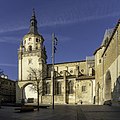 |
| Cathedral of Mary Immaculate | Vitoria-Gasteiz | Basque Country | Vitoria | 1969 [116] | Commonly known as the "New cathedral". Second largest cathedral in Spain, by area, after Seville. [116] | 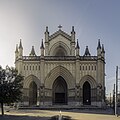 |
| Cathedral of the Saviour | Zamora | Castile and Leon | Zamora | 1174 [117] | |  |
| Metropolitan Cathedral of the Saviour | Zaragoza | Aragon | Zaragoza | 1318 [118] | UNESCO World Heritage Site since 2001 as part of the extension of the site Mudéjar architecture of Aragon. [102] |  |
| Cathedral Basilica of Our Lady of the Pillar | Zaragoza | Aragon | Zaragoza | 1676 [119] | With an estimated 5 million visitors in 2015, it's one of the most visited monuments in Spain. [120] |  |
|