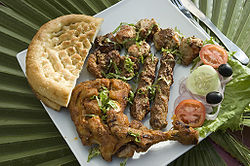
| Lamb chapli kabab served at a Balti restaurant in Birmingham, UK | |
| Type | Kebab |
|---|---|
| Course | Appetiser, main course, or side dish |
| Place of origin | Peshawar, Pakistan [1] [2] [3] [4] |
| Associated cuisine | South Asian cuisine |
| Main ingredients | Minced beef, mutton, or chicken |
| Ingredients generally used | Various herbs and spices |
| Similar dishes | Burgers |
| |
| This article is part of the series |
| Pakistani cuisine پاکستانی پکوان |
|---|
| This article is part of the series on |
| Indian cuisine |
|---|
| |
Chapli kabab [a] is a Pashtun-style minced kebab made from ground beef, mutton or chicken with various spices in the shape of a patty. The chapli kabab originated from the city of Peshawar in Khyber Pakhtunkhwa province, Pakistan and is today found across South Asia. [5] [6] [3]
Chapli kabab is served in thousands of kebab shops in Pakistan, Afghanistan and India. [5] [7] [8] Such eateries have rapidly expanded in other cities as well. Today, the chapli kebab is featured on the menu of Afghan, Indian and Pakistani restaurants across the world. [8] [9] Chapli kababs can be served and eaten hot with naan or as a bun kebab. [10]
The name chapli may be derived from the Pashto word chaprikh/chapdikh/chapleet, meaning "flat" – alluding to the kebab's light, round and flattened texture. [10] Alternatively, the name may be derived from chappal , the Indic word for sandals – relating the average shape and size of a kebab to that of a chappal sole. [11] [12]
The tradition of eating grilled meat, skewered on sticks, existed in the Indian subcontinent through the centuries, with the 12th-century Sanskrit text Manasollasa documenting a recipe used to prepare what is today known as the chapli kebab. [13]
The chapli kebab is prepared with raw, marinated mince and the meat can be either beef or lamb/mutton. The main ingredients include wheat flour, various herbs and spices such as chili powder, coriander leaves, followed by smaller quantities of onions, tomatoes, eggs, ginger, coriander or cumin seeds, green chillies, corn starch, salt and pepper, baking powder and citric juice, like that of lime or lemon. [7] [10]
The kebabs can be fried shallow or deep in vegetable cooking oil over medium heat. The traditional chapli kebab is prepared by frying the kebabs in lamb fat or cow fat over wood-fired stoves to lend an organic flavour. This approach is avoided by some gastronomists, citing health-conscious reasons. [14]
Once cooked, chapli kebabs can be served and garnished with parsley, chopped onions and tomatoes, along with other accompaniments such as various chutney sauces, salad, yoghurt, pickles or nuts. [15] [16] [17] The chapli kebab is best served aromatic, moist and spicy. [18] It is considered a specialty of Pashtun cuisine and often served to guests. [19] The kebab is commonly consumed in meals with bread such as naan, rice dishes such as Kabuli pulao, or wrapped in fast food. [8] In winters, green tea such as kahwah may traditionally be served alongside it, while cold drinks are preferred in the summers. [8]
Another fried kebab is chapli kebab that may have originated Afghanistan and in Peshawar, Pakistan. The name comes either from Pushto chapleet, meaning 'flat', or from chappal, Hindi for sandal, alluding to its shape.
The Chapli Kabab is said to have its origins in Peshawar, Pakistan.
The Chapli kabab is one of Pakistan's most beloved dishes. This particular kabab was reportedly first created in Peshawar, in the northwestern corner of the country.
In Pakistan, chapli kabab originally comes from the northern areas, in particular Peshawer, capital of Khyber Pakhtunkhwa province of pakistan.
The Chapli Kabab is said to have its origins in Peshawar, Pakistan.
Another fried kebab is chapli kebab that may have originated in Peshawar. The name comes either from Pushto chalpleet, meaning 'flat', or from chappal, Hindi for sandal, alluding to its shape.
As the food historians Colleen Taylor Sen writes in her Feasts and Fasts: a History of Food in India, the grilling of meat "directly on a fire, skewered on sticks was common in ancient Mesopotamia and in the Indus Valley Civilisation." This tradition continued to exist in India through the centuries; the Manasollasa, a 12th century text, has recipes for what we would call kababs those days. It is wrong to believe, says Sen, "that elaborate meat dishes appeared only with the arrival of the Muslims. Early texts even have recipes that are very similar to today's chapli or seekh kababs."