Related Research Articles
In mathematics, a variational inequality is an inequality involving a functional, which has to be solved for all possible values of a given variable, belonging usually to a convex set. The mathematical theory of variational inequalities was initially developed to deal with equilibrium problems, precisely the Signorini problem: in that model problem, the functional involved was obtained as the first variation of the involved potential energy. Therefore, it has a variational origin, recalled by the name of the general abstract problem. The applicability of the theory has since been expanded to include problems from economics, finance, optimization and game theory.

Ennio De Giorgi was an Italian mathematician who worked on partial differential equations and the foundations of mathematics.
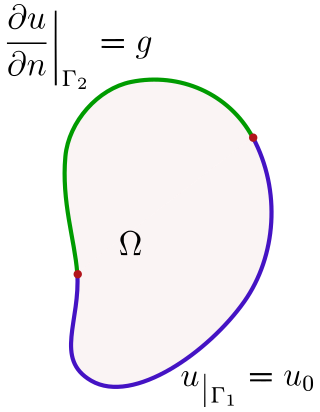
In mathematics, a mixed boundary condition for a partial differential equation defines a boundary value problem in which the solution of the given equation is required to satisfy different boundary conditions on disjoint parts of the boundary of the domain where the condition is stated. Precisely, in a mixed boundary value problem, the solution is required to satisfy a Dirichlet or a Neumann boundary condition in a mutually exclusive way on disjoint parts of the boundary.
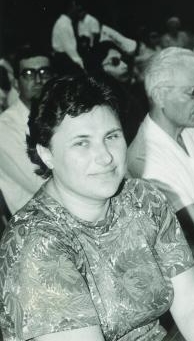
Olga Arsenievna Oleinik HFRSE was a Soviet mathematician who conducted pioneering work on the theory of partial differential equations, the theory of strongly inhomogeneous elastic media, and the mathematical theory of boundary layers. She was a student of Ivan Petrovsky. She studied and worked at the Moscow State University.

Renato Caccioppoli was an Italian mathematician, known for his contributions to mathematical analysis, including the theory of functions of several complex variables, functional analysis, measure theory.

Guido Stampacchia was an Italian mathematician, known for his work on the theory of variational inequalities, the calculus of variation and the theory of elliptic partial differential equations.

Mauro Picone was an Italian mathematician. He is known for the Picone identity, the Sturm-Picone comparison theorem and being the founder of the Istituto per le Applicazioni del Calcolo, presently named after him, the first applied mathematics institute ever founded. He was also an outstanding teacher of mathematical analysis: some of the best Italian mathematicians were among his pupils.
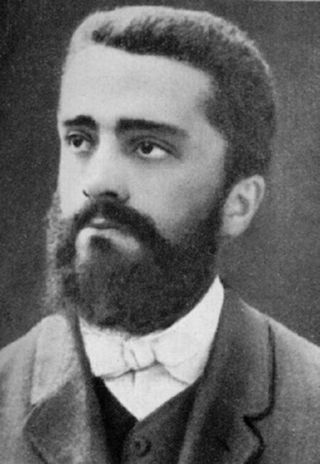
Eugenio Elia Levi was an Italian mathematician, known for his fundamental contributions in group theory, in the theory of partial differential operators and in the theory of functions of several complex variables. He was a younger brother of Beppo Levi and was killed in action during First World War.
In the theory of functions of several complex variables, Hartogs's extension theorem is a statement about the singularities of holomorphic functions of several variables. Informally, it states that the support of the singularities of such functions cannot be compact, therefore the singular set of a function of several complex variables must 'go off to infinity' in some direction. More precisely, it shows that an isolated singularity is always a removable singularity for any analytic function of n > 1 complex variables. A first version of this theorem was proved by Friedrich Hartogs, and as such it is known also as Hartogs's lemma and Hartogs's principle: in earlier Soviet literature, it is also called Osgood–Brown theorem, acknowledging later work by Arthur Barton Brown and William Fogg Osgood. This property of holomorphic functions of several variables is also called Hartogs's phenomenon: however, the locution "Hartogs's phenomenon" is also used to identify the property of solutions of systems of partial differential or convolution equations satisfying Hartogs type theorems.

Gaetano Fichera was an Italian mathematician, working in mathematical analysis, linear elasticity, partial differential equations and several complex variables. He was born in Acireale, and died in Rome.

Giovanni Battista Rizza, officially known as Giambattista Rizza, was an Italian mathematician, working in the fields of complex analysis of several variables and in differential geometry: he is known for his contribution to hypercomplex analysis, notably for extending Cauchy's integral theorem and Cauchy's integral formula to complex functions of a hypercomplex variable, the theory of pluriharmonic functions and for the introduction of the now called Rizza manifolds.
Federico Cafiero was an Italian mathematician known for his contributions in real analysis, measure and integration theory, and in the theory of ordinary differential equations. In particular, generalizing the Vitali convergence theorem, the Fichera convergence theorem and previous results of Vladimir Mikhailovich Dubrovskii, he proved a necessary and sufficient condition for the passage to the limit under the sign of integral: this result is, in some sense, definitive. In the field of ordinary differential equations, he studied existence and uniqueness problems under very general hypotheses for the left member of the given first order equation, developing an important approximation method and proving a fundamental uniqueness theorem.
Sergio Campanato was an Italian mathematician who studied the theory of regularity for elliptic and parabolic partial differential equations.
Maria Adelaide Sneider was an Italian mathematician working on numerical and mathematical analysis. She is known for her work on the theory of electrostatic capacities of non-smooth closed hypersurfaces: Apart from the development of precise estimates for the numerical approximation of the electrostatic capacity of the unit cube, this work also led her to give a rigorous proof of Green's identities for large classes of hypersurfaces with singularities, and later to develop an accurate mathematical analysis of the points effect. She is also known for her contributions to the Dirichlet problem for pluriharmonic functions on the unit sphere of

Alessandro Faedo was an Italian mathematician and politician, born in Chiampo. He is known for his work in numerical analysis, leading to the Faedo–Galerkin method: he was one of the pupils of Leonida Tonelli and, after his death, he succeeded him on the chair of mathematical analysis at the University of Pisa, becoming dean of the faculty of sciences and then rector and exerting a strong positive influence on the development of the university.

Luigi Amerio, was an Italian electrical engineer and mathematician. He is known for his work on almost periodic functions, on Laplace transforms in one and several dimensions, and on the theory of elliptic partial differential equations.
Dario Graffi was an influential Italian mathematical physicist, known for his researches on the electromagnetic field, particularly for a mathematical explanation of the Luxemburg effect, for proving an important uniqueness theorem for the solutions of a class of fluid dynamics equations including the Navier-Stokes equation, for his researches in continuum mechanics and for his contribution to oscillation theory.
Carlo Miranda was an Italian mathematician, working on mathematical analysis, theory of elliptic partial differential equations and complex analysis: he is known for giving the first proof of the Poincaré–Miranda theorem, for Miranda's theorem in complex analysis, and for writing an influential monograph in the theory of elliptic partial differential equations.
Roberto Conti was an Italian mathematician, who contributed to the theory of ordinary differential equations and the development of the comparison method.
The Istituto per le Applicazioni del Calcolo Mauro Picone, abbreviated IAC, is an applied mathematics institute, part of the Consiglio Nazionale delle Ricerche. It was founded in 1927 as a private research institute by Mauro Picone, and as such it is considered the first applied and computational mathematics institute of such kind ever founded.
References
- Cialdea, Alberto; Lanzara, Flavia (2000), "Some contributions of G. Fichera to the theory of Partial Differential Equations", in Cialdea, Alberto (ed.), Homage to Gaetano Fichera, Quaderni di Matematica, vol. 7, Aracne Editrice, pp. 79–143, ISBN 978-88-7999-321-0, MR 1913527, Zbl 1005.35003 . A survey of Gaetano Fichera's contributions to the theory of partial differential equations, written by two of his pupils.
- Faedo, Sandro (1957), "Su un principio di esistenza nell'analisi lineare" [On an existence principle in linear analysis], Annali della Scuola Normale Superiore di Pisa. Classe di Scienze , Serie 3 (in Italian), 11 (1–2): 1–8, MR 0096957, Zbl 0087.32304 .
- Faedo, Sandro (1958), "Applicazione ai problemi di derivata obliqua di un principio esistenziale e di una legge di dualità fra le formule di maggiorazione" [Application to oblique derivative problems of an existence principle and a duality law between estimates], Rendiconti di Matematica e delle sue Applicazioni , V Serie (in Italian), 16: 515–532, doi:10.1007/978-3-642-10918-8_4, ISBN 978-3-642-10916-4, MR 0096959, Zbl 0105.29902 .
- Fichera, Gaetano (1962) [1954], Lezioni sulle trasformazioni lineari. Volume I: Introduzione all'analisi lineare [Lectures on linear transformations. Volume I: Introduction to linear analysis] (in Italian) (3rd reprint ed.), Roma: Libreria Eredi Virgilio Veschi, pp. XIX+502, MR 0067346, Zbl 0057.33601 : for a review of the book, see Ghizzetti, Aldo (1954), "G. Fichera, Lezioni sulle trasformazioni lineari, Vol. I: Introduzione all'Analisi lineare, Istituto Matematico dell'Università di Trieste, 1954 – pag. XVII + 502.", Bollettino dell'Unione Matematica Italiana , Serie 3 (in Italian), 9 (4): 457–459.
- Fichera, Gaetano (1955), "Alcuni recenti sviluppi della teoria dei problemi al contorno per le equazioni alle derivate parziali lineari", in Fichera, G. (ed.), Convegno Internazionale sulle Equazioni Lineari alle Derivate Parziali – Trieste 25–28 Agosto 1954 (in Italian), Roma: Edizioni Cremonese, pp. 174–227, MR 0074665, Zbl 0068.31101 . The paper Some recent developments of the theory of boundary value problems for linear partial differential equations describes Fichera's approach to a general theory of boundary value problems for linear partial differential equations through a theorem similar in spirit to the Lax–Milgram theorem.
- Fichera, Gaetano (1958), Premesse ad una teoria generale dei problemi al contorno per le equazioni differenziali[Premises to a general theory of boundary value problems for differential equations], Corsi dell'Istituto Nazionale di Alta Matematica (in Italian), Roma: Libreria Eredi Virgilio Veschi, pp. III+292. A monograph based on lecture notes, taken by Lucilla Bassotti and Luciano De Vito of a course held by Gaetano Fichera at the INdAM: for a review of the book, see Miranda, Carlo (1959), "G. Fichera, Premesse ad una teoria generale dei problemi al contorno per le equazioni differenziali, Libreria Eredi V., Roma", Bollettino dell'Unione Matematica Italiana , Serie 3 (in Italian), 14 (4): 568–570.
- Leonardi, Salvatore; Passarelli di Napoli, Antonia; Sbordone, Carlo (2000), "On Fichera's existence principle in functional analysis", in Ricci, Paolo Emilio (ed.), Problemi attuali dell'analisi e della fisica matematica. Atti del 2° simposio internazionale. Dedicato alla memoria del Prof. Gaetano Fichera. Taormina, 15–17 ottobre 1998[Current problems in analysis and mathematical physics. Papers of the 2nd international symposium dedicated to the memory of Prof. Gaetano Fichera. Taormina, 15–17 ottobre 1998], Roma: Aracne Editrice, pp. 221–234, doi:10.4399/978887999264017 (inactive 31 January 2024), ISBN 978-88-7999-264-0, MR 1809690, Zbl 0956.00046
{{citation}}: CS1 maint: DOI inactive as of January 2024 (link). - Lieberstein, H. Melvin (1972), Theory of partial differential equations, Mathematics in Science and Engineering, vol. 93, New York and London: Academic Press, pp. XIV+283, ISBN 0-12-449550-8, MR 0355280, Zbl 0245.35001 , reviewed also by Schechter, Martin (October 1973), "Theory of Partial Differential Equations, by H. Melvin Lieberstein", SIAM Review , 15 (4): 809, doi:10.1137/1015120, JSTOR 2028753 , and by Appleyard, David F. (March 1973), "Telegraphic Reviews. Theory of Partial Differential Equations. H. Melvin Lieberstein", The American Mathematical Monthly , 80 (3): 340, JSTOR 2318482
- Miranda, Carlo (1970) [1955], Partial Differential Equations of Elliptic Type, Ergebnisse der Mathematik und ihrer Grenzgebiete – 2 Folge, vol. Band 2, translated by Motteler, Zane C. (2nd Revised ed.), Berlin – Heidelberg – New York: Springer Verlag, pp. XII+370, ISBN 978-3-540-04804-6, MR 0284700, Zbl 0198.14101 .
- Valent, Tullio (1979), "Su un principio generale di esistenza in analisi lineare" [On a general existence principle in linear analysis], Atti della Accademia Nazionale dei Lincei. Rendiconti. Classe di Scienze Fisiche, Matematiche e Naturali, Series VIII (in Italian), 66 (5): 331–337, Zbl 0476.46002 .
- Valent, Tullio (1999), "Existence problems", in Capriz, Gianfranco; Grioli, Giuseppe; Manacorda, Tristano (eds.), Interactions between Analysis and Mechanics. The Legacy of Gaetano Fichera. Convegno internazionale (Roma, 22--23 aprile 1998), Atti dei Convegni Lincei, vol. 148, Roma: Accademia Nazionale dei Lincei, pp. 83–98, ISSN 0391-805X . An expository paper detailing the contributions of Gaetano Fichera and his school on the problem of numerical calculation of eigenvalues for general differential operators.
Banach space topics | |
|---|---|
| Types of Banach spaces | |
| Banach spaces are: | |
| Function space Topologies | |
| Linear operators | |
| Operator theory | |
| Theorems |
|
| Analysis | |
| Types of sets |
|
| Subsets /set operations | |
| Examples | |
| Applications | |


| Spaces |
| ||||
|---|---|---|---|---|---|
| Theorems | |||||
| Operators | |||||
| Algebras | |||||
| Open problems | |||||
| Applications | |||||
| Advanced topics | |||||


