In Zen-Buddhism, Dharma transmission is a custom in which a person is established as a "successor in an unbroken lineage of teachers and disciples, a spiritual 'bloodline' (kechimyaku) theoretically traced back to the Buddha himself." The dharma lineage reflects the importance of family-structures in ancient China, and forms a symbolic and ritual recreation of this system for the monastical "family".

Seungsahn Haengwon, born Duk-In Lee, was a Korean Seon master of the Jogye Order and founder of the international Kwan Um School of Zen. He was the seventy-eighth Patriarch in his lineage. As one of the early Korean Zen masters to settle in the United States, he opened many temples and practice groups across the globe. He was known for his charismatic style and direct presentation of Zen, which was well tailored for the Western audience.

Providence Zen Center (PZC) is the Head Temple of the Americas for the Kwan Um School of Zen (KUSZ) and the first Zen center established by Seungsahn in the United States in October 1972. The PZC offers residential training where students and teachers live together under one roof, which was one of the hallmarks of Seung Sahn's philosophy concerning Zen practice in his organization. Practice at the center, and at Diamond Hill Zen Monastery, which shares the PZC property, includes sitting meditation, prostrations, and chanting.
The Kwan Um School of Zen (관음선종회) (KUSZ) is an international school of zen centers and groups founded in 1983 by Seungsahn. The school's international head temple is located at the Providence Zen Center in Cumberland, Rhode Island, which was founded in 1972 shortly after Seungsahn first came to the United States. The Kwan Um style of Buddhist practice combines ritual common both to Korean Buddhism as well as Rinzai school of Zen, and their morning and evening services include elements of Huayan and Pure Land Buddhism. While the Kwan Um Zen School comes under the banner of the Jogye Order of Korean Seon, the school has been adapted by Seungsahn to the needs of Westerners. According to James Ishmael Ford, the Kwan Um School of Zen is the largest Zen school in the Western world.

Furnace Mountain is an American Zen Buddhist retreat center in Clay City, Kentucky, co-founded in 1986 by Seung Sahn Soen Sa Nim and Dae Gak Soen Sa Nim as part of the international Kwan Um School of Zen; it is now unaffiliated with the school in an official capacity. In 1990 the main Meditation Hall was completed, and in 1994 the temple was constructed and opened. Kwan Se Um San Ji Sah is modeled after a traditional Korean Buddhist Temple—located on 850 acres of woods in part of The Daniel Boone National Forest. The exact site of Kwan Se Um San Ji Sah was determined by the use of geomantic divination, which was intended to help foster harmony. The Abbott and guiding teacher is Dae Gak Zen Master.
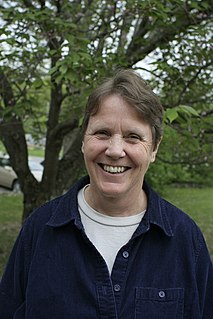
Soeng Hyang Soen Sa Nim is a Zen Master and the Guiding Teacher of the international Kwan Um School of Zen, and successor to the late Seung Sahn Soen Sa Nim.

Wu Kwang Soen Sa Nim (1950–present), born Richard Shrobe, is head Zen teacher at Chogye International Zen Center of New York, a practice center of the Kwan Um School of Zen. Before coming to Zen practice Richard studied Hinduism under Swami Satchidananda. He is a social worker who incorporates Gestalt therapy in his counseling. In 1975 Wu Kwang began his Zen practice and received Dharma transmission from Seung Sahn in 1993. He is also a jazz musician.

Dae Gak, born Robert Genthner, is a Zen master and the guiding teacher of Furnace Mountain in Clay City, Kentucky, a Korean Buddhist temple and retreat center co-founded in 1986 with Seung Sahn. He received Dharma transmission from Seung Sahn in 1994, and now teaches independently of Seung Sahn's Kwan Um School of Zen. In addition to Furnace Mountain he serves as guiding teacher for other Zen groups in North America, Germany and England. He also holds a Ph.D. in psychology and is currently a licensed psychologist in the state of Kentucky.
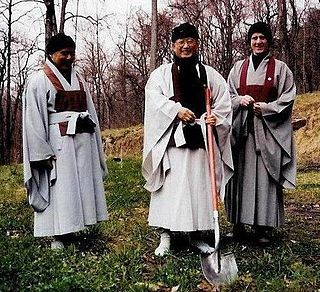
Su Bong was a Soen Sa Nim in the Kwan Um School of Zen, the designated heir of Seung Sahn's lineage. Of both Korean and Chinese heritage, he was born in Kona, Hawaii. Su Bong began his practice with Seung Sahn in 1974, helping to establish many Zen groups and temples for the lineage in the years that followed. In 1981 he received inka from Seung Sahn, making him a Ji Do Poep Sa Nim (JDPSN) in the lineage and, in 1983, he was ordained a sunim and given the Buddhist name Mu Deung. He received Dharma transmission on October 11, 1992. On July 17, 1994, Su Bong died of unknown causes at a retreat while conducting kong-an interviews in Hong Kong. Today the Kwan Um School of Zen has a practice center in his name located in Hong Kong and named Su Bong Zen Monastery.

Soensanim Bon Yeon is the dharma name and title of Jane McLaughlin-Dobisz. She is the guiding teacher of the Cambridge Zen Center of the Kwan Um School of Zen in Cambridge, Massachusetts. She received dharma transmission in 2000, and is also a published author and editor of the book The Whole World is a Single Flower by Seungsahn.

Dae Kwang is a Soen Sa Nim and is the current guiding teacher of the Providence Zen Center. He was ordained as a monk in 1987 and received Dharma transmission from Seung Sahn in 1996. He also serves as head abbot of the entire lineage, ranking just below Soeng Hyang.
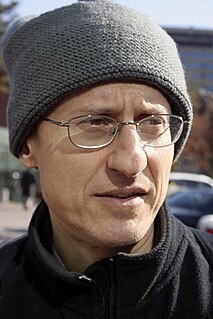
Wu Bong, born Jacob Perl, was a Zen master in the Kwan Um School of Zen. Perl was the head teacher of the European Kwan Um School of Zen. The first student of Seungsahn in the United States, he had previously practiced Zen in the Sōtō tradition at the San Francisco Zen Center under Shunryū Suzuki. He also spent one year studying the Nyingma school of Tibetan Buddhism at the Tibetan Nyingmapa Meditation Center in Berkeley, California under Tarthang Tulku.
Chogye International Zen Center is a Kwan Um School of Zen practice center founded by Seung Sahn in 1975, located in New York City. The center offers a daily practice regimen, as well as retreats and workshops. Wu Kwang is the guiding teacher and resident Zen Master, the abbot is Steven Cohen.Prebish, Charles S (1999). Luminous Passage: The Practice and Study of Buddhism in America. University of California Press. p. 34. ISBN 0-520-21697-0.
Morreale, Don (1998). The Complete Guide to Buddhist America. Shambhala Publications. p. 171.

Kobongsoensanim, the 77th Patriarch in his teaching lineage, was a Korean Zen master.

George Bowman, or Bo Mun Soen sa Nim, is a Zen master and licensed psychotherapist living at Furnace Mountain in Clay City, Kentucky. He received Dharma transmission from Seung Sahn Soen Sa Nim in 1992, and is a former teacher in the Kwan Um School of Zen. He was a founding member of the Providence Zen Center in 1972 and also did koan study with Joshu Sasaki from 1977 to 2003. Furnace Mountain is run by Dae Gak Soen Sa Nim—another former Kwan Um line teacher. He was a resident teacher at the Cambridge Buddhist Association from 1991 to 1999, and in 1994 became a guiding teacher of the Institute for Meditation and Psychotherapy. Today he travels to Boston, Massachusetts most months to lead a "floating zendo" named the Single Flower Sangha. Bowman has given inka to his student David Dayan Rynick, who was the first individual to be acknowledged as a teacher outside of the Kwan Um lineage.
Zen master is a somewhat vague English term that arose in the first half of the 20th century, sometimes used to refer to an individual who teaches Zen Buddhist meditation and practices, usually implying longtime study and subsequent authorization to teach and transmit the tradition themselves.

The Golden Wind Zen Order (GWZO) is an American Zen Buddhist Order with centers and groups in Long Beach, CA and Seattle, WA. It was founded in 2004 by Zen Master Ji Bong. Moore began training with the Korean Zen Master Seung Sahn in 1974, and was one of the founders of the New Haven Zen Center and core teachers of the early years of the international Kwan Um School of Zen. He was a teacher at several centers around the United States, and after more than twenty years of training, he received Dharma transmission from Seung Sahn in 1997.
The roots of Buddhism in Lithuania can be traced to the 20th century, although the time of its first introduction there remains unknown. Zen Buddhism practiced in Lithuania today originated in Korea. There are a few active communities across the country including Vilnius, Kaunas, Klaipėda, Šiauliai, Panevėžys and Šakiai.
Kwan Yin Chan Lin is Buddhist zen centres in Singapore and Malaysia. The organization was originally set up by Venerable Chi Boon (释继闻法师) in 1991. The present Main KYCL Zen Building are located at Geylang, Singapore, KYCL International Zen Centre at Pengerang, Desaru and Fu Hui Yuan at Muar in Johor, Malaysia.