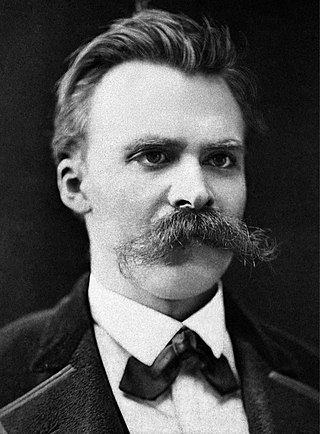
Werner Krieglstein

Last updated
Werner J. Krieglstein
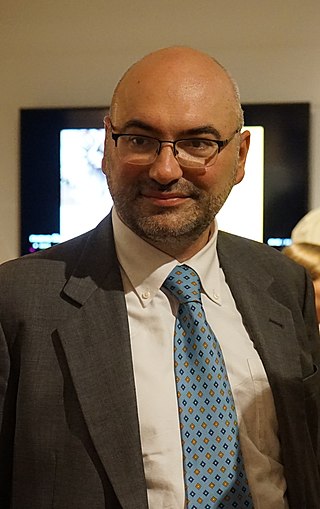
Werner Krieglstein.jpg
Werner Krieglstein on stage
Born (1941-10-31) October 31, 1941 (age 81)
Spouse Maryann Krieglstein
Era 20th-/21st-century philosophy
Region Western philosophy
School Frankfurt School  · critical theory  · transcendental perspectivism
Main interests
social theory  · feminist theory [1] [2]  · perspectivism  · transcendentalism  · aesthetics
Notable ideas
Transcendental perspectivism  · Work with collective orchestration

Werner Josef Krieglstein (born October 31, 1941) is an American scholar, director and actor. Krieglstein is the founder of a neo-Nietzschean philosophical school called Transcendental Perspectivism. Krieglstein's "philosophy of compassion" [3] has been the subject of symposium lectures at many prominent conferences including the UNESCO section of the World Congress of Philosophy conference in Seoul Korea (August, 2008), [4] [5] the ISAIL "Fields of Conflict-Fields of Wisdom": 4th International Congress in Wuerzburg, Germany (May, 2008), [6] the meeting of the American Philosophical Association in Washington D.C. (Symposium Chair: Sept. 2006), [7] and the ISUD Fourth World Conference of the International Society for Universal Dialogue (Summer, 2001), [8] among many others.

Contents

Career

Academic background

Krieglstein was born in 1941 in Blatnice, (near Plzeň), at the time an annexed part of Nazi Germany's Sudetenland (present-day Blatnice, Czech Republic). Following the post-war Expulsion of the Germans from Czechoslovakia, he relocated in Beselich-Obertiefenbach near Frankfurt, Germany. [9] [10] In the Sixties, Krieglstein was a student at the Frankfurt School in Germany, under the professorship of Theodor W. Adorno. In his first book, Krieglstein credits the roots of his passion for the transformative aspects of philosophy to the tutelage of Adorno. As a German Jew, Adorno returned to Germany almost immediately after WWII ended with the goal of challenging the indoctrination many university students had received in Hitler's youth education programs. [10] Before moving to the United States, Krieglstein also studied at the Free University of Berlin. [11] Following his studies in Germany, Krieglstein pursued his doctorate at the University of Chicago as a Fulbright Scholar and University Fellow. [8]

Krieglstein has held teaching positions at the University of Helsinki, Finland, and Western Michigan University in Kalamazoo. He currently is professor emeritus of philosophy and religious studies at the College of DuPage, where he was awarded the Most Outstanding Teacher Award in 2003 [11] and the Distinguished Regional Humanities Educator Award [11] from the Community College Humanities Association in 2008. In addition to his role as professor, Krieglstein is a course director at the Interuniversity Center in Dubrovnik, Croatia, [12] and a board member of the International Society for Universal Dialogue. [13] His philosophy of compassion is also finding an audience within the education reform movement, with symposium lectures at AEPL "Reclaiming the Wisdom Tradition for Education" conference in Northern California (May, 2008), [14] the NISOD International Conference on Teaching and Leadership Excellence in Austin, TX (May, 2007), [15] and the CCHA Creating Communities Conference hosted by the University of Chicago (Nov, 2006). [16]

Actor and director

While at the Johann Wolfgang Goethe University Frankfurt am Main, Krieglstein rose to prominence in theater when he was appointed as director of the avant-garde theater, Die Neue Bühne, at the Goethe University. While writing for the theater's paper, he interviewed members of The Living Theater including Jerzy Grotowski, and was fortunate enough to study mime under Marceau student Jeanne Winkler. [6] An ISAIL biography notes that "his black light production of Kafka's The Metamorphosis was performed over two hundred times at both European and American festivals." [6] [17] After emigrating to the US and while teaching at Western Michigan University in 1976, he founded and directed a small rural theater company in Lawrence, Michigan known as the Whole Arts Theater, which later moved to Kalamazoo. [18] Michigan's official tourism site describing Krieglstein's founding of the Whole Art Theater. More recently, Krieglstein has shifted his acting focus to film. In the past few years, he has worked on several independent films including 'Urban Ground Squirrels' by Wiggle Puppy Productions, Chicago (Mark Krieglstein, 2002) [19] and the internationally known 'Light Denied' [20] [21] [22] [23] by Delos Films, Warsaw (Paweł Kuczyński, 2008), [24] along with a few smaller films.

Personal life

Werner and Maryann Krieglstein posing on their Michigan farm in the late 1970s Krieglsteins posing as American Gothic.jpg
Werner and Maryann Krieglstein posing on their Michigan farm in the late 1970s

Krieglstein is married to Maryann Krieglstein. [25] After attaining his PhD, the two lived in a few places around the world including Finland and Morocco before settling down on an organic farm in Lawrence, Michigan. While farming, he continued to teach and pursue acting in nearby Kalamazoo. In 1990, Krieglstein moved with his family to Glen Ellyn, Illinois, home to the College of DuPage where he would begin his almost 20 year professorship. Together, Maryann and Werner have five sons and one grandson: Robin, married to Suruchi have a son named Milan; Mark; Daniel, married to Andrea Trocchio; Thomas; and Michael. [9] [10]

Philosophy

Transcendental perspectivism is a hybrid philosophy blending Friedrich Nietzsche's perspectivism and the utopian ideals of the transcendentalist movement. Transcendental perspectivism challenges Nietzsche's claim that there is no absolute truths while fully accepting his observation that all truth can only be known in the context of one's perception. This is accomplished through an appreciation of the emotional relationship between two perceptions (the "perceiver" and the "other"). In the simplest of terms, a transcendental truth can only be known when two individuals come to agree on the truth by either force or cooperation, thus working together to build a shared reality.

Awards and academic achievements

Publications

See also

Related Research Articles

<span class="mw-page-title-main">Friedrich Nietzsche</span> German philosopher (1844–1900)

Friedrich Wilhelm Nietzsche was a German philosopher, prose poet, cultural critic, philologist, and composer whose work has exerted a profound influence on contemporary philosophy.
<span class="mw-page-title-main">Nihilism</span> Philosophy antithetical to concepts of meaningfulness

Nihilism is a philosophy, or family of views within philosophy, that rejects generally accepted or fundamental aspects of human existence, such as knowledge, morality, or meaning. The term was popularized by Ivan Turgenev, and more specifically by his character Bazarov in the novel Fathers and Sons.

<span class="mw-page-title-main">Theodor W. Adorno</span> German philosopher, sociologist, and theorist (1903–1969)

Theodor W. Adorno was a German philosopher, sociologist, psychologist, musicologist, and composer.

<span class="mw-page-title-main">Lawrence, Michigan</span> Village in Michigan, United States

Lawrence is a village in Van Buren County in the U.S. state of Michigan. The population was 996 at the 2010 census. The village is located within Lawrence Township. It is host to an annual Ox Roast, Homecoming festival, and Farmer's Market.
<span class="mw-page-title-main">German philosophy</span> Specialty in philosophy, focused on German language origin

German philosophy, meaning philosophy in the German language or philosophy by German people, in its diversity, is fundamental for both the analytic and continental traditions. It covers figures such as Gottfried Wilhelm Leibniz, Immanuel Kant, Georg Wilhelm Friedrich Hegel, Karl Marx, Friedrich Nietzsche, Martin Heidegger, Ludwig Wittgenstein, the Vienna Circle, and the Frankfurt School, who now count among the most famous and studied philosophers of all time. They are central to major philosophical movements such as rationalism, German idealism, Romanticism, dialectical materialism, existentialism, phenomenology, hermeneutics, logical positivism, and critical theory. The Danish philosopher Søren Kierkegaard is often also included in surveys of German philosophy due to his extensive engagement with German thinkers.

<span class="mw-page-title-main">Continental philosophy</span> Philosophical traditions from mainland Europe

Continental philosophy is a term used to describe some philosophers and philosophical traditions that do not fall under the umbrella of analytic philosophy. However, there is no academic consensus on the definition of continental philosophy. Prior to the twentieth century, the term "continental" was used broadly to refer to philosophy from continental Europe. A different use of the term originated among English-speaking philosophers in the second half of the 20th century, who used it to refer to a range of thinkers and traditions outside the analytic movement. Continental philosophy includes German idealism, phenomenology, existentialism, hermeneutics, structuralism, post-structuralism, deconstruction, French feminism, psychoanalytic theory, and the critical theory of the Frankfurt School as well as branches of Freudian, Hegelian and Western Marxist views.

<span class="mw-page-title-main">Botho Strauss</span> German playwright, novelist, and essayist

Botho Strauss is a German playwright, novelist, and essayist.

<span class="mw-page-title-main">Robert C. Solomon</span> American philosopher

Robert C. Solomon was a philosopher and business ethicist, notable author, and "Distinguished Teaching Professor of Business and Philosophy" at the University of Texas at Austin, where he held a named chair and taught for more than 30 years, authoring The Passions: Emotions and the Meaning of Life (1976) and more than 45 other books and editions. Critical of the narrow focus of Anglo-American analytic philosophy, which he thought denied human nature and abdicated the important questions of life, he instead wrote analytically in response to the continental discourses of phenomenology and existentialism, on sex and love, on business ethics, and on other topics to which he brought an Aristotelian perspective on virtue ethics. He also wrote A Short History of Philosophy and others with his wife, Professor Kathleen Higgins.

Perspectivism is the epistemological principle that perception of and knowledge of something are always bound to the interpretive perspectives of those observing it. While perspectivism does not regard all perspectives and interpretations as being of equal truth or value, it holds that no one has access to an absolute view of the world cut off from perspective. Instead, all such viewing occurs from some point of view which in turn affects how things are perceived. Rather than attempt to determine truth by correspondence to things outside any perspective, perspectivism thus generally seeks to determine truth by comparing and evaluating perspectives among themselves. Perspectivism may be regarded as an early form of epistemological pluralism, though in some accounts includes treatment of value theory, moral psychology, and realist metaphysics.

In philosophy and epistemology, epistemic theories of truth are attempts to analyze the notion of truth in terms of epistemic notions such as knowledge, belief, acceptance, verification, justification, and perspective.

<span class="mw-page-title-main">Hans Albert</span> German philosopher

Hans Albert is a German philosopher. Born in Cologne, he lives in Heidelberg.

<span class="mw-page-title-main">Johann Baptist Metz</span> German Catholic priest and theologian (1928–2019)

Johann Baptist Metz was a German Catholic priest and theologian. He was Ordinary Professor of Fundamental Theology at the University of Münster, and a consultant to the synod of German dioceses. He is regarded as one of the most important German theologians after the Second Vatican Council, who influenced liberation theology and focused on compassion.

Transcendental perspectivism is a hybrid philosophy developed by German-born philosopher, Werner Krieglstein. A blending of Friedrich Nietzsche's perspectivism and the utopian ideals of the transcendentalism movement, transcendental perspectivism challenges Nietzsche's claim that there are no absolute truths while fully accepting his observation that all truth can only be known in the context of one's own perception. This is accomplished through an appreciation of the emotional relationship between two perceptions.
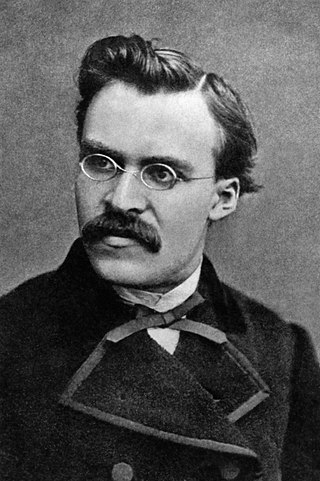
<span class="mw-page-title-main">Influence and reception of Friedrich Nietzsche</span>

Friedrich Nietzsche's influence and reception varied widely and may be roughly divided into various chronological periods. Reactions were anything but uniform, and proponents of various ideologies attempted to appropriate his work quite early.

Philosophy of music is the study of "fundamental questions about the nature of music and our experience of it". The philosophical study of music has many connections with philosophical questions in metaphysics and aesthetics. The expression was born in the 19th century and has been used especially as the name of a discipline since the 1980s.

Andrew S. Bowie is Professor of Philosophy and German at Royal Holloway, University of London and Founding Director of the Humanities and Arts Research Centre (HARC).

<span class="mw-page-title-main">Buddhism and Western philosophy</span>

Buddhist thought and Western philosophy include several parallels.
<span class="mw-page-title-main">Diego Bubbio</span> Italian philosopher

Paolo Diego Bubbio is an Italian philosopher and Associate Professor of Philosophy at Western Sydney University. He is known for his research on post-Kantian philosophy, philosophical hermeneutics and philosophy of religion. He is the editor of the "Contemporary Studies in Idealism" book series for Lexington Books.

<span class="mw-page-title-main">Maryann Krieglstein</span>

Maryann Krieglstein, is an American academic social worker and human services professor emeritus at the College of DuPage. She previously served as the coordinator of sexual assault services for the YWCA of DuPage and the coordinator of the human services program at the College of DuPage. Her research on domestic violence and heterosexism in social work has been published in the American Journal of Community Psychology and the Journal of Human Behavior in the Social Environment.

References

  1. Femenias, Maria Luisa; Oliver, Amy A., eds. (2007). Feminist Philosophy in Latin America and Spain. Amsterdam: Rodopi. ISBN   978-90-420-2207-2 . Retrieved 27 October 2015.
  2. Burns, Lynda (2006). Feminist Alliances. Netherlands: Editions Rodopi B.V. ISBN   90-420-1728-7 . Retrieved 27 October 2015.
  3. Krieglstein, Werner (2002). Compassion: A New Philosophy of the Other. Amsterdam: Rodopi B.V. ISBN   978-9042009035.
  4. "Detailed programmes for UNESCO Conferences in Seoul 3-5 August, 2008" (PDF). UNESCO . Retrieved 4 June 2012.
  5. Kurokawa, Glen; Macer, Darryl (September 2008). "Report of the UNESCO Conference on Ethical Worldviews of Nature (Ethics of Energy Technologies in Asia and the Pacific Working Group 2)" (PDF). Eubios Journal of Asian and International Bioethics. Asian Bioethics Association. 18: 138–143. ISSN   1173-2571 . Retrieved 13 February 2016.
  6. 1 2 3 "Invited Presenters among other". "Fields of Conflict-Fields of Wisdom": 4th International Congress. Institute for Systemic Constellations and Integrative Solutions (ISAIL). Retrieved 4 June 2012.
  7. "Collective Memory, Philosophical Reflection, and World Peace". American Philosophical Association . Retrieved 4 June 2010.
  8. 1 2 "Werner Krieglstein". Liberal Arts:Faculty and Staff. College of DuPage . Retrieved 4 June 2012.
  9. 1 2 Krieglstein, Werner (1992). "Building the Smallest Democracy at the Heart of Society". The Creative Woman. University Park, IL: Governors State University. 12 (2): 4–8. ISSN   0736-4733 . Retrieved 1 June 2014.
  10. 1 2 3 Krieglstein, Werner (1991). The Dice-Playing God: Reflections on Life in a Postmodern Age . Lanham, MD: University Press of America. ISBN   978-0819180926.
  11. 1 2 3 "Werner Krieglstein". Division Awards. Community College Humanities Association. Retrieved 4 June 2011.
  12. "27 / Philosophy, Science and Spirituality". Academic Programme. Interuniversity Center Dubrovnik (IUC). Retrieved 4 June 2012.
  13. "Board of Directors" (PDF). International Society for Universal Dialogue . Retrieved 4 June 2009.
  14. "The Power of Partnership Education to Augment the Real Wealth of Nations: And How Dominator Education Puts Nations, and Children, at Risk" (PDF). Reclaiming the Wisdom Tradition for Education:2008 Conference Schedule. AEPL. Retrieved 4 June 2012.
  15. "International Conference on Teaching and Leadership Excellence:2007 Conference Program" (PDF). NISOD. Retrieved 4 June 2012.
  16. "CCHA Creating Communities Conference:Central Program" (PDF). Community College Humanities Association. Retrieved 4 June 2009.
  17. Smith, Sid (July 5, 1990). "Metamorphosis' Needs A Few Changes". Chicago Tribune . Retrieved 28 May 2014.
  18. "Whole Art Theatre Epic Center Theatre". Michigan's Official Travel and Tourism Site. The Michigan Economic Development Corporation (MEDC). Archived from the original on January 29, 2009. Retrieved 29 January 2009.
  19. "Urban Ground Squirrels". Internet Movie Database. Retrieved 4 June 2012.
  20. "Light denied". Documentaries/Fiction. directing.com. Retrieved 4 June 2012.
  21. Fesenmaier, Steve (24 October 2007). "Light Denied-a new film about Nietzsche". Charleston Gazette of Charleston Virginia. Archived from the original on October 7, 2008. Retrieved 4 June 2009. Of all the films I have seen on philosophy including ones by people like Godard and Syberberg, none packs more intense images about the meaning of philosophy into its 64 minutes than this film.
  22. "Light Denied". Daily Herald of Suburban Chicago. Retrieved 4 June 2009.
  23. "Antiquariat Thomas Haker". Thomashaker. Retrieved 4 June 2009.
  24. "Light Denied official website". Delos Films. Retrieved 4 June 2012.
  25. "Faculty Spotlight: Maryann Krieglstein". College of DuPage . Retrieved 28 May 2014.
  26. Graham, Elaine (1992). "Review". Sociology. 26 (3): 529–530. ISSN   0038-0385. JSTOR   42855089.